NovaStar and Colorlight control approximately 95% of the global synchronous LED display market between them — NovaStar holding an estimated 70% share and Colorlight around 25%, according to integrator surveys and industry shipment data. Both are headquartered in Shenzhen, China, and both sell exclusively through authorized distributors worldwide. Yet their product philosophies, pricing strategies, and software ecosystems differ fundamentally. This guide compares them across 10 dimensions — from hardware pricing to cloud management to real-world field feedback — so you can make a data-driven decision for your next project.
At LEGIDATECH, we supply both brands factory-direct — with 72-hour burn-in testing, full accessories, and 3-year warranty — so our recommendation is based on which controller fits your project, not which one we would rather sell.
External references used in this article: NovaStar Official | Colorlight Official | Integrator surveys on r/VIDEOENGINEERING | DOIT VISION integrator analysis.
Quick Verdict: Which Brand for Which Project?
| If You Need… | Choose | Why |
|---|---|---|
| Broadcast / XR / stadium | NovaStar | Genlock, 12-bit 4:4:4, HDR10, sub-1ms latency, largest .rcfg library, VNNOX cloud |
| Rental & live events (mid-scale) | Either | Both excel; NovaStar dominates high-end rental; Colorlight X2/X4 is excellent value for mid-scale |
| Fixed commercial / digital signage | Colorlight | 15-20% lower hardware cost, 5A universal receiving card reduces commissioning time |
| Budget-constrained project | Colorlight | Entry-level X2 costs ~$125 vs MCTRL300 at ~$120 — but X2 includes 5 inputs vs just DVI on MCTRL300 |
| Building management system (Crestron/AMX) integration | NovaStar | Only NovaStar publishes a documented open API for TCP/IP and RS-232 control — essential for BMS integration |
| Distributed retail chain (50+ locations) | Colorlight | ColorCloud is simpler than VNNOX for single-brand deployments; 5A reduces per-site commissioning labor by 20-30% |
| Maximum 3rd-party support & training | NovaStar | 37 global offices, 10,000+ certified technicians, largest YouTube tutorial library |
| Mixed-module legacy projects | Colorlight | 5A card’s “any chip, any scan, any row” architecture handles mixed-module projects that frustrate NovaStar configs |
1. Company Background & Market Position
| NovaStar (诺瓦星云) | Colorlight (卡莱特) | |
|---|---|---|
| Founded | 2008, Xi’an, China | 2012, Shenzhen, China |
| Stock Listing | Shenzhen Stock Exchange (301589.SZ) | Shenzhen Stock Exchange (301391.SZ) |
| Global Market Share | ~70% (synchronous LED controllers) | ~25% (synchronous LED controllers) |
| Global Offices | 37 branches worldwide | Headquarters + regional distributors |
| Primary Segments | Broadcast, rental, XR, stadium, control room | Rental, fixed commercial, digital signage, creative |
| Key Differentiator | End-to-end ecosystem (hardware + VNNOX cloud + NovaLCT + calibration + training) | Cost-efficiency + 5A universal architecture + continuous hardware iteration |
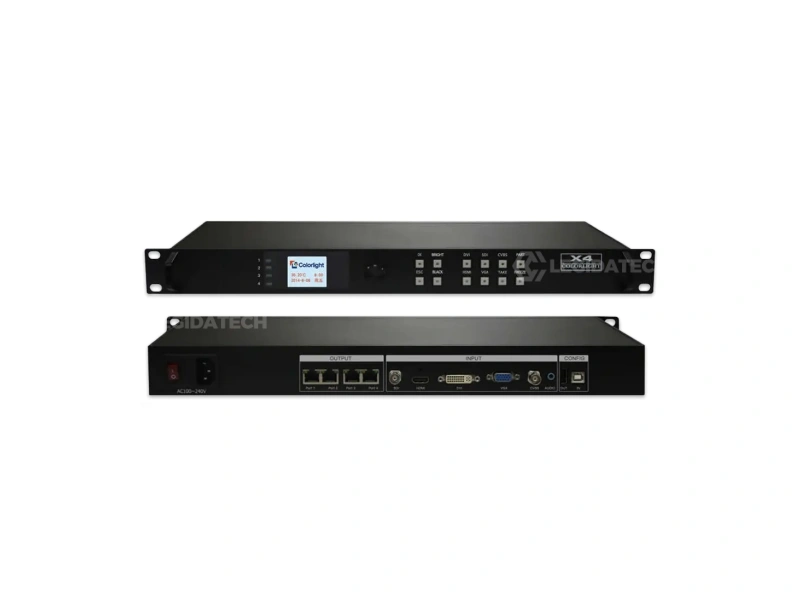
Market share estimates from integrator surveys and industry shipment analysis. Both are publicly listed companies — NovaStar on Shenzhen Stock Exchange (301589), Colorlight on Shenzhen Stock Exchange (301391) — with audited financial disclosures confirming their market positions.
2. Sending Controller Lineup: Model-by-Model Equivalency Map
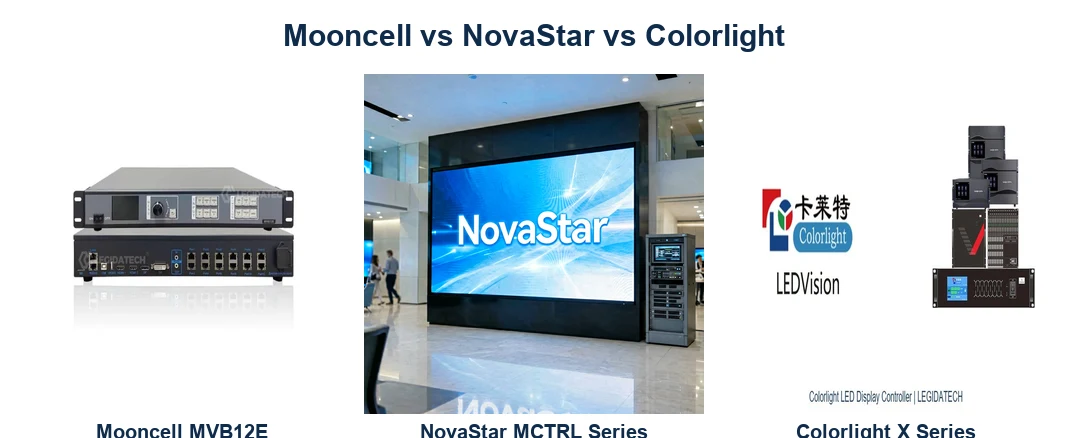
Note: NovaStar splits into two families — VX Series (all-in-one) and MCTRL Series (pure sending). Colorlight uses a single X-Series naming convention. The table below maps equivalent performance tiers, not feature-identical models. For detailed model specs, see our NovaStar MCTRL Full Lineup and Colorlight X Series Full Lineup.
| Tier | NovaStar Model | Closest Colorlight | Key Difference |
|---|---|---|---|
| Entry | MCTRL300 (1.3M px, DVI only) | X2 (1.3M px, 5 inputs incl. SDI) | X2 has dramatically more inputs at similar price |
| Entry All-in-One | VX4S-N (2.6M px, 4 ports) | X4 (2.3M px, 5 inputs incl. SDI) | VX4S-N has more pixels; X4 has SDI input |
| Mid-Range | MCTRL660 Pro (2.3M, SDI, Genlock, fiber) | X8m (5.24M, 4K input, Genlock, 8 ports) | NovaStar has fiber+SDI; Colorlight has 2x the ports and 4K input |
| High-End | VX1000 (6.5M, 10 ports, Genlock, 3D) | X8m (5.24M, 8 ports, 4K, 6 windows) | VX1000 has more pixels+3D; X8m has 4K input at lower cost |
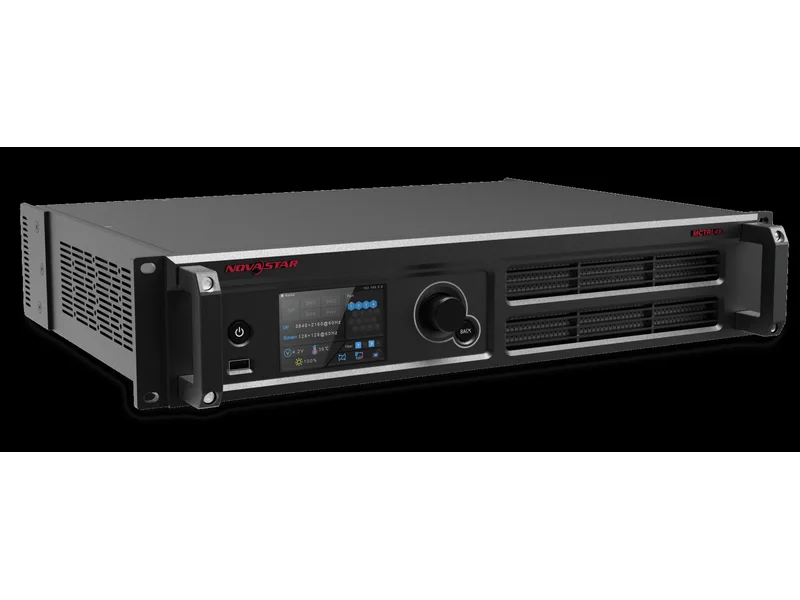
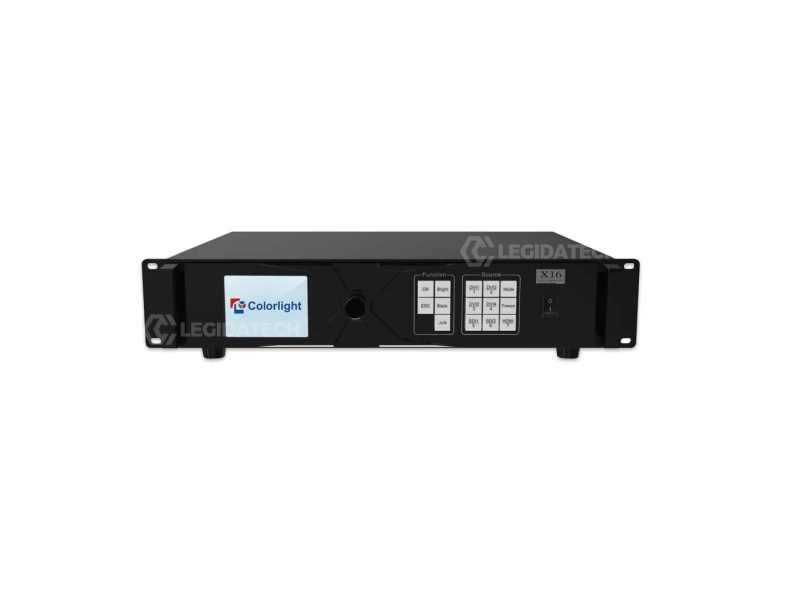
| 4K Broadcast | MCTRL4K (8.8M, 16 ports, HDR10, 3D) | X16 (8.88M, 16 ports, 7 layers, Genlock LOOP) | MCTRL4K has HDR10+3D; X16 has 7-layer multi-picture+Genlock LOOP |
| 8K Flagship | COEX series / MX2000 Pro | X20 (11.5M px, 20 ports, 8K, 8 layers) | NovaStar COEX is a separate high-end processor line; X20 is Colorlight’s top sending controller |
3. Hardware Pricing: Cost Comparison on a Typical Project
This is the most frequently asked question — and the answer is consistent across multiple integrator sources: Colorlight hardware averages 15-20% less than NovaStar at equivalent technical specification. This has been independently reported by DOIT VISION’s integrator analysis and confirmed across our own factory pricing data.
| Cost Factor | NovaStar | Colorlight |
|---|---|---|
| Entry sending card | $120-$300 (MCTRL300) | $125-$350 (X2) |
| Mid-range all-in-one | $200-$500 (VX4S-N) | $125-$450 (X4) |
| 4K/Broadcast controller | $2,000-$2,500 (MCTRL4K) | $800-$1,500 (X16) |
| Receiving card (typical) | $20-$30 (MRV300-series) | $20-$40 (5A-series) |
| Cloud platform (annual) | $200-$800/year (VNNOX Advanced, per deployment) | Included with hardware (ColorCloud basic) |
| 100-cabinet project total | Cost index: 100 (baseline) | Cost index: ~80-85 (15-20% savings) |
Real project example: On a 100-cabinet P3.91 rental screen, the hardware cost difference between NovaStar and Colorlight control systems is approximately $2,000-$4,000 — enough to buy spare receiving cards or an additional backup controller. For integrators deploying multiple screens per year, this compounds significantly.
4. Software Ecosystem: NovaLCT vs LEDVISION vs VNNOX vs ColorCloud
Software is where the two brands diverge most dramatically. A controller is only as good as the software that configures it.
| Software Dimension | NovaStar | Colorlight |
|---|---|---|
| Desktop Configuration | NovaLCT (all controllers) + VMP (COEX series) | LEDVISION (X1-X8m) + iSet (X16) + iSet Pro (X20) |
| Learning Curve | Steeper — powerful but complex interface | Gentler — LEDVISION is widely considered more intuitive for basic setup |
| Cloud Platform | VNNOX — mature, feature-rich, multi-brand support, paid advanced tiers | ColorCloud — simpler, single-brand, included with hardware, adequate for most commercial needs |
| Mobile App | NovaLCT Mobile (iOS/Android) | LED Assistant (iOS/Android) — field adjustments |
| API / 3rd-Party Integration | Documented open API, TCP/IP + RS-232, Crestron/AMX compatible | SDK available, requires custom development for BMS integration |
| Calibration | Pixel-level brightness + chromaticity, 16-bit, supports industrial cameras | Pixel-level via LEDVISION, supports common calibration sensors |
| .rcfg Library | Largest in the industry — most LED module config files pre-built | Growing rapidly — covers all mainstream modules but fewer niche/legacy configs |
Field feedback on software: Integrators consistently report that LEDVISION (Colorlight) is faster to learn and deploy for standard configurations, while NovaLCT (NovaStar) has a steeper initial learning curve but offers deeper control for complex projects. As one Reddit engineer in r/VIDEOENGINEERING noted: “Colorlight products have been more of a solid component over NovaStar. Colorlight range moves faster and keeps up with changes better” — while NovaStar users on the same forum emphasize the unmatched NovaLCT calibration depth and VNNOX multi-site management.
5. The 5A Factor: Colorlight’s Universal Receiving Card Advantage
Colorlight’s 5A receiving card deserves its own section because it represents the single most cited operational advantage Colorlight holds. “5A” stands for: Any chip, Any shape, Any row, Any scan, Any column — meaning one card model works with virtually any LED module configuration without re-flashing firmware or hunting for .rcfg files.
For integrators managing mixed fleets — different module batches, different suppliers, different pixel pitches — this translates to 20-30% less commissioning time per site according to DOIT VISION’s field data. The standard 5A-75B receiving card (192×1024 pixels, 1G bandwidth) costs $20-$40 and is the most popular receiving card in the Colorlight ecosystem.
NovaStar’s equivalent receiving cards (MRV300-series) offer comparable pixel capacity but require the correct .rcfg configuration file for each specific LED module. NovaStar’s library is larger — meaning you are more likely to find a pre-built config — but when you encounter an unsupported module, NovaStar’s configuration process is more involved than Colorlight’s 5A auto-detection. For more on receiving card selection, see our receiving card calculation guide.
6. Key Feature Comparison: Head-to-Head on Technical Specs
| Feature | NovaStar | Colorlight | Winner |
|---|---|---|---|
| Max Refresh Rate | Up to 480Hz (MX2000 Pro) | Up to 240Hz (X16) | NovaStar |
| Genlock | YES on MCTRL660 Pro, MCTRL4K, VX1000, COEX | YES on X8m, X16 (IN+LOOP), X20 | Tie — both support it; X16 has unique Genlock LOOP for daisy-chain |
| HDR | HDR10 + HLG (MCTRL4K, COEX) | — (no controller currently supports HDR) | NovaStar |
| 3D Support | YES (MCTRL4K, VX1000) | — (no controller currently supports 3D) | NovaStar |
| 12-bit 4:4:4 | YES (MCTRL660 Pro, MCTRL4K, VX1000) | 8-bit on X1-X8m; hardware supports 10/12-bit on X16/X20 | NovaStar |
| 4K Input | MCTRL4K, VX1000, COEX | X8m, X16, X20 | Both — Colorlight offers more 4K models at lower price points |
| 8K Input | COEX series | X20 (dual DP, 7680×4320) | Tie — different product families |
| Fiber Output | YES (MCTRL660 Pro: 2×10G SFP+; MCTRL4K: 4×10G) | Via external transceivers (H10FN, H2F) | NovaStar (built-in vs external) |
| Multi-Layer PIP | VX series, COEX | X8m (6 windows), X16 (7 layers), X20 (8 layers) | Colorlight at mid-tier (X8m has 6 windows; no NovaStar equivalent at this price) |
| Hot-Backup Redundancy | YES (MCTRL300 dual-unit; VX series dual-power) | YES (USB cascade across X Series) | NovaStar (more mature redundancy architecture) |
7. Application Scenarios: Real Projects, Real Choices
Scenario A: Broadcast OB Van — 4K LED Wall for Live Sports
Requirements: 4K@60 input, 3G-SDI camera feeds, Genlock for multi-camera sync, sub-1ms latency, fiber connectivity to LED wall 100m away.
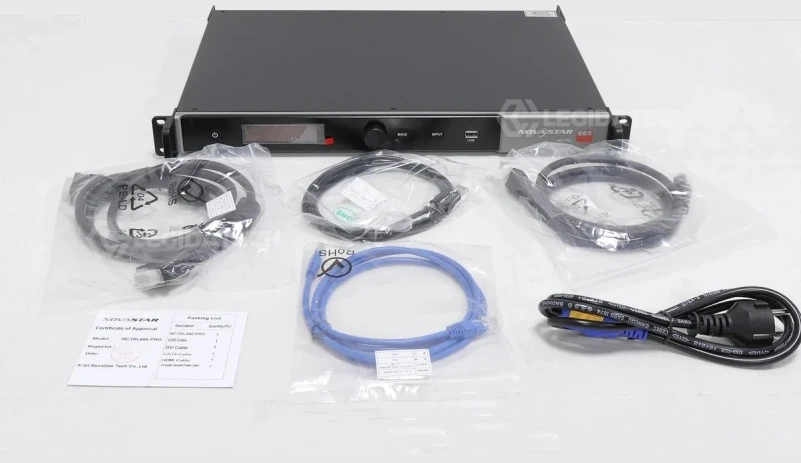
Winner: NovaStar MCTRL4K. Built-in 4K input via DP 1.2, 4×10G fiber outputs eliminate external media converters (~$200-$400 savings per link), Genlock, and HDR10 support. The X16 is a capable alternative at ~60% of the cost but lacks HDR and built-in fiber. For broadcast where HDR is becoming standard, the MCTRL4K justifies its premium.
Scenario B: Retail Chain Digital Signage — 50 Locations
Requirements: Cloud content scheduling, remote monitoring, budget-conscious hardware, standard P2.5-P3 indoor modules, minimal on-site technical staff.
Winner: Colorlight X2 + 5A receiving cards + ColorCloud. The X2’s 5-input suite means any source works out of the box. 5A auto-configuration reduces per-site commissioning time. ColorCloud provides adequate cloud scheduling for retail teams without the $200-$800/year VNNOX licensing. Total hardware savings vs equivalent NovaStar: ~18%.
Scenario C: Rental House — Mixed P3.91 and P2.6 Fleet
Requirements: Standardized controllers across the fleet, fast setup/teardown, occasional SDI camera feeds, budget-sensitive.
Winner: Either — depends on fleet preference. NovaStar MCTRL660 + MRV300 is the rental industry standard, with .rcfg files for every common rental module. Colorlight X2/X4 is a strong alternative — front-panel LCD enables on-device source switching without a laptop, and the X2’s SDI input (~$125-$350 all-in) is significantly cheaper than MCTRL660 Pro ($650-$850) for SDI jobs. The deciding factor: if your rental techs are already trained on NovaLCT, stay NovaStar. If starting fresh or budget-constrained, Colorlight offers better value.
Scenario D: XR Virtual Production LED Volume
Requirements: Genlock, 16-bit grayscale, 7680Hz+ refresh rate, Unreal Engine integration, low-latency signal path, pixel-level calibration.
Winner: NovaStar MCTRL4K or COEX series. NovaStar’s virtual production workflow is the most documented and field-tested in the XR market. Genlock, HDR, 12-bit color, and the industry’s largest .rcfg library for fine-pitch modules give NovaStar a decisive edge in this application. Colorlight is not absent from XR — the X16 with iSet and Genlock LOOP is technically capable — but NovaStar’s ecosystem of XR-specific documentation, third-party workflow guides, and integration partners makes it the lower-risk choice for XR stages today.
8. Support, Warranty & Global Presence
| NovaStar | Colorlight | |
|---|---|---|
| Global Offices | 37 branches worldwide | Shenzhen HQ + authorized distributors in 80+ countries |
| Certified Technicians | 10,000+ globally | Growing network; smaller than NovaStar |
| Standard Warranty | 3 years on all products | 3-5 years depending on product |
| RMA Turnaround | 5-10 business days (region-dependent) | 5-10 business days |
| Documentation | Comprehensive — manuals, spec sheets, video tutorials, NovaLCT guides | Comprehensive — manuals, spec sheets, LEDVISION/iSet documentation |
| Community / Forum | Active Reddit r/VIDEOENGINEERING discussions; extensive YouTube tutorials | Growing but smaller community footprint |
Bottom line on support: NovaStar’s 37-branch global presence and 10,000+ certified technicians provide a genuine advantage for integrators in Europe, North America, and the Middle East who need local support. Colorlight’s support is reliable but relies more on the distributor network. Both brands maintain CE, FCC, and RoHS certifications on current product lines.
9. Firmware, Longevity & Product Strategy
NovaStar maintains products in-market for extended periods. The MCTRL660 has been in production since 2017 — 9+ years — with continuous firmware updates. This is a double-edged sword: proven reliability and stable supply chains, but older hardware architectures (the MCTRL600, a 2022+ design, is objectively more efficient than the still-sold MCTRL660 at 6.6W vs 16W for similar capacity).
Colorlight iterates hardware faster. The X4, X8m, X16, and X20 have all seen significant updates in the past 3 years. As one Reddit engineer observed, “Colorlight range moves faster and keeps up with changes better.” The trade-off: faster innovation means integrators need to stay current with product changes, while NovaStar’s stability means you can standardize on one model for years.
10. Total Cost of Ownership: 5-Year Analysis
For a mid-scale rental house with 200 cabinets across P2.6 and P3.91:
| Cost Element (5 Years) | NovaStar (MCTRL660 fleet) | Colorlight (X4 fleet) |
|---|---|---|
| Initial hardware | $7,000-$11,000 | $5,000-$9,000 |
| Cloud platform | $1,000-$4,000 (VNNOX Advanced) | $0 (ColorCloud basic included) |
| Electricity (16h/day) | $840-$1,680 | $1,050-$2,100 |
| Commissioning labor | Baseline (experienced techs) | -15 to -25% (5A auto-config) |
| Spare parts holding | $500-$1,000 | $400-$800 |
| 5-Year TCO Estimate | $9,340-$17,680 | $6,450-$11,900 |
Note: This is a representative estimate. Actual TCO depends on local electricity rates, labor costs, cloud feature requirements, and project complexity. The savings with Colorlight are hardware-driven (~15-20% on initial purchase) and labor-driven (~20-30% faster commissioning on mixed-module projects).
Decision Framework: 5 Questions to Answer Before Choosing
- Will your LED wall appear on camera? If yes → you need Genlock and potentially HDR. NovaStar has the more mature broadcast ecosystem.
- What is your project budget for control hardware? If budget-constrained → Colorlight saves 15-20% without sacrificing core functionality.
- Do you need BMS/Crestron/AMX integration? If yes → NovaStar is the only documented option with an open API.
- Are your technicians already trained on a specific platform? If yes → staying with that brand is usually cheaper than retraining, unless the hardware savings from switching are substantial.
- How diverse are your LED modules? If you have mixed fleets with different suppliers/chips → Colorlight 5A’s universal architecture saves significant commissioning time.
The One Rule That Matters Most
Never mix sending and receiving cards from different brands. A NovaStar MCTRL4K will not drive Colorlight 5A receiving cards. A Colorlight X16 will not drive NovaStar MRV300 receiving cards. The control protocols are proprietary and incompatible. Choosing a brand commits your entire LED display control system — sending controller, receiving cards, multifunction cards, fiber transceivers, and cloud platform — to that ecosystem. This is the single most expensive mistake integrators make, because it is only discovered after hardware is purchased and on-site.
Frequently Asked Questions
Which is better for rental — NovaStar or Colorlight?
NovaStar dominates high-end rental and is the industry default. Colorlight X2/X4 offer excellent value for mid-scale rental — especially the X2, which includes SDI input (~$125-$350) vs NovaStar MCTRL660 Pro ($650-$850) for SDI jobs. For large rental houses with diverse client needs, many carry both: NovaStar for broadcast/XR events, Colorlight for corporate/commercial events.
Can I use NovaStar software to control a Colorlight controller?
No. NovaLCT only works with NovaStar hardware. LEDVISION only works with Colorlight hardware. The software is brand-locked, just like the hardware.
Which brand has better calibration capabilities?
Both support pixel-level brightness and chromaticity calibration at 16-bit. NovaStar’s calibration toolchain (NovaLCT + industrial camera support) is more mature and widely documented. For critical color applications (broadcast, XR, premium retail), NovaStar’s calibration ecosystem has an edge. For standard commercial installations, both are equivalent.
What is the difference between VNNOX and ColorCloud?
VNNOX (NovaStar) is a mature, feature-rich cloud platform supporting multi-brand hardware, detailed user permissions, content approval workflows, and scheduled tasks. Advanced tiers cost $200-$800/year per deployment. ColorCloud (Colorlight) is simpler, single-brand, and included with hardware — adequate for most commercial signage needs but lacks VNNOX’s multi-brand support and advanced workflow features.
Which brand is easier for a new technician to learn?
Colorlight LEDVISION is widely reported to have a gentler learning curve for basic screen configuration. NovaStar NovaLCT is more powerful but has a steeper initial learning curve. If your team is new to LED control systems, starting with Colorlight may reduce training time. If you have experienced LED technicians, NovaStar’s depth is an asset.
Do both brands support 3,840Hz refresh rate?
Yes. Both NovaStar and Colorlight current-generation receiving cards support 3,840Hz refresh rate — the minimum required to prevent rolling shutter banding when LED walls are filmed by broadcast cameras. This is standard on all current products from both manufacturers.
The Bottom Line
There is no universal “better” brand — there is only the right brand for your specific project. NovaStar is the reference standard for broadcast, XR, stadium, and any application where cameras are involved, HDR is required, or cloud management must span multiple brands. Colorlight is the data-driven value choice for commercial signage, retail chains, budget-sensitive projects, and deployments where the 5A universal receiving card’s auto-configuration saves real commissioning hours.
The market has spoken with its wallet: NovaStar’s ~70% market share reflects genuine technical leadership at the high end. Colorlight’s ~25% share reflects a strong value proposition that wins on price-performance for the majority of commercial projects. Both are publicly listed, financially stable, and continuously investing in R&D. Neither is a risky choice — only a right or wrong choice for your specific requirements.
Further reading from LEGIDATECH:
- NovaStar MCTRL Series Full Lineup (2026)
- Colorlight X Series Full Lineup (2026)
- NovaStar VX vs MCTRL: All-in-One or Pure Sending Controller?
- How to Choose the Right NovaStar LED Controller
- What Is Colorlight Control System?
- What Is NovaStar Control System?
- LED Display Types 2026 Ultimate Guide
Get Factory-Direct Pricing on Both Brands from LEGIDATECH
As an authorized distributor for both NovaStar and Colorlight, LEGIDATECH can supply either brand — or both — with factory-direct pricing, 72-hour burn-in testing, and 3-year warranty. We will recommend the optimal controller for your specific project, not the one with higher margin for us.
- NovaStar products: MCTRL300 | MCTRL660 Pro | MCTRL4K | VX4S-N | VX600 | VX1000 | MCTRL R5
- Colorlight products: X2 | X4 | X16 | X1, X2s, X4s, X4e, X8m, X20 — full lineup available on request
legidatechled@gmail.com | WhatsApp: +86 185 69492693
Published by LEGIDATECH — Your factory-direct source for NovaStar controllers, Colorlight controllers, LED display cabinets, and complete LED screen solutions. 15+ years of LED manufacturing experience. This article references independent integrator analysis from DOIT VISION, community feedback from r/VIDEOENGINEERING, and official product specifications from NovaStar and Colorlight.