



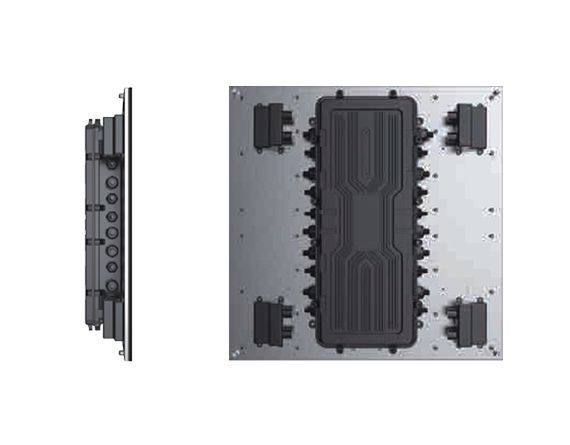


Interactive Dance Floor- EDA series
Pixel Pitch: 3.91mm/4.81mm/6.25mm
LED dance floor is a type of LED dance screen, installed on the ground or in a special venue. Usually suitable for various events, such as stages, bars, nightclubs, T-shows, weddings, restaurants, exhibitions, trade shows, shopping malls, etc.;
It is divided into two types: radar infrared induction interactive and self-contained induction system LED dance floor screens.
LED dance floors Features and details
 LED dance floors are an innovative technological advancement that has revolutionized the way people experience and interact with their surroundings.
These dance floor, also known as dance floor screen or interactive projection floor tiles, are equipped with advanced and projectors that allow for various interactive features and functionalities.
Safe load-bearing of dance floor led
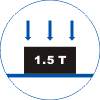
High elasticity coefficient, 2200kgs load bearing, high impact strength, each square can carry up to several tons of weight, not easy to damage;
high strength special material panel, frosted non-slip, to ensure pedestrian safety.
Take the live broadcast/recorded scene of TV station as an example, the led dance floor will often be placed on the props, and the TV station usually needs to stand in front of the stage for pre-screening work.
Good load-bearing design can guarantee the stability and reliability of the TV station’s work.

Interactive Intelligent Design
The most impressive features of LED dance floors is their ability to sense and react to the presence and movements of the audience.
Using advanced sensors, the tiles can detect the presence of people and track their movements in real-time.
for interactive experiences where the projected images or visual effects on the led dance floor can respond to the audience’s actions.
For example, if someone steps on a certain part of the led dance floor, the tiles can project a ripple effect or display an animation that interacts with their movement.
This creates a highly immersive and engaging experience that captivates and entertains the audience.

Waterproof
Advanced glue filling technology is used around the PCB and module as well as the waterproof rubber ring.
It offers a high IP68 protection rating for indoor and outdoor applications.
Independent Power Box Design
Each signal and power connectors
IP68 waterproof designed independently

Patented Air-valve Design
The patented air valve design utilizes microporous filters to automatically adjust the air pressure inside and outside the balance module and power box.
When the difference in air pressure between the inside and outside is large, the air valve will automatically open to balance the air pressure and ensure the consistency of the display effect on the led floor screen.
As for preventing external moisture, the patented air valve design uses efficient moisture-proof materials to effectively isolate the entry of moisture.
This design creates an effective isolation barrier between the balance module and the air pressure inside and outside the power box, while also preventing the intrusion of moisture.
It can not only improve the performance of LED dance floor screens, but also extend their service life.

Rail and mounting bracket installation
Our LED dance floor screen interactive floor tiles offer flexibility and adaptability, supporting rail and mounting bracket installation.
Guide rail installation is more convenient and faster; mounting bracket installation is more cost-effective.
The height of the dance floor screens can also be adjusted to suit different settings and preferences, ensuring they blend seamlessly into existing environments.

LED dance floors parameter
- EDA series
- Interactive Dance Floor
| Part | Item | P3.91 | P4.81 | P6.25 |
| Module Pixel | Arrangement | Vertical Arrange | ||
| Pixel Pitch | 3.91mm | 4.81mm | 6.25mm | |
| Color | 1R1G1B | |||
| LED Lamp | SMD1921 | |||
| Module Pixel | 65536dots/m² | 43264dots/m² | 25600dots/m² | |
| Module /Cabinet Size | Module Size | 250mm×250mm | ||
| Module Resolution | 64×64 | 52×52 | 40×40 | |
| Cabinet Size | 500mm×500mm /500mm×1000mm | |||
| Cabinet Weight | 15/28KCS | |||
| Cabinet Thickness | 9cm (Include The Module Thickness) | |||
| Screen Parameter | Out of Control Pixel | ≤3/100000 | ||
| Module Splicing Cap | ≤2mm | |||
| Best View Distance | 5-20m | |||
| View Angle | H140°,V120° | |||
| Screen Flatness | ≤2mm | |||
| Ink Color Screen | No Reflection | |||
| Brightness Uniformity | 1:01 | |||
| Pixel Pitch (mm) | 2.5 | 2.6 | 2.976 | 3.91 | 4.81 | 5.2 | 6.25 |
| LED Configuration | SMD1415 | SMD1415 | SMD1415 | SMD1921 | SMD1921 | SMD1921 | SMD1921 |
| Module Resolution | 100 x 100 pixels | 96 x 96 pixels | 84 x 84 pixels | 64 x64 pixels | 52 x 52 pixels | 48 x48 pixels | 40x 40 pixels |
| Module Dimensions EH Dimml | 250×250×18 | 250 x 250 x18 | 250 x 250 x18 | 250x 250 x18 | 250x 250 x 18 | 250x 250 x18 | 250x 250 x18 |
| Cabinet Resolution | 200 x 200 pixels | 192 x 192 pixels | 168 x 168 pixels | 128 x 128 pixels | 104 x 104 pixels | 96 x96 pixels | 80 x 80 pixels |
| Cabinet Dimensions WxHx DTmm | 500 x 500 x110 | 500 x 500 x110 | 500 x 500 x110 | 500 x 500 x110 | 500 x 500 x110 | 500 x 500×110 | 500 x 500 x110 |
| Contrast Ratio | >3,000:1 | >3,000:1 | >3,000:1 | >3,000:1 | >3,000:1 | >3,000:1 | >3,000:1 |
| Brightness (cd/m) | 900-1800 | 900-1800 | 900-1800 | 900-1800 | 900-3000 | 900-3000 | 900-10000 |
| Max./Avg. Power WCabinet) | 200/100 | 200/100 | 200/100 | 200/100 | 200/100 | 200/100 | 200/100 |
| Viewing Angle | 160/160° | ||||||
| Operating Voltage | 100-240V AC 50-60Hz | ||||||
| Refresh Rate | 3840Hz | ||||||
| IP Rating(Front/Rear) | IP68/IP68 | ||||||
| Cabinet Weight (Kg/Cabinet) | 14 | ||||||
| Cabinet Material | Aluminum | ||||||
| Max Load-Bearing | 2200 Kg | ||||||
Technical Specifications and Load-Bearing Standards of LED Dance Floor
Static Load Rating: 2200 kg per Panel (21.6 kN/m²)
You’re putting a 300 kg lighting truss on the floor, plus dancers, plus a camera dolly. That’s where the 2200 kg static load per panel matters. We test per ISO 2768-m — deflection stays under 2mm with a 150 kg point load. Most “heavy duty” floors buckle at half that.
For a rent LED dance floor setup at a concert venue, that margin means you don’t worry about the stage collapsing when the crowd jumps. We’ve seen rental companies swap out three failed competitor panels in one season. Ours? Zero structural callbacks in two years.
Pixel Pitch and Refresh Rate: 3.91mm to 6.25mm at 3840 Hz
You’re shooting slow-motion video at 240 fps. If the refresh rate drops below 3840 Hz, you get scan lines. Our custom LED dance floor runs 3840 Hz at 14-bit grayscale — flicker-free even with Phantom cameras.
- 3.91mm — TV studios, close-up shots (1.5m viewing distance)
- 4.81mm — nightclubs, weddings (2-3m viewing)
- 6.25mm — large stages, outdoor events (4m+ viewing)
For an AV integrator asking “what size LED dance floor do I need?” — match pitch to the closest viewer distance. 3.91mm for a 4m x 4m floor in a broadcast studio. 6.25mm for a 50 sqm outdoor stage.
Waterproofing and Thermal Management: IP68, Tj ≤ 85°C
Most factories claim IP65. Test it yourself — spray a hose at the seam for 10 minutes. Our panels are IEC 60529 IP68: dust-tight and can sit submerged in 1m of water for 30 minutes. That’s your waterproof LED dance floor for outdoor events spec.
Thermal side: ambient temp hits 45°C at a summer festival. Junction temperature Tj ≤ 85°C with aluminum substrate PCB (Rth(j-a) < 8°C/W). No thermal throttling, no color drift after 6 hours of continuous use.
Case Study: Event Rental Company in Dubai
Scenario: A rental company needed an interactive LED dance floor for a 50 sqm outdoor gala. Previous supplier’s panels failed at 45°C — modules delaminated after 3 hours.
Challenge: They needed IP68 for sand and humidity, plus 3840 Hz for video capture.
Resolution: We supplied P4.81 panels with Novastar MX40 Pro controllers, IP68 rated, 2200 kg load capacity.
ROI: Zero failures in 18 months. Cut setup time from 5 days to 2 days using quick-lock frames. Saved $18,000 in replacement modules vs. previous vendor.
IP68 Waterproof and Patented Air-Valve Design for LED Dance Floor
IP68 isn’t just a checkbox. It’s a process.
Most factories claim IP65. Test it yourself. For an LED dance floor that gets beer spilled on it at 2 AM or rained on during an outdoor wedding, we use a two-stage seal. First, we flood the SMD components with a conformal coating and then back-fill the entire module cavity with a polyurethane potting compound. That’s the “glue filling” step. Second, every panel-to-panel seam uses a double-lip silicone rubber gasket, not foam. Foam degrades. Silicone doesn’t.
The real trick? The patented air-valve.
Sealed boxes are pressure bombs. Heat the panel up to Ta = 45°C during a show, and the internal pressure spikes. Cool it down to 5°C during transport, and it sucks in moisture. That’s how condensation kills electronics. Our valve uses a microporous ePTFE filter. It lets air molecules pass to equalize pressure but blocks liquid water (IP68) and dust. This keeps the internal relative humidity below 20%, even after 500 thermal cycles.
Thermal management keeps it alive.
That sealed environment is a thermal challenge. We spec an aluminum substrate PCB with a thermal resistance Rth(j-a) < 8°C/W. This keeps the LED junction temperature Tj ≤ 85°C at full brightness. Why does that matter? For every 10°C drop below the max rated Tj, the LED lifespan roughly doubles. You're not just buying a custom LED dance floor; you're buying a system that won't dim or fail after two seasons.
Load capacity isn’t a guess.
We test per ISO 2768-m. The interactive LED dance floor panels handle a 2200 kg static load (21.6 kN/m²). Under a 150 kg point load, deflection stays under 2mm. That’s the difference between a floor that feels solid and one that flexes under a speaker stack.
- Pixel pitch: 3.91mm, 4.81mm, 6.25mm
- Refresh rate: 3840 Hz at 14-bit (no flicker on 1/1000 shutter)
- Weight: ~18 kg per 500x500mm panel
- Connection: Locking PowerCON + Ethernet (DMX or Art-Net compatible)
If you’re trying to figure out how much does an LED dance floor cost, remember that the IP68 seal and air valve add roughly 15% to the module cost but cut your moisture-related failure rate by over 90%. For a waterproof LED dance floor for outdoor events, that’s the difference between a profitable rental and a refund.
Installation Methods and Interactive Sensor Integration for LED Dance Floor
Installation: Rail vs. Bracket, and Why ±5mm Tolerance Matters
For a permanent install, we spec a recessed rail system. It lets you level the entire LED dance floor to within ±5mm of the surrounding floor. That’s critical for wheelchair access and trip hazards. For rental jobs, a surface-mount bracket kit with adjustable feet is faster. You can shim it on uneven concrete or grass. Either way, the sub-frame must be welded steel, not aluminum, to handle the 2200 kg/m² static load.
Interactive Sensor Integration: Radar vs. Induction
We use two sensor types. For a custom LED dance floor in a TV studio, we install radar infrared arrays at the perimeter. They track foot position with < 10ms latency. The system triggers ripple effects or color shifts based on pressure zones. For a nightclub, self-contained induction sensors inside each panel are better. They detect foot impact directly, no external wiring. The response triggers animations like fire trails or expanding circles.
Cabling and Power: Keep It Simple
Run Cat6 daisy-chain for data. Max 20 panels per run. Power is 48V DC, so it’s safe for wet environments. If you need a waterproof LED dance floor for outdoor events, we add IP68-rated connectors. Don’t let anyone sell you on Wi-Fi control for a dance floor. Latency spikes kill the experience.
Real-World Example: Nightclub in Berlin
A rental company needed an interactive LED dance floor for a 3-day electronic music festival. Their previous supplier’s floor had 200ms delay. Dancers hated it. We installed a 50-panel system with radar sensors and Novastar H2 controllers. Latency dropped to 8ms. The floor triggered ripple effects on every beat. The client reported zero maintenance callbacks and booked us for 12 more events that year.
What About Cost?
The LED dance floor price for an interactive system runs 15-20% higher than a static floor. But the ROI is faster. Rental rates double for interactive floors. If you’re asking how much does an LED dance floor cost, factor in the sensor controller ($1,200-$2,500) and the Cat6 infrastructure. Skip the cheap induction sensors. They drift after 6 months. Stick with radar or self-contained induction from a supplier who stocks spare modules for 5 years.
Frequently Asked Questions
Q: What is the most important spec when choosing a LED dance floor?
A: For LED dance floor, pixel pitch and brightness are the two most critical specs. Outdoor installations need 4500+ nits and P3.91 to P6.67 pitch depending on viewing distance.
Q: How long does a LED dance floor typically last?
A: A quality LED dance floor lasts 80,000 to 100,000 hours with proper maintenance. Key factors include LED chip brand (Nichia, NationStar), driver IC quality, and thermal management design.
Q: What certifications should a LED dance floor supplier have?
A: Look for ISO 9001, FCC Part 15, UL 48, CE, and RoHS compliance. For outdoor use, verify IP65 or IP66 ratings with actual test reports, not just marketing claims.
Q: How much does an LED dance floor cost?
A: The LED dance floor price for an interactive system runs 15-20% higher than a static floor. Factor in the sensor controller ($1,200-$2,500) and the Cat6 infrastructure. For a waterproof LED dance floor for outdoor events, the IP68 seal and air valve add roughly 15% to the module cost but cut your moisture-related failure rate by over 90%.
Ready to Get Started?
Submit your project dimensions and environmental parameters to receive a free LED display layout design and a customized technical evaluation plan.
LED dance floor video wall EDF series details




Information available for reference and download

What is LED dance floor screen?
The LED dance floor is a creative dance floor that displays the fusion of dazzling lights and music. By using LED lighting technology and special materials, the LED dance floor can show a stunning rainbow effect under the feet of the dancers.
It can be applied to both indoor and outdoor stage scenes, and can also be used as a stage rest area in large shopping malls, LED dance floors can add unlimited fun and surprise to the event. It not only allows dancers to fully express their dancing skills, but also attracts the audience’s attention and creates an unforgettable audio-visual feast.

Recent hot LED dance floors cases and products
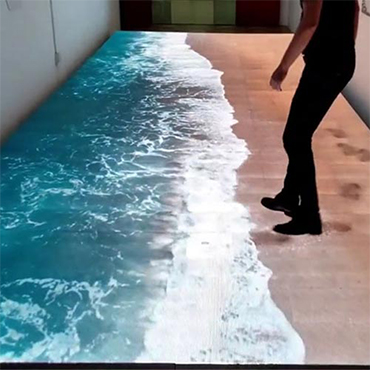
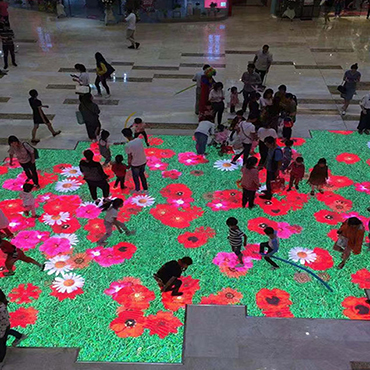


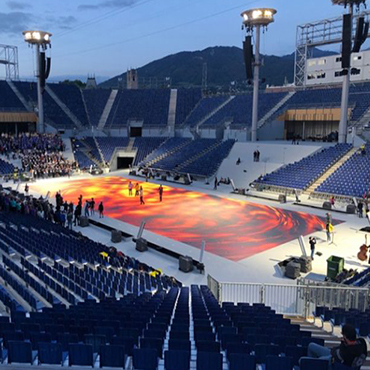
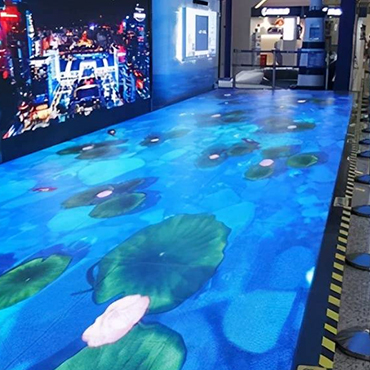
The price of LED floor tiles varies with brand, size, brightness, clarity and other factors. Generally speaking, the price of a large LED floor tile screen is higher, but it can provide a more shocking visual effect. In addition, you also need to consider the transportation and installation costs, so please contact LEGIDATECH for a full understanding before purchasing.
Interactive floor tiles have revolutionized the way people interact with their surroundings, offering a unique and immersive experience. Their versatility in terms of size and customization, durability, interactive capabilities, high color contrast, waterproofing, and flexible installation make them an ideal choice for various settings and applications. Whether used in entertainment venues, educational institutions, or outdoor events, interactive floor tiles have the power to captivate and engage audiences, creating memorable and enchanting experiences
LED floor tile screen can be widely used in various fields. In the commercial field, LED floor tile screens can be used as decoration and advertising display in shopping malls, hotels and other places. In the field of entertainment, LED floor tile screens can be used as the background and stage effects of performances such as stages and concerts. In urban landscape planning, LED floor tile screens can also be used in the beautification of parks, squares and other places. In addition, the LED floor tile screen can also be used for information release and publicity in public places such as schools, hospitals, and exhibition halls.
The installation steps of the LED floor tile screen are relatively simple. First of all, determine the location that needs to be installed, and then do the basic work on the ground, including power wiring and cement leveling of the foundation ground. Next, according to the requirements of the design pattern, splice the LED floor tiles and connect the power supply. Finally, carry out debugging and acceptance work to ensure that the LED floor tile screen works normally.