


INDOOR FIXED & ADVERTISING LED DISPLAYS
LED Screen for Shopping Mall & Shopping Center
Atrium video walls, storefront fascias, transparent shop-window displays, food-court menu boards and mall-exterior advertising screens — engineered and supplied factory-direct by LEGIDATECH since 2011.
Why Shopping Malls Are Replacing Static Signage with LED
A shopping mall is an advertising inventory before it is a building. The landlord sells visibility per shopper, and LED display screens have become the medium that mall operators, retail-media owners and anchor tenants all standardise on. In 2025 the digital signage market was worth US$31.1 billion; it is forecast to reach US$58.4 billion by 2033 (8.2% CAGR), and retail was the largest end-use segment at roughly 19% of demand — according to Grand View Research, whose latest report was published in June 2026. That growth is visible inside real portfolios: Unibail-Rodamco-Westfield launched its Westfield Rise retail-media arm with an Immersive Experiential Display network of nearly 300 large-format LED screens across 11 flagship centres, and Dubai Mall replaced the world-record OLED aquarium wall with a 3.9 mm LED video wall that is among the largest indoor screens on earth.
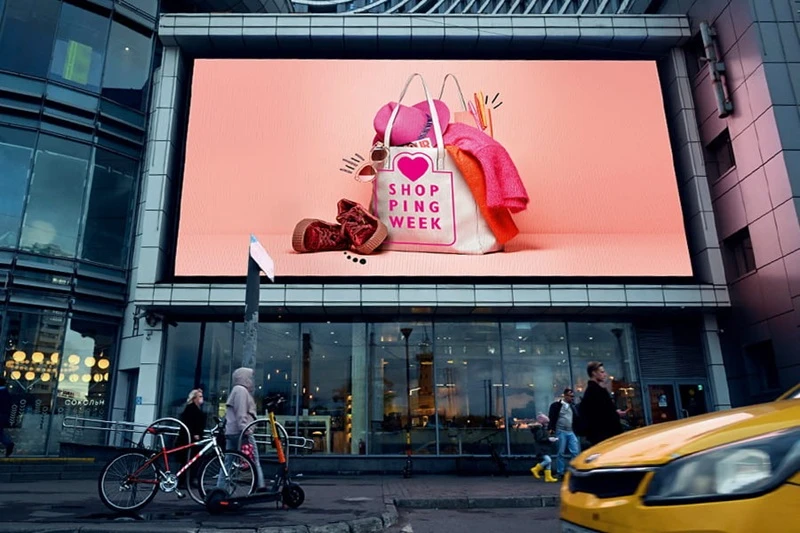
For a mall owner or shopping-centre developer, the commercial logic has three parts. First, rentable media: digital atrium walls, lift-lobby screens and entrance fascias become paid advertising slots for tenants and brands. Second, experience: shoppers who spend time in a space spend money in it, and moving image holds attention far longer than printed posters. Third, operating cost: one LED wall running 12–18 hours a day replaces an endless stream of printed banners, and a modern low-power module cuts the electricity bill at the same time.
This page is a technical buyer’s guide written for mall developers, retail-media operators, shopping-centre facility teams and store-chain buyers. It covers which LED screen fits each zone of a mall, the pixel pitches, brightness and viewing distances that work, what a real installation costs, and the products LEGIDATECH manufactures for these projects.
LED Screen Applications in a Mall, Zone by Zone
A shopping centre is not one viewing environment — it is a dozen. The screen above a food-court counter is viewed from two metres in strong light; the media wall above a central atrium is seen from twenty metres in daylight through a glass roof; the facade screen competes with direct sun. The matrix below is the starting point we use for every mall quotation. Pitch and brightness figures follow the guidance used across the LED industry and our own engineering data sheets.
| Mall zone | Typical placement | Viewing distance | Recommended pitch | Recommended brightness | Typical format |
|---|---|---|---|---|---|
| Central atrium / media court | Feature wall above the atrium void, often visible from 3–4 floors | 5–30 m | P2.5–P4 | 1,200–2,500 nits (more under skylights) | Fixed indoor video wall, 10–100 m² |
| Walkways & corridors | Wall-mounted above shop fronts, viewable along the mall spine | 2–8 m | P1.8–P2.5 | 800–1,200 nits | Fine-pitch walls or 32–55 in posters |
| Storefronts & shop fascias | Over or beside the entrance of a tenant shop, brand-run content | 1–5 m | P1.5–P2.5 | 800–1,200 nits | Fascia strip or window-height wall |
| Shop windows (glass) | Transparent LED film or panel inside the glass line | 0.5–3 m | P2–P3.9 (transparent) | 1,500–4,500 nits (window side) | Transparent LED, 60–95% see-through |
| Food court | Menu boards behind counters and promo walls above seating | 1–6 m | P1.8–P2.5 | 800–1,200 nits | Menu boards, posters, video walls |
| Lift lobbies & escalator cores | Above doors, beside lifts, on core columns | 1–4 m | P1.8–P2.5 | 600–1,000 nits | Portrait posters, wall strips |
| Directory & wayfinding | Floor-standing totems and wall directories | 1–3 m | P1.5–P2.5 | 600–1,000 nits | LED posters and touch-style totems |
| Tenant promo points | Freestanding pillars and demo islands in high-traffic junctions | 1–5 m | P1.8–P2.5 | 800–1,200 nits | Floor posters, double-sided, custom shapes |
| Rental & event deck | Temporary stages, launches, seasonal markets in the atrium or car park | 3–20 m | P2.97–P4.81 | 1,000–1,500 nits | Rental cabinets with quick locks |
| Entrance canopies | Screens under canopies, semi-outdoor light | 3–15 m | P2.6–P4 | 2,500–4,500 nits | Outdoor-grade IP65 panels |
| Exterior facade & carpark walls | Street-facing media facade, drive-through and carpark elevations | 10–200 m | P4–P10 | 5,000–8,000 nits | Outdoor die-cast cabinets, IP65 |
Brightness guidance: corridors and food courts typically run 800–1,200 nits — above that, glare and viewer fatigue set in. Atriums under glass roofs need 2,500–4,500 nits to hold contrast against daylight. Facades facing the sun need the full 5,000–8,000 nits of outdoor modules with automatic dimming at night.
Zone by Zone: What Each Mall LED Screen Is For
1. Atrium video walls — the mall’s centrepiece
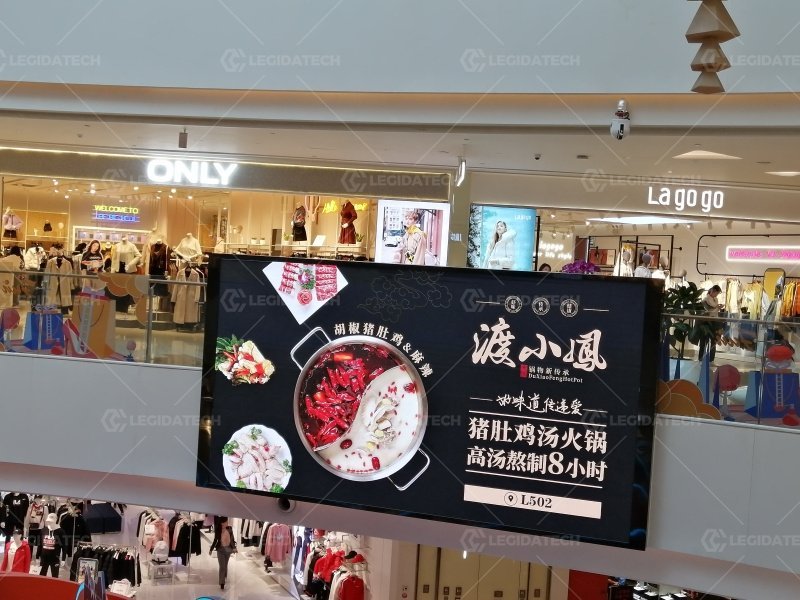
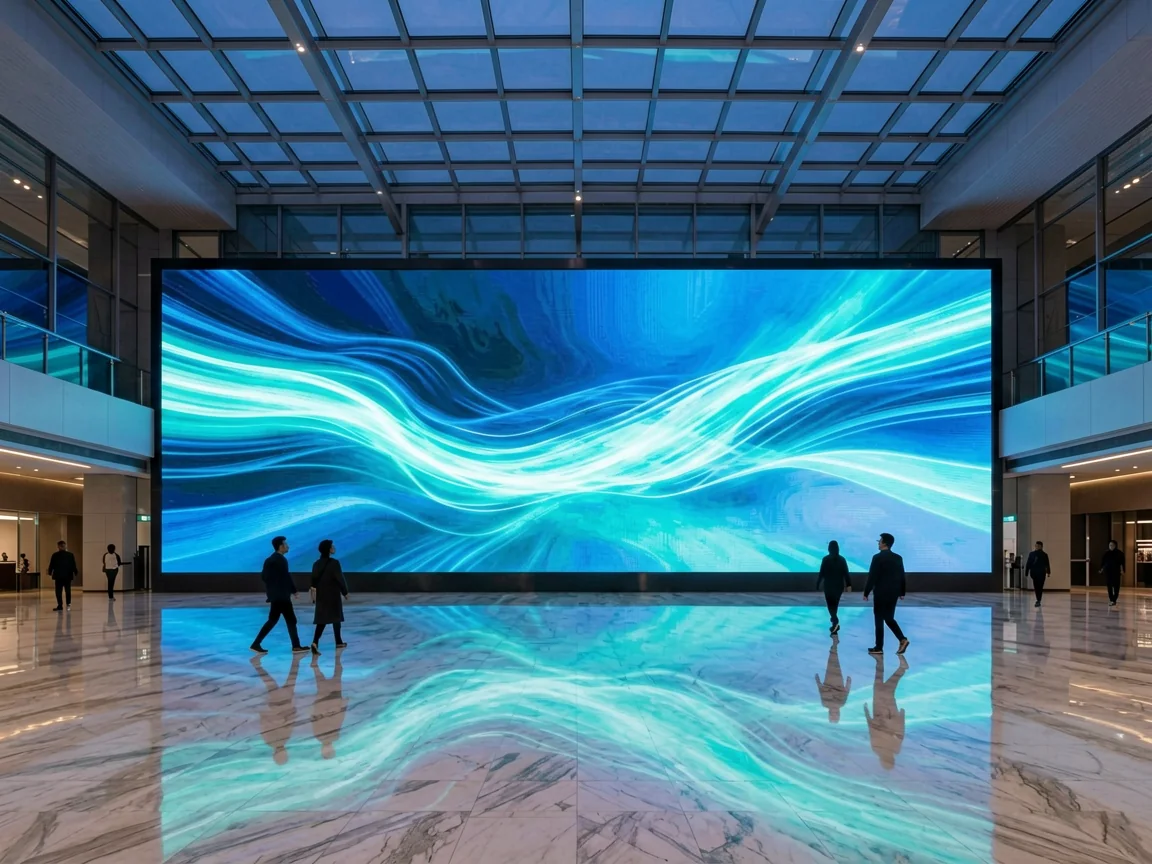
The atrium is where a mall’s digital identity lives. One seamless wall above the central void replaces every static banner on the ground floor, and because it is seen from several levels it becomes the frame shoppers remember. For atriums we recommend fixed indoor walls in P2.5–P4 — P3 or P2.5 is the most common balance between perceived resolution from 5–20 m and budget. Screens here run from sunrise to closing, so LED dies with a 100,000-hour L50 rating and high-quality power supplies matter more than headline brightness.
Content for atrium walls is rented as advertising time by tenant groups, and a mall can sell the same wall to several advertisers per day. That revenue model is why the world’s largest mall operator, Unibail-Rodamco-Westfield, built its Westfield Rise media network around 8-foot LED screens across 11 centres, and why its flagship screens — such as the 250 m² “Digital Dream” wall at Westfield Les 4 Temps in Paris — are purpose-built LED, not projector surfaces.
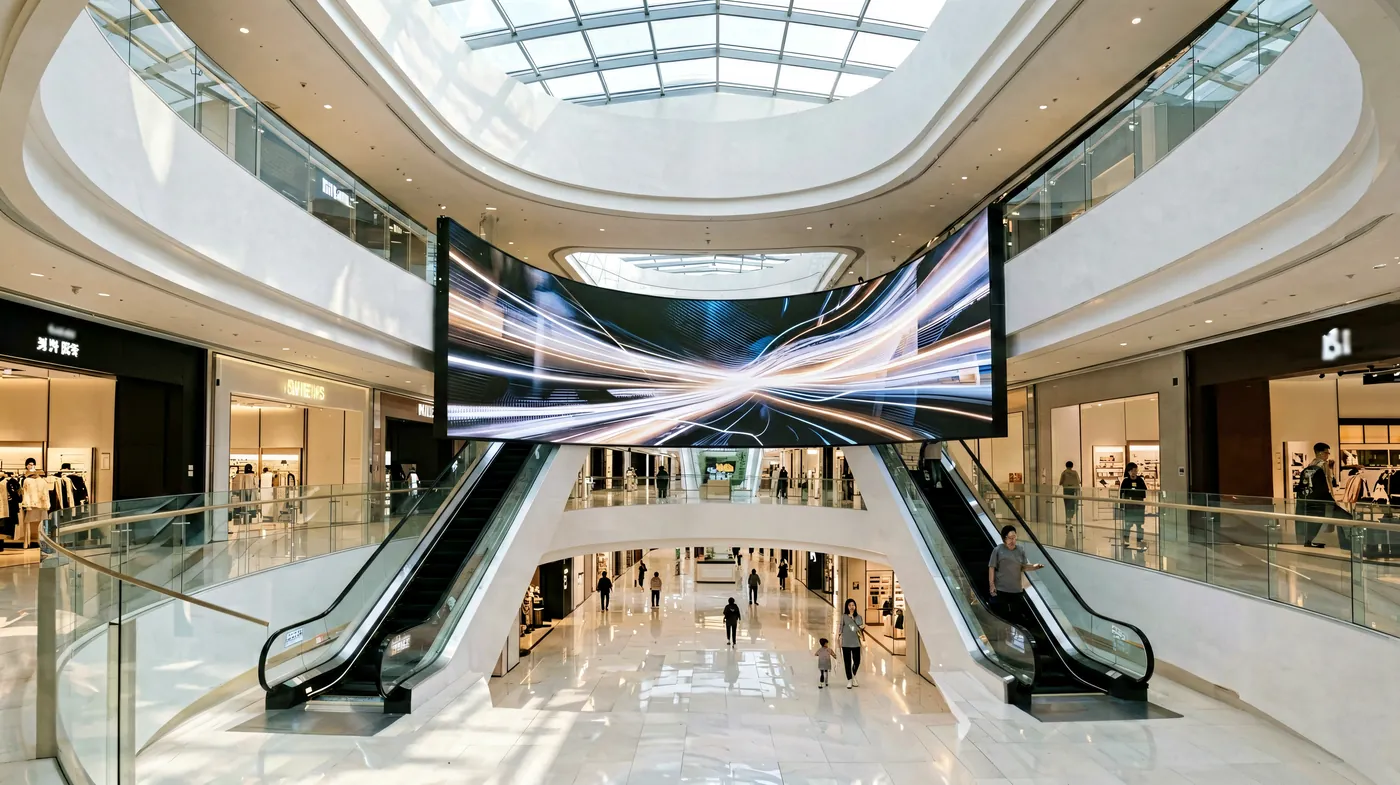
2. Storefront screens and shop fascias — media at the point of sale
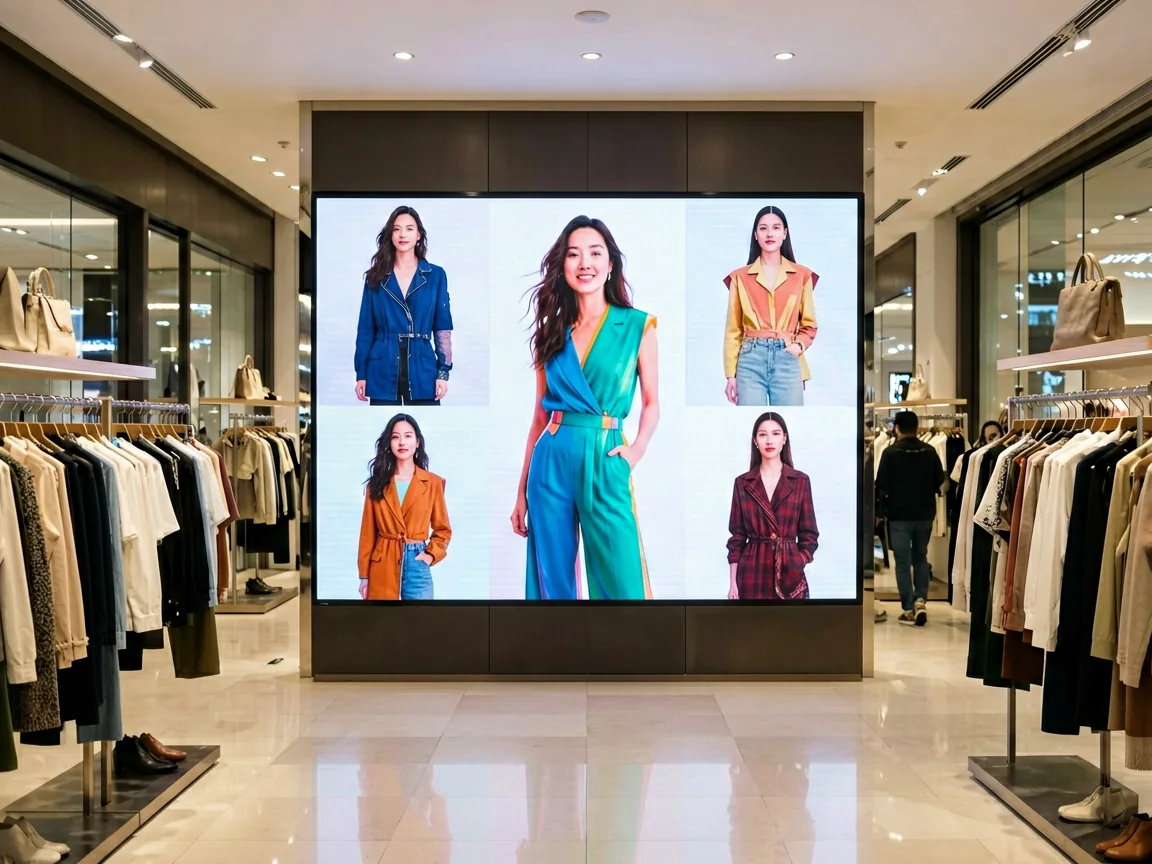
The fascia above a shop door is the most valuable 3 square metres in retail. A storefront LED screen shows the brand, the offer and the price in motion, and it converts while the mall is quiet — shoppers walking past a lit window at 9 am still see today’s campaign. For fascias and storefronts the rule is simple: fine pitch because people stand close. P1.5–P2.5 modules viewed from 1–5 m keep text crisp, and 800–1,200 nits is enough indoors. LEGIDATECH’s Ehonor and H series are the usual choice — front-serviceable cabinets that a store’s own team can swap a module on in minutes without entering the wall cavity.
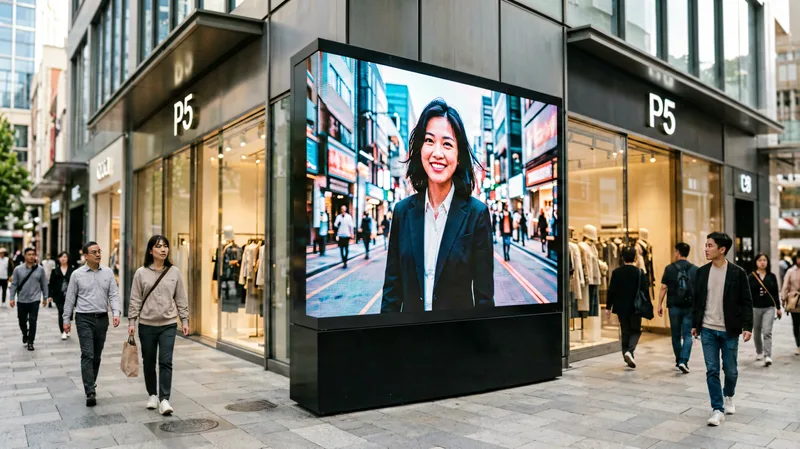
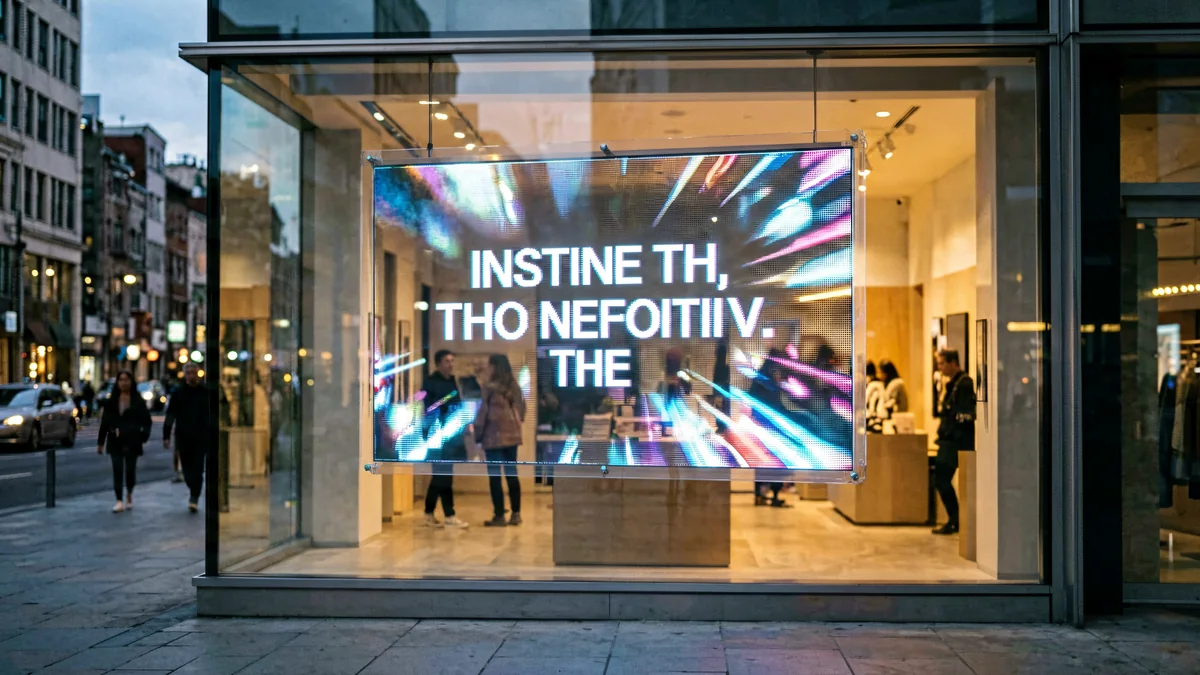
3. Transparent LED for shop windows — daylight retail without blocking the view
Traditional screens turn a flagship window into a black box. Transparent LED panels — from 60% up to 95% see-through — let a store keep its visual merchandising while overlaying motion on the glass. They are the fastest-growing format in storefront media because the retailer does not have to choose between display and daylight. For windows, pitch is chosen by what sits behind the glass: P3.9–P7.8 reads well from street and concourse distances, while P2–P3.9 is used where shoppers stand directly at the pane. Brightness for glass-facing panels runs 1,500–4,500 nits so the image holds against daylight on the glass.
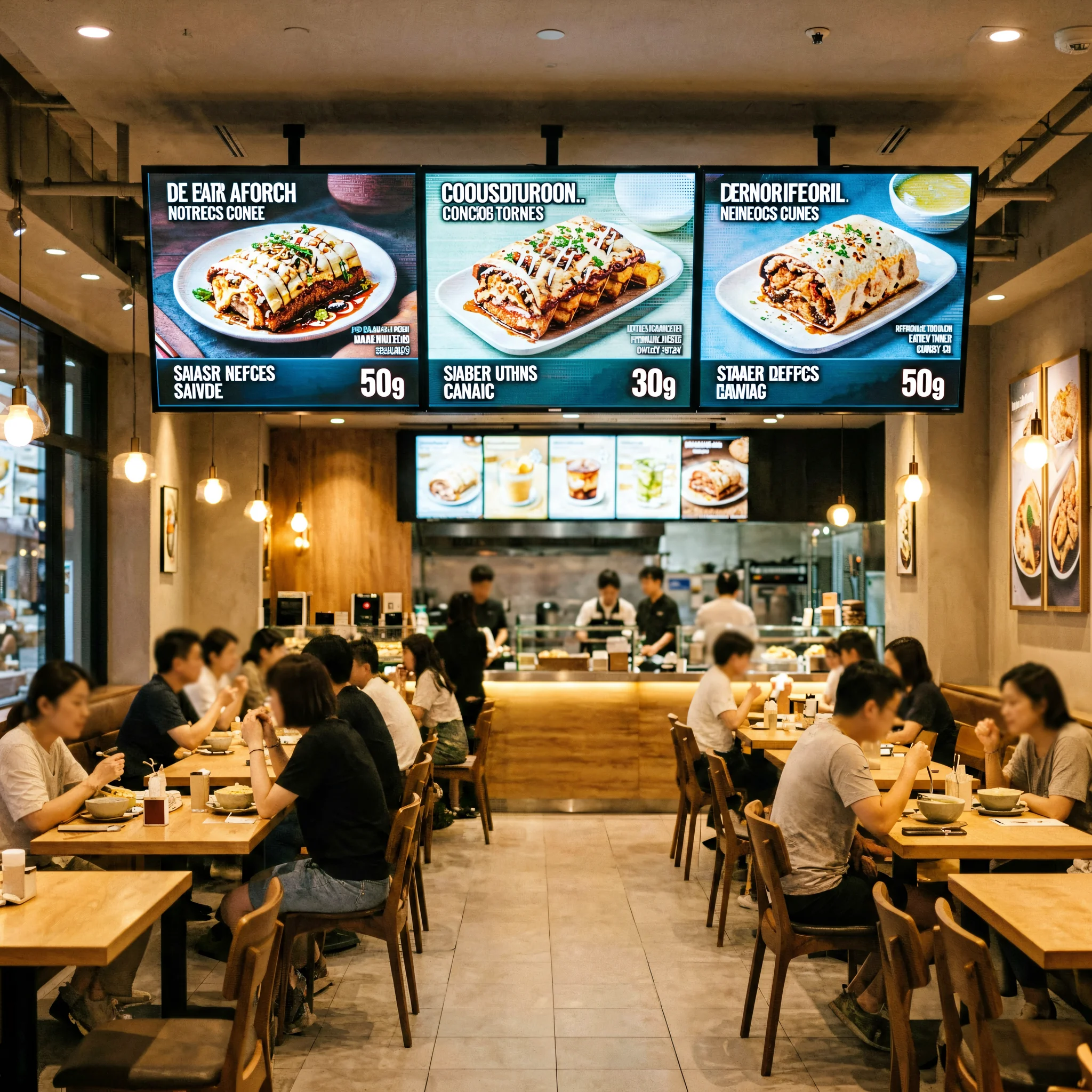
4. Food courts and quick-service counters — menus that reprice at 3 pm
Digital menu boards above quick-service counters do three jobs at once: they replace printed menu boards, they let a franchise change pricing or promos by daypart in one click, and they upsell through motion. Because queues form 1–3 m from the panel, P1.8–P2.5 is the working pitch for readable text, and contrast matters more than raw nits. Many of our food-court and counter installations run the Huidu or Mooncell media players with scheduling, so breakfast menus switch to lunch at a set time without staff touching anything.
5. Walkways, lift lobbies and directories — the shopper’s navigation layer
Long mall spines, lift lobbies and escalator cores are the places shoppers pause. Portrait-format LED posters and wall strips here carry wayfinding, floor directories, tenant lists and the mall’s own event calendar. Freestanding totems with two or four faces pull double duty as directories and paid advertising. All of these are short-distance screens, so fine pitch P1.5–P2.5 and modest brightness 600–1,000 nits give the cleanest text without washing out the concourse.
6. Facades and exterior media walls — the mall as a landmark
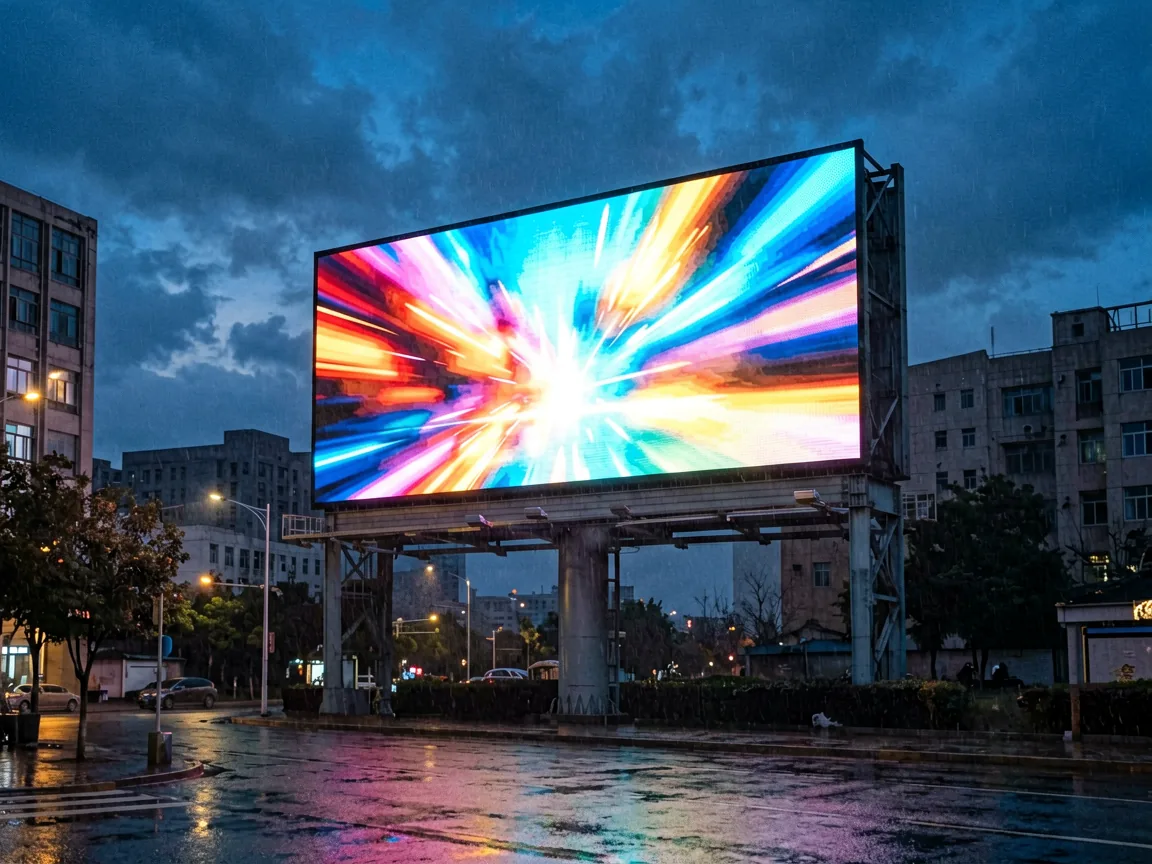
The exterior screen is a different product class: IP65 outdoor panels at 5,000–8,000 nits in die-cast cabinets rated for sun, rain and wind. These are the “shopping-mall advertising screens” seen from the highway and the parking deck. Outdoor pitch depends on the viewing distance — P4–P6 for close drive-past and street positions, P6–P10 for facade and carpark walls seen from far away. A well-engineered media facade carries advertising revenue that typically out-earns the screen’s own capital cost inside its first lease cycle, and with automatic brightness sensors it dims at night to avoid light pollution while still showing content.

Indoor or Outdoor: Two Different Products
Mall buyers sometimes ask for “the same screen” indoors and out. They are different products with different cost structures. Outdoor modules are built for direct sun: high-brightness LEDs, IP65 waterproofing on both faces, stronger die-cast cabinets and high refresh so cameras do not band. An outdoor P3.91 wall, for example, costs roughly $800–$1,200/m² factory-direct, against $400–$1,100/m² for indoor P2.5. The table below is the same classification LEGIDATECH uses on its LED screen price guide.
| Indoor (atrium, storefront, food court) | Semi-outdoor (canopies) | Outdoor (facade, carpark) | |
|---|---|---|---|
| Brightness | 600–1,200 nits | 2,500–4,500 nits | 5,000–8,000 nits |
| Protection | IP30 front-service modules | Front IP54+, rear protected | IP65 front and rear, sun/rain rated |
| Typical pitch | P1.25–P3.9 | P2.6–P4 | P4–P10 |
| Cabinet | 480×320 mm / 500×500 mm aluminium | Die-cast aluminium, reinforced | 960×960 mm / 1000×1000 mm die-cast steel or aluminium |
| Factory price / m² | $350–$1,500 | From $800 | $280–$950 at wide pitch; more for fine-pitch outdoor |
| Example product | Ehonor P1.8–P3.9, H series | Custom IP54 builds | OK / AD series outdoor advertising panels |
How to Choose the Right Pixel Pitch for a Mall Screen
Pixel pitch is the centre-to-centre distance between two adjacent LEDs, in millimetres. It decides three things: the resolution you get per square metre, the closest distance at which the image looks seamless, and — more than anything else — the price. A P2.5 screen packs roughly 160,000 LEDs per m² against about 10,000 for P10, which is why small-pitch panels cost more.
The working rule used across the industry is simple: the minimum comfortable viewing distance in metres is approximately equal to the pixel pitch in millimetres. A P2.5 wall looks continuous from about 2.5 m, a P4 wall from 4 m. For comfortable, pixel-free viewing at normal retail distances, multiply the pitch in millimetres by about 2.5 to get the distance in metres — so P2.5 is at its best beyond roughly 6 m, and P4 beyond 10 m.
Do not choose pitch by budget alone. Measure the distance from the screen to the nearest regular viewer, choose the pitch whose minimum distance is below that, then size the screen. Undersizing the pitch wastes money on LEDs nobody can resolve; oversizing it makes a mall’s flagship wall look blocky from the escalator.
Pitch guidance for mall placements
| Nearest viewer | Suggested pitch | Where this fits in a mall |
|---|---|---|
| Under 3 m | P1.2–P2.5 | Storefronts, shop windows, directories, counter menu boards |
| 3–6 m | P2.5–P3 | Walkways, lift lobbies, small feature walls |
| 5–15 m | P3–P4 | Atrium media walls, concourse ends |
| 15 m and beyond | P4–P10 | Facades, carpark walls, rooftop signage |
Sizing a Mall Screen: The Cabinet Grid Method
Every LEGIDATECH indoor screen is assembled from aluminium cabinets — the Ehonor series in 480 × 320 mm, H-series in 500 × 500 mm — so the finished width and height step in cabinet increments. This is not a limitation; it is how the price is calculated, and it is why we ask for your exact wall opening rather than a round number.
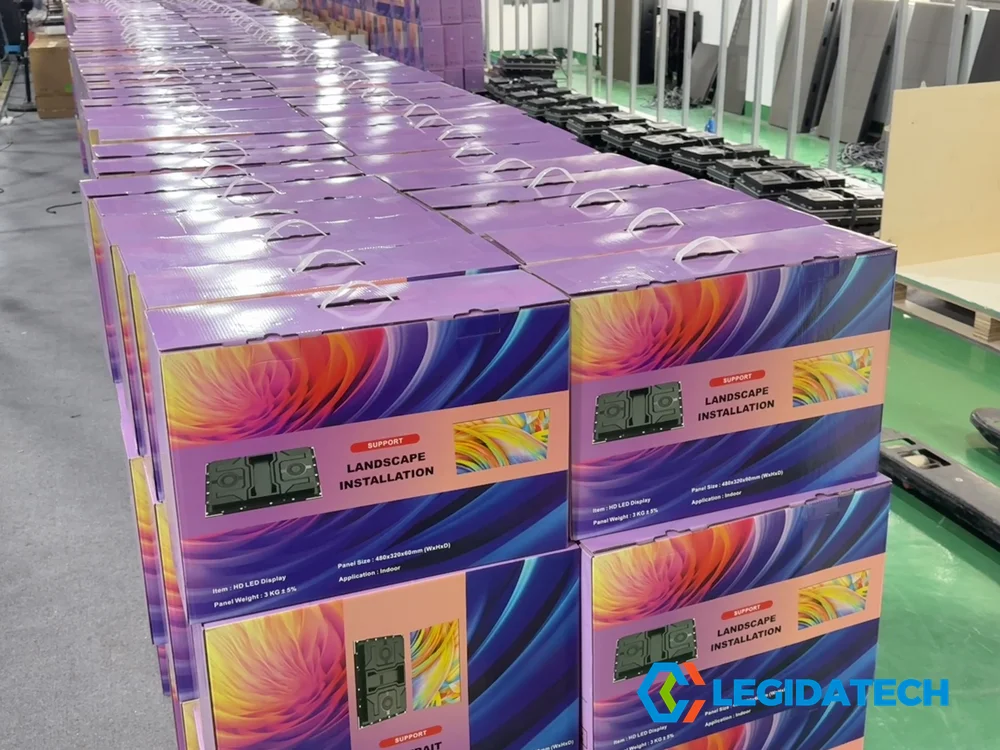
Worked example — a food-court media wall of 6.4 m × 3.2 m using P2.5 Ehonor cabinets:
- Width: 6.4 m ÷ 0.48 m per cabinet = 13.3 → 13 cabinets = 6.24 m, or 14 cabinets = 6.72 m. Choose 14 if the opening is exactly 6.4 m and trim the returns.
- Height: 3.2 m ÷ 0.32 m = exactly 10 cabinets = 3.2 m.
- Total: 14 × 10 = 140 cabinets. Resolution at P2.5 = 160 × 160 px per 0.48 m × 0.32 m cell → a 6.72 × 3.2 m wall is 2,240 × 1,280 px — full HD wide, comfortably.
Send us the wall opening and the nearest viewing distance. Within 24 hours we return a cabinet layout drawing sized to the actual opening, so there is no on-site improvisation.
Brightness: How Many Nits Does a Mall Screen Need?
Brightness is measured in nits (candela per square metre). The number to specify is the maximum rated brightness, but a well-configured mall screen normally runs at 50–70% of rating — enough for the ambient light, with headroom for daylight peaks.
| Environment | Rated brightness | Why |
|---|---|---|
| Lift lobbies, corridors (low ambient light) | 600–1,000 nits | Too much brightness at close range causes glare and fatigue |
| Storefronts and concourses (normal mall lighting) | 800–1,200 nits | Holds contrast against ceiling lights and glazing |
| Atriums under glass or skylights | 1,500–4,500 nits | Sunlight on the glass washes out lower-rated panels |
| Canopies and covered entrances | 2,500–4,500 nits | Semi-outdoor light levels with rain protection needed |
| Exterior facades in direct sun | 5,000–8,000 nits | Must be readable against full daylight; auto-dim at night |
Every outdoor and atrium-grade screen we ship includes an ambient-light sensor option, so the panel dims automatically at night — good for neighbours, good for the electricity bill.
Refresh Rate, Lifespan and the Seamless Look
Refresh rate: 3,840 Hz as standard
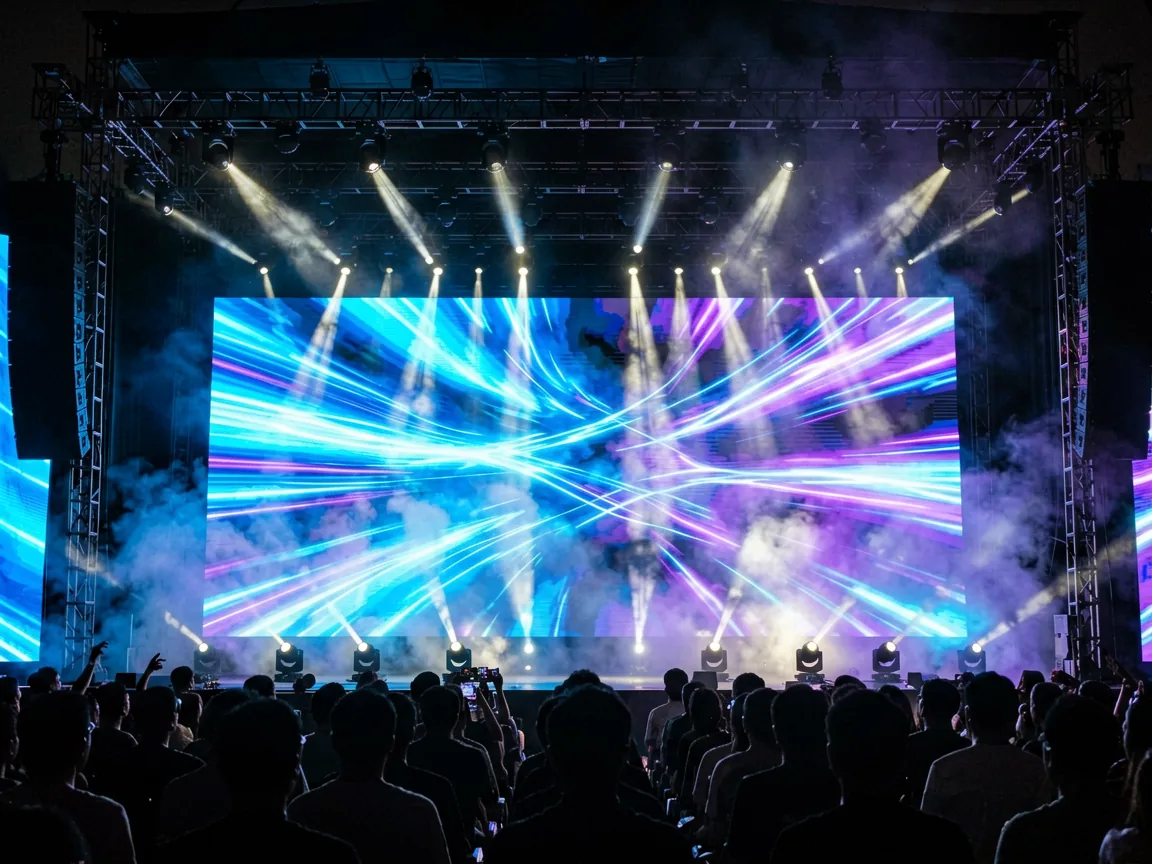
Refresh rate is how many times per second the screen redraws. Mall screens are filmed constantly — shoppers photograph the atrium wall, influencers film the facade, security cameras record the food court — and below about 1,920 Hz a camera records visible horizontal scan bands. All LEGIDATECH indoor and outdoor mall panels ship at 3,840 Hz as standard. You can verify it yourself: film the screen with any phone; if dark bands roll through the footage, the refresh rate is below spec.
Lifespan: what 100,000 hours actually means
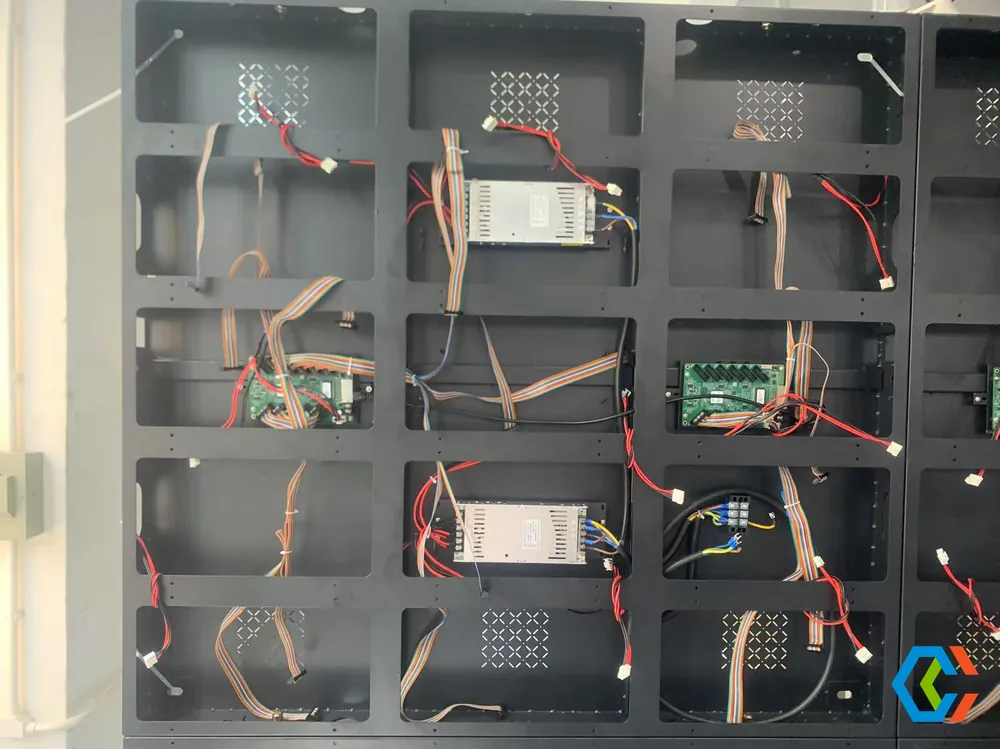
The LED dies are rated at 100,000 hours to 50% brightness (L50). Run 12 hours a day, that is roughly 22 years. The honest caveat is that the switching power supplies, not the LEDs, set the practical service life: a quality supply rated for 50,000 hours (about 11 years at 12 h/day) costs roughly three times a generic 20,000-hour unit, and we fit the quality supply as standard. A mall screen therefore typically needs a power-supply service around years 9–11 — a planned, cheap event, not a screen failure. LEGIDATECH warrants the screen for 5 years.
Seamless by construction, flat by installation
An LED wall is seamless because it is one continuous surface of modules — there is no bezel grid as on LCD video walls. What decides whether it looks seamless is flatness: cabinets must sit within about ±1 mm across the whole frame, otherwise adjacent panels catch light at different angles and a hairline seam appears. That is why the steel structure is part of the engineering, not an afterthought — we provide the frame drawing, and for structural walls our own installation teams or supervised local crews handle the build.
Control Systems and Content Scheduling
A mall rarely runs one screen — it runs twenty, across atriums, lobbies, food courts and a facade, in several languages and with advertising slots sold to different tenants. The control chain for every screen is the same: media source → video processor → sending card → Cat-5e or fibre → receiving cards in each cabinet.
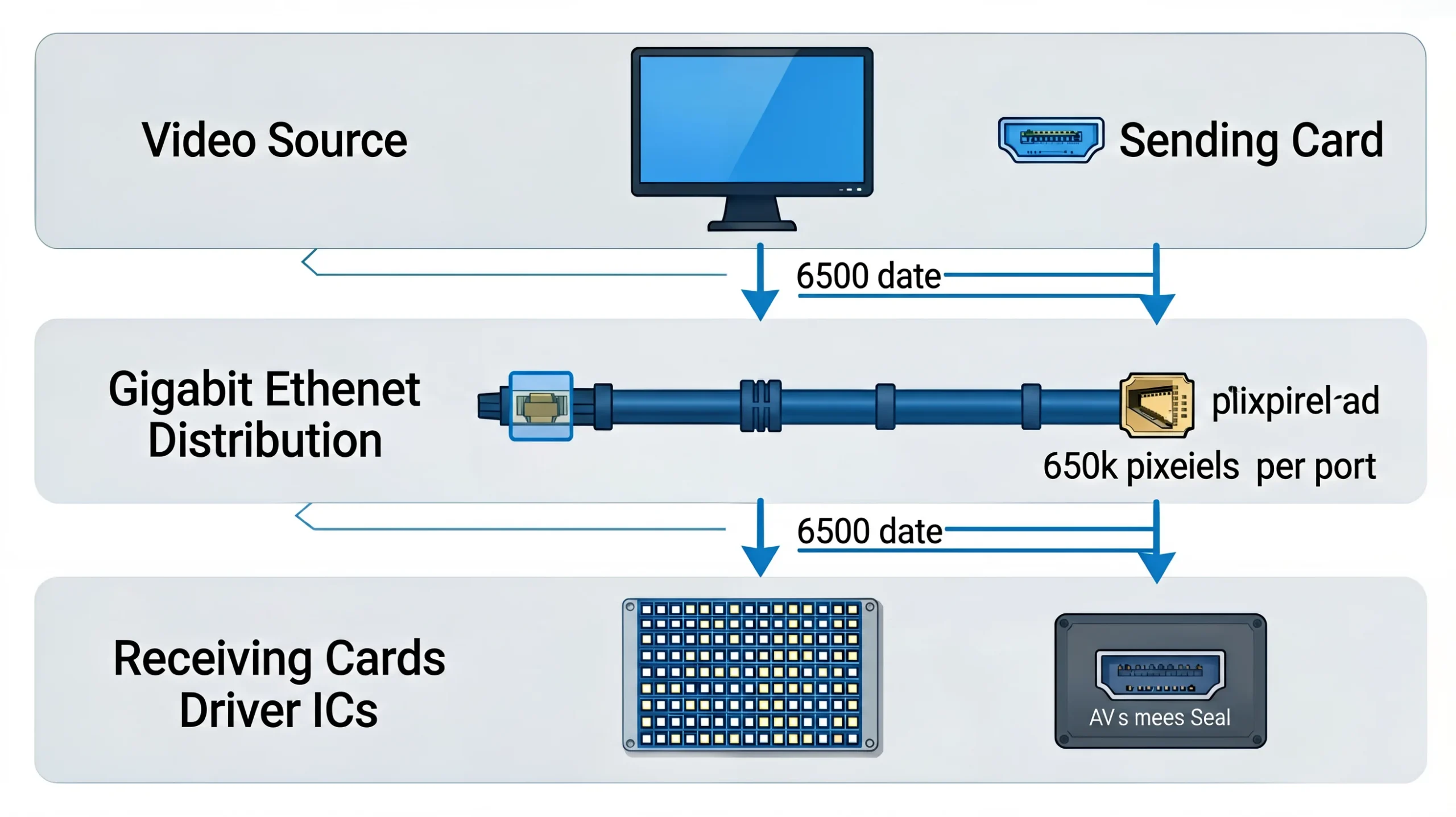
We supply and pre-configure NovaStar, Huidu, Colorlight and Mooncell control — from single-screen media players to mall-wide networks. A typical retail-media setup uses Huidu or Mooncell players with remote CMS: every screen on the network plays its own playlist, dayparted (breakfast menus at 7 am, retail ads at 10 am, dinner promos at 6 pm), and the operator sells tenant slots by time of day from one dashboard. For campaign-grade content with edge blending and 4K sources, NovaStar processors handle the atrium wall.
Plan the network when you plan the screen. Running one fibre or Cat-5e backbone to each screen position during the fit-out costs almost nothing; retrofitting control wiring into a finished mall is the most expensive line in the project.
Installation: Who Builds a Mall Screen
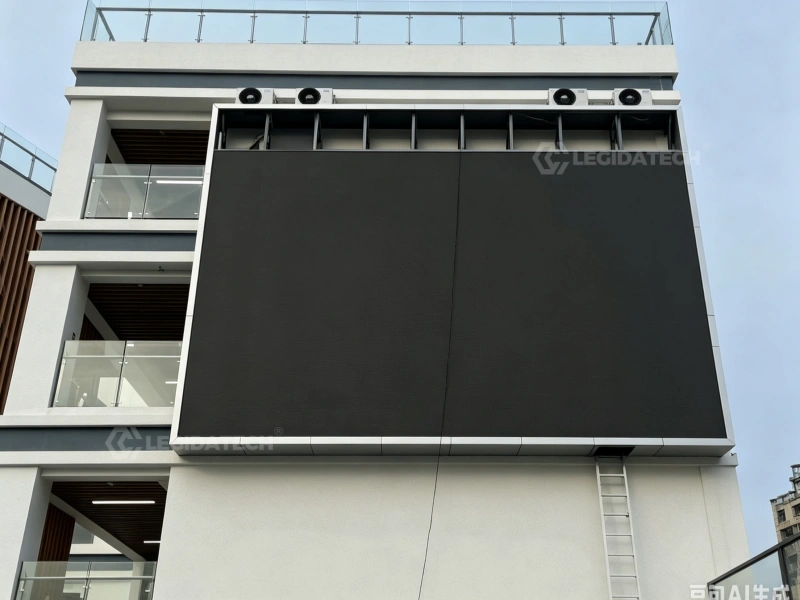
A complete mall installation has six stages: structural survey and frame design → steel or aluminium structure fabrication → screen assembly and pre-burn-in at the factory → shipment → on-site mounting, cabling and commissioning → content handover and staff training. Indoor screens on existing walls are the simplest case — flush wall-mount on the finished surface, front-serviceable, so no rear access corridor is needed. Facades and atrium walls suspended above voids need engineered frames, and we supply certified structural drawings with the order.
Typical schedules for mall work:
| Project type | Design & fabrication | On-site install | Notes |
|---|---|---|---|
| Storefront or poster retrofit (finished wall) | 2–3 weeks | 1–3 days per screen | Often done overnight so trading continues |
| Atrium media wall 20–60 m² | 3–5 weeks | 1–2 weeks | Needs scaffold or lift access and a power/data point |
| Facade media wall 50–500 m² | 4–8 weeks | 2–6 weeks | Structural engineer sign-off; crane or mast climber |
| Mall-wide multi-screen network | 4–6 weeks | Rolling by zone | Install zone by zone so the mall never closes a wing |
Maintenance: Front Service Changes Everything
The maintenance question for a mall is not “will a module fail” but “how fast can we change it without shutting anything”. Front-serviceable designs — the Ehonor and H series included — let a technician swap a module from the front in minutes with a suction tool or magnetic release, no rear corridor, no wall cavity access. A mall operator keeps a small spare-parts kit (a few modules, power supplies, receiving cards) and is self-sufficient for 95% of faults. Most screen faults in the field are not the LEDs: they are the power supplies and data cabling, which is why we publish the supply specification and pre-configure every receiving card before shipping.
LED vs LCD vs Projection in a Mall
Malls compare three technologies for big-format display. The table reflects real operating conditions — running hours, ambient light, viewing distance — not brochure figures.
| LED video wall | LCD video wall | Projection | |
|---|---|---|---|
| Seams at size | None — continuous surface | Bezel lines every 55 in unless using bezel-less and expensive | None, but one lamp covers it |
| Brightness in daylight | 600–8,000 nits by grade | 500–700 nits typical | Weak in ambient light; dark rooms only |
| Lifespan (rated) | 100,000 h L50 LEDs | 50,000–60,000 h backlight | Lamp life 3,000–20,000 h; frequent replacement |
| Running cost over 10 years | Lowest — no consumables beyond power supplies | Medium — backlight degradation | Highest — lamps, filters, alignment |
| Image at 20 m distance | Excellent | Dim and bezel-crossed | Dim unless light-controlled |
| Best mall role | Anything from 2 m storefronts to 500 m² facades | Close-range signage and totems | Cinema and after-dark events only |
Real Shopping Mall and Retail LED Projects
Case studies below are drawn from LEGIDATECH installations and from independently reported industry projects. The named-mall figures are cited so you can verify them.
P2.5 indoor LED wall, 7.36 × 1.44 m — shopping mall, Nigeria
An Ehonor-series P2.5 fixed wall installed in a shopping mall in Nigeria. At 160,000 LEDs per square metre it carries full-motion advertising and branded content legibly from the concourse, and the front-service Ehonor cabinets keep the wall serviced without closing the walkway behind it.
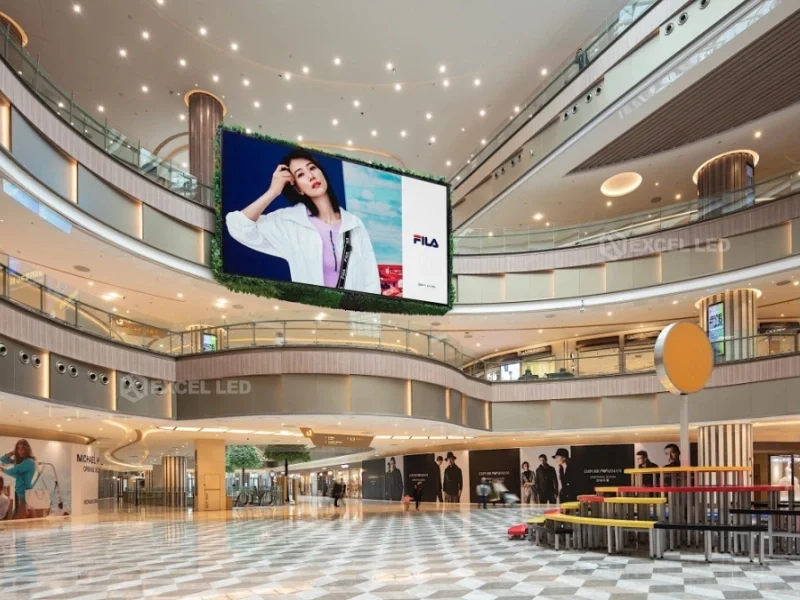
H-series P2.5 screens — shopping mall, Los Angeles, USA
Multiple H-series P2.5 displays supplied to a shopping mall in Los Angeles. H-series 500 × 500 mm cabinets with high refresh keep the screens clean in smartphone footage — important when every mall visit ends up on social media.
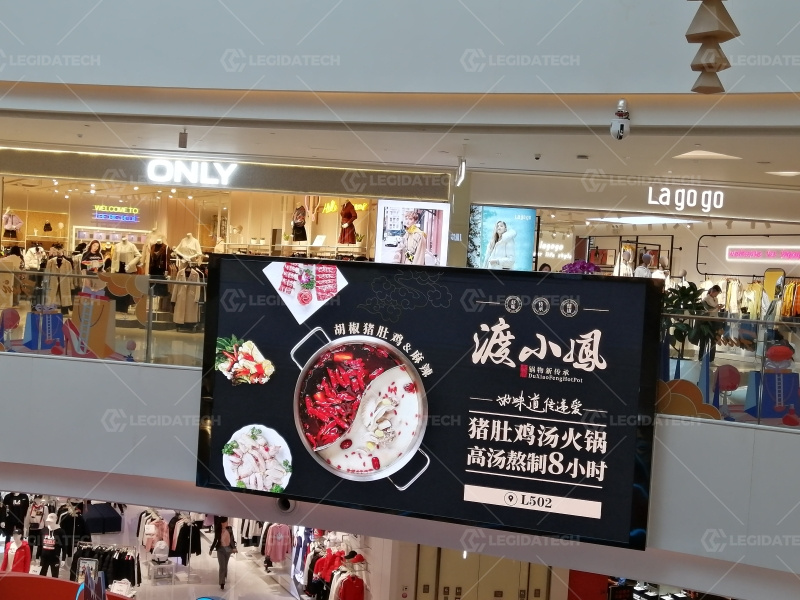
Ehonor screens inside Shoprite supermarket, Ibadan, Nigeria
Retail advertising screens installed in a Shoprite supermarket location in Ibadan, Nigeria (Ehonor series). Supermarket and grocery fascia screens are part of the same retail-media budget as mall screens, and they run 12+ hours daily in strong indoor lighting.

Flagship storefront screens — Gucci, Vietnam
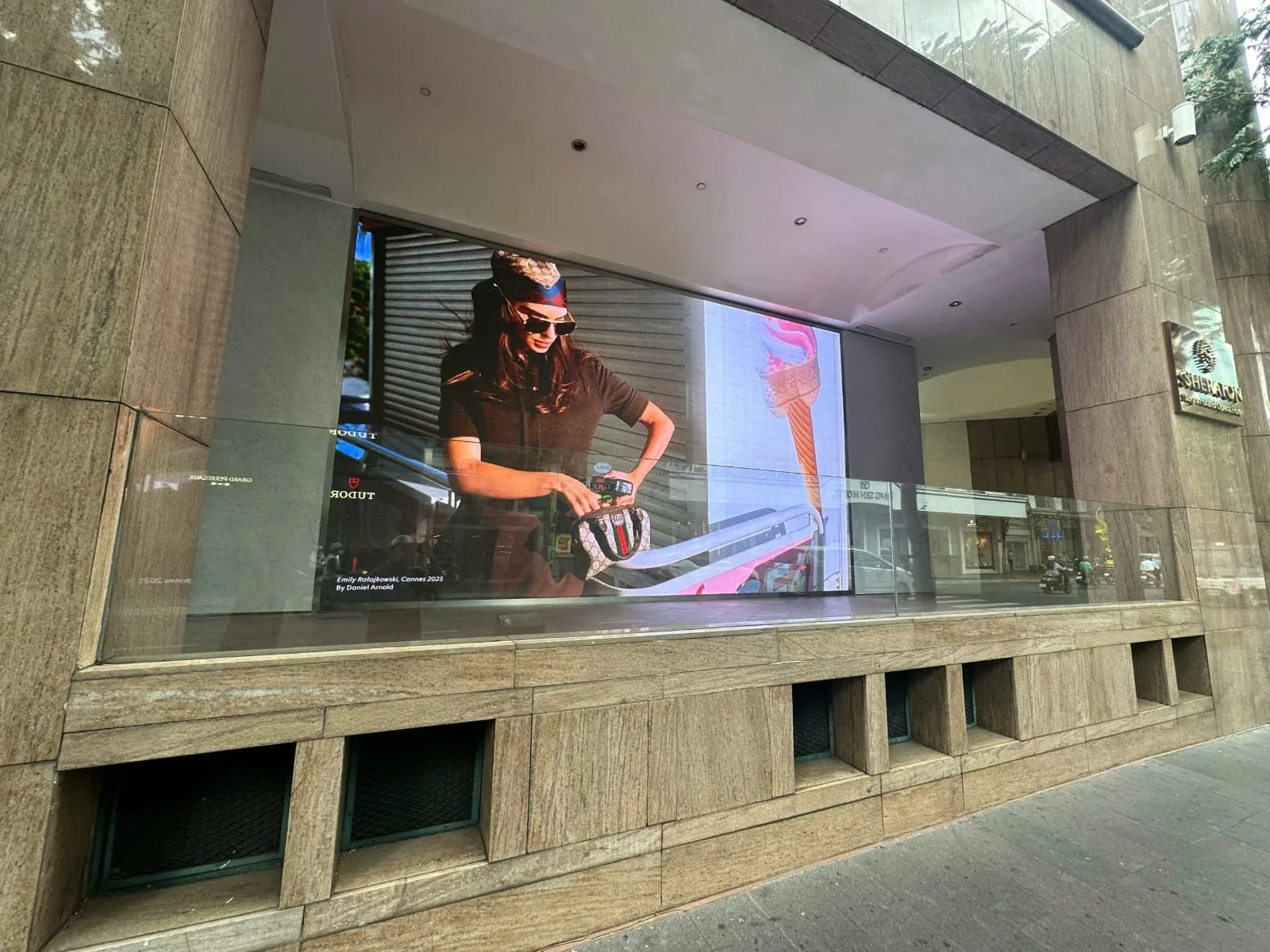
Three high-resolution screens totalling about 53 m² across a flagship storefront in Vietnam: two P1.86 walls and one P2.604 panel, engineered for street viewing at close range. Storefront screens at this grade are specified like fine jewellery — P1.86 brings 16:9 broadcast content to a shop facade without visible pixels.
92 m² curved media wall — Arndale Centre, Manchester, UK (industry case)
Reported by AV Magazine in September 2025: a 92 m² display following a 34-metre convex curve at Manchester’s Arndale Centre, built from Absen A0621 panels that cut power consumption by more than 30% versus older tech, operated with the DOOH operator Ocean Outdoor. Source: AV Magazine
World-scale: Dubai Mall aquarium wall and Westfield Rise (industry cases)
Two landmark projects show where mall LED is heading. Dubai Mall replaced its Guinness-record OLED aquarium display with a 3.9 mm LED video wall among the largest indoor screens ever installed (invidis, February 2024). And Unibail-Rodamco-Westfield — the world’s largest listed mall operator — standardised its Westfield Rise retail-media network on nearly 300 large-format LED screens across 11 flagship centres (Retail Technology Innovation Hub, April 2025), alongside landmark single screens such as the 280 m² HALO display at Westfield Mall of Scandinavia.
Mall and Retail LED Installations on Video
These are LEGIDATECH project videos — the Nigeria mall wall, the Los Angeles mall screens, a supermarket installation, a GOB retail poster and the transparent window series.
What Does a Shopping Mall LED Screen Cost?
Factory-direct reference prices from LEGIDATECH’s price guide: indoor screens run $350–$1,500/m², outdoor screens $280–$950/m² at wide pitch, and a mid-range indoor P2.5 wall is typically $400–$1,100/m². The digital signage market’s own economics reinforce the investment case: Grand View Research sizes digital signage at US$33.6 billion in 2026, growing at 8.2% annually through 2033 (source).
Two worked examples using those ranges:
| Example | Screen cost (factory-direct) | What is included |
|---|---|---|
| Food-court poster pair: 2 × 32 in P2.5 posters | $800–$1,500 per unit | Complete floor-standing poster, player included, plug-and-play |
| Atrium wall, 6.72 × 3.2 m (21.5 m²) P2.5 | 21.5 m² × $400–$1,100 = $8,600–$23,600 | Panels, cabinets, receiving cards and processor; structure and installation quoted separately |
| Facade wall, 40 m² outdoor P6 | 40 m² × $550–$900 = $22,000–$36,000 | IP65 die-cast panels; structure, cabling and CMS quoted separately |
Configuration moves the price by 50–100% at the same pitch: LED chip brand, refresh rate, cabinet material, brightness grade and what is included (processor, CMS licences, spare parts, shipping). Compare like for like — the distributor-markup rule of thumb is 20–30% over factory-direct.
Related Products for Mall Projects
Every screen class below is manufactured in our own factory and is used in the projects above.
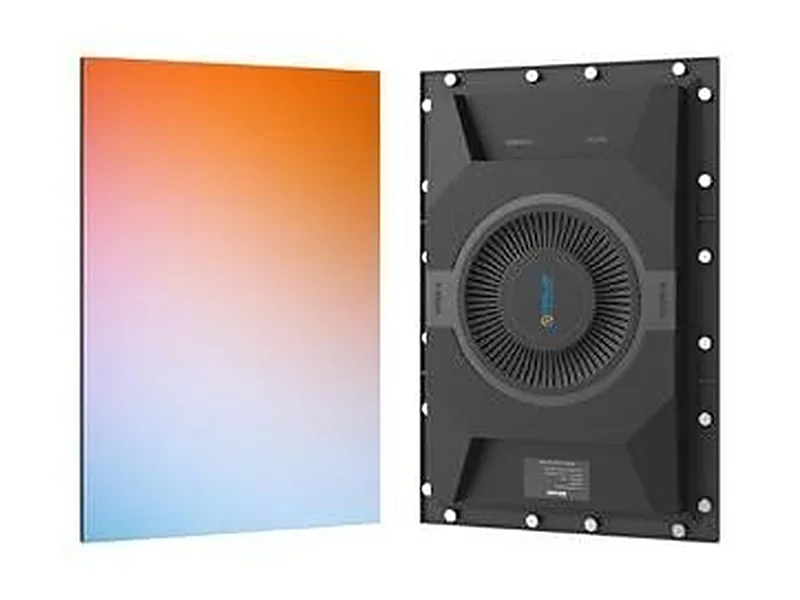
Ehonor Series — indoor fixed, P1.8–P3.9
480 × 320 mm front-service cabinets; the workhorse for atrium walls, storefronts and menu boards. Magnetic module swap in minutes.
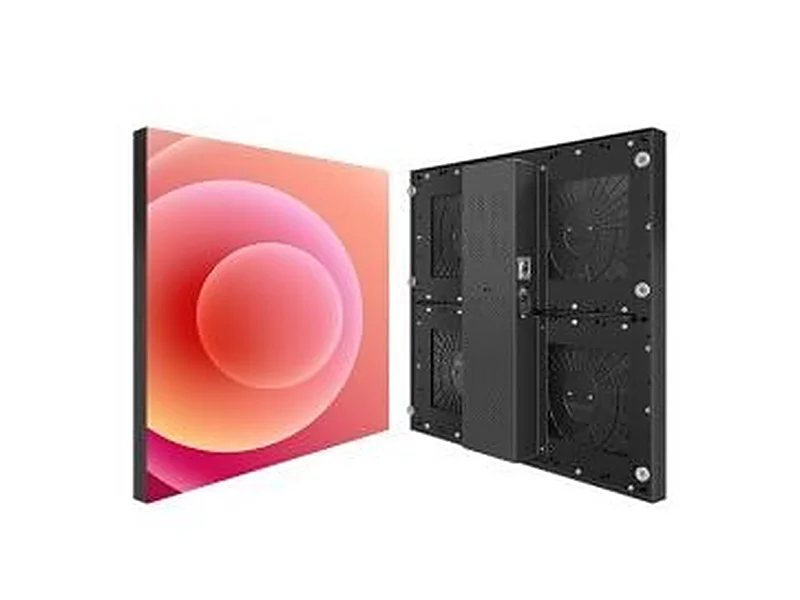
H Series — large indoor walls
500 × 500 mm cabinets for big atrium and concourse media walls where cabinet count and install speed matter.
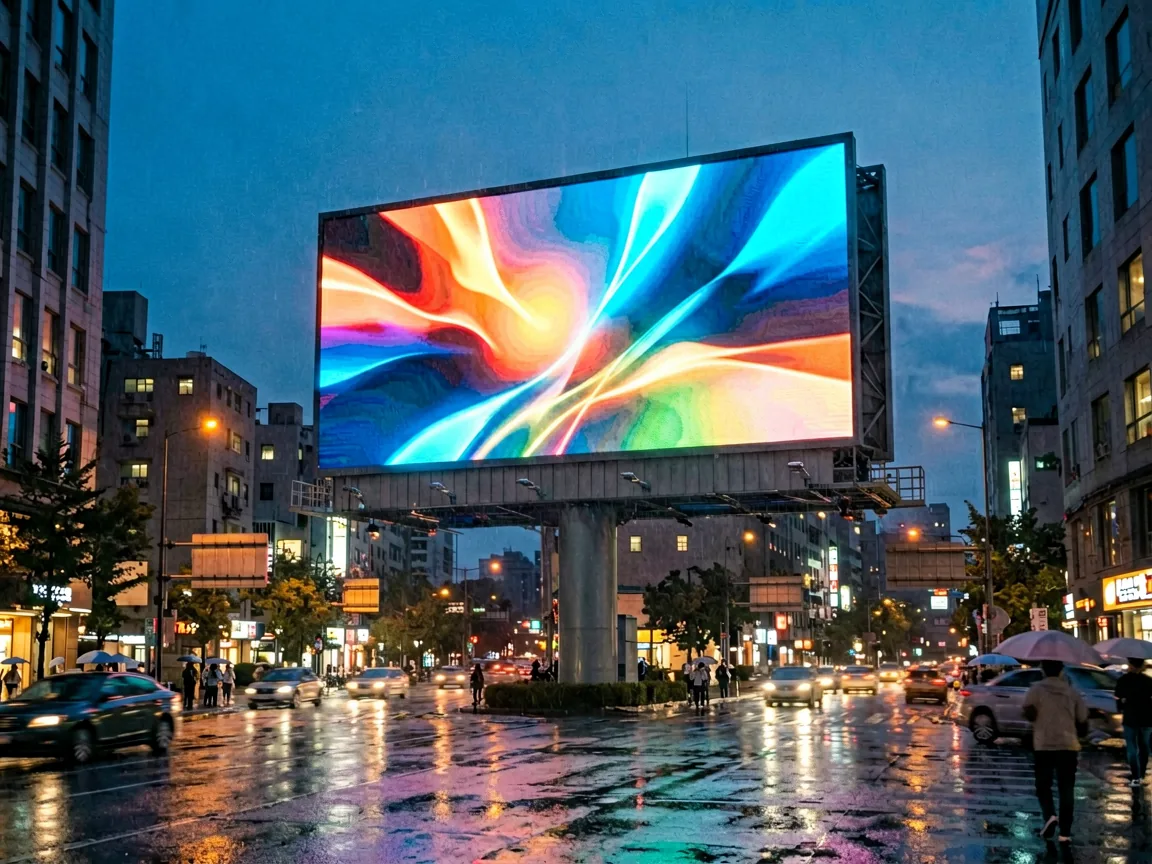
OK / AD Series — outdoor advertising
IP65 die-cast panels, 5,000–8,000 nits, P3.9–P10. Facade, carpark and entrance-canopy screens.
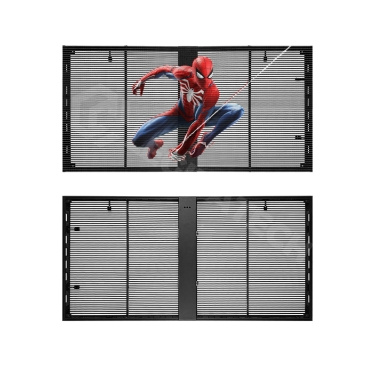
EIT transparent series — shop windows
60–95% see-through LED for glass storefronts; the image overlays daylight retail without blocking the window.
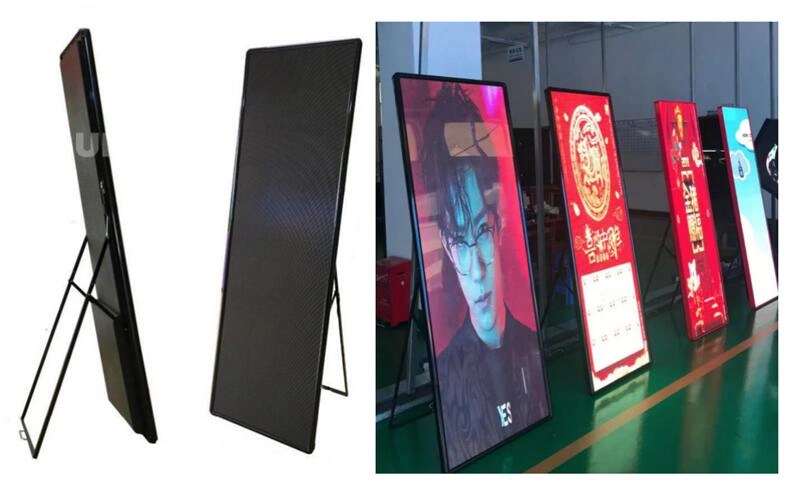
LED digital posters
Floor-standing posters from P1.25 in 32–55 in and custom formats, with built-in Android or Huidu players — plug-and-play retail signage.
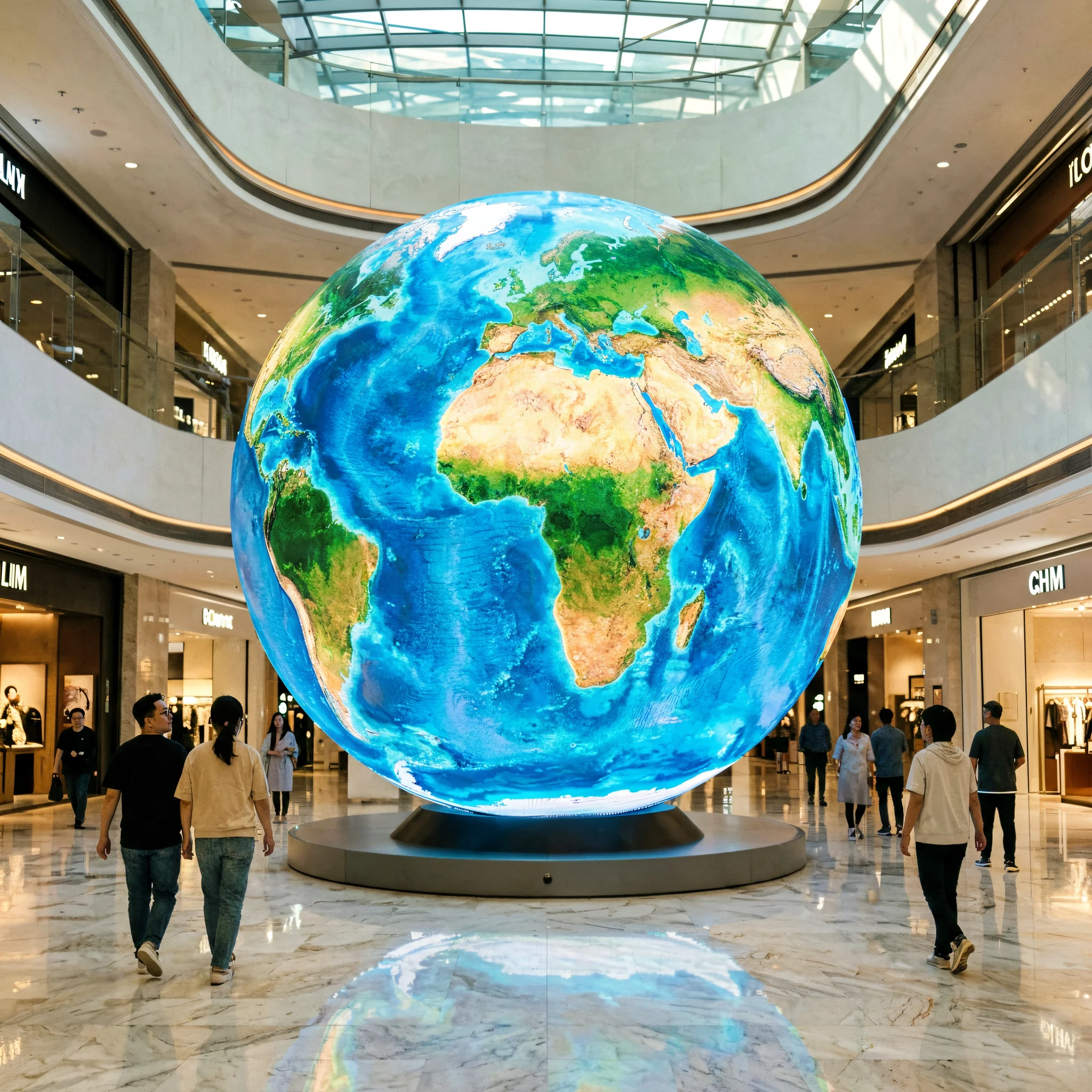
Creative & rental formats
Spherical, curved and naked-eye 3D displays for promotion points, plus P2.97–P4.81 rental cabinets for atrium events.
Send These Seven Items with Your Enquiry
With these seven inputs the production team quotes in one round — no back-and-forth:
- Wall opening or planned screen size (width × height in metres)
- Distance from the nearest viewer to the screen
- Environment: indoor, under a skylight, canopy or exterior
- Content type: advertising loops, menus, branding or video
- Mounting: finished wall, steel structure, window glass or freestanding
- Operating hours and who controls content (CMS/player preference)
- Target price band and delivery country
You will receive a cabinet layout drawing, a specification sheet naming the LED chip and driver IC, a power-and-data topology, and a factory-direct quotation — within 24 hours.
Get Your Shopping Mall LED Screen Quote
Send us your zone plan or wall dimensions. Engineering drawing and factory-direct pricing within 24 hours — no obligation.
FAQ: LED Screens for Shopping Malls
Which LED screen is best for a shopping mall atrium?
For an atrium viewed from 5–20 m, a fixed indoor wall in P2.5–P4 is the standard choice; P2.5 or P3 are the most common pitches. Under a glass roof, specify a higher-brightness grade (1,500–4,500 nits) so daylight does not wash out the image.
What is the best pixel pitch for a storefront LED screen?
Shoppers stand 1–5 m from storefront screens, so use fine pitch P1.5–P2.5. Text stays crisp at arm’s length and the screen still reads from the opposite side of the concourse.
How bright should an indoor mall LED screen be?
600–1,200 nits is the working range for corridors, lift lobbies and food courts; 800–1,200 nits suits normal mall lighting. Atriums under skylights and storefronts facing glass need more — 1,500–4,500 nits.
Can LED screens be used on shop windows without blocking the view?
Yes. Transparent LED panels run from 60% to 95% see-through, letting retailers keep window displays while overlaying motion. Pitch P3.9–P7.8 works for street and concourse distances; P2–P3.9 for direct-at-glass viewing.
How much does an LED screen for a shopping mall cost?
Factory-direct indoor screens run $350–$1,500 per m²; a P2.5 wall is typically $400–$1,100/m². A 21.5 m² atrium wall (6.72 × 3.2 m) costs roughly $8,600–$23,600 for the screen, with structure, installation and control quoted separately. Configuration, not just pitch, moves the price by 50–100%.
How long does a mall LED screen last?
LED dies carry a 100,000-hour L50 rating — about 22 years at 12 hours a day. Power supplies are the practical limit at 7–11 years of daily commercial operation; we fit 50,000-hour rated supplies and warrant the screen for 5 years.
Is LED cheaper to run than printed banners in a mall?
Over a year, one LED wall replaces a continuous stream of printed POS and banners, and modern low-power modules with ambient-light dimming cut electricity use further. Industry-reported modern panels have cut power consumption by more than 30% versus older generations.
Can mall screens show different content by time of day?
Yes. Huidu and Mooncell players with remote CMS daypart playlists — breakfast menus in the morning, retail advertising at midday, dinner promos in the evening — and tenant ad slots can be sold by time block from one dashboard.
Do you need rear access for maintenance?
No. Front-serviceable Ehonor and H-series cabinets let a technician swap a module from the front in minutes. A mall keeps a small spare kit and stays self-sufficient for most faults.
Do mall LED screens harm night-time neighbours?
Outdoor and atrium screens ship with automatic brightness sensors and dim to content levels at night. Specified and set correctly, a facade screen shows content without light pollution.
What refresh rate do mall LED screens need?
3,840 Hz is our standard for mall panels. Below roughly 1,920 Hz, cameras record horizontal scan bands — visible in shopper videos, security footage and broadcast.
Can you install screens across a whole mall at once?
Yes. Multi-screen networks are installed zone by zone so no wing closes: storefront retrofits overnight, atrium and facade walls to a rolling schedule, all wired to one control room.
Do you ship and install internationally?
We ship worldwide from our factory and support export projects with structural drawings, supervised installation or fully remote commissioning. Recent retail-media shipments include Nigeria, Vietnam, the United States and across Europe.
Are your mall screens suitable for brand campaigns and social video?
Yes — 3,840 Hz refresh, high colour depth and 16-bit processing keep screens clean in smartphone footage, which is exactly how mall content ends up being shared.
Choosing a Factory for Mall LED Screens
The mall screen market rewards suppliers who build, not just resell. Ask five questions of any shortlisted factory: Do you manufacture the cabinets and modules in-house? Which LED chip and driver IC will you name in the specification? Is the refresh rate guaranteed at 3,840 Hz in the contract? What is the real running cost — supply quality, not just LED lifespan? And who holds the spare parts? LEGIDATECH answers all five on paper: factory-direct production, named components, 3,840 Hz standard, 50,000-hour supplies, and a 5-year screen warranty with a spare-parts kit offered on every mall order.