


500×500mm DIE-CAST INTERACTIVE FLOOR · 10ms LASER SENSING · XR-READY
500x500mm Interactive LED Dance Floor
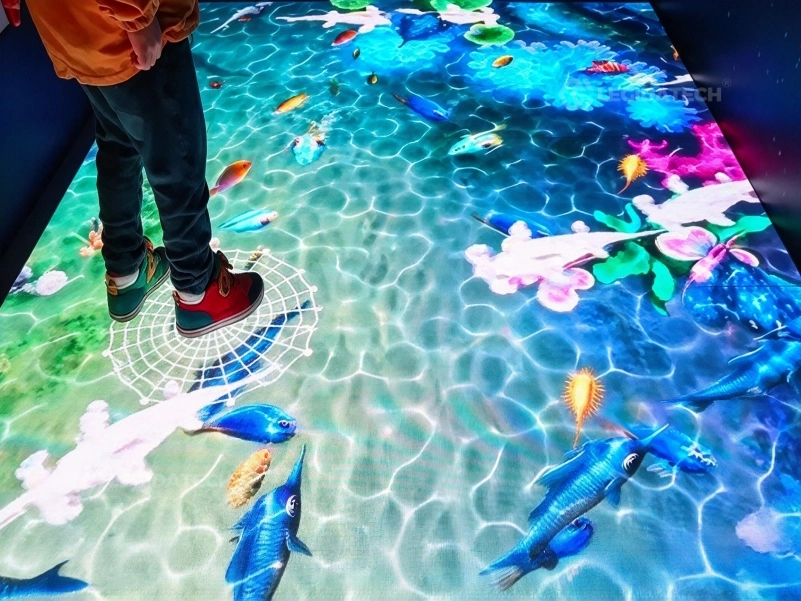
A 500x500mm interactive LED dance floor is a walkable LED screen that senses every step — 10ms laser non-contact sensing, a 2.0–2.5t/㎡ tempered-glass surface option and XR-ready one-cabinet-three-uses — all in the die-cast cabinet that won the iF Design Award 2024 and Red Dot Award 2024. Built for concerts, nightclubs, wedding venues and rental fleets where a misfiring floor tile stops the show.
✓ 82mm slim die-cast profile · ✓ 11kg per cabinet · ✓ Spring-lock tool-free assembly · ✓ 3-year warranty
What Is a 500x500mm Interactive LED Dance Floor?
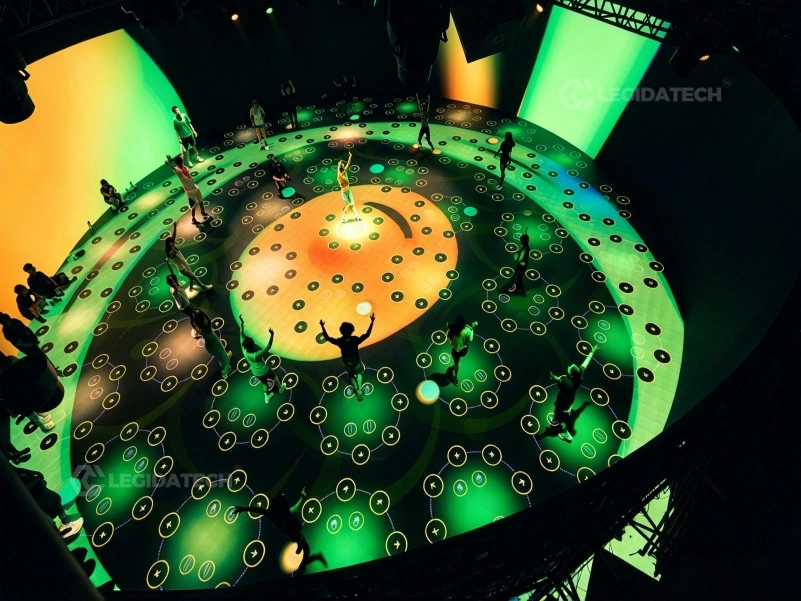
A 500x500mm interactive LED dance floor is a walkable LED screen built from 500×500 mm die-cast aluminum cabinets. Each 500x500mm interactive LED dance floor panel carries a laser sensor that reads where a person is standing — no contact, no pressure pad — and triggers mapped video content at that tile within 10 milliseconds. Cabinets lock edge-to-edge and run from one controller, so the same tile scales from a 2×2 m nightclub podium to a full festival stage at four cabinets per square meter, with eight pixel pitches from P1.56 to P6.25 on one shared platform.
What separates a floor that performs from one that embarrasses you on show day comes down to three failure modes: sensors that misfire under stage lighting, surfaces that cannot take real loads, and cabinets that turn installation day into overtime. This platform is engineered against exactly those three — laser sensing that ignores strobe and spotlight, a tempered-glass surface rated 2.0–2.5 t/㎡, and 11 kg spring-lock cabinets a four-person crew lays at 50㎡ in three to four hours.
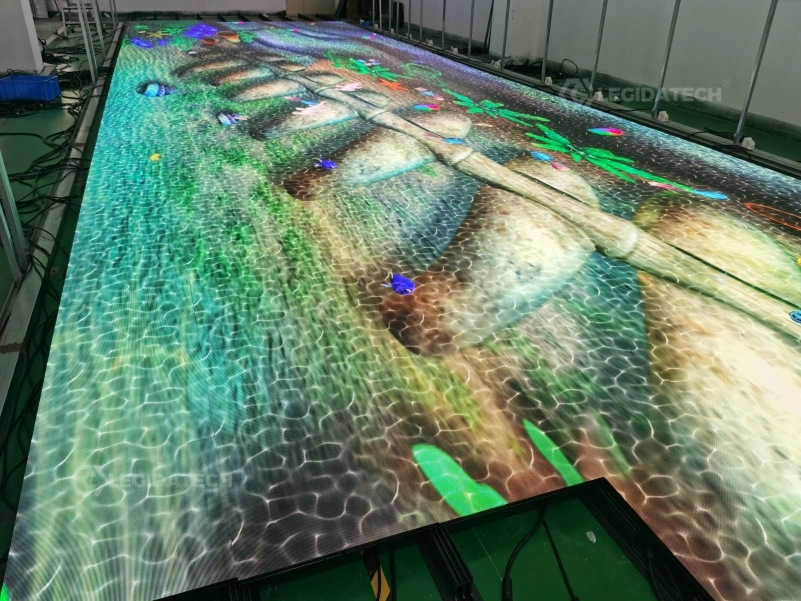
What Is the 500x500mm Interactive LED Dance Floor Cabinet Built From?
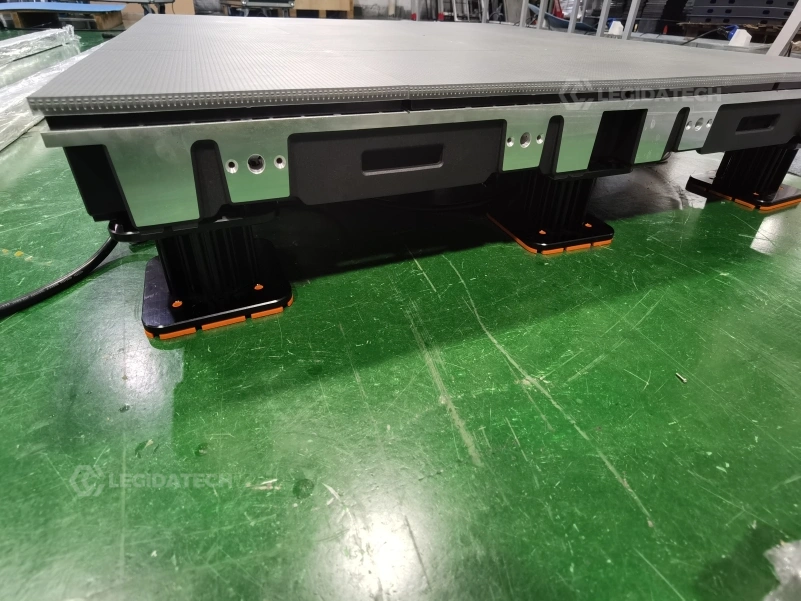
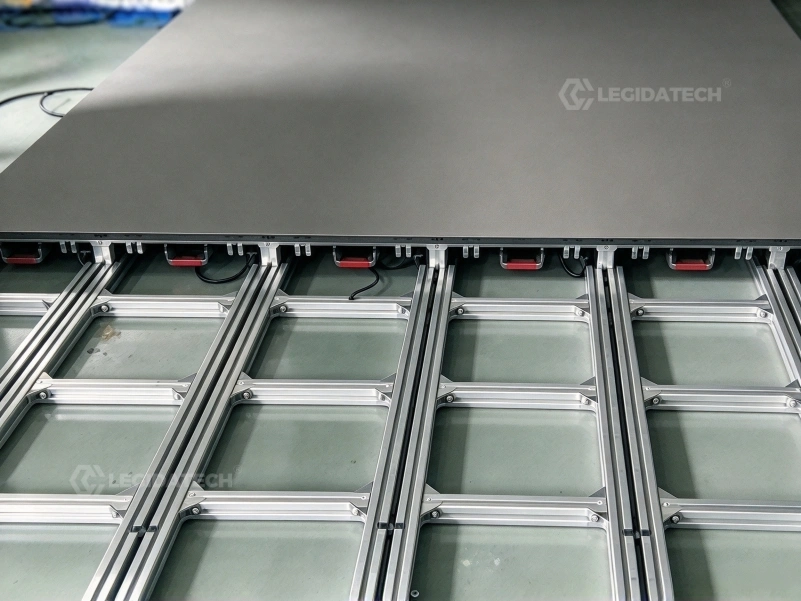
The cabinet underneath this floor won the iF Design Award 2024 and the Red Dot Award 2024 — a private-mold, skeleton-style die-cast aluminum structure built for the abuse of the rental and event business. What matters on your show day is what the judges were actually looking at: three structural details that decide how this cabinet behaves on your floor.
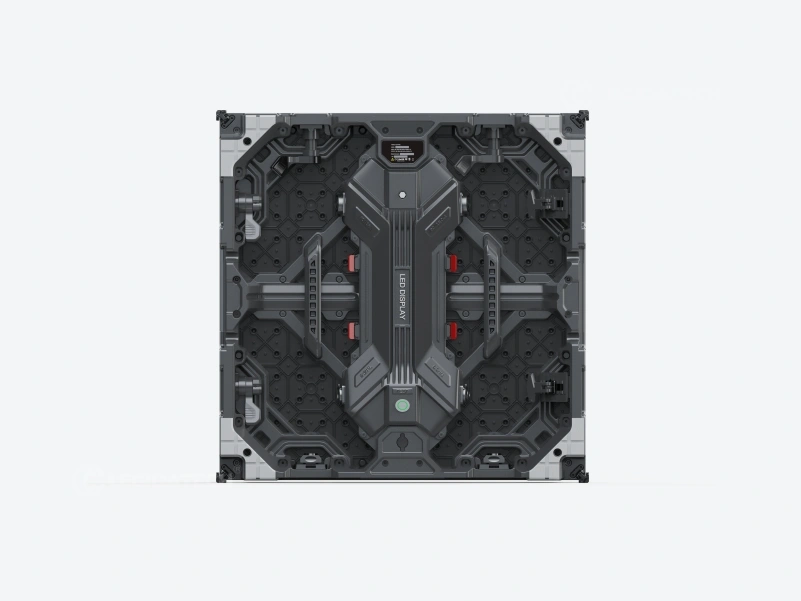
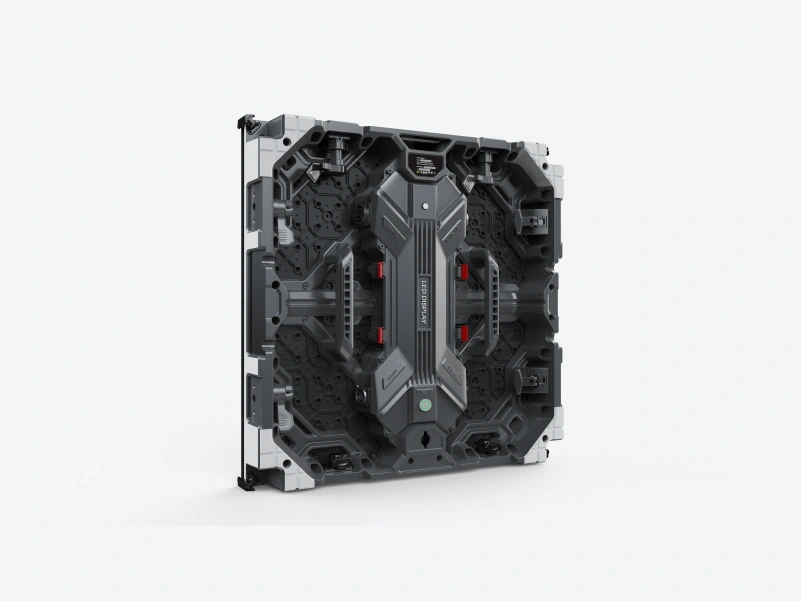
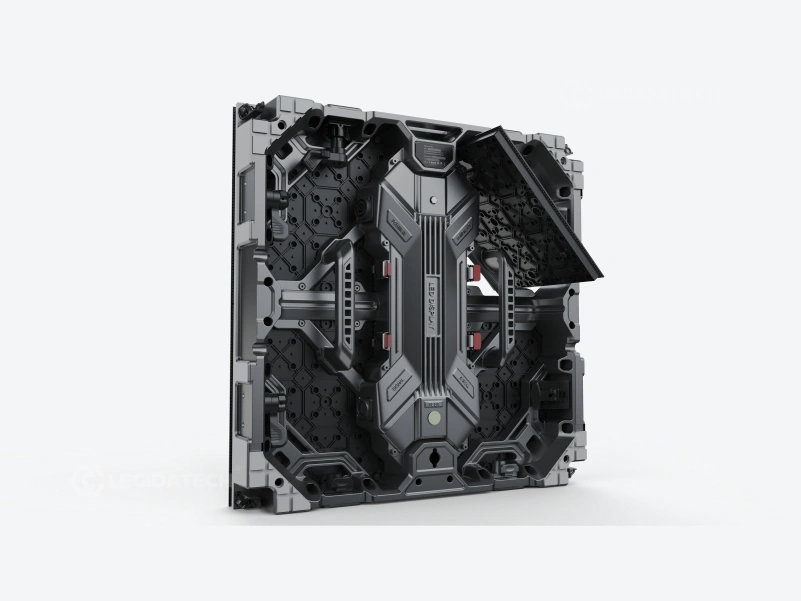
Skeleton die-cast structure. A private-mold skeleton frame carries the load while the walking surface stays flat. Because the body is cast rather than welded from sheet, cabinets hold a tight flatness tolerance — on a finished floor you read that as a seam line the eye barely registers.
Protective corner guards. Corners take the first hit in every truck load-in. Molded protective corners absorb knocks that would dent softer cabinet edges, protecting both the finish and the alignment of the neighboring tile — a dropped corner on one cabinet means a visible ridge across two.
Spring locks. Spring-loaded latches pull cabinets tight without tools. A crew closes a seam in seconds and reopens it just as fast when the floor plan changes mid-build — screw-fixed cabinets cannot follow a last-minute site change at that speed.
500x500mm Interactive LED Dance Floor Sensing: 10ms Laser vs Four Alternatives
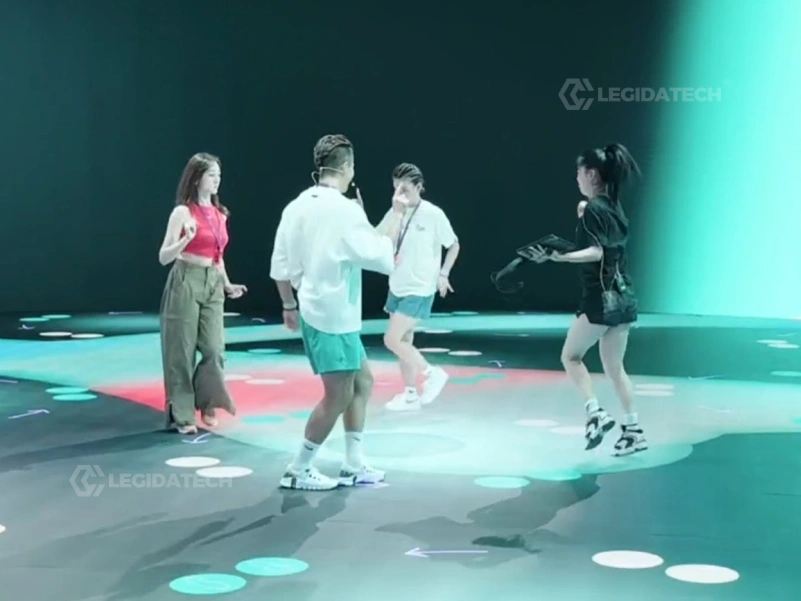
Every panel in this interactive LED dance floor carries its own laser sensor and a dedicated MCU. The laser reads position above the surface without physical contact; the MCU converts that reading into coordinates and pushes them to the content system in about 10 milliseconds. From footstep to on-screen effect, the whole loop stays inside a frame or two — fast enough that heels, dress shoes and running children all register as instant.
Two consequences matter on professional stages. First, the sensing is immune to the moving lights, haze and camera flashes that falsely trigger infrared-based floors — the optical filtering is narrow-band by design. Second, because every cabinet senses independently, dozens of positions fire at once: the floor tracks an entire cast, not one performer standing on a pressure pad.
Why not capacitive? Capacitive surfaces detect a touch, not a position in space — sensitivity drifts with footwear, moisture and surface wear, and the sensor only fires on contact.
Why not infrared? IR grids scan the surface with beams — but a concert lighting rig is itself an infrared source. Add sunlight and haze and the grid starts reporting footsteps that never happened.
Why not radar? Radar and mmWave sense motion robustly, but at zone level. A stage show needs tile-level coordinates; a motion blob is not choreography data.
Typical industry characteristics per technology class; exact behavior varies by manufacturer and installation. On this floor, the laser sensor plus MCU combination is factory-calibrated as one system — sensor, processor and content player ship together.
Three Mask Options for the 500x500mm Interactive LED Dance Floor
The same interactive cabinet ships with three walking surfaces. The mask decides load rating, slip behavior, cleaning effort and viewing texture — and because masks are field-swappable per project, the choice is not permanent. Pick the surface per venue; the electronics underneath stay identical.
Load: 1.0 t/㎡. Matte, anti-glare and the finest viewing texture of the three — the closest-range surface. Spills wipe off; dye-resistance testing shows zero penetration after 8 hours at 100℃. The default for showrooms, nightclubs and studios.
Load: everyday equipment traffic. Polycarbonate surface with high impact tolerance and an anti-slip texture. The workhorse for rental fleets, exhibition halls and any venue where road cases and carts cross the floor all day.
Load: 2.0–2.5 t/㎡. Concert-grade surface — forklifts, truss stacks and vehicles cross it during build and show. Cabinet weight rises to 15.5 kg. The choice for main stages, festivals and heavy XR volumes.
COD Mask — Laboratory Test Data
500x500mm Interactive LED Dance Floor Specifications — Eight Pitches, One Platform
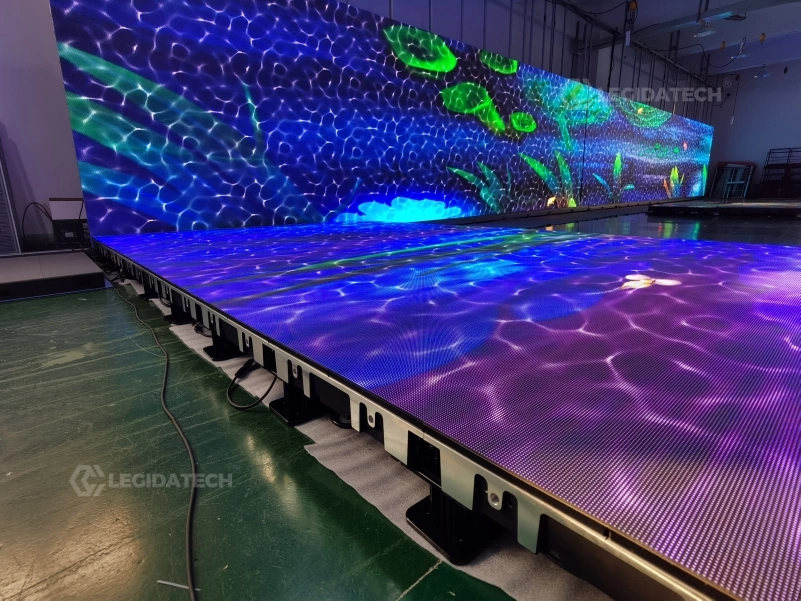
Every model below shares the same 500×500×82mm die-cast body, the same laser-plus-MCU sensing, the same three mask options and the same spring-lock assembly. The pitch decides pixel density and brightness class — nothing else changes. That single-platform logic is what keeps spare parts, flight cases and crew training identical across your whole inventory.
Power figures are per square meter of installed floor — budget cabling at the 800 W/㎢ worst case and let our engineers size the controller chain against your final cabinet count.
500x500mm Interactive LED Dance Floor Pixel Pitch: A Viewing-Distance Guide by Venue
The working rule: the pitch number in millimeters approximates the minimum comfortable viewing distance in meters. Closer audiences need finer pitch — and floor audiences are always closer than wall-screen audiences, because people look down at their own feet.
Distances are viewing comfort guidance, not sharpness limits — camera work and content style shift the choice. Send us your venue dimensions and nearest-audience distance and we will spec the pitch for you.
One 500x500mm Interactive LED Dance Floor Cabinet, Three Surfaces: Floor, Ceiling and Wall
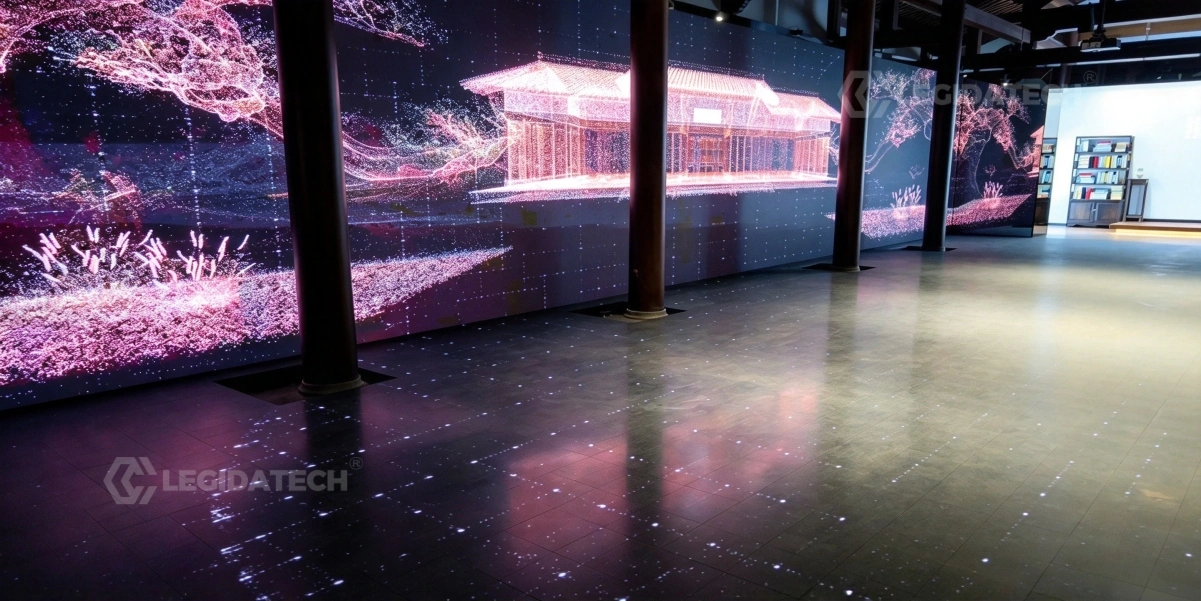
The same die-cast cabinet that walks under your audience also hangs above them and stands behind them. Floor, ceiling and wall builds use identical mechanics, identical power and data topology, and identical spare parts — so a purchase made for a dance floor keeps earning as a ceiling canvas or an XR stage wall.
For camera-facing work, the optional 3840 Hz refresh is the difference between usable and unusable footage: scan-line banding that ruins a slow pan simply does not appear. Pair that with a low-reflection mask and the surface stays out of your lens even under hard key light. Curved layouts, rigging frames and stacked configurations are supported with the cabinet’s standard locking hardware.
If your project is a permanent, fixed installation instead of a touring or rental build, our EDA interactive floor series is engineered for that duty cycle — this page’s die-cast platform is the one that travels.
500x500mm Interactive LED Dance Floor Load Ratings You Can Drive On — Literally
A floor that only survives foot traffic is not a stage floor. With the tempered-glass mask, this platform carries 2.0–2.5 t/㎡ — forklifts cross it during load-in, truss stacks rest on it between moves, and vehicles park on it for photo shoots. The COD composite surface carries 1.0 t/㎡ for venues that never see equipment loads; the PC mask sits between them as the everyday workhorse.
The rating holds because of how load travels: force applied to the surface transfers through the mask into the cabinet skeleton and down into the support feet — the display electronics are not the load path. Combined with the protective corner guards and the cast-aluminum body, the structure is designed for the worst day of a rental life, not the showroom demo.
🧪 COD composite — 1.0 t/㎡
showrooms, studios, nightclubs
🛡️ PC mask — everyday equipment traffic
rental fleets, exhibitions
🎵 Tempered glass — 2.0–2.5 t/㎡
stages, festivals, forklift crossings
500x500mm Interactive LED Dance Floor Installation: Spring Locks, Adjustable Feet, Flight Cases
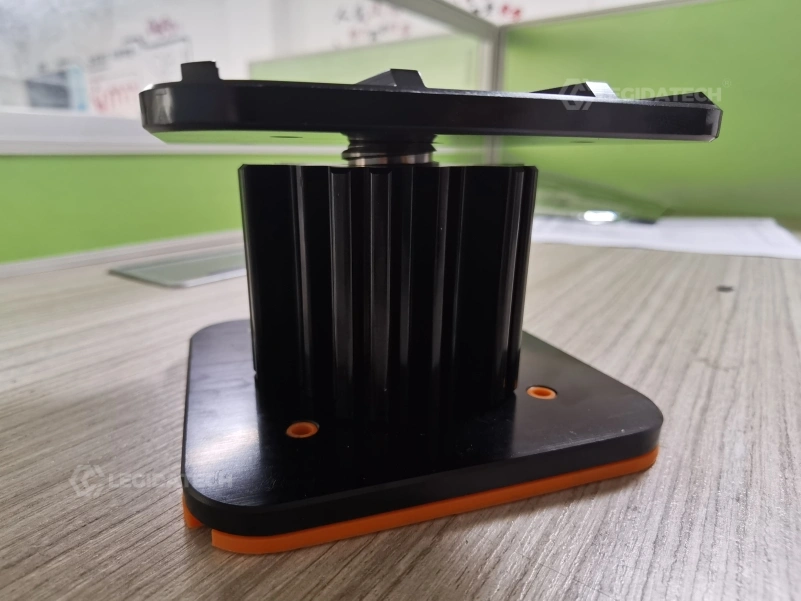
Rental installation of an interactive LED dance floor lives or dies on two numbers: crew size and hours. This platform attacks both. Cabinets stand on independent adjustable metal feet — 72 mm standard height or 12 mm low-profile — so an uneven venue floor is leveled cabinet by cabinet with no pit, no sill and no carpentry. Guide rails align the first row, and the spring locks do the rest.
Assembly is tool-free by design: spring-loaded latches pull each cabinet flush against its neighbor and release just as fast. Where screw-fixed floors need a drill and four screws per cabinet — hundreds of fasteners across a 100㎡ floor — this floor closes the same area with a crew walking the seams. Stacked transport, rigging frames and flight cases with casters complete the rental kit.
A trained four-person crew typically lays a 50㎡ floor in three to four hours including leveling and cable harness — and tears it out faster, because every latch releases in one motion.
Where the 500x500mm Interactive LED Dance Floor Performs
P3.91 or P6.25 under the main stage — tempered-glass mask for the load-in, laser sensing that ignores the lighting rig.
P2.97 with the COD surface — 10 ms response under heels, and spills wipe off before the next track drops.
P2.604–P2.97 ballroom floors installed quietly between bookings — no pit, no carpentry, no downtime.
3840 Hz camera-safe refresh, with floor, ceiling and wall all built from the same cabinet line.
A reactive walkway that trails every step of the collection down the runway in light.
Product reveals and logo moments the audience literally steps into — and films, and shares.
Planning a permanent in-venue installation instead? The EDM interactive floor series covers fixed 500×1000mm installations.
The 500x500mm Interactive LED Dance Floor, Proven on Real Stages and Retail Floors
This cabinet family has been walked on, driven on and broadcast from across Europe and North America. Two reference projects below; three more from the rental and project record underneath.
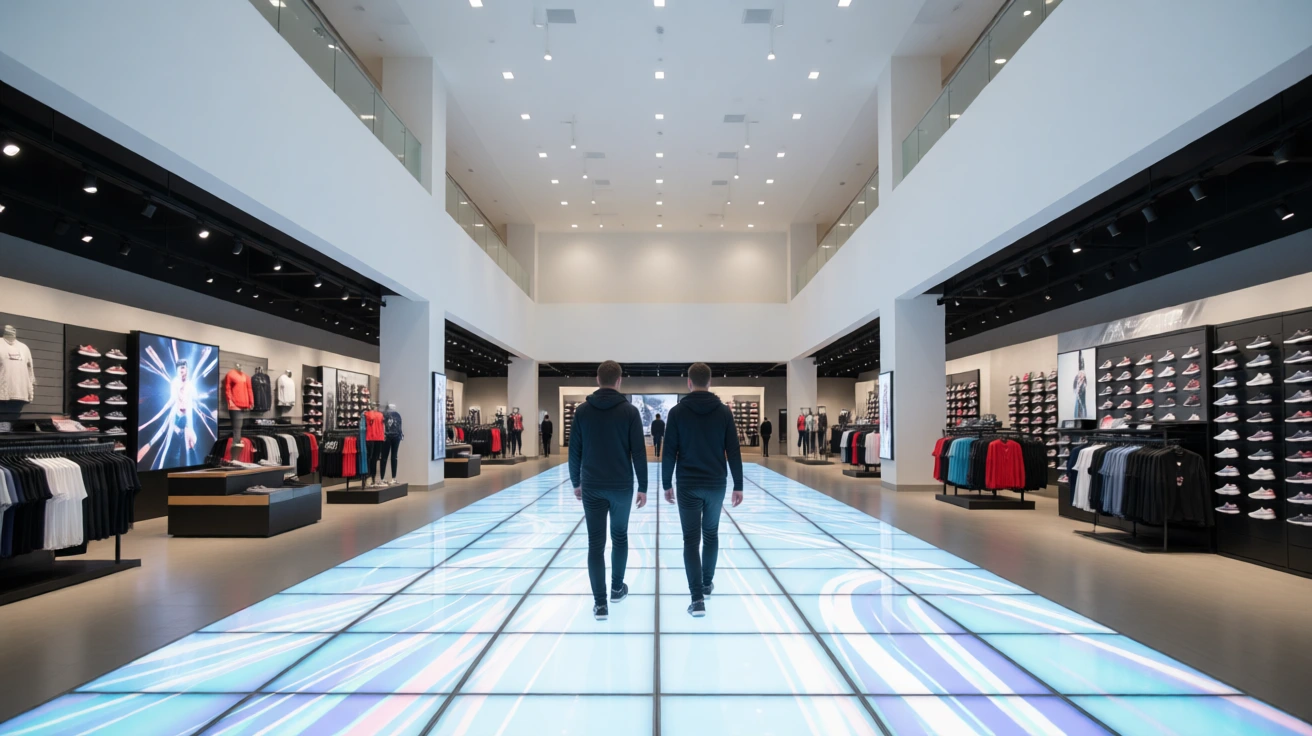
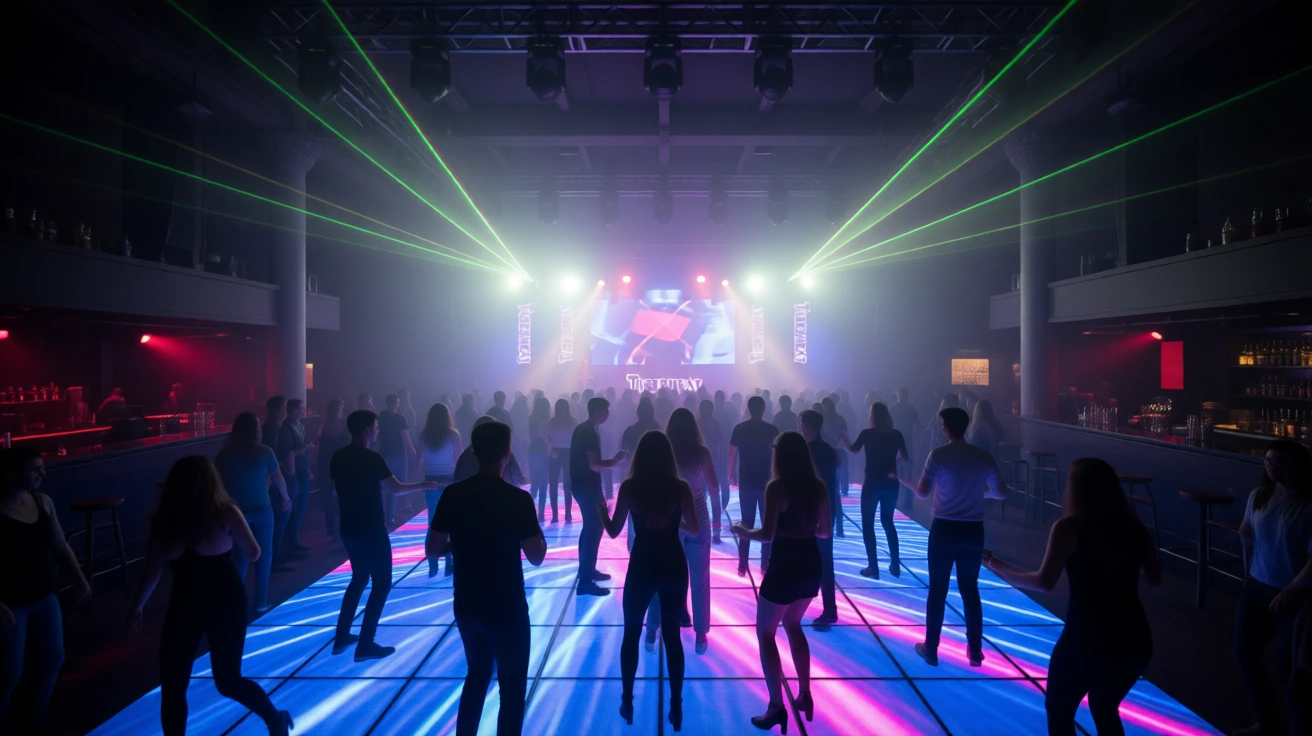
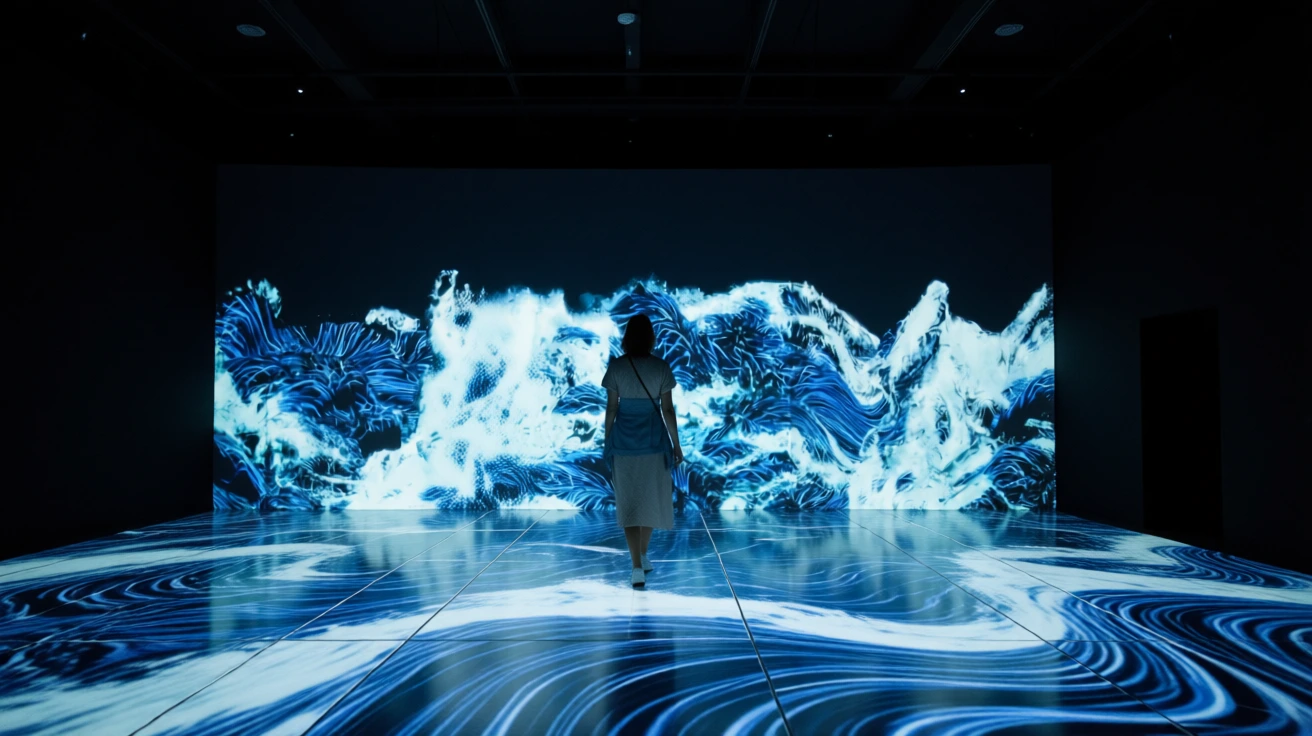
A 75㎡ interactive LED dance floor anchors a walk-through immersive show at an American art venue — every tile senses visitors at 10 ms and the content package swaps per exhibition.
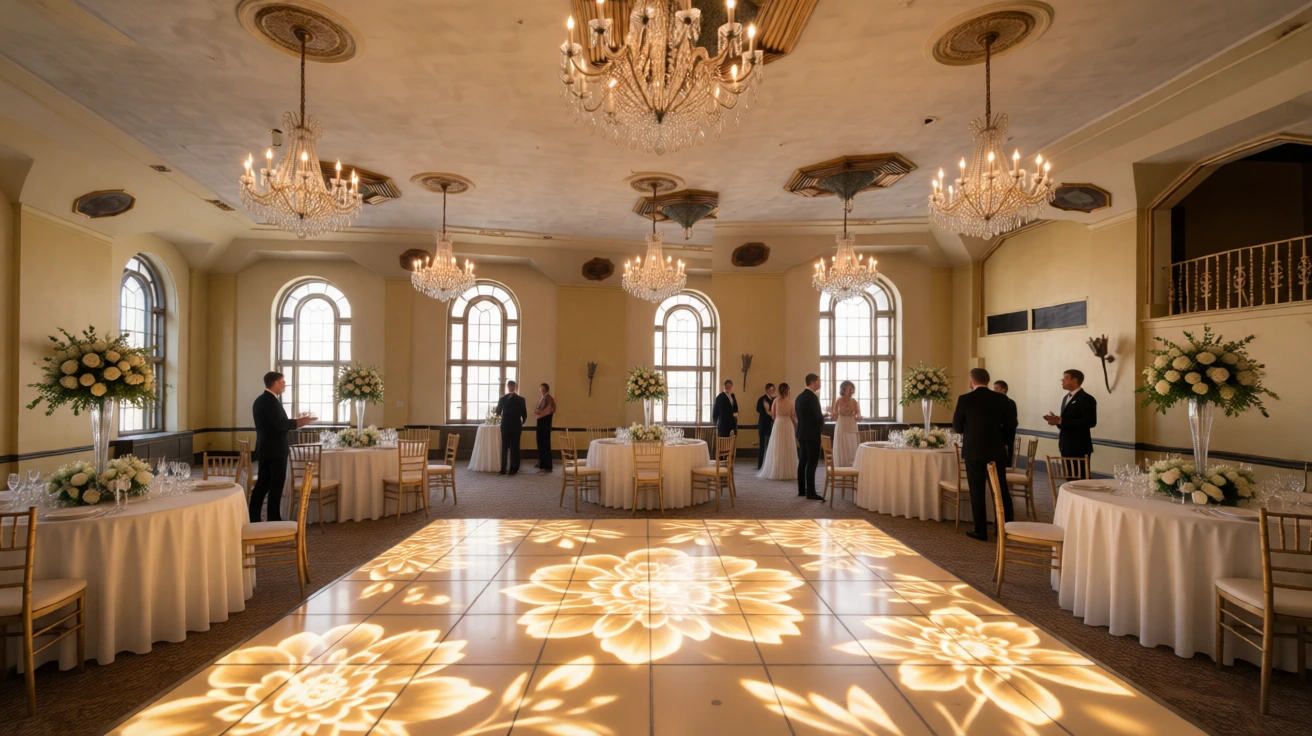
Die-cast interactive cabinets working in an Italian rental fleet across weddings and corporate events season after season.
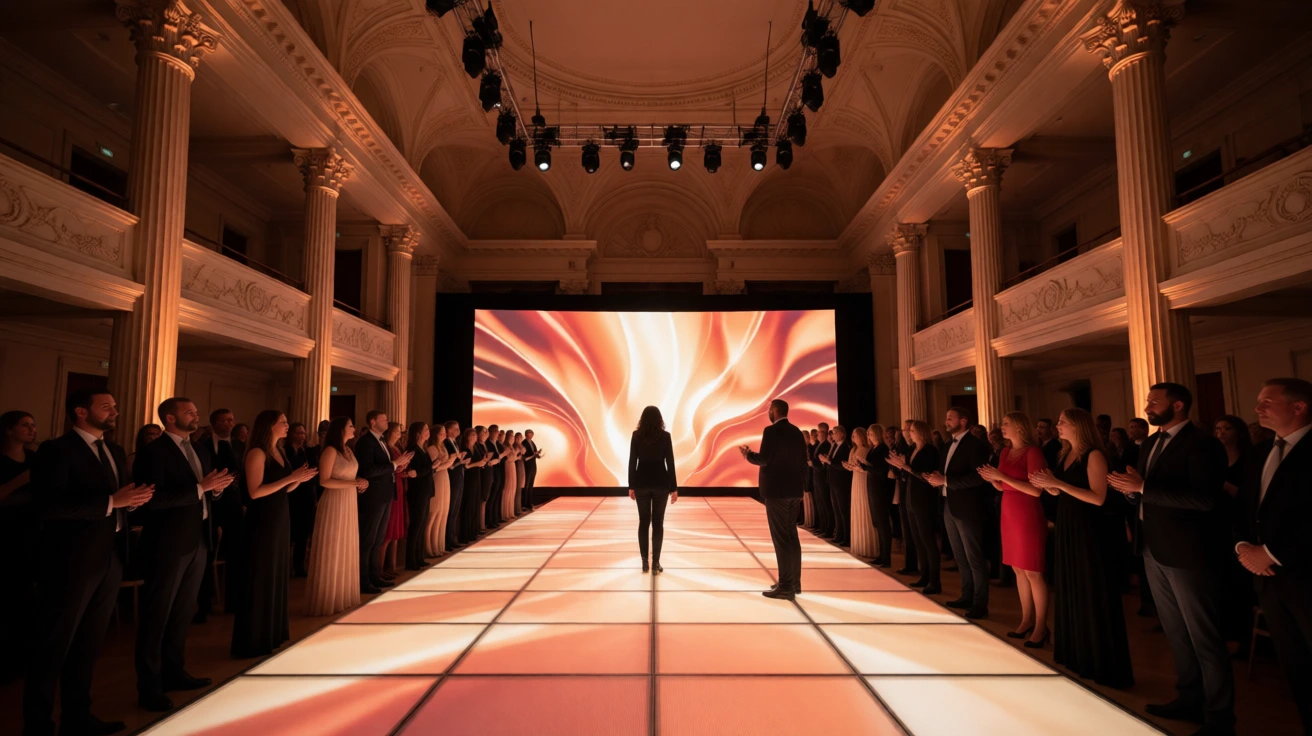
A 40㎡ interactive LED dance floor works product launches and brand activations across the UK — laid overnight, struck in an hour, back on hire the same weekend.
More installations across the interactive floor family: the LED dance floor collection.
Tell Us What You Do — This 500x500mm Interactive LED Dance Floor Was Built for You
Seven buyers keep choosing this platform. Find yourself below — the match is not a coincidence.
You own or manage an AV rental company. Your floor is an asset that lives on trucks. Spring-lock assembly cuts load-in hours on every job, the 11 kg die-cast cabinet is a one-person carry, protective corners shrug off dock handling, and one cabinet covering floor, wall and ceiling keeps the asset rented between dance-floor jobs. That is exactly what this floor is built for.
You produce concerts and brand activations. Moving lights wreck infrared floors with false triggers, and your show cannot afford a tile that fires on its own. Laser-plus-MCU sensing stays accurate under a full lighting rig, and the tempered-glass surface takes forklift and truss loads during build. That is exactly what this floor is built for.
You run an XR virtual production studio. You need floor, ceiling and wall pixels that behave identically on camera. One cabinet builds all three surfaces, the 3840 Hz option removes scan-line artifacts, and low-reflection masks keep hot spots out of the lens. That is exactly what this floor is built for.
You operate a nightclub or wedding venue. Guests in heels must trigger effects instantly, and a spilled drink cannot kill a tile. 10 ms response reads every step, COD and glass masks wipe clean in seconds, and the 82 mm body retrofits without cutting a pit. That is exactly what this floor is built for.
You are a media company monetizing spaces. Sponsors pay more for surfaces that react to people. The built-in effect library plus custom game content turns a plain floor into a chargeable attraction you re-sell at premium event rates. That is exactly what this floor is built for.
You integrate digital experiences for retail chains. Multi-store rollouts live on repeatability: the same 500×500 mm tile, the same effect library and the same content pipeline copy from the flagship store to the mall kiosk without re-engineering, the floor speaks NovaStar and media-server workflows your CMS team already runs, and batch pricing keeps a multi-door rollout inside budget. That is exactly what this floor is built for.
You build exhibition stands and brand booths. The floor is often the attraction, and your build window is measured in hours: spring locks close seams without a single tool, flight cases on casters roll the whole floor off one truck, and the same tiles re-rent across the show calendar instead of waiting in a warehouse. That is exactly what this floor is built for.
Building a fixed showroom or retail floor instead of a stage? The close-viewing 500x500mm LED floor tile screen and the larger 500x1000mm LED floor tile screen cover the installation side of the family.
Where the 500x500mm Interactive LED Dance Floor Wins — Germany, the United States and the Gulf
LEGIDATECH builds in Shenzhen and ships factory-direct worldwide. Three regions keep coming back for this specific platform — here is why it wins there.
The Red Dot Award is a German design award — buyers here know exactly what its jury examined. Rental and event companies bill by the setup hour, so tool-free spring locks convert directly into margin, and fast build-and-strike matters across the Frankfurt, Cologne and Stuttgart fair calendar. CE documentation and CNAS test reports pass project acceptance without follow-up rounds.
Typical deployment: a DACH rental house builds a 32㎡ P2.97 tempered-glass floor for an auto brand’s dealer tour — four city stops in one month, the same flight cases each time, and the crew bills setup by the hour, so spring locks are the margin.
Las Vegas and Miami run on reaction speed and spectacle — 10 ms laser sensing and a 2.5 t/㎡ glass surface are built for that brief. XR studios in Los Angeles and New York reuse one cabinet across floor, ceiling and wall instead of buying three systems. FCC and CE paperwork plus a 3-year warranty keep procurement moving.
Typical deployment: a Miami production company lays a 60㎡ reactive stage for a two-night festival, then re-rents the same floor into a nightclub residency between tours — utilization is the business model, and the 3840 Hz option keeps the broadcast feed clean.
Luxury weddings and hotel events compete on spectacle: a tempered-glass stage surface, an award-winning cabinet and reactive effects justify premium bids. The 0–40℃ operating window covers climate-controlled ballrooms and atriums, and 35%–85% humidity tolerance handles the coastal air.
Typical deployment: a Dubai event designer installs a 20㎡ interactive aisle and dance floor into a hotel ballroom between bookings — no pit, no carpentry, tempered glass under banquet trolleys, and the effect package branded for each couple.
Shipping somewhere else? These three regions are where this platform concentrates today — but the same spring-lock, laser-sensing package travels anywhere a stage goes, and we will connect you with references in your market.
What Does a 500x500mm Interactive LED Dance Floor Cost?
Factory-direct, most 500×500mm interactive floor projects land between $800 and $2,000 per square meter. The interactive premium over a static floor tile screen buys the laser sensors, the per-cabinet MCU boards and the content processing — the parts that make the floor react. Any quote that does not explain those line items is not comparable.
① Pixel pitch — P1.56 versus P6.25 is the single biggest cost lever
② Mask choice — COD, PC and tempered glass sit at different price points
③ Interaction scope — sensing coverage and how deep the content customization goes
④ Order quantity — project scale moves the per-㎡ figure
⑤ Accessories — flight cases, guide rails and a ~5% spare-module stock
The size rental companies ask about most is a 12 ft × 12 ft floor (≈3.7 m × 3.7 m). In 500×500mm cabinets that is a 7 × 8 array — 56 cabinets covering about 14㎡. At the band above, a complete 12-ft interactive dance floor lands roughly between $11,000 and $28,000 before accessories, shipping and taxes — transparent arithmetic, not a teaser number.
We quote exact figures against your floor plan, not against a guess.
Buying vs renting: if your calendar runs six to eight events a year or more, ownership usually pays for itself within 18–30 months — and rental companies bill the same floor out week after week in between. Run fewer events and renting stays rational. Send your annual event count and we will run the comparison with real numbers.
500x500mm Interactive LED Dance Floor Content — What Ships and What We Build for You
A built-in effect library ships standard: water ripples, firework bursts, color trails, footprint blooms, countdowns and logo reveals. It runs locally, so the floor reacts out of the case with no show computer on the rider.
For produced shows, the floor slots into existing control: standard NovaStar-based LED control plus media-server workflows over HDMI, with the interactive layer outputting coordinates so lighting desks and media servers treat the floor as an input device, not just a display.
Custom content goes further: penalty shootouts, piano grids, quiz floors and branded treasure hunts are developed against your brief, and a sensing SDK is available for interactive agencies that want to drive the floor from their own engines.
Comparing interaction platforms? The dance floor display range and the full LED dance floor collection sit one click away.
500x500mm Interactive LED Dance Floor FAQs
How much does a 500x500mm interactive LED dance floor cost?+
Most projects land between $800 and $2,000 per square meter factory-direct, depending on pixel pitch, mask type, interaction scope and quantity. A 12 ft × 12 ft floor works out to 56 cabinets (≈14㎡) — send your floor plan for an exact quote within 24 hours.
What makes laser sensing better than capacitive or infrared floors?+
The laser sensor plus MCU reads position without contact in about 10 ms and rejects the stage lighting, sunlight and haze that falsely trigger infrared grids. Capacitive floors only fire on touch, and radar detects motion but not tile-level position. The full comparison table is above.
How much weight can the floor hold?+
It depends on the mask: the COD composite surface carries 1.0 t/㎡, the PC mask handles everyday equipment traffic, and the tempered-glass mask carries 2.0–2.5 t/㎡ — forklifts, truss stacks and vehicles included.
Is it suitable for outdoor events?+
The front surface is rated IP54. We recommend indoor and covered outdoor use — tented weddings, covered stages, canopy plazas. For fully exposed permanent outdoor installations, our engineers will spec the fixed-installation series instead.
How fast is the response — and can it track multiple people?+
End-to-end response is about 10 milliseconds from footstep to effect. Every cabinet senses independently, so dozens of positions fire simultaneously — the floor tracks an entire cast, not one pressure pad.
What interactive content is included?+
A built-in effect library ships standard — water ripples, firework bursts, color trails, footprint blooms. The floor integrates with NovaStar and media-server workflows, and we develop custom games and branded content against your brief.
Can one cabinet be used as a wall or ceiling screen?+
Yes. The same die-cast cabinet mounts as floor, wall or ceiling, supports curved layouts and standard rigging, and with the 3840 Hz option stays free of scan-line artifacts on camera — which is why XR studios buy one line instead of three.
How long does setup take for a 50㎡ rental floor?+
A trained four-person crew typically lays 50㎡ (200 cabinets) in three to four hours including leveling and cable harness. Spring locks release in one motion, so strike is faster than build.
Which pixel pitch should I choose?+
Match pitch to nearest viewing distance: P1.56–P1.95 for retail and studio close-ups, P2.5–P2.97 for ballrooms and nightclubs, P3.91 for concerts, P6.25 for large stages and XR volumes. Send your venue dimensions and we will spec it for you.
What about warranty, spare parts and lead time?+
Every floor ships with a 3-year warranty. We recommend about 5% spare modules for rental fleets, and lead time is confirmed per order — typically a few weeks for standard pitches. Spare cabinets, masks and locks remain orderable for the life of the platform.
Ready to Put an Award-Winning 500x500mm Interactive LED Dance Floor Under Your Next Show?
Send your floor dimensions, venue type and target pitch — you receive a complete spec sheet, configuration advice and a factory-direct price within 24 hours.