Choosing between Huidu vs NovaStar is one of the most common decisions in LED display projects today — and the answer is rarely about which brand is “better” in absolute terms. As an LED screen manufacturer that integrates both control systems into factory-built displays, we specify NovaStar for some projects and Huidu for others, based on measurable engineering criteria. This comparison walks through the two brands’ product lines, software ecosystems, hardware specifications, and real project scenarios, so integrators and display buyers can decide on data rather than brand habit.
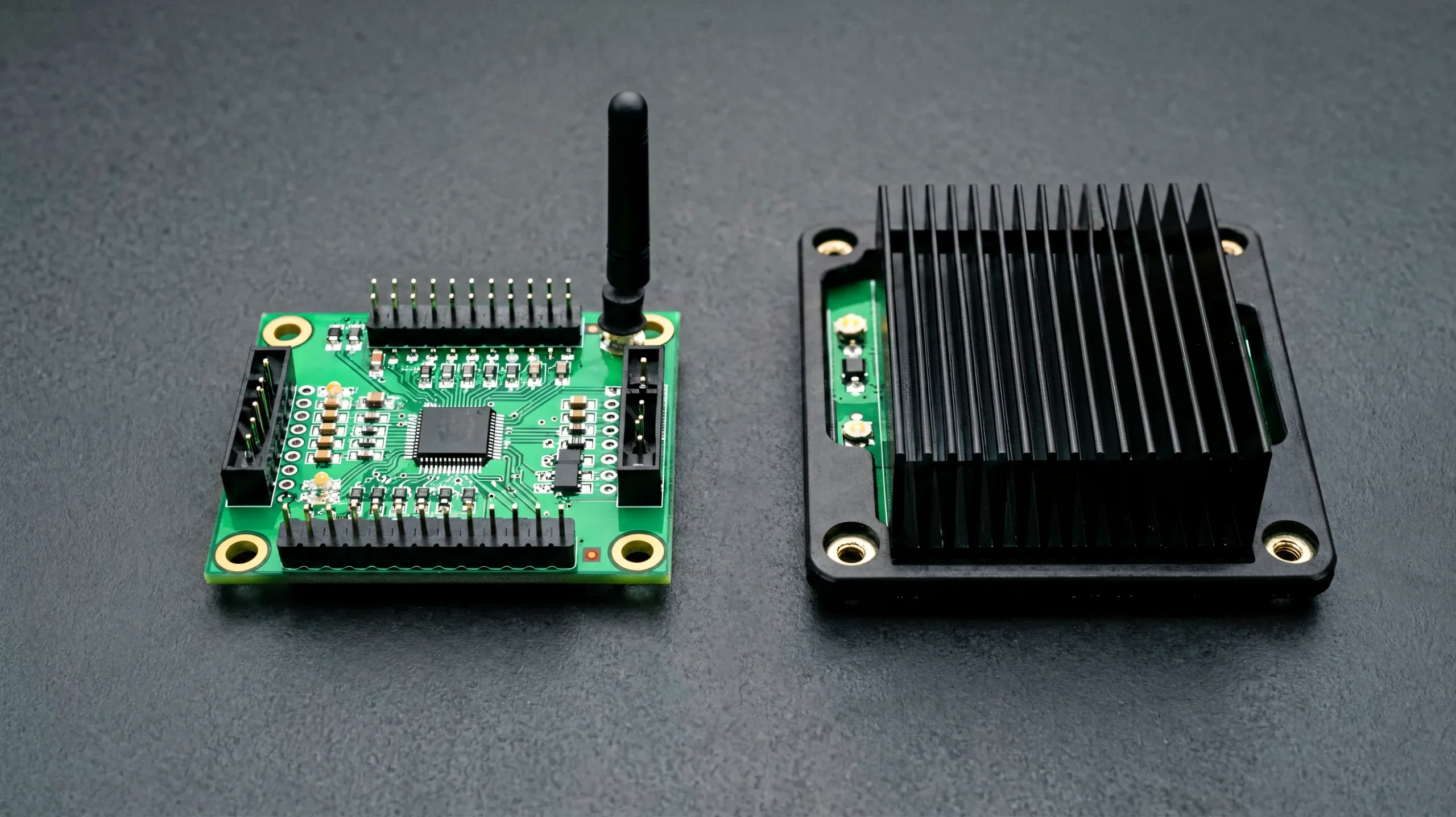
Huidu vs NovaStar at a Glance
NovaStar (Shenzhen NovaStar Tech) and Huidu (Shenzhen Huidu Technology, 灰度科技) both design LED control hardware and software, but they built their reputations in different market segments. NovaStar is the dominant brand in professional synchronous applications — rental staging, broadcast, sports venues, and control rooms — where live video, high refresh rates, and redundant architecture are non-negotiable. Huidu’s strength is asynchronous signage: storefront screens, pole displays, banner screens, and distributed billboard networks that play content autonomously without an on-site PC.
A common misconception found in some comparison articles is that Huidu only makes “entry-level” hardware. That reading is outdated: Huidu maintains a full synchronous video processor line (the HD-VP210, HD-VP410, HD-VP620, and HD-VP830) alongside its asynchronous portfolio. For a full background on each brand, see what a Huidu control system is and our NovaStar control system overview. For model-level selection, our Huidu controller lineup guide and the HDSet software guide cover the operational side.
Product Lines Compared
| Category | NovaStar | Huidu |
|---|---|---|
| Synchronous processors | VX series, MCTRL4K, MCTRL600 | HD-VP210 / HD-VP410 / HD-VP620 / HD-VP830 |
| Sending cards | MSD300, MSD600 | — (async cards embed sending function) |
| Receiving cards | MRV300/366, A8s, A5s Plus | Used inside Huidu-controlled cabinets |
| Asynchronous controllers | PSD80, PBOX100, PCC80 | HD-D16, HD-C16C (WiFi), HD-C36C, HD-A3, HD-A5, HD-A6L, R712 |
| WiFi modules | — | WF1, WF2, WF4 |
| Cloud platform | VNNOX | XiaoHui |
| Core software | SmartLCT, NovaLCT, ViPlex | HDPlayer, HDSet, HD2020, HDSign, HDShow |
| Mobile app | ViPlex / NovaStar apps | LEDArt |
The lineup table shows the structural difference clearly: NovaStar covers the synchronous chain end to end (processor, sending card, receiving card), while Huidu concentrates control intelligence in its asynchronous cards and, for synchronous projects, in the HD-VP processor series. Neither structure is better in isolation — they are optimized for different system topologies.
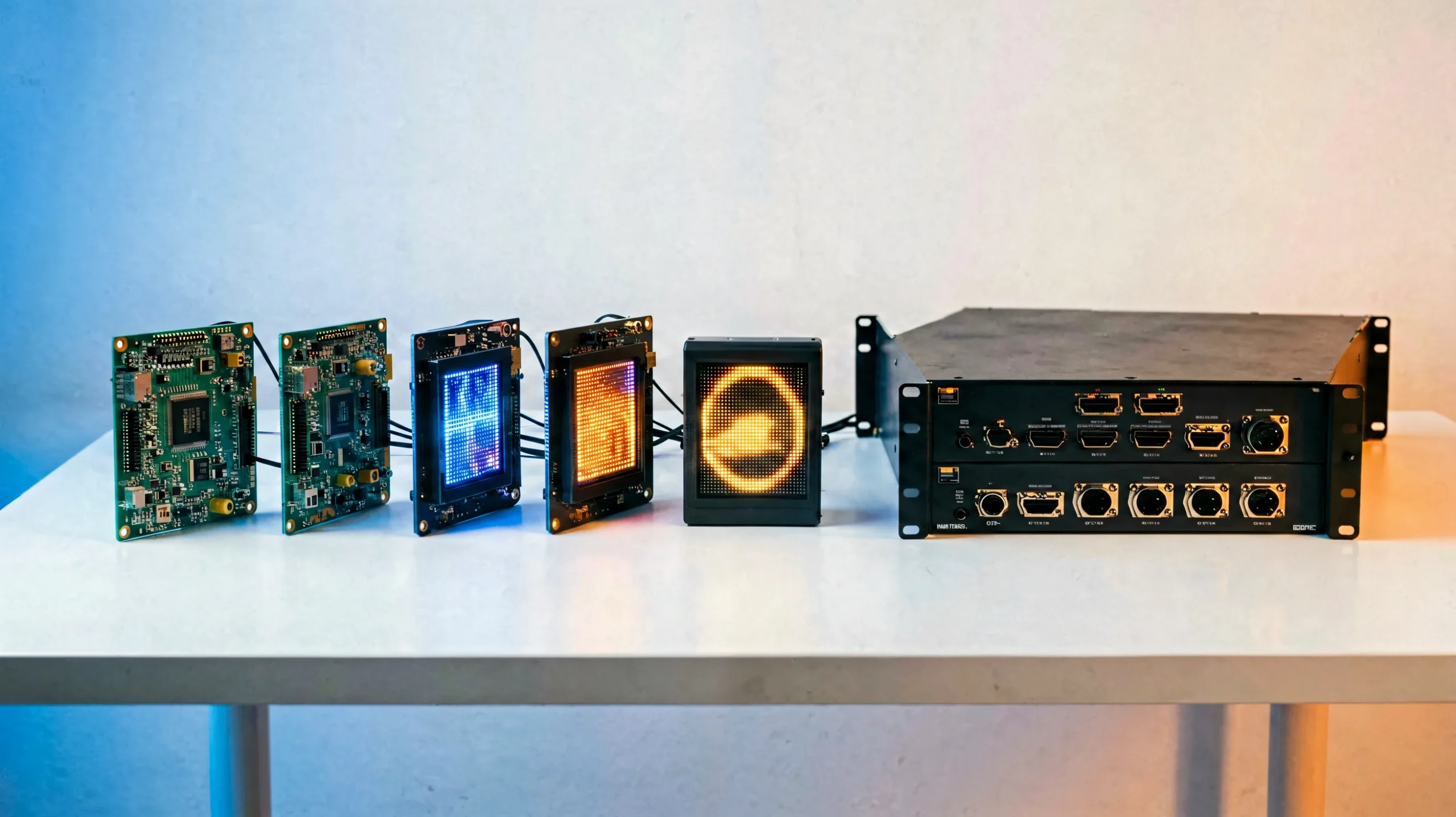
Synchronous vs Asynchronous: Where Each Brand Wins
To compare the two brands fairly, the architecture question comes first. The technical difference between the two control modes is covered in our guide to synchronous and asynchronous LED displays; in short, a synchronous system renders content in real time from a video source, while an asynchronous system stores content on the controller and plays it independently.
NovaStar’s Synchronous Strength
For live video applications, NovaStar’s ecosystem is the most widely deployed in the industry. Its VX-series processors and MCTRL controllers drive rental walls, broadcast studios, and stadium screens, with features that matter in those environments: refresh rates of 3,840 Hz and above to eliminate rolling-shutter banding on camera, pixel-level brightness and color calibration through NovaLCT, hot-backup sending redundancy for 24/7 operation, and documented control protocols for third-party integration with systems such as Crestron and AMX. Industry estimates commonly place NovaStar’s share of the professional control market at around 70%, which also means the largest pool of trained technicians and spare parts.
Huidu’s Asynchronous Strength
Huidu owns the opposite corner of the market. Its asynchronous controllers store programs locally, update over network cluster sending or U-disk, and are managed by the free HDPlayer software or the LEDArt mobile app over WiFi. For a chain of 30 outdoor billboards where no media server should run on site, this architecture removes the failure points that a PC-per-screen setup introduces. Huidu controllers also support WiFi access-point mode with configurable passwords — a standard field workflow covered in our HDPlayer setup guide — and XiaoHui cloud for remote management of distributed displays. For volume signage deployments, Huidu’s hardware cost position is a documented part of its appeal.
Software and Cloud Platforms Compared
The daily user experience lives in the software. NovaStar’s NovaLCT handles screen configuration, calibration, and monitoring for synchronous systems, with SmartLCT as the newer unified tool and ViPlex for content and device management. Huidu splits its free software family by hardware class: HDPlayer for full-color asynchronous controllers, HD2020 for single-color cards, HDSet for configuration, HDSign for signage, and HDShow as a multimedia player. Both brands ship their software free of charge; downloads are available from our Huidu software download center and the NovaStar systems portal.
The video below shows a typical NovaStar software workflow — reading a configuration file back from a receiving card — which gives a concrete sense of how NovaLCT operates in the field compared with the HDPlayer workflows Huidu technicians use.
Cloud Platforms: XiaoHui vs VNNOX
Both brands now offer cloud management. NovaStar’s VNNOX platform provides centralized scheduling, real-time fault alerts, brightness automation, and device dashboards; integrator sources note advanced tiers carry subscription fees. Huidu’s XiaoHui platform targets distributed asynchronous deployments — multi-screen content publishing and status monitoring from a single dashboard, aligned with Huidu’s billboard-network focus. For a B2B buyer, the cloud decision usually follows the hardware decision rather than leading it, but the subscription cost should be included in the total cost calculation.
A practical difference field technicians notice early: Huidu’s workflow is built around configuration files and phone-based access via the LEDArt app, while NovaStar’s workflow centers on calibrated desktop tooling. Both approaches are documented and mature; the choice follows the project’s control-room or street-level operating model.
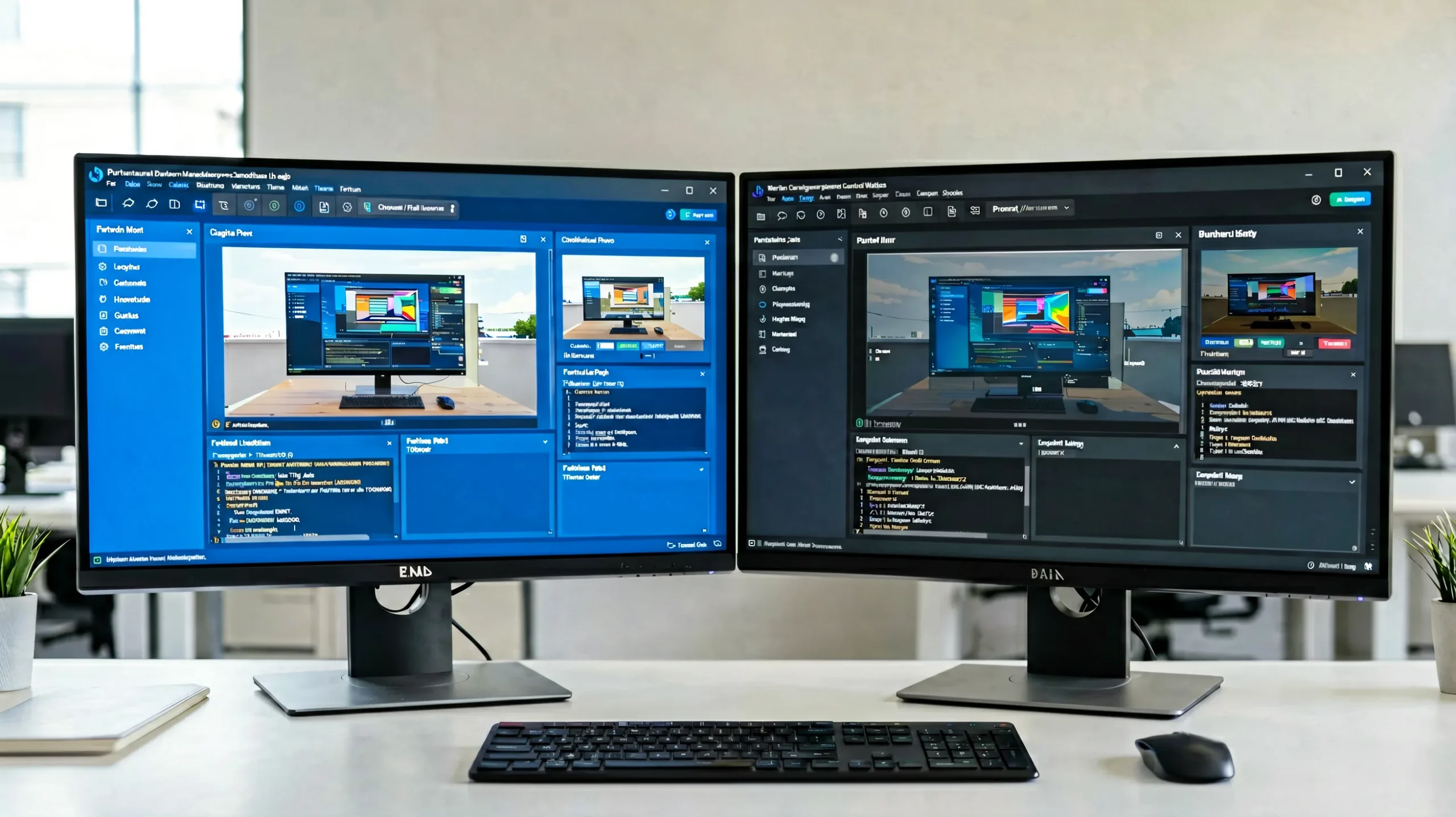
Hardware Lineup and Specifications
At the hardware level, the two lineups map cleanly to the architectures above. On the NovaStar side, the receiving card portfolio — MRV300/366, A8s, A5s Plus — pairs with MSD300/MSD600 sending cards and VX or MCTRL processors. Our NovaStar A8s receiving card page documents one of the most common choices for standard cabinets. On the Huidu side, the WiFi-enabled HD-C16C WiFi control card and the HD-A3 asynchronous controller represent the two workhorse tiers for signage projects.
Receiving Card Capacity and Cost Rules of Thumb
Whatever the brand, integrators size control hardware with the same arithmetic. A typical receiving card drives up to roughly 256×256 pixels on common driver ICs; the practical figure depends on pixel pitch and scan mode. A P3.91 500×500mm cabinet is 128×128 pixels, so one receiving card per cabinet is the standard configuration, and a single sending card typically covers 1.3–2.3 million pixels. For a 4K-wide wall (3840×2160 ≈ 8.3M pixels), plan for multiple sending cards, usually managed by a video processor. When display faults occur, reading back the receiving card program identifies whether parameters were overwritten — the procedure is demonstrated in the video below.
Huidu vs NovaStar: The Integrator Decision Checklist
Experienced integrators evaluate control systems against a consistent checklist before specifying a brand. The table below applies that checklist to Huidu vs NovaStar.
| Criterion | NovaStar | Huidu |
|---|---|---|
| Software and remote management | NovaLCT/SmartLCT + VNNOX cloud; documented API for Crestron/AMX | HDPlayer + XiaoHui cloud; LEDArt app for field control |
| Calibration capability | Pixel-level brightness and color calibration (required for broadcast and XR) | Smart setting and configuration-file workflow oriented to fixed signage |
| Redundancy architecture | Hot-backup sending on VX/MCTRL class hardware | Autonomous playback removes live-signal failure mode (different redundancy model) |
| Refresh rate and grayscale | 3,840 Hz+ standard on current receiving cards; 16-bit grayscale paths | Async content playback; synchronous HD-VP line for processor use cases |
| Spare parts and field support | Largest global distributor network; broad technician pool | Strong in signage channels; growing international distribution |
| Total cost of ownership | Higher hardware price; VNNOX advanced tiers add subscription cost | Lower hardware cost for async deployments; free software stack |
| Warranty | Multi-year coverage per product line | Multi-year coverage per product line |
Note the two brands answer “redundancy” differently: NovaStar protects the live signal path with hot-backup hardware, while a Huidu asynchronous screen eliminates the live-signal dependency entirely by design. Which model fits depends on whether the screen must show live video.
Huidu vs NovaStar: Scenario-Based Recommendations
Outdoor Billboard Networks → Huidu
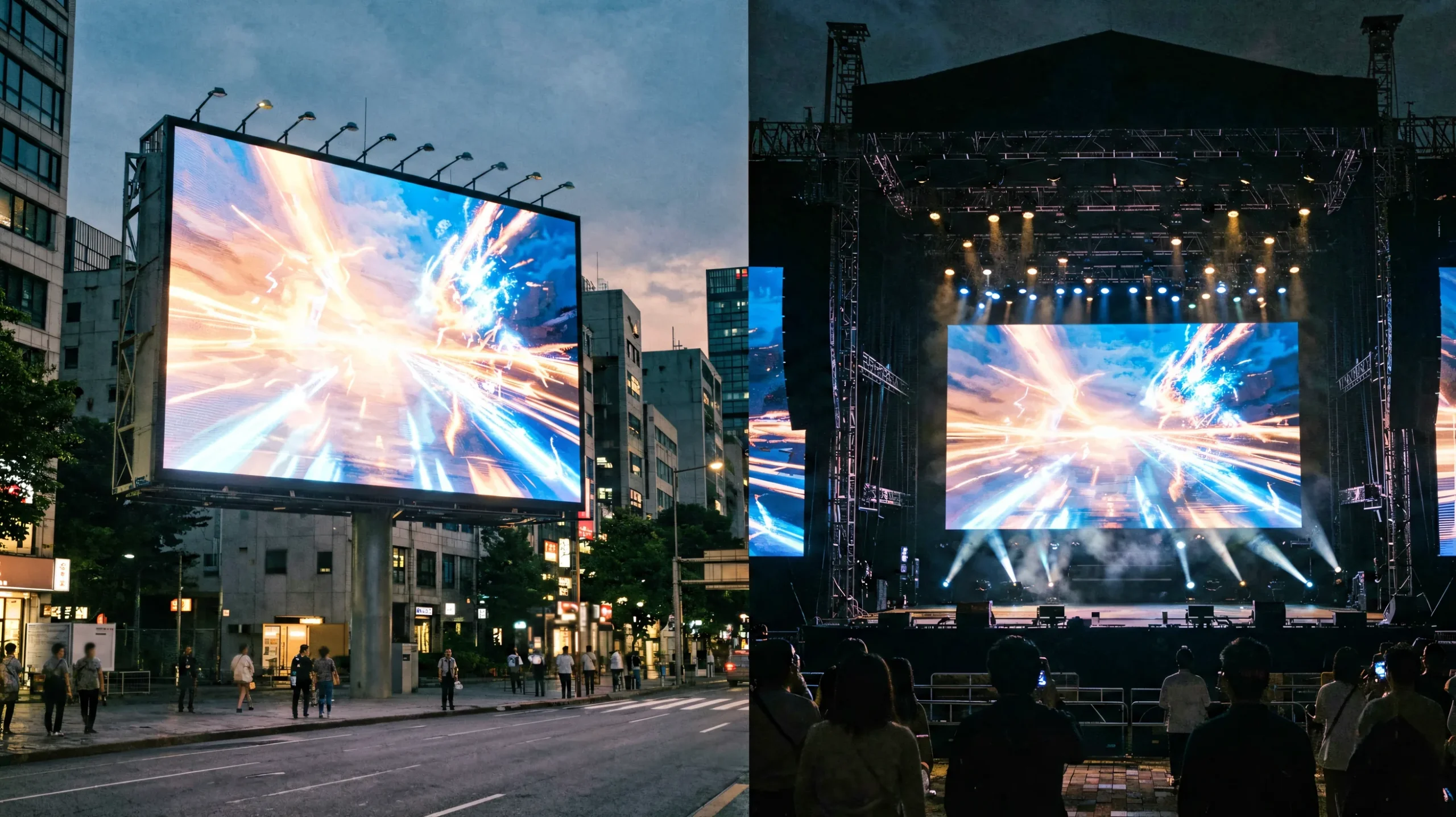
Thirty screens, autonomous 24/7 playback, minimal on-site maintenance, remote content updates: this is the definition of an asynchronous workload. The operational model is documented in our outdoor LED display guide. Huidu controllers with U-disk or cluster updates and XiaoHui cloud monitoring fit the operational model directly, and the hardware cost advantage scales across the network. The video below shows the engineering reality of outdoor LED installations this scenario involves. For screen-side guidance once the control system is chosen, see our HDPlayer setup guide.
Rental, Stage and Broadcast → NovaStar
Rental inventory moves between venues, connects to external video sources, and gets filmed. NovaStar’s VX1000 all-in-one controller class of hardware is built for that workflow: camera-safe refresh rates, hot-backup, seamless switching, and the industry’s largest pool of trained operators. Rental companies also value that the brand choice is familiar to the AV crews they hire.
Retail Chains and Storefronts → Split by Scale
A single storefront sign or a franchise of storefront screens playing scheduled content favors Huidu’s simplicity and cost. A flagship retail experience with live camera feeds, interactive zones, or broadcast appearances shifts toward NovaStar. The deciding question is always: does this screen show live video, or scheduled content?
XR Virtual Production → NovaStar
XR volumes demand 3,840 Hz+ refresh, 16-bit grayscale, pixel-level calibration, and a documented Unreal Engine workflow. NovaStar’s virtual-production documentation and deployment base make it the standard choice in this niche; Huidu does not currently target this segment.
Total Cost of Ownership
Hardware price is only the entry point. Integrator-published indicative pricing puts entry-level NovaStar sending cards in the $180–280 range and receiving cards around $20–30 per unit, with Huidu asynchronous hardware positioned lower for equivalent signage functions. Beyond hardware, add cloud subscription tiers (VNNOX advanced tiers, per integrator sources, range from a few hundred dollars per deployment per year), commissioning labor — simpler asynchronous setups typically configure faster than calibrated synchronous walls — and spare-parts holding for regions without local distributor stock. A 100-cabinet project can see thousands of dollars of difference between the two stacks, which is why the scenario, not the brand preference, should drive the specification. Our LED display controller setup guide covers the commissioning side in more detail, and the NovaStar vs Colorlight comparison extends the brand decision to a third option. When field faults appear, our Huidu troubleshooting guide provides the systematic fix path.
FAQ: Huidu vs NovaStar
Which is better, NovaStar or Huidu?
Neither is universally better. NovaStar leads synchronous professional applications (rental, broadcast, control rooms); Huidu leads cost-efficient asynchronous signage. The project’s content type — live video versus scheduled playback — decides the brand.
Is Huidu compatible with NovaStar?
At the system level, no. Each brand’s sending cards, receiving cards, and software form a closed ecosystem. You cannot drive a Huidu controller with NovaLCT or a NovaStar card with HDPlayer.
Can I mix Huidu and NovaStar receiving cards in one screen?
No. Mixing brands at the sending/receiving card level is not supported by either manufacturer. A screen runs on one control system end to end.
Which control system is cheaper?
For asynchronous signage deployments, Huidu hardware and its free software stack typically cost less than an equivalent NovaStar asynchronous setup. For synchronous systems, total cost must include processors, calibration labor, and cloud subscriptions, where NovaStar’s ecosystem is the benchmark.
What software does Huidu use vs NovaStar?
Huidu uses HDPlayer (full-color async), HD2020 (single-color), HDSet, HDSign, and HDShow, plus the LEDArt mobile app. NovaStar uses NovaLCT, SmartLCT, and ViPlex, plus VNNOX for cloud management.
Does Huidu support synchronous LED displays?
Yes. Huidu’s HD-VP210, HD-VP410, HD-VP620, and HD-VP830 video processors serve synchronous applications; the asynchronous HD-A/HD-C/HD-D lines remain its core volume business.
What refresh rate do I need for camera-facing LED walls?
Plan for at least 3,840 Hz to avoid rolling-shutter banding in footage. NovaStar’s current receiving cards support this as standard; confirm the exact figure per model in either brand’s specification sheet.
Which system suits outdoor billboard networks?
Huidu. Autonomous playback, U-disk and cluster updates, WiFi management, and lower hardware cost match the operational model of distributed billboard networks. NovaStar remains the choice where billboards must display live feeds.
Which system suits rental staging?
NovaStar. The VX/MCTRL processor line, hot-backup, seamless switching, and the industry’s operator pool make it the rental standard.
What cloud platform does each brand offer?
NovaStar offers VNNOX for centralized scheduling, fault alerts, and monitoring. Huidu offers XiaoHui for remote management of distributed asynchronous displays.
How many receiving cards do I need per cabinet?
Divide the cabinet’s pixel count by the receiving card’s rated capacity and round up. A 128×128-pixel P3.91 cabinet uses one standard receiving card; higher-load cards such as the NovaStar A8s handle larger cabinets.
Does Huidu support pixel-level calibration?
Huidu’s strength is smart-setting configuration for fixed signage rather than broadcast-grade pixel-level calibration. For pixel-level calibration requirements, NovaStar’s NovaLCT workflow is the industry benchmark.
Conclusion
The Huidu vs NovaStar decision reduces to one engineering question: does your screen show live video or scheduled content? Live video — rental, broadcast, XR, control rooms — belongs to NovaStar’s synchronous ecosystem. Scheduled content — billboards, storefronts, signage networks — belongs to Huidu’s asynchronous platform, and Huidu’s HD-VP processor line now covers the middle ground. Both ecosystems are mature, both ship free software, and both are supported by factory integrations. As an LED screen manufacturer that ships both control systems pre-configured, LEGIDATECH specifies the brand per project scenario — and we can provide the same data-driven recommendation, wiring diagrams, and configuration files for your next display project.
Explore the Huidu LED Control System Hub
For the complete Huidu picture — product categories, comparison table, HD-VP series guide, applications, selection logic and FAQs — visit the Huidu LED Control System: Complete Guide & Product Hub.