


LED Screen Price in the Philippines (2026): Cost per m² by Pitch & Use Case
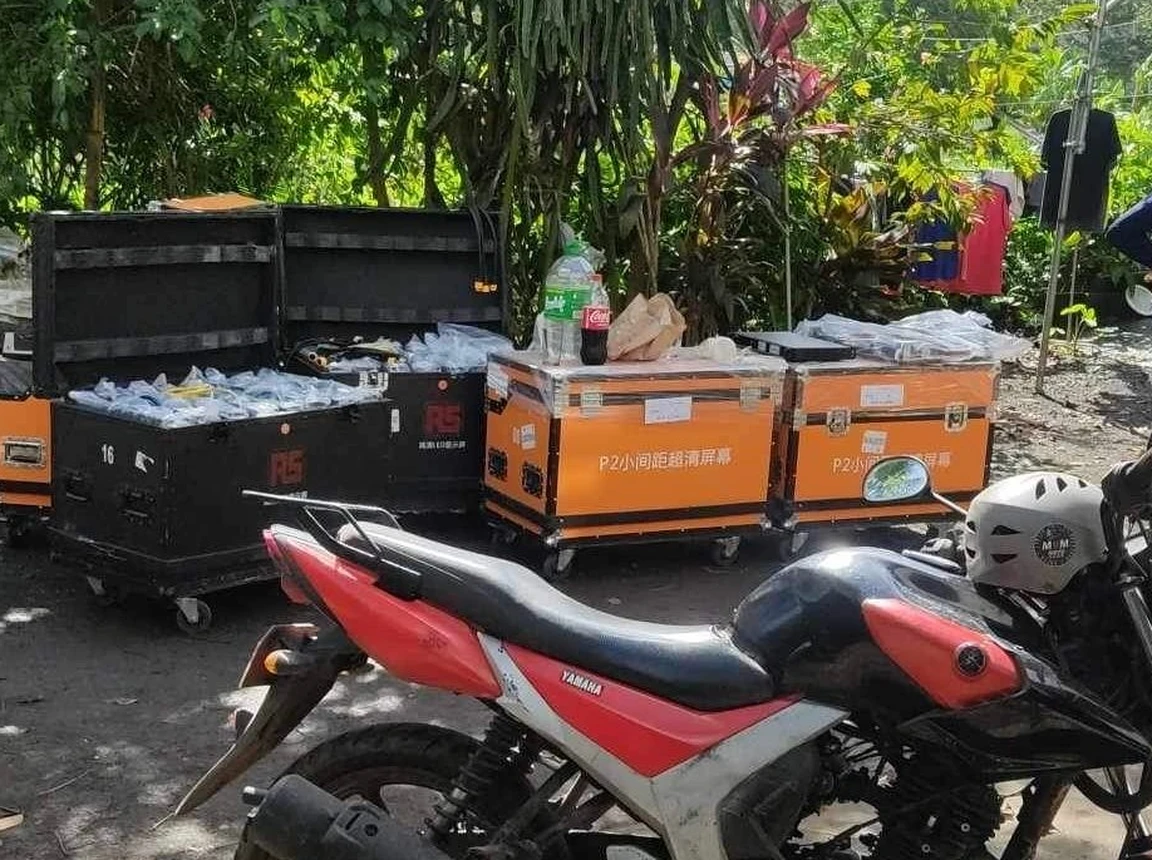
The Philippines prices its LED screens the way it buys most hardware: manufactured in China, quoted in US dollars, paid for in pesos. Our factory’s Philippine order book is younger than its Nigerian counterpart but moving the same way — a 10 m² outdoor P3.91 stage screen we shipped to a client in Manila, P2.5 conference all-in-one walls for Philippine offices, and a steady flow of billboard and church inquiries from Metro Manila, Cebu and Davao. Yet the same question opens nearly every inquiry: what does an LED screen price in the Philippines actually look like in 2026, per square meter, in dollars and in pesos? The confusion is real, because a Manila dealer quotation, a Chinese factory quotation and a landed-cost calculation can differ by two to three times for screens that look identical in a photo. This guide separates them with numbers: factory-direct body prices by pitch, the full landed-cost stack for shipping to Manila, and real budgets from projects we shipped — so you can price your own project before you request a single quote.
Short answer: Factory-direct, an LED screen body costs $280–$950 per m² outdoor (P4–P10), $350–$1,500 per m² indoor (P1.25–P3) and $650–$1,450 per m² rental-grade (P2.6–P4.81) in 2026 — roughly ₱17,600–₱94,500 per m² at ≈₱63/USD. Shipping to Manila adds sea freight (LCL ran ≈$22/cbm in October 2026, Sino-Shipping), 12% VAT on the VAT base, brokerage of ₱1,500–₱5,000 per entry, and 0% duty if your supplier issues an ACFTA Form E certificate of origin (3–15% MFN duty without it). A 20 m² P4 outdoor billboard lands near $8,100–$11,700 delivered (≈₱25,500–₱37,000 per m²). Local supplier size lists — SZLEDWORLD quotes a 4×6 ft unit at ₱10,000–₱13,000 — cover entry-level installs and were published before the peso slid to record lows, so treat them as a floor, not a 2026 video-wall budget.
What Is the LED Screen Price in the Philippines in 2026?
Start with the body price — the panels, power supplies, controller and spare modules at the factory gate — because every other number in a Philippine project builds on it. Our current LED screen price guide puts the 2026 factory-direct bands here, converted at ≈₱63/USD (the peso traded near its record low of ≈₱63/USD in October 2026, per Trading Economics):
| Category | Pixel pitch | Factory-direct (USD/m²) | ≈ Pesos per m² |
|---|---|---|---|
| Indoor LED screens | P1.25–P3 | $350–$1,500 | ₱22,100–₱94,500 |
| Outdoor LED screens | P4–P10 | $280–$950 | ₱17,600–₱59,900 |
| Rental-grade LED screens | P2.6–P4.81 | $650–$1,450 | ₱41,000–₱91,400 |
Two reference points inside those bands cover most Philippine inquiries: P2.5 indoor walls for offices, retail and churches run $400–$1,500/m² (₱25,200–₱94,500), while P3.91 panels — the workhorse pitch for stages and rental fleets — price at $750–$980/m² indoor and $800–$1,200/m² outdoor (₱47,300–₱75,600). For the per-pitch trade-offs in detail, see our P2.5 price guide and the P3.91 outdoor factory price guide.
What Do Philippine Suppliers Quote per Square Meter?
Local Philippine quotations cluster into two groups. Established Metro Manila integrators — Inewvation International (est. 2011), Globaltronics (2003), United Neon (1937) and Luce Acustico (2017) among them — quote installed projects that bundle hardware, steel, permits and labor, so their per-m² numbers sit well above factory-direct. At the other end, SZLEDWORLD’s published size list (last updated February 2024) quotes a 4×6 ft unit at ₱10,000–₱13,000 ($200–$260) and a 9×12 ft unit at ₱15,000–₱20,000 ($300–$400). Those size-based figures describe small, entry-level configurations rather than full video walls, and they predate the peso’s 2026 slide past ₱62/USD — a 12-month loss of 8.6% against the dollar (Trading Economics) that quietly raises every imported screen price in peso terms. Ask any supplier which pitch, lamp brand, refresh rate and brightness their quote includes before you compare it to another.
Why Does the LED Screen Price in the Philippines Vary So Much Between Suppliers?
Because “LED screen” is a category, not a specification. Two P4 outdoor quotes can differ by 40% on the same m² because the lamps, drivers, cabinet material and control system inside differ. These are the levers that move the number:
| Factor | Price impact | What to check |
|---|---|---|
| Pixel pitch | ±40–60% within a category | Viewing distance first: P4–P6 for billboards, P2.5–P3 indoors |
| Indoor vs outdoor build | Outdoor adds 5,000+ nit brightness, IP65 sealing, steel cabinets | IP rating, brightness spec, cabinet weight |
| Lamp and driver IC grade | 15–30% between lamp tiers | Lamp brand (e.g. NationStar-class vs economy), IC brand |
| Refresh rate | High-refresh (≥3,840 Hz) costs more than 1,920 Hz | Camera work and broadcast need high refresh |
| Order size | Full-container pricing beats LCL per m² | Consolidate panels, structure and spares in one shipment |
The full component-by-component math sits in our LED screen cost breakdown from P0.9 to P10. The practical takeaway for Philippine buyers: fix the specification in writing before comparing prices, because a quote without a spec sheet is not a price — it is a placeholder.
What Is the Landed Cost Behind the LED Screen Price in the Philippines?
The body price is what you pay at the factory gate; the landed price is what appears on your Manila customs entry. Four charges sit between them:
1. Customs duty. LED displays (HS 8528) carry Most-Favoured-Nation duty of roughly 3–15% depending on subheading, per Philippine Bureau of Customs tariff circulars. China-manufactured screens qualify for 0% under ACFTA — but only if your supplier issues a Certificate of Origin Form E before the goods ship. Form E cannot be obtained after departure; without it the Bureau of Customs applies the standard MFN rate. Since June 2023 the Philippines also sits under RCEP, whose Form RCEP occasionally beats ACFTA on specific codes — ask your broker to check both.
2. VAT at 12%. The Bureau of Internal Revenue applies 12% VAT to virtually every commercial import, on a VAT base of CIF value plus duty plus brokerage fees. It applies even when duty is 0%.
3. Brokerage. A licensed customs broker typically charges ₱1,500–₱5,000 per entry for a standard shipment. These fees join the VAT base.
4. Sea freight. Shenzhen/Shanghai→Manila LCL ran about $22/cbm in October 2026 (Sino-Shipping freight update), with 40GP containers at $450–$550 and 10–15 day transit. A typical LED wall order packs loosely — cabinets, flight cases or plywood crates, steel structure and spares — so budget $5–$15 per m² of screen for freight plus destination charges on LCL, falling to $3–$5 per m² on full containers. Our guide to importing LED screens from China walks the paperwork end to end.
What Does a 20 m² P4 Billboard Really Cost Landed?
Take the most common Philippine inquiry — a 20 m² (roughly 6×3.4 m) P4 outdoor billboard:
| Cost line | Rule of thumb | 20 m² P4 example |
|---|---|---|
| Screen body, FOB Shenzhen | $350–$500/m² in the P4 outdoor class | $7,000–$10,000 |
| Sea freight + insurance to Manila | LCL ≈$22/cbm plus destination charges | $180–$350 |
| Customs duty | 0% with ACFTA Form E; 3–15% MFN without | $0 with Form E |
| Brokerage | ₱1,500–₱5,000 per entry | $25–$80 |
| VAT | 12% of (CIF + duty + brokerage) | $865–$1,250 |
| Landed total | — | $8,100–$11,700 (≈₱510,000–₱737,000) |
That lands at ≈₱25,500–₱37,000 per m² — about 15–18% above the body price with Form E in order. Skip the Form E and the same container pays MFN duty plus 12% VAT on the duty, adding roughly another 3–15% depending on the subheading. Undervaluation is not a shortcut: the Customs Modernization and Tariff Act treats it as fraud, with surcharges up to 600% of tax owed and seizure.
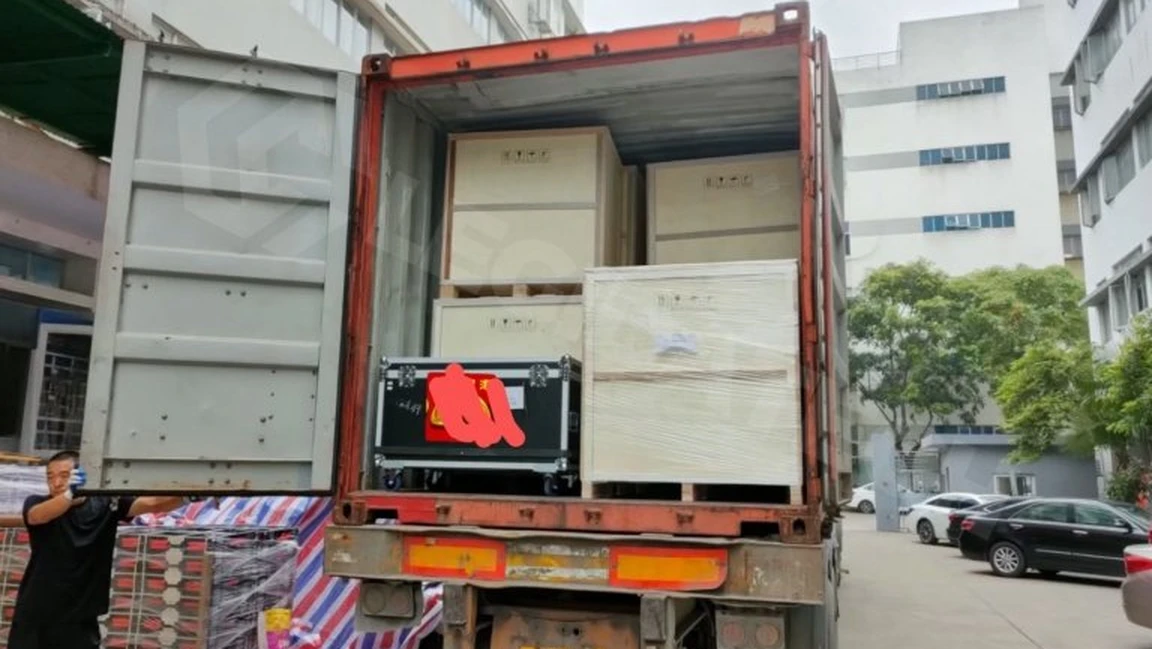
Freight is not the only cost outside the body price. Installation, steel structure (₱80–₱120 per m²-class budgets apply in China; local Philippine fabrication prices separately) and commissioning sit on top — the video below shows the full sequence our documentation covers, from unboxing to a lit screen:
How Does the LED Screen Price in the Philippines Change by Use Case?
Pitch and environment do more work than size. Four use cases cover most of our Philippine inquiries, each priced with the real configuration of a documented shipment.
What Does a Church LED Screen Cost in the Philippines?
Churches are the most active indoor buyers in the Philippine market, and most land on P2.5–P3 for a 10–20 m² wall behind the altar: a 3×2 m P2.5 screen runs $2,400–$4,500 body (₱151,000–₱283,500) before freight and VAT. Configuration details, camera-distance rules and real installations are in our church LED screen guide.
How Much Is an Outdoor LED Billboard on EDSA?
Roadside sites mostly specify P5–P6 at $280–$500/m² body, so an 18 m² (6×3 m) billboard prices at $5,000–$9,000 body before freight, VAT and structure — the landed math in the section above applies directly, and wider-pitch economy builds stretch toward the $950/m² top of the band. The market has a visible ceiling too — Unilumin’s case study documents the 2,260 m² screen on GA Tower along EDSA, the largest outdoor LED display in the Philippines. Whether that spend pays back depends on site and slots: our digital billboard revenue guide works the advertising math, and SZLEDWORLD’s market notes credit Metro Manila’s congestion — motorists average about two hours a day on the road — for the format’s reach. The country’s ambitions keep climbing: the first naked-eye 3D LED screen debuted in Bonifacio Global City in 2022 (BusinessWorld).
What Do Mall, Retail, Conference and Stage Setups Cost?
Retail and mall installations favor P2.5–P3 indoor at $350–$800/m²; where glass façades and window-door transparency matter, our transparent LED screen price guide covers the film and strip options. Conference rooms increasingly specify all-in-one machines instead of projector-plus-screen combos: the P2.5 conference all-in-one display we built for a Philippine client ships as a single unit with GOB-protected modules, and the test clip below shows one on our workshop floor:
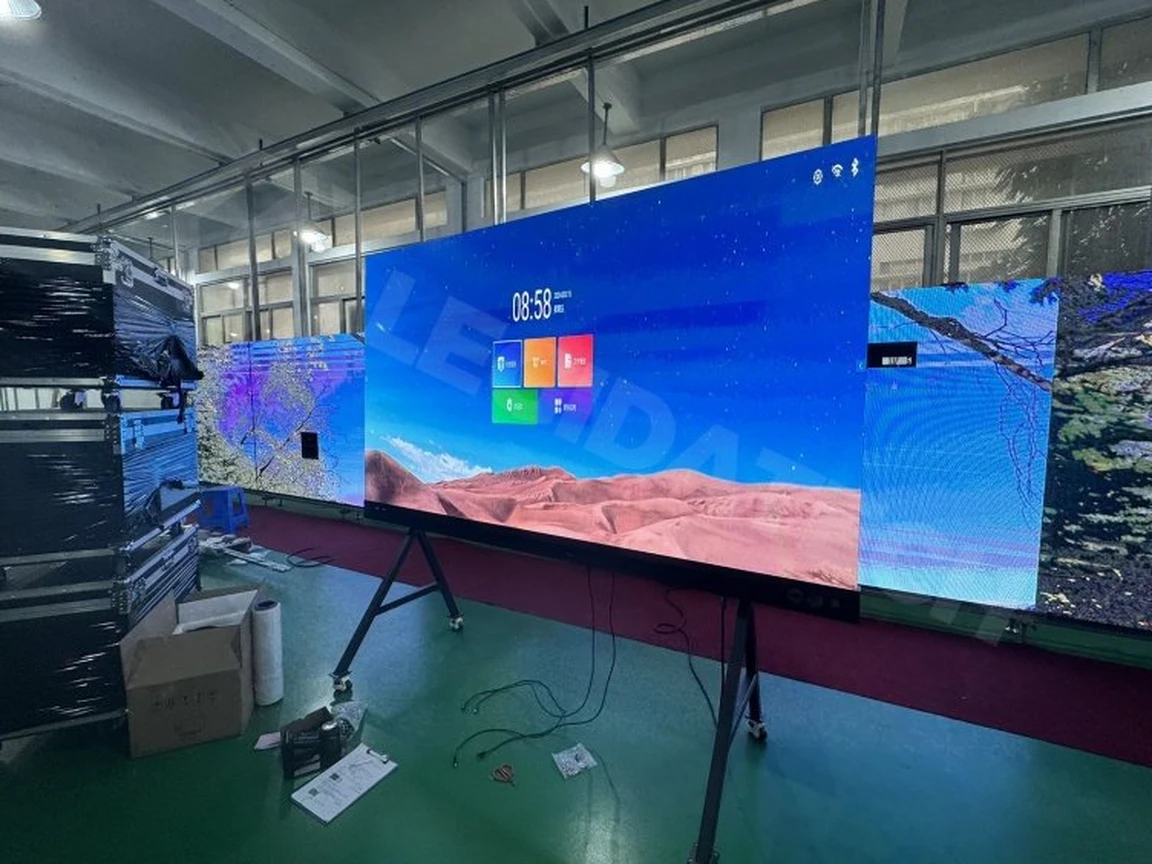
Stages and events run on P3.91 rental-grade panels at $650–$1,450/m² — the class behind the Manila stage screen at the top of this guide. Rental companies and event teams buy these fleets rather than hire them per show; current fleet pricing sits in our rental LED screen price guide. For fixed indoor references, our indoor LED screen price guide and outdoor LED display price guide carry the full pitch-by-pitch tables.
Factory-Direct or Local Dealer: Who Offers the Better LED Screen Price in the Philippines?
Both routes deliver working screens; they differ in what you pay for and what you carry yourself.
| — | Factory-direct (our route) | Local Manila dealer |
|---|---|---|
| Price per m² | $280–$1,500 body + landed costs | Bundled hardware, structure, labor and margin |
| Configuration | Specified in writing: lamps, ICs, refresh, brightness | Varies by stock; ask for the spec sheet |
| Lead time | 2–4 weeks production + 10–15 days sea freight | Immediate if in stock |
| Support | Spare modules in every shipment, remote commissioning | On-site service within metro areas |
A practical hybrid works for many Philippine buyers: import the screen factory-direct from the LED screen manufacturer, contract a local crew for steel and installation, and keep a local electrician on call. When you want to shortlist established local integrators instead — Inewvation International, Globaltronics, United Neon and their peers — our ranking of the top 35 LED screen suppliers in the Philippines profiles the field. Buyers comparing markets can also read our LED screen price in Nigeria, where the factory-versus-dealer math runs on a different tax regime.
LED Screen Price in the Philippines: Frequently Asked Questions
How much does an LED screen cost in the Philippines in 2026?
Factory-direct bodies run $280–$950/m² outdoor (P4–P10), $350–$1,500/m² indoor (P1.25–P3) and $650–$1,450/m² rental-grade — about ₱17,600–₱94,500 per m² at ≈₱63/USD. Landed in Manila with ACFTA Form E, 12% VAT and brokerage, budget roughly 15–18% above the body price — up to about 30% if duty applies without Form E.
How much is an outdoor LED billboard in the Philippines?
An 18 m² (6×3 m) billboard body runs $5,040–$17,100 across the P4–P10 outdoor band; the P5–P6 class most roadside sites use sits at $5,000–$9,000 body. Add sea freight (LCL ≈$22/cbm in October 2026), 12% VAT, brokerage and steel structure. At the top of the market, Unilumin’s 2,260 m² GA Tower screen on EDSA shows what landmark-scale budgets look like.
Why are some Manila dealer quotes lower than factory prices?
Dealer lists often quote budget-grade panels — lower-brightness lamps, basic driver ICs, 1,920 Hz refresh — or stock priced before the peso slid past ₱62/USD. A cheaper quote can mean an older configuration or thinner spares and support rather than a better deal, so compare spec sheets line by line.
What extra costs come with importing an LED screen to the Philippines?
Sea freight to Manila, 12% VAT on a base of CIF plus duty plus brokerage, customs duty of 3–15% MFN unless ACFTA Form E secures 0%, brokerage of ₱1,500–₱5,000 per entry, plus steel structure and installation. Confirm the duty line with a licensed broker via the Tariff Commission finder.
Which pixel pitch is best for the Philippine market?
P4–P6 for roadside billboards read from several meters away, P2.5–P3 for indoor retail, churches and conference rooms, and P3.91 for stage and rental fleets. Match pitch to viewing distance first and price second — that ordering keeps budgets honest.
Do you ship LED screens to the Philippines?
Yes. We ship factory-direct from China to Manila and other Philippine ports with ACFTA Form E paperwork, spare modules and remote commissioning support. Documented Philippine projects include a 10 m² outdoor P3.91 stage screen in Manila and P2.5 conference all-in-one displays for office buyers.
Conclusion: Reading the LED Screen Price in the Philippines With Numbers That Hold
An LED screen price in the Philippines is three numbers stacked together: the factory-direct body at $280–$1,500 per m² depending on pitch, a landed-cost layer of freight, duty and 12% VAT that adds roughly 15–25% when the Form E paperwork is right, and a project layer of steel, installation and content that no per-m² figure covers. Fix the specification first, ask for Form E before the goods ship, and compare peso quotes against the ≈₱63/USD reality of late 2026 rather than 2024 price lists. When you are ready to price a specific wall, send your dimensions, site photos and viewing distance for a factory quote — and if a Philippine installation is already in your plans, request a factory quotation with the landed-cost math included.
