Glass has quietly become the largest unused advertising surface on most commercial buildings, and a transparent LED screen is the hardware that turns it into media. The question retail chains, mall operators, and façade owners ask first is always the same: what does a transparent LED screen price look like in 2026? Published guides seem to contradict each other — $300 per square meter from one supplier, $4,800 from another, with one agency guide listing custom builds at up to $13,000 (MuxWave, 2026). The contradiction disappears once you separate the three constructions sold under one name, and separate screen-body cost from installed cost. This guide does both, with factory-direct numbers from the manufacturing side that reseller quotes never show.
Short answer: A transparent LED screen costs $300–$2,600 per square meter for the screen body in 2026, set by construction: LED film runs $740–$2,220/m² (DOIT VISION, 2026), LED strip glass-wall screens run $400–$1,200/m² factory-direct, and coarse-pitch mesh starts near $150/m². Fine-pitch transparent panels for close-view retail reach $1,800–$4,800/m² through integrators (iamledwall, 2026). The body price is not the total budget — controller, cabling, structure, installation, and shipping add another 10–25% (DOIT VISION, 2026). Buying factory-direct from an LED screen manufacturer compresses the same specification by roughly 30–50% against branded integrator quotes.
What Is a Transparent LED Screen and How Is It Priced?
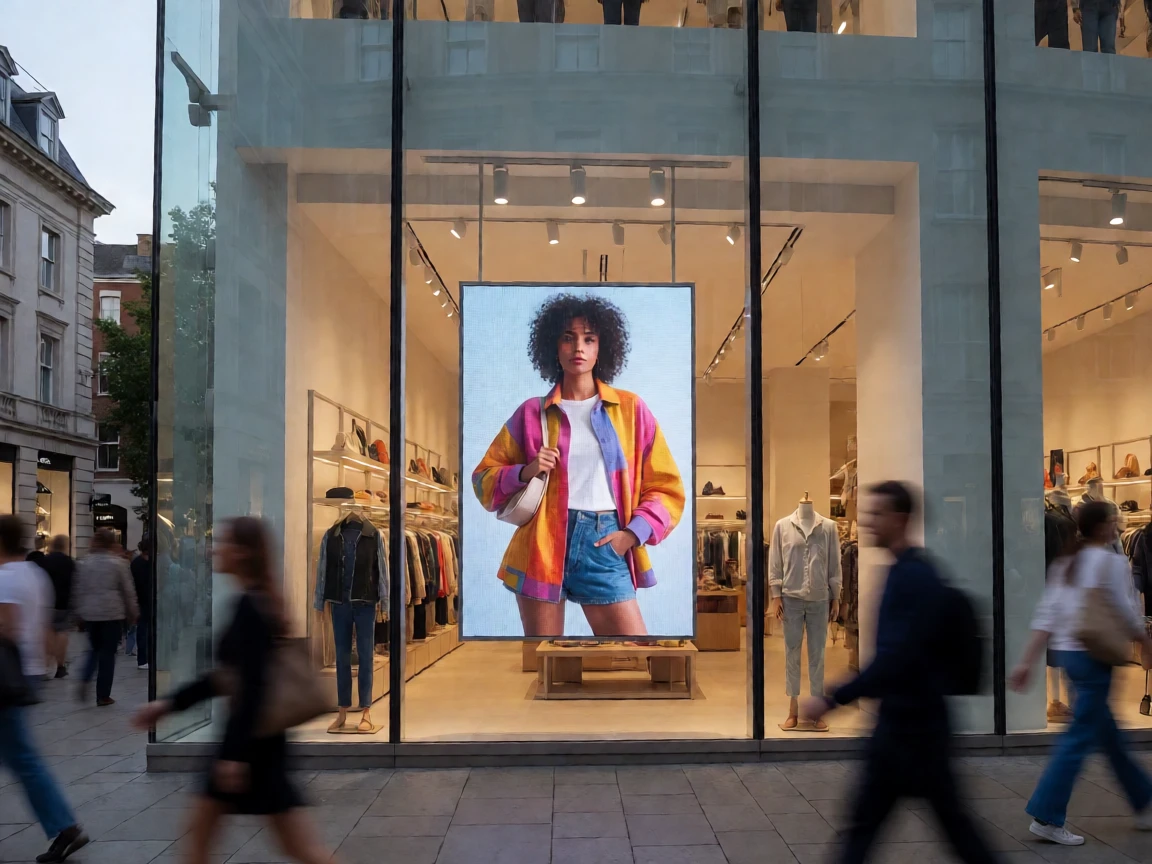
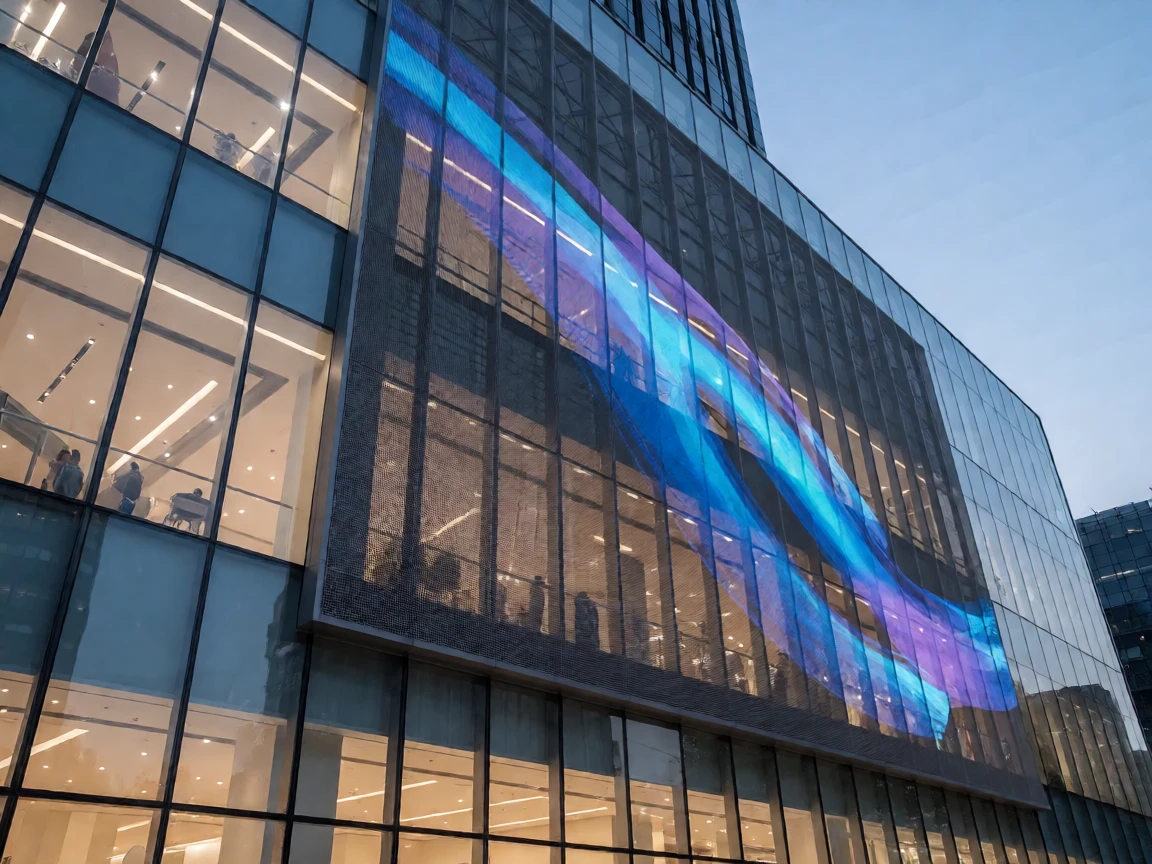
A transparent LED screen is a display that mounts LED emitters on a see-through carrier — the glass itself, a slim aluminum strip frame, or a self-adhesive film — so that 60–95% of the surface stays open to light and view while the lit lines form the image. Unlike a standard indoor LED cabinet, a transparent panel is not a sealed box: transparency comes from removing material, and that is also why its per-square-meter price behaves differently.
Three constructions are sold under the transparent label, and each carries its own price structure:
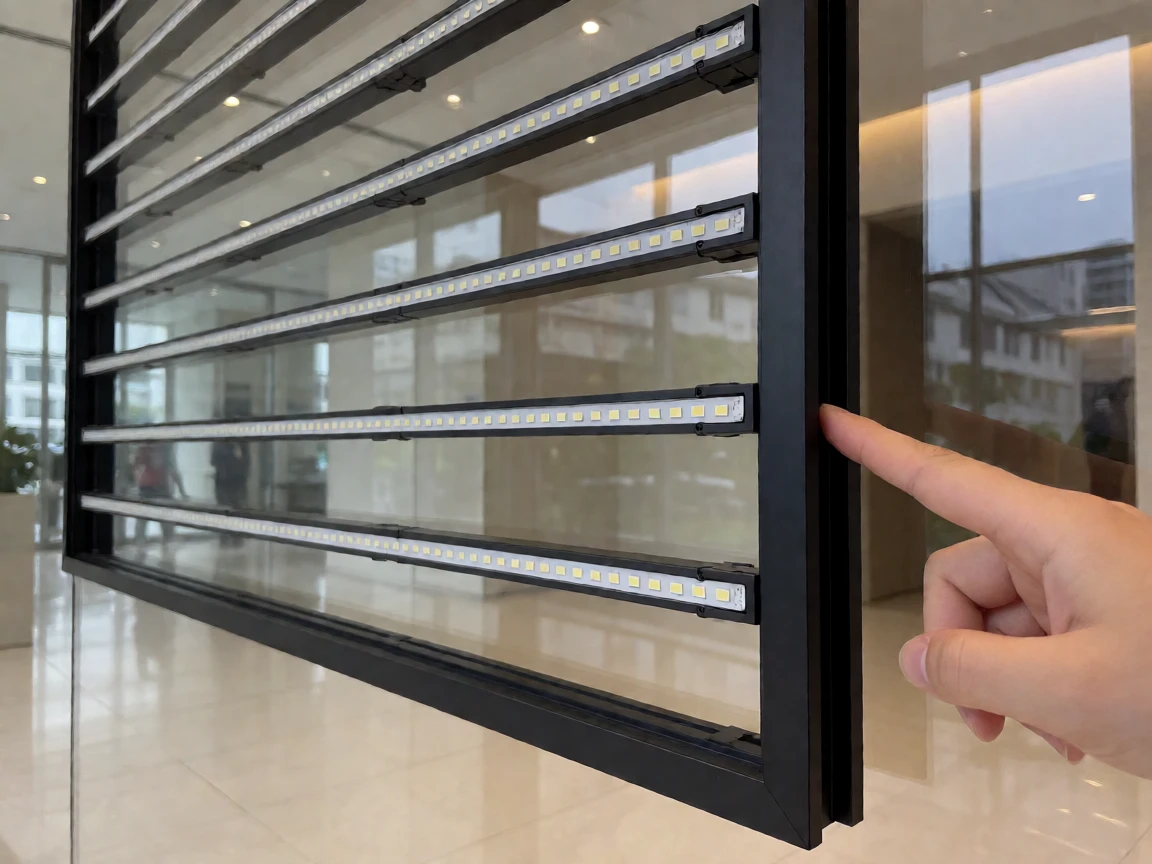
- LED strip screen (cabinet type) is a row of LED light bars held in slim aluminum cabinets hung on or in front of the glass. This is the construction behind the transparent LED window display EIT series: pitch P3.91–7.81, 70% transparency, 11 kg per square meter, brightness options from 1,000 to 5,500 nits for indoor or sun-facing positions. It is the workhorse of storefront and glass-curtain-wall projects. For the application side of storefront glass, our shop window LED display guide covers the retail use cases.
- LED film screen is a self-adhesive PET sheet with LEDs bonded to it, cut to the exact glass size and applied directly to the pane. At roughly 1.3 kg per panel with no frame, it is the retrofit route for existing retail glass (DOIT VISION, 2026).
- LED mesh or grid screen is a cable-supported lattice of LED lines for large façades, pitched P10 and coarser, where viewing distance is measured in tens of meters.
Pricing follows the same five inputs regardless of construction: construction type first, then pixel pitch, transparency rate, peak brightness, and total area. The screen body is quoted per square meter at EXW factory terms; everything else arrives as separate quote lines — more on that in the hidden-costs section.
How Much Does a Transparent LED Screen Cost in 2026?
The 2026 price ladder below separates the screen body at EXW factory-direct terms from what the broader market quotes for comparable builds. Market references come from published 2026 industry guides (DOIT VISION; iamledwall), each of which prices a different slice of the market — which is exactly why quoting one headline number for the category misleads buyers.
| Construction | Typical pitch | Factory-direct body per m² | Market reference per m² |
|---|---|---|---|
| LED film (self-adhesive) | P5–P20 | $500–$1,500 | $740–$2,220 (DOIT VISION, 2026) |
| LED strip / cabinet transparent | P2.5–P7.8 | $400–$1,200 | $800–$2,600; branded fine-pitch builds $3,000–$4,800 (iamledwall, 2026) |
| LED mesh / grid | P10–P25 | $150–$500 | $300–$960 (DOIT VISION, 2026) |
The market column is wider for three stacked reasons: LED brand, integrator margin, and turnkey scope. Lamp brand alone moves a strip-screen quote by 30–60% — an outdoor P3.9 build with Nationstar lamps runs $3,000–$4,200 per square meter against $2,600–$3,500 with Kinglight lamps at the same pitch (iamledwall, 2026). Pitch class also flips the comparison with standard panels: at fine pitches (P2.5–P3.9) a transparent build runs 20–40% above a sealed panel of the same pitch because of wide-temperature, high-brightness strip components (XLED comparison, 2026); at P7.8 and coarser the transparent build undercuts it, because the sparse LED layout simply carries less material per square meter. For conventional sealed outdoor hardware, our outdoor LED display price guide covers the standard-panel market.
What Does a Transparent LED Screen Cost Per Square Meter by Pixel Pitch?
Pitch is the biggest single lever inside any construction. The working rule is that pitch in millimeters approximates the minimum comfortable viewing distance in meters — the full method is in our guide to LED pixel pitch and viewing distance. The table below prices the strip construction across its pitch range, factory-direct against market.
| Pixel pitch | Viewing distance | Typical application | Factory-direct per m² | Market reference per m² |
|---|---|---|---|---|
| P2.5–P3.9 | 1–4 m | Luxury retail, jewelry, showrooms | $900–$1,800 | $1,800–$4,800 (iamledwall, 2026) |
| P3.91–P7.81 | 3–10 m | Storefronts, mall atriums (standard EIT class) | $400–$1,000 | $800–$2,600 |
| P7.8–P10.4 | 8–15 m | Glass curtain walls | $250–$600 | $500–$1,200 |
| P10.4–P15+ | 15 m and beyond | Tower façades, large DOOH meshes | $120–$400 | $300–$960 (DOIT VISION, 2026) |
Two mechanisms explain the table. First, LED count: a P3.91–7.81 strip carries about 32,768 dots per square meter, while a P15 strip carries fewer than 4,500 — the denser panel pays several times more in lamps and driver ICs before any other specification changes. Second, distance discipline: pixels bought for a 15-meter façade are wasted on a 3-meter window, and the price table punishes that mistake. The trade-offs specific to the P3.91 class are covered in our analysis of P3.91 transparent LED screen characteristics and applications.
For context against conventional hardware: the general indoor LED screen market runs $400–$1,500 per square meter (our indoor LED screen price guide), and a standard storefront strip screen at P3.91–7.81 lands inside that same band despite the more specialized application.
Why Does Higher Transparency Lower the Price of a Transparent LED Screen?
The transparency rate is the share of the screen surface that stays open to light and view — 70% on the EIT strip series, 90–95% on film products, up to 90% on coarse meshes (DOIT VISION, 2026). Within one product line, transparency and price move in opposite directions, which surprises most buyers. Raising transparency means spacing the LED lines further apart, so the same square meter carries fewer lamps, fewer driver channels, and less PCB substrate — the material bill drops as the see-through share rises.
Construction remains the bigger lever. A 90%-transparent film at P5 costs more per square meter than a 70%-transparent strip at P3.91–7.81, because bonding every lamp onto PET film is a precision process and the pitch is finer. The practical way to use the transparency dial is to decide what must stay visible behind the glass: retail windows hold 65–75% so merchandise reads through the content, while tower façades take 80% and above where the content, not the view, is the product. Specifying more transparency than the sight-line requires is one of the few places where buyers overpay for a specification that also lowers the hardware cost — the real cost of excess transparency is resolution, not money.
Transparent LED Film vs LED Strip Screen: Which Costs Less?
Both routes can cover a storefront window, so the price comparison has to run through structure, brightness, and environment — not just the body number. The table lines them up.
| Attribute | LED film | LED strip (cabinet) |
|---|---|---|
| Screen body price | $740–$2,220/m² market; P10 ≈ $1,120 (DOIT VISION, 2026) | $400–$1,200/m² factory-direct |
| Transparency | 90–95% | 60–75% |
| Weight | ~1.3 kg per panel, no frame | ~11 kg/m² including cabinets |
| Brightness | 2,000–4,000 nits | 1,000–5,500 nits |
| Installation | Peel-and-stick, no structure | Light frame or hanging bars |
| Outdoor capability | IP31, indoor glass only | Sealed IP65 models available |
Five key differences decide which route costs less on a given project:
- Body price overlaps, structure does not. Film’s published body range sits inside the branded strip range, but film needs no frame at all — on small panes that erases the strip’s body-price advantage.
- Environment disqualifies, not price. Film is rated IP31 and belongs behind glass; sun-facing and weather-exposed positions are strip territory regardless of what film costs.
- Brightness headroom differs by 1,500 nits. Strip tops out near 5,500 nits for direct sun; film’s 2,000–4,000 nits serves interior glass.
- Scale flips the winner near 15–20 m². Below that, film’s zero-structure install wins on total cost; above it, the strip’s coarser-pitch pricing drops faster per square meter.
- Maintenance models differ. Strip modules unclip and swap individually; film repairs mean patching or replacing sections of bonded material.
The working rule: retrofitting existing indoor retail glass points to film; new builds, sun-facing positions, outdoor exposure, and areas above 20 m² point to strip.
What Hidden Costs Sit Behind a Transparent LED Screen Quote?
The per-square-meter body price is the largest line in the budget but never the whole one, and comparing two quotes on body price alone is the most common budgeting error in this category. The items below typically add 10–25% on top of the screen body (DOIT VISION, 2026), and every one of them belongs on the quote as its own line.
| Item | Typical range | Notes |
|---|---|---|
| LED controller (NovaStar / Colorlight) | $300–$600 per screen | Configured to the panel layout before shipping |
| Power and signal cabling | $200–$500 | Depends on run length and site layout |
| Frame, rigging, or support steel | $0 (film) to $30–$80/m² (strip, mesh) | At 11 kg/m², strip needs light framing rather than full steelwork |
| Installation labor | Regional rates | A two-person crew covers 20–30 m² per day on film installs (DOIT VISION, 2026) |
| Shipping and import duty | By destination | Quoted to your port; the main source of the 10–25% add-on |
Weight explains a good share of that hidden-cost table. A standard sealed cabinet wall can demand engineered steelwork; a strip screen at 11 kg per square meter with 40 mm cabinet depth hangs off light framing bolted to the existing structure. That difference is why transparent installs regularly come in below standard-wall installs of the same area — and it is also why the structural drawings deserve as much attention as the panel quote. Our guide to transparent LED screen installation standards covers the structural side in detail.
How Much Should You Budget for a Transparent LED Screen Project?
Three worked budgets show how body price, hidden costs, and construction choice land on real projects. Each total assumes a NovaStar-class controller, standard cabling, regional installation labor, and sea freight.
| Project | Specification | Screen body | Budget total |
|---|---|---|---|
| Chain retail storefront | 12 m², strip P3.91–7.81, 70% transparency | $4,800–$12,000 | $6,500–$16,000 |
| Shopping-mall glass wall | 60 m², strip P7.81, 75% transparency | $15,000–$36,000 | $20,000–$46,000 |
| Boutique window film retrofit | 8 m², film P10, indoor glass | $5,600–$9,000 | $7,000–$11,000 |
Larger orders move the unit rate: manufacturers price transparency projects in volume bands, and a 60 m² order commonly secures a better per-square-meter body price than three separate 20 m² orders. Buyers planning multi-store rollouts should quote the program, not the individual store.
How Do You Check Whether a Transparent LED Screen Quote Is Fair?
Quotes for the “same” P3.91 transparent screen routinely differ by a factor of three, and the differences hide in what the quote leaves unnamed. Run this check before signing:
- Construction named, not implied — film, strip, or mesh, with pitch and transparency rate printed on the datasheet, not described in adjectives.
- Lamp brand and driver IC disclosed — the 30–60% spread between Nationstar and generic lamps (iamledwall, 2026) is invisible in a photo.
- Body scope separated from turnkey scope — what exactly the per-square-meter price excludes, at EXW or delivered terms.
- Power stated per square meter — transparent products average 200–240 W/m² at peak against 800 W/m² maximum; a quote without power figures hides running cost.
- Spare modules, IP rating for the actual mounting position, and warranty terms listed — the three items that surface as costs in year two.
- Line-item BOM requested — controller, cables, structure, and shipping each on their own row.
The deeper mechanics behind quote-to-quote gaps apply across the whole display category — our breakdown of five factors that affect LED display price covers them, and the price gap between outdoor LED panels shows the same pattern at outdoor grade.
Final Word: What Should a Transparent LED Screen Cost You in 2026?
Decide the construction first — film for indoor glass retrofits, strip for storefronts and sun-facing walls, mesh for large façades. Match pitch to viewing distance, set transparency by what must stay visible, and then compare quotes line against line, body against body. On those terms, $400–$1,000 per square meter buys a standard factory-direct storefront strip screen, $150–$500 covers a façade mesh, and $740–$2,200 reflects film at market terms — with 10–25% on top for everything the body price excludes. The transparent LED screen price you should pay is the one that arrives line-itemed, not the one that arrives as a headline.
Frequently Asked Questions About Transparent LED Screen Price
How much does a transparent LED screen cost per square meter in 2026?
The screen body runs $300–$2,600 per square meter depending on construction: LED film $740–$2,220 (DOIT VISION, 2026), strip screens $400–$1,200 factory-direct, and mesh from $150. Fine-pitch builds for close-view retail reach $1,800–$4,800/m² through integrators (iamledwall, 2026). Controller, cables, structure, installation, and shipping add 10–25% on top.
Why is there such a wide price range for transparent LED screens?
Because “transparent LED” names three constructions with different material bills, and the same screen is quoted at EXW body price by factories and at turnkey installed price by integrators — a 2–5x spread. Lamp brand adds another 30–60% within the same pitch.
What pixel pitch should I choose for a storefront window?
P3.91–P7.81 covers most storefronts, where viewers stand 3–10 meters from the glass. Luxury retail with 1–3 meter sight lines justifies P2.5–P3.9 at $900–$1,800/m² factory-direct; anything coarser than P7.81 loses readability inside a store.
Does a transparent LED screen need a steel support structure?
Usually not. Strip screens weigh about 11 kg/m² with 40 mm cabinet depth and hang on light framing bolted to the existing structure; film adds roughly 1.3 kg per panel and needs no structure at all. Full steelwork only returns on very large mesh façades.
Are transparent LED screens suitable for outdoor use?
Strip and mesh constructions are — sealed IP65 models are built for weather-exposed façades and reach 5,500 nits for direct sun. LED film is rated IP31 and belongs on the interior face of the glass, where the pane itself acts as the weather barrier.
What is included in a transparent LED screen quote — and what is not?
A factory body quote includes the panels, configured controller, and spare modules at EXW terms. Installation labor, support framing, site cabling beyond the supplied harness, shipping, and import duty are quoted separately and typically add 10–25% to the body total (DOIT VISION, 2026).