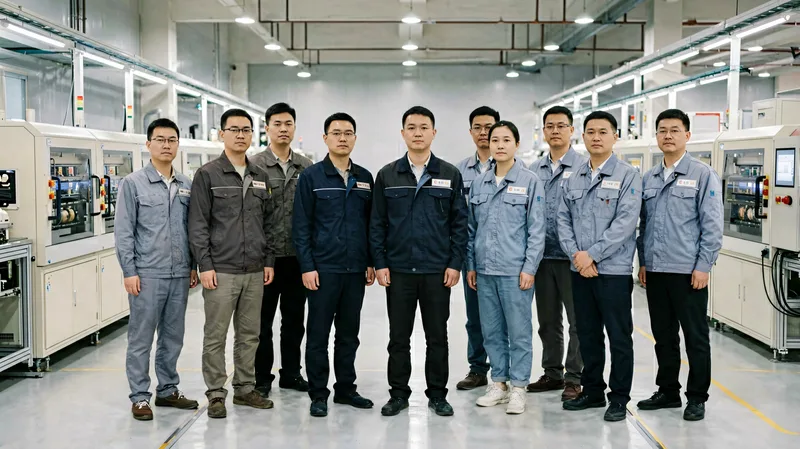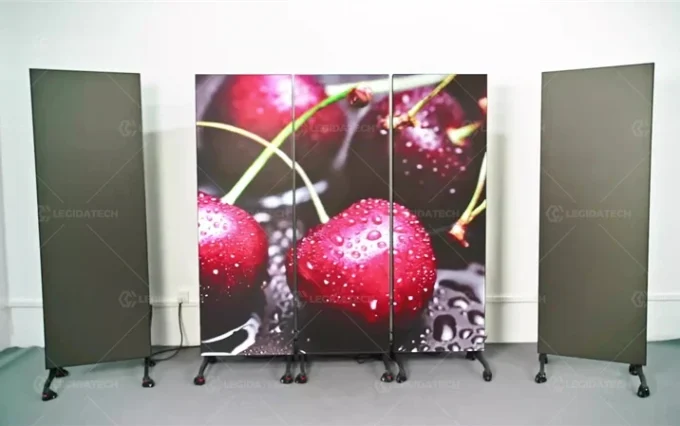
If you’re looking to import LED screens from China, the opportunity is massive — China produces over 80% of the world’s LED displays (Grand View Research, 2026), and buying factory-direct can save 30–45% compared to local distributor pricing. But navigating supplier verification, payment terms, freight logistics, and customs clearance requires a methodical approach. This guide walks you through the entire LED screen import process step by step — from defining your specifications to receiving your shipment — so you can source LED displays from Chinese manufacturers with confidence.
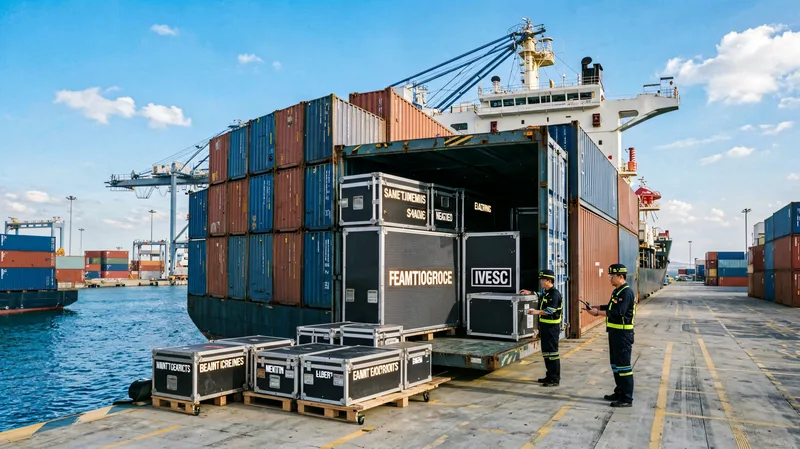
Why Import LED Displays Directly from Chinese Manufacturers?
Before diving into the logistics, it’s worth understanding why sourcing LED video walls from China has become the default procurement strategy for AV integrators, rental companies, and advertising operators worldwide.
1. Factory-Direct Pricing Eliminates Middlemen
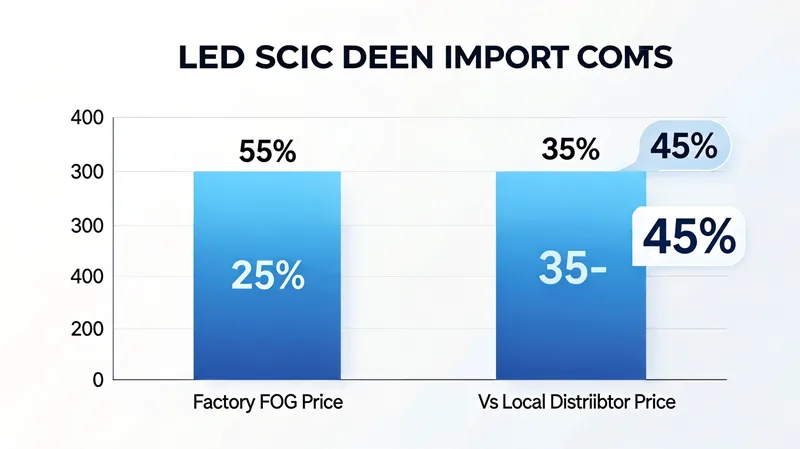
When you buy LED display from China factory directly, you bypass regional distributors who typically mark up 40–80%. A P3.91 outdoor LED screen that costs $450/m² FOB Shenzhen often retails for $750–1,100/m² in North America or Europe. For a 50 m² installation, that’s $15,000–32,500 in pure savings.
2. Access to the Latest LED Technology
Chinese LED display manufacturers lead global innovation in COB (Chip-on-Board), Mini-LED, Micro-LED, and common cathode energy-saving technology. Sourcing directly gives you access to technology that may take 12–18 months to reach local distributor catalogs. LED display types in 2026 have evolved dramatically — factory-direct buyers benefit first.
3. OEM/ODM Customization
Need custom cabinet sizes, private-label branding, or specific firmware? Chinese factories offer custom LED display manufacturing that local resellers simply cannot match. From custom LED display designs to tailored control systems, the flexibility is unmatched.
4. Mature Export Infrastructure
Shenzhen’s LED ecosystem supports end-to-end export: from component sourcing (NationStar LEDs, Mean Well power supplies, NovaStar controllers) to freight forwarding and export documentation. As a leading LED screen manufacturer based in Shenzhen, LEGIDATECH has shipped to 108+ countries, proving the supply chain’s maturity.
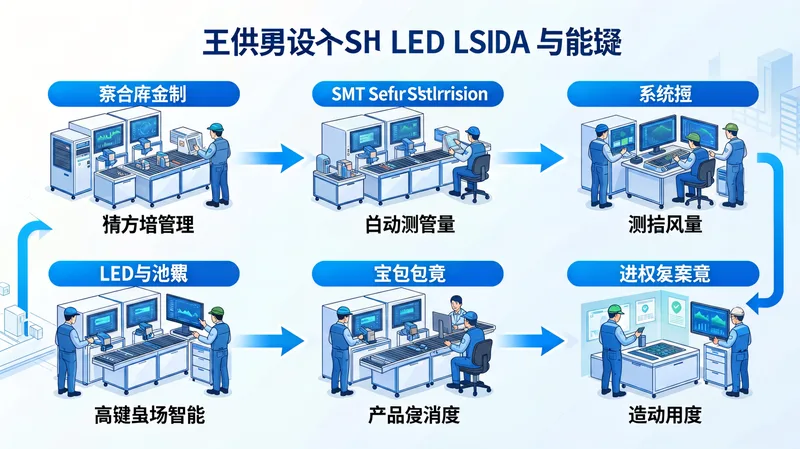
How to Import LED Screens from China — Step-by-Step Process
This section covers the complete LED screen import process, from your first specification document to the moment your LED panels power on at your installation site. Each step includes actionable checklists — skip nothing.
Step 1: Define Your LED Screen Specifications
Before contacting any Chinese LED display supplier, you need a precise technical specification document. Factories quote based on exact specs; vague RFQs get vague (and often inflated) quotes.
Essential specifications to lock down:
- Pixel pitch: Indoor typically P0.9–P4; outdoor P2.5–P16. Closer viewing distances demand finer pitch. See our P3.91 LED display view distance guide for reference.
- Brightness (nits): Indoor: 600–1,500 nits. Outdoor sunlight-readable: 5,000–10,000 nits.
- IP rating: Indoor minimum IP31. Outdoor: IP65 front / IP54 rear minimum. For extreme environments, IP68.
- Refresh rate: ≥1,920Hz for camera/broadcast use; ≥3,840Hz for film production and XR stages.
- Cabinet material: Die-cast aluminum (lighter, rental-grade) vs. steel (budget, fixed installation).
- LED brand: NationStar, Kinglight, Nichia — specify in your RFQ to avoid substitutions.
- Control system: NovaStar control system, Linsn, Colorlight — ensure compatibility with your existing hardware.

Step 2: Find and Vet Chinese LED Display Manufacturers
This is the most critical step in your LED screen sourcing journey. A bad supplier selection can cost you tens of thousands in defective panels, missed deadlines, and zero after-sales support.
Where to find verified LED display factory China suppliers:
- B2B Marketplaces: Alibaba (Trade Assurance), Made-in-China.com (Audited Suppliers), Global Sources (Verified). Filter for ≥3 years active, ≥95% response rate, and verified factory audit reports.
- Industry Trade Shows: ISE (Barcelona), InfoComm (USA), LED CHINA (Shenzhen) — meet manufacturers face-to-face.
- Direct Outreach: Factory websites with Google Maps-verifiable addresses, real production floor photos, and independent video tours.
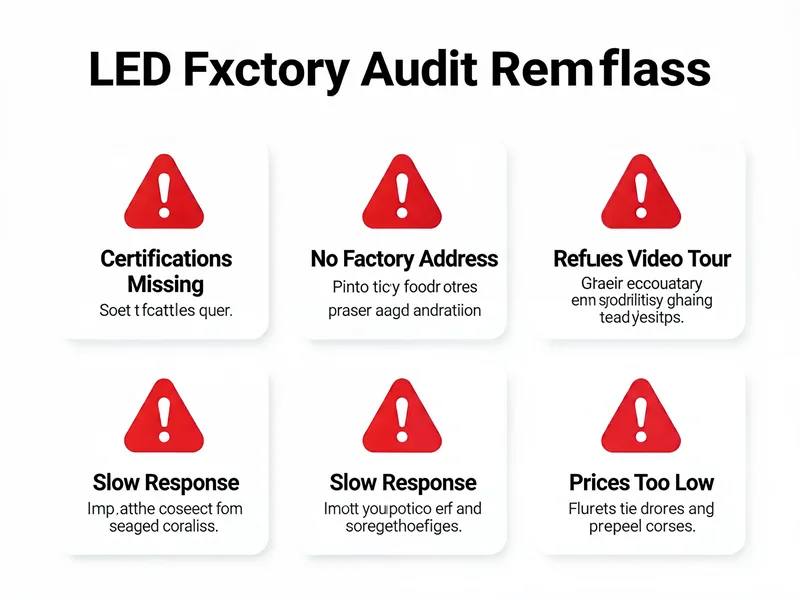
🚩 Red Flag Checklist — Reject any LED screen supplier that:
- ❌ Cannot provide a physical factory address verified on Google Maps
- ❌ Refuses a live video call walking through the production floor
- ❌ Lacks third-party certifications: CE (Europe), FCC (USA), RoHS (hazardous substances), ISO 9001 (quality management)
- ❌ Takes >48 hours to respond to technical questions about LED chip origin, driver IC model, or PCB layer count
- ❌ Claims “we can do everything” without showing project-specific case studies
- ❌ Quotes 30%+ below the market average — substandard LEDs and thin PCBs are invisible in photos
Step 3: Request Quotations and Order Samples
A professional RFQ (Request for Quotation) for LED video wall panels should include: exact pixel pitch, cabinet dimensions, LED brand, driver IC model, power supply brand, control system, warranty terms, and shipping Incoterms. Compare quotes on total landed cost — not just unit price.
Sample order strategy: Invest $200–$500 in 1–2 sample cabinets with your exact specifications. Test color uniformity, brightness consistency, refresh rate under camera, and physical build quality. This small investment prevents six-figure mistakes. For P3.91 outdoor displays, see our P3.91 outdoor LED screen factory price guide for benchmark pricing.
For more context on pricing across categories, consult our factory-direct LED screen price overview.
Step 4: Factory Audit and Quality Inspection
You don’t need to fly to Shenzhen for every order — but you do need independent verification. Third-party inspection agencies like SGS, Bureau Veritas (BV), and TÜV Rheinland offer factory audit services starting at $300–$800.
Factory visit and audit checklist — what to verify:
- ✅ SMT production line: Automated pick-and-place machines (Yamaha, Panasonic, ASM) — not manual soldering
- ✅ Aging test room: Every cabinet should undergo 48–72 hours of continuous burn-in testing at full white before shipping
- ✅ In-house LED module assembly: Factory owns the process from SMT to final assembly — not reselling from third parties
- ✅ Export packaging: Flight cases for rental LED screens, reinforced wooden crates for fixed installations
- ✅ QC documentation: Batch test reports including brightness uniformity (±5%), color temperature, and dead pixel rate (<0.01%)
Watch: Inside a Real LED Display Factory
Above: Walk through LEGIDATECH’s automated SMT production line. This is the standard of manufacturing you should expect from any qualified LED display factory China supplier — automated pick-and-place, dust-controlled environment, and systematic quality checks at every stage.
Step 5: Payment Terms and Trade Assurance
Payment is where many first-time LED screen importers get burned. Follow these industry-standard terms:
| Payment Method | Best For | Risk Level | Standard Terms |
|---|---|---|---|
| T/T (Telegraphic Transfer) | Orders < $50,000 | Medium | 30% deposit, 70% before shipment (after inspection photos/video) |
| L/C (Letter of Credit) | Orders > $50,000 | Low | Irrevocable L/C at sight; factory ships after L/C confirmation |
| Alibaba Trade Assurance | First-time buyers, small orders | Low | Full payment held in escrow; released after delivery confirmation |
| Western Union / PayPal | Sample orders only | High (no recovery) | Avoid for production orders |
Never pay 100% upfront. A 30/70 T/T split protects both parties: the factory has working capital, and you retain leverage until shipment verification.
Step 6: Shipping and Logistics — From Shenzhen to Your Door
Understanding LED display shipping from China is critical to accurate budgeting. Most LED screen exports leave from Shenzhen (Yantian/Shekou ports) or Hong Kong.
Incoterms — which should you choose?
- FOB (Free On Board): Factory delivers to port, you handle shipping + insurance. Best if you have a freight forwarder. Recommended for experienced importers.
- CIF (Cost, Insurance, Freight): Factory arranges shipping to destination port. Simpler, but you pay a premium. Recommended for first-time LED screen importers.
- DDP (Delivered Duty Paid): Factory handles everything including customs duty. Most expensive, least hassle. Good for small orders where simplicity outweighs cost.
| Shipping Method | Transit Time | Cost | Best For |
|---|---|---|---|
| Sea Freight (LCL) | 20–40 days (USA/EU) | $300–600/m³ | Orders >5 m²; best value for bulk |
| Sea Freight (FCL 20ft) | 20–40 days | $2,500–4,500 | Full container loads (~28 m³) |
| Sea Freight (FCL 40ft) | 20–40 days | $3,800–6,500 | Large projects (~58 m³) |
| Air Freight | 3–7 days | $3–8/kg | Urgent/small orders, spare parts |
| Rail Freight | 15–20 days (EU) | $2–4/kg | Europe-bound; faster than sea, cheaper than air |
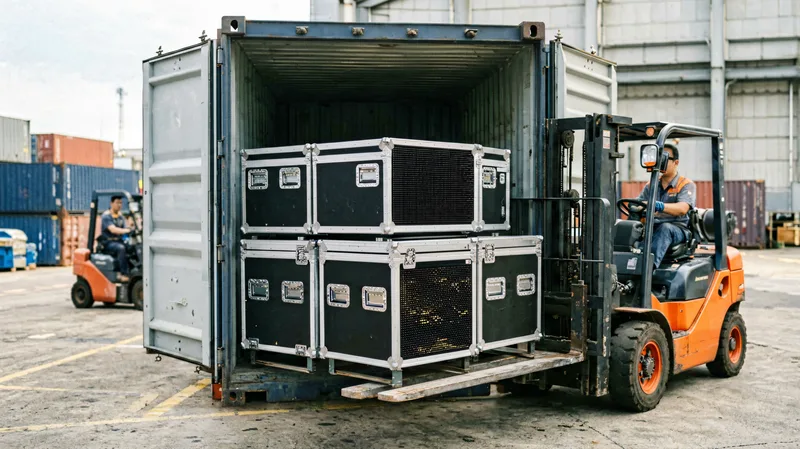
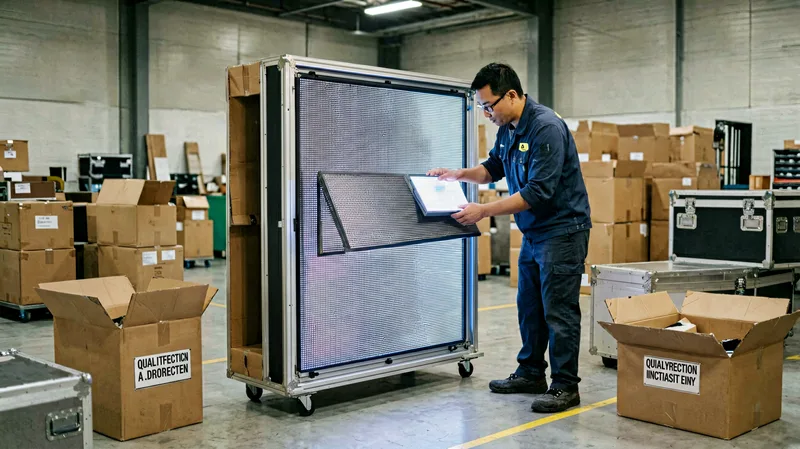
Packaging matters. Rental LED screens require flight cases with foam lining. Fixed LED displays ship in reinforced wooden crates with moisture barriers. Damaged-on-arrival rates drop from ~12% to <2% with proper export packaging (SINO Shipping 2025 logistics report).
Step 7: Customs Clearance and Import Duties
Clearing LED display customs requires correct documentation and HS code classification. Get this wrong and your shipment sits in a bonded warehouse accumulating storage fees.
HS Code for LED Displays: 8528.59 — “Monitors and projectors, not incorporating television reception apparatus; flat panel displays.” Confirm with your customs broker as classification can vary by specific product type.
Import duty rates (2026):
- USA: 0–3.9% base rate. Note: Section 301 tariffs on Chinese electronics may add 7.5–25% depending on product classification. Verify with a licensed customs broker.
- EU: 0–14% depending on member state and product classification. VAT additional (17–27%).
- UK: 0–2% base duty + 20% VAT.
- Australia: 0–5% duty + 10% GST.
Required import documents:
- ✅ Commercial Invoice
- ✅ Packing List (dimensions + weight per package)
- ✅ Bill of Lading (sea) or Air Waybill (air)
- ✅ Certificate of Origin (Form E for ASEAN, Form A for EU GSP)
- ✅ CE / FCC / RoHS certificates from manufacturer
- ✅ ISF Filing (USA only — must be filed 24 hours before vessel departure)
Customs broker: Worth the $150–500 fee, especially for first-time LED screen importers. They handle classification, duty calculation, and clearance — preventing costly delays.
Step 8: Receiving, Installation, and After-Sales Support
Your LED panels have arrived. Don’t sign the delivery receipt until you’ve done a preliminary inspection.
Receiving inspection protocol (within 48 hours):
- 📦 Check all packages against the packing list. Photograph any external damage.
- 🔌 Power on every cabinet one by one. Look for dead pixels, color inconsistency, flickering.
- 📊 Verify brightness and color calibration against the factory test report.
- 📋 Report any defects immediately — most warranties require claims within 5–7 days of delivery.
Warranty and after-sales: Standard LED display warranties are 2–5 years. Always negotiate 3–5% free spare modules in your contract — these cover dead pixels and module failures without waiting for international shipping. A qualified LED screen manufacturer provides steel structure drawings, system design, and remote troubleshooting support.
Real Cost Breakdown: What Does It Actually Cost to Import LED Screens from China?
Here is a transparent LED display landed cost analysis based on real 2026 data from import records and freight rate indices. Use this as a budgeting template. For a country-level version of this stack, see our LED Screen Price in Nigeria guide.
| Cost Item | P3.91 Outdoor (55 m²) | P2.5 Indoor (30 m²) | Rental P3.91 (50 m²) |
|---|---|---|---|
| Factory FOB Shenzhen | $380–550/m² | $450–700/m² | $520–800/m² |
| Sea Freight (LCL) | $35–55/m² | $35–55/m² | $35–55/m² |
| Marine Insurance (0.3% CIF) | $1.5–2/m² | $1.5–2.5/m² | $1.5–2.5/m² |
| Customs Duty (~3%) | $12–17/m² | $14–21/m² | $16–24/m² |
| Customs Broker Fee | $150–350 total | $150–350 total | $150–350 total |
| Local Delivery (LTL) | $200–600 total | $150–400 total | $200–500 total |
| Total Landed Cost | ~$450–650/m² | ~$520–800/m² | ~$600–900/m² |
| vs. Local Distributor Price | $750–1,100/m² | $900–1,500/m² | $1,000–1,600/m² |
| Your Savings | 35–40% | 40–45% | 40–45% |
Sources: Grand View Research LED Display Market Report (2026), SINO Shipping Freight Rate Index Q2 2026, aggregated import records. Actual costs vary by country, order volume, and freight rate fluctuations.
For more context on pricing across different product categories, refer to our outdoor LED display price guide and P2.5 LED screen price guide 2026.
7 Common Mistakes When You Import LED Screens from China
Having worked with 1,600+ international partners, we’ve seen the same costly errors repeat. Here’s how to avoid them when you source LED displays from China:
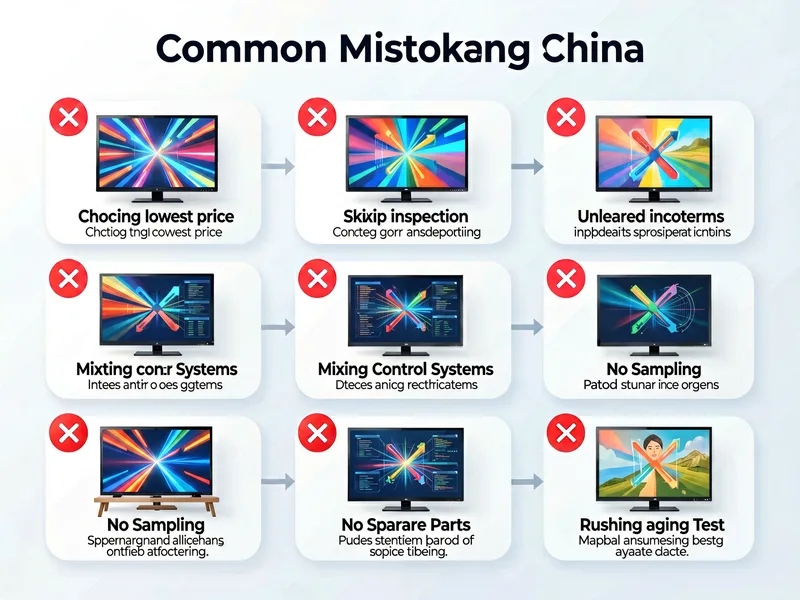
- Choosing by lowest price only. A $320/m² P3.91 outdoor screen uses generic LEDs, thin single-layer PCBs, and unbranded power supplies. It typically fails within 18 months. Compare total cost of ownership — not unit price.
- Skipping third-party inspection. Independent agencies (SGS, BV, TÜV) cost $300–800. That’s 0.5–1.5% of a typical $50,000 order — far cheaper than receiving substandard goods with no recourse.
- Not clarifying Incoterms upfront. “Free shipping” in a quote means nothing. Always specify FOB, CIF, or DDP in writing. FOB puts shipping risk on you; CIF transfers risk at the destination port; DDP covers everything.
- Ignoring control system compatibility. Mixing NovaStar LED controllers with Linsn receiving cards creates configuration chaos. Standardize on one ecosystem — NovaStar is the global standard supported by the broadest software ecosystem.
- Ordering production without sampling. A spec sheet is not a screen. One $300 sample cabinet reveals color calibration quality, physical build, and actual brightness that no PDF can communicate.
- No spare parts clause in the contract. Always negotiate 3–5% free spare LED modules, plus cost-price access to replacement parts for 3 years. A $50 module shouldn’t hold your $50,000 wall hostage.
- Rushing the aging test. Insist on 48–72 hours of factory burn-in at full white brightness. The “infant mortality” failure curve for LEDs peaks in the first 200 operating hours — catch defects at the factory, not at your venue.
Why Choose LEGIDATECH as Your LED Screen Manufacturer
When you decide to import LED screens from China, your choice of manufacturing partner determines everything — product quality, delivery reliability, and long-term support. Here’s what sets LEGIDATECH apart:
- 13+ years of export experience — 1,600+ partners across 108 countries
- 10,000 m² production facility in Shenzhen + Changsha R&D center
- Full certifications: CE, RoHS, FCC, ISO 9001
- Premium components only: NationStar / Kinglight LEDs, Mean Well power supplies, NovaStar / Linsn control systems
- Factory-direct wholesale pricing — no middlemen, no markup chains
- 2-5 year warranty on all LED display products
- Free system design and steel structure plans with every order
- In-house OEM/ODM: Custom LED displays for any application — indoor, outdoor, rental, stadium, creative shapes
Take a Virtual Tour of Our Factory:
Above: See LEGIDATECH’s end-to-end manufacturing facility. From SMT placement to module assembly, aging testing, and export packaging — every LED video wall we ship is manufactured under one roof with full quality traceability.
Browse our full product range: indoor LED displays, outdoor fixed LED billboards, rental LED screens, and stadium LED perimeter displays.
Frequently Asked Questions About Importing LED Screens
Q: How long does it take to import LED screens from China?
A: Production typically takes 15–30 days depending on order size and customization. Sea freight adds 20–40 days (USA/Europe). Budget 35–70 days total from order confirmation to delivery. Air freight cuts shipping to 3–7 days for urgent orders.
Q: What is the minimum order quantity (MOQ) for LED displays from Chinese factories?
A: Most manufacturers accept 5–10 m² for standard indoor/outdoor models. Rental LED screens and custom designs may require 20–50 m². Some factories including LEGIDATECH accept sample orders of 1–2 cabinets for quality evaluation before bulk purchase.
Q: Can I visit the LED screen factory before ordering?
A: Yes — and you should if your order exceeds $20,000. LEGIDATECH welcomes factory visits at our Shenzhen facility. If travel isn’t practical, we provide live video tours of our production floor, SMT lines, and aging test facilities.
Q: What certifications should a reliable LED display factory have?
A: Minimum: CE (European conformity), FCC (USA electromagnetic compliance), RoHS (restriction of hazardous substances), and ISO 9001 (quality management system). Request the actual certificate numbers and verify them on the issuing lab’s website (e.g., SGS CertEye, TÜV Rheinland certificate check).
Q: How do I handle warranty claims for imported LED displays?
A: Standard process: (1) Video-document the issue with the module powered on. (2) Send to your manufacturer’s support team for diagnosis. (3) If confirmed as a manufacturing defect, replacement modules are shipped via DHL/FedEx within 3–5 business days. Always keep your 3–5% spare modules on hand to avoid downtime during warranty processing.
Q: Do I need a customs broker to import LED screens?
A: Strongly recommended for first-time importers. A licensed customs broker ($150–500) handles HS code classification, duty calculation, and clearance paperwork — preventing storage fees that can exceed $100/day at bonded warehouses. For experienced importers with established customs relationships, self-filing is possible but adds administrative overhead.
Q: How does payment work when buying LED displays from a Chinese manufacturer?
A: Industry standard is T/T (Telegraphic Transfer): 30% deposit to start production, 70% before shipment after you receive inspection photos/video. For orders above $50,000, an irrevocable Letter of Credit (L/C) provides the strongest buyer protection. Alibaba Trade Assurance is a good option for first-time buyers making smaller purchases.
Conclusion — Start Your LED Screen Import Journey Today
Learning how to import LED screens from China is one of the highest-ROI investments you can make as an AV integrator, rental company, or advertising operator. With factory-direct pricing delivering 35–45% savings, direct access to the latest LED display technology, and full OEM/ODM customization, importing from a trusted Chinese LED screen manufacturer gives you a structural cost advantage over competitors who buy from local distributors.
The process is methodical — not mysterious. Define your specs. Vet your LED display supplier with factory video tours and third-party audits. Lock in payment terms that protect both sides. Ship with the right Incoterms and packaging. Clear customs with proper documentation. And always negotiate spare parts and warranty terms upfront.
Ready to start sourcing? Get a free quote from LEGIDATECH — factory-direct pricing, response within 24 hours, free system design and steel structure plans included. With 13+ years of experience shipping LED video walls to 108+ countries, we make the LED screen import process straightforward and transparent.
Sources: Grand View Research, “LED Display Market Size, Share & Trends Analysis Report, 2026” (grandviewresearch.com); WTO World Tariff Profiles 2026; SINO Shipping Logistics Performance Report Q2 2025.