LED Lamp Bead Brands Compared: Nationstar, Kinglight & How to Evaluate Bins
Two LED display quotes can name the same lamp bead brand and still produce screens that look different. The brand tells you who packaged the LED; the bin code tells you what wavelength, brightness and voltage group the beads came from. This guide compares the lamp bead brands used in commercial LED displays, explains how binning works, and shows how to write a specification that a supplier can actually be held to.
Short answer: LED lamp bead brands are packaging companies that turn LED chips into solderable components. Nationstar and Kinglight are the two Chinese brands most often quoted for quality commercial displays; Nichia and Cree sit above them on price and are used in about 5% of projects. The brand name matters less than the bin code, batch and test report: specify the bins, require one production lot, and verify the reel labels before production.
What Are LED Lamp Bead Brands and Why Do They Matter?
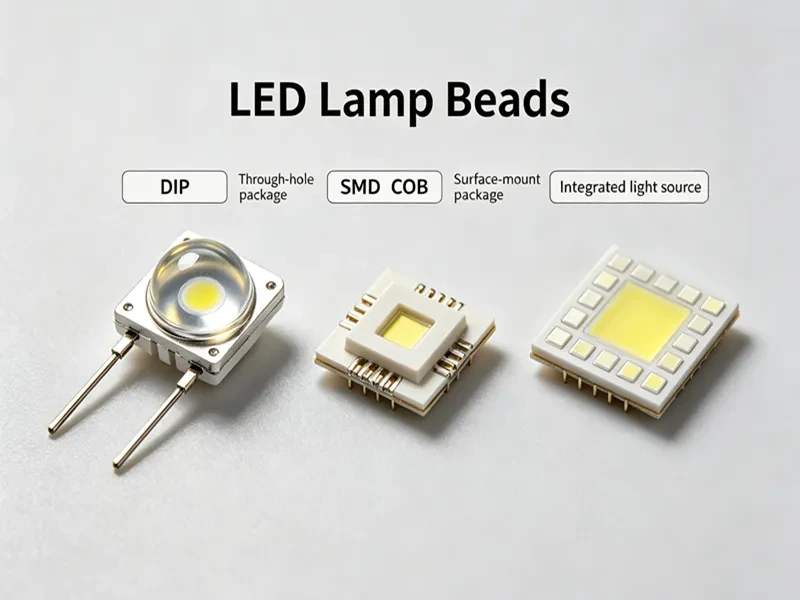
An LED lamp bead is a finished packaged LED: an LED chip mounted in a bracket or on a substrate, wire-bonded or flip-chip bonded, encapsulated in resin or silicone, and fitted with a lens or a flat emitting surface. It is the component that gets soldered onto the display PCB. The bare chip is the light source inside it, not the part the display factory buys by the reel.
LED lamp bead brands are the companies that perform that packaging step. They buy chips from chip makers, package them into SMD, COB, IMD or DIP formats, measure each unit, sort the output into bins, and sell the binned reels to display manufacturers. The brand name indicates the packaging house and its process control; it does not, by itself, tell you which chip is inside or how tightly the parts were sorted.
Royal Display (2026) estimates that lamp beads account for 30–70% of total display cost. In Legidatech’s P3.91 outdoor cost breakdown, tier-one beads from Nationstar or Kinglight cost $180–$250 per square meter, before the driver ICs, power supplies and cabinet (Legidatech, 2026). A 15–20% saving on that line item is the difference between a tight-bin screen and a mixed-bin screen, and the saving is usually invisible until the wall is running a white field.
Which LED Lamp Bead Brands Lead the Display Market in 2026?
The market is easier to read as tiers than as a ranking. The tiers reflect positioning, not a universal quality order; a top-tier brand can still ship a loose bin.
| Tier | Brands | Typical position | Fixture types |
|---|---|---|---|
| International premium | Nichia, Cree, OSRAM | High price, tight process control, long track record | Broadcast, cinema, medical, mission-critical |
| Chinese top tier | Nationstar, Kinglight | Standard for quality commercial displays | Indoor fixed, outdoor, rental, XR, cinema |
| Mid tier | Mulinsen, Hongsheng, Refond | Cost-focused, acceptable for non-critical signage | Short-term rental, basic advertising |
| Unbranded | No traceable package brand | Lowest price, no reliable bin data | Avoid for permanent or high-visibility work |
Nationstar (Foshan Nationstar Optoelectronics) was founded in 1969 and is one of China’s longer-established LED packaging companies. Its display range includes the REESTAR series, IMD series, small-pixel series and separate indoor and outdoor lines, and its devices have been used in large public events including the 2022 Beijing Winter Olympics (IAMLEDWALL, 2025). It is usually positioned around color reproduction and fine-pitch consistency.
Kinglight (Shenzhen Kinglight) was founded in 2008 and has built a product range around fine-pitch, rental, cinema, XR/virtual production and outdoor 5G+8K displays. Its rental series is marketed around impact resistance, and its XR series cites up to 98% DCI-P3 coverage (IAMLEDWALL, 2025). It is positioned as the cost-effective top-tier option, with more emphasis on rental durability than cinema-grade color.
Nichia and Cree sit above both on price. DOIT VISION (2024) reports that Nichia and Cree parts can cost 3–5 times more than a Nationstar part, putting the finished LED package 4–6 times higher, and that only about 5% of buyers choose them. They appear in broadcast, medical and other projects where the color budget is secondary to the risk budget.
Nationstar vs Kinglight: How Do the Two Leading LED Lamp Bead Brands Compare?
The two brands overlap across most of the commercial range, so compare by project type, not by a single winner.
| Attribute | Nationstar | Kinglight |
|---|---|---|
| Founded | 1969, Guangdong | 2008, Shenzhen |
| Strongest positioning | Color fidelity, fine pitch, cinema and high-end fixed installs | Cost efficiency, rental durability, XR and outdoor volume |
| Representative series | REESTAR, IMD, small-pixel, indoor and outdoor SMD | 1212 and TOP1010 fine pitch, 1820 rental, 1415/1212 XR, 3535 outdoor |
| Published price delta | About $20–$50/m² more than Kinglight in a supplier comparison | Lower entry price for comparable pitch |
| Supplier-published reliability claims | Lower dead-pixel rate and slower light decay in comparisons | Higher claimed brightness per dollar, improved rental durability |
| Best fit | Control rooms, cinema, broadcast, premium boardrooms | Rental fleets, outdoor advertising, XR stages, cost-sensitive fixed jobs |
The price delta is small against the total wall. A $20–$50/m² difference on a $800–$1,500/m² indoor screen is roughly 2–6% of the hardware price (DOIT VISION, 2024; Legidatech indoor price guide, 2026). The reliability claims in the table are supplier-published comparisons, not independent lab results. Treat them as a reason to ask for test data, not as a substitute for it.
Five differences decide most projects:
- Color target. Nationstar is usually specified where skin tones, brand colors or cinema grading dominate; Kinglight is usually sufficient for advertising and rental content.
- Mechanical exposure. Rental and touring screens benefit from Kinglight’s impact-focused rental series; fixed installs can prioritize color over impact resistance.
- Price position. The brand delta is small per square meter but compounds on large walls; the bin specification matters more than the logo.
- Product depth. Kinglight publishes dedicated XR, cinema and outdoor series; Nationstar covers fine pitch with REESTAR and IMD.
- Evidence quality. Both can supply bin codes and test reports; require them regardless of the logo.
How Do LED Lamp Bead Brands Grade Bins and What Do the Codes Mean?
Binning is the process of measuring each packaged LED and sorting it into groups with similar electrical and optical behavior. A bin is not a quality grade in the abstract; it is a range. Two beads from the same brand can sit in different bins and look different on a white field.
Four parameters are sorted for display LEDs:
- Dominant wavelength (color). Red, green and blue beads are sorted by wavelength in nanometers. Royal Display (2026) lists typical display ranges of 620–630 nm for red, 520–530 nm for green and 460–470 nm for blue.
- Luminous intensity or flux (brightness). Beads are grouped by light output so that one part of the wall does not run brighter than another. Royal Display (2026) cites ±5% grouping as a typical professional target.
- Forward voltage. Voltage bins keep the current draw predictable across a module. A ±0.1 V tolerance is a common professional target (Royal Display, 2026).
- Chromaticity (white beads). White LEDs are sorted by color coordinates and color temperature; a ±200 K CCT band is typical for commercial work (Royal Display, 2026).
Wavelength tolerance decides most display projects. HQG (2025) lists three grades: ±2.5 nm ultra-tight, ±5 nm tight and ±7.5 nm standard, and notes that the eye detects differences of 3–5 nm when LEDs are viewed together. Tight bins cost more: a 10–20% premium for ±5 nm, 20–30% for ±2.5 nm and 30–50% for custom sorting.
Why Does the Same LED Lamp Bead Brand Perform Differently in Different Screens?
The package brand is only one variable. Module design, PCB thermal performance, driver IC current accuracy, mask reflectance and the calibration process all change the result. A Nationstar reel built into a poorly cooled module can drift more than a Kinglight reel in a well-designed module. This is why a brand-only specification is weak: it names the supplier but not the bin, the batch or the module around it.
What Does a Bin Code Tell You About LED Lamp Bead Brands?
A bin code is the supplier’s record of the wavelength, flux and voltage group. It should appear on the reel label and in the shipping documents. Save the codes from the first order: when a module is replaced two years later, the closest match is the same brand, same bin and same production lot. If a supplier cannot provide the code, the buyer cannot verify what was shipped.
How Do You Evaluate LED Lamp Bead Brands Before Ordering?
Evaluation starts with the datasheet and ends with an incoming inspection. The steps below apply to any brand.
- Request the bin specification in writing. Ask for the wavelength range, flux range and voltage range, with the bin code format the supplier uses.
- Require one production lot per screen. Mixed lots from the same brand can still show color differences. The whole wall should use beads from one lot, and spare modules should come from the same lot.
- Ask for the test report. Look for wavelength distribution, flux distribution, forward voltage and, for white beads, chromaticity coordinates.
- Check the lifetime data. Ask for LM-80 data and an L70 estimate. Royal Display (2026) cites 50,000 hours as a common commercial target; the number is only useful with the drive current and test conditions attached.
- Inspect samples and run field tests. Check solder joints, encapsulation, contamination and glue hardness, then light a solid white field and solid RGB fields to expose brightness patches, wavelength spread and dead pixels.
- Age the modules. A 72-hour high-temperature, high-humidity powered aging test is a common screen before assembly (Sunrise, 2026). It exposes early light decay and color drift that a short sample test misses.
- Confirm the calibration plan. Even a tight-bin wall needs module matching and a full-screen calibration to reach a uniform white field. Ask who performs it and what Delta E the report will show.
How Do You Write LED Lamp Bead Brand Requirements into an RFQ?
Use language that can be checked. For example: “All display LEDs must come from a single production lot of the specified package brand and bin. Wavelength tolerance shall not exceed ±5 nm. Luminous intensity shall be within ±5%. Forward voltage shall be within ±0.1 V. Bin codes must appear on each reel and in the shipping documents. A test report and a 72-hour aging record must be provided before shipment.” That paragraph is short, but it closes the gap between a brand name and a delivered screen.
Which LED Lamp Bead Brands Fit Indoor, Outdoor and Rental Projects?
The application decides the package format first, then the brand tier, then the bin tolerance.
| Application | Package and pitch | Brand tier | Bin focus |
|---|---|---|---|
| Indoor fixed, boardroom | SMD 1515/2121 or COB, P1.2–P2.5 | Nationstar or Kinglight; Nichia for premium | ±2.5–5 nm, tight flux, matched batch |
| Retail and advertising | SMD 2121/2727, P2.5–P4 | Kinglight or Nationstar | ±5 nm, brightness uniformity |
| Outdoor billboard | SMD 2727/3535 or DIP, P4–P10 | Kinglight or Nationstar; DIP for P6+ | High brightness, UV and moisture resistance |
| Rental and stage | SMD 1820/2121/2727, P2.6–P4.8 | Kinglight rental series or Nationstar | Impact resistance, matched batches for spares |
| XR and virtual production | SMD 1212/1415 or COB, P0.9–P1.8 | Kinglight XR, Nationstar, Nichia | P3 gamut coverage, low failure rate, tight color |
Legidatech’s P1.25 COB LED display module uses Nationstar lamp beads, 3,840 Hz refresh and 1,000-nit brightness, and each module is placed on an aging rack for a lighting test before shipment (Legidatech, 2026). The outdoor LED modules and indoor LED modules pages show the module formats that sit around those beads, while the COB LED display modules page covers the fine-pitch alternative.
LED Lamp Bead Brands vs Chip Brands: What Is the Difference?
An LED chip is the bare semiconductor die that emits light. An LED lamp bead is the packaged component built around that die. Epistar, Sanan and other chip makers sell dies to packaging houses; Nationstar and Kinglight package dies into display beads; Nichia and Cree operate across both stages.
This distinction matters when a quote says “Nationstar chip” or “Epistar lamp bead.” Nationstar is primarily a packaging brand, not a chip brand. A supplier that cannot separate the chip maker from the package maker may not know which part is actually being controlled. Ask for both: the package brand and bin, and the chip brand if the project’s reliability model depends on it.
What Do LED Lamp Bead Brands Cost in 2026?
The bead line is a large share of the screen, but the brand delta is smaller than the bin delta. Royal Display (2026) puts lamp beads at 30–70% of total display cost. Legidatech’s P3.91 outdoor breakdown puts tier-one SMD 1921 or 2727 beads at $180–$250/m² and the driver ICs at $45–$65/m² (Legidatech, 2026). A loose-bin substitution can cut 15–20% from the bead line, but it also produces uneven color and faster brightness attenuation, which is why the cheap quote often returns as a warranty claim.
At the screen level, use the indoor LED screen price guide, the LED screen price guide and the LED screen cost breakdown as baselines. For a 50 m² P3.91 outdoor wall, tier-one beads alone represent roughly $9,000–$12,500 of material; the difference between a tight-bin and a loose-bin reel is a few thousand dollars against a project that will run for years. The P3.91 outdoor LED screen factory price article itemizes the rest of the bill of materials.
How Do Mixed-Bin or Counterfeit LED Lamp Bead Brands Reach a Project?
Most problems do not arrive as a fake logo. They arrive as a legitimate brand name with an unspecified bin: re-marked reels, mixed lots sold as one, a brand named in the BOM but substituted at production, loose bins sold as tight, and refurbished beads from dismantled screens.
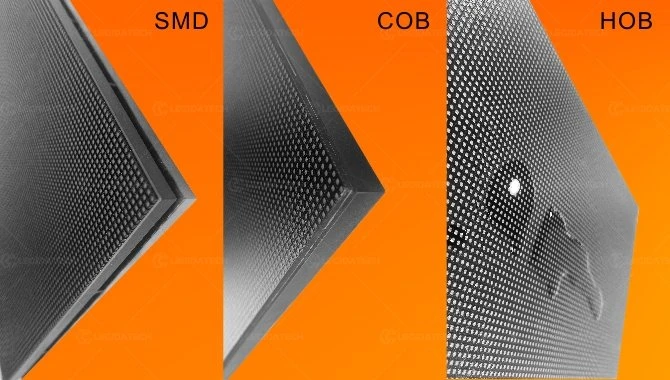
Verification is procedural. Check the reel label against the shipping documents, sample a few beads from each reel, compare the measured wavelength and brightness with the bin code, and require a pre-shipment aging record. Put the brand, bin, batch and penalty terms in the purchase contract. The 8 reasons for LED display lamp bead damage article covers the failure modes that appear after installation, and the DIP, SMD and COB packaging comparison explains how the package choice changes those failure modes.
Which Sources Support This LED Lamp Bead Brands Guide?
Brand profiles, product series and application positioning: IAMLEDWALL, “Nationstar LED vs Kinglight LED vs Nichia LED vs Epistar LED” (2025-09). Price delta and supplier-published reliability comparison: DOIT VISION, “Nationstar vs Kinglight vs Nichia vs Epistar LED” (2024-02). Lamp bead definition, package types, specification targets and cost share: Royal Display, “LED Lamp Beads: How to Choose the Best for LED Display” (2026-04). Bin tolerances and tight-bin pricing: HQG, “Why Wavelength Consistency Matters: The Importance of Binning in SMD LEDs” (2025-12). Full-screen color control, 72-hour aging and Delta E <3: Sunrise, “Color Consistency Control for LED Displays” (2026-08). Tier-one bead and driver IC cost at P3.91: Legidatech, “P3.91 Outdoor LED Screen Factory Price” (2026). Product configuration and aging practice: Legidatech, P1.25 COB LED display module page and module pages (2026).
Frequently Asked Questions About LED Lamp Bead Brands
Is Nationstar better than Kinglight for LED displays?
Neither brand wins every project. Nationstar is usually specified where color fidelity and fine-pitch consistency matter, such as control rooms, cinema and premium boardrooms. Kinglight is usually specified for rental, outdoor and cost-sensitive fixed projects, where its rental series and price position fit better. The bin code and production batch matter more than the brand name.
What is a lamp bead bin code?
A bin code is the supplier label for the wavelength, brightness and voltage group that a reel of LEDs was sorted into. It should appear on the reel and in the shipping documents. The same brand can ship several bins, so the code is the only way to reorder a matching batch or replace a module without a visible color patch.
How tight should LED wavelength bins be for a display?
For commercial displays, a maximum wavelength tolerance of plus or minus 5 nm is a practical baseline, and plus or minus 2.5 nm is used for color-critical work. Standard bins of plus or minus 7.5 nm can look patchy on a large wall because the human eye can detect differences of 3 to 5 nm. Tighter bins cost more, so match the tolerance to the viewing distance and content.
Can I mix LED lamp bead brands or batches on one screen?
Do not mix brands or batches on one screen. Even two reels from the same brand and the same bin can differ if they came from different production lots. The whole wall should use one brand, one bin and one lot, and spare modules should be built from the same lot so that later repairs match the original screen.
Are more expensive LED lamp bead brands always better?
No. Nichia and Cree cost several times more than Nationstar or Kinglight, and the premium is justified only for broadcast, medical or other color-critical work. For most commercial displays, a tight-bin Nationstar or Kinglight reel with a verified batch and test report produces a better result than a premium brand with loose bins or no traceability.
How do I verify an LED lamp bead brand before production?
Check the reel label and shipping documents for the brand and bin code, sample beads from each reel, compare measured wavelength and brightness with the stated bin, and require a 72-hour aging record before shipment. Put the brand, bin, batch and penalty terms in the purchase contract. A logo on a datasheet is not verification.
Final Word: How Should You Choose LED Lamp Bead Brands?
The brand is the starting point, not the specification. Choose the package format for the application, choose a tier that matches the color and reliability budget, then write the bin, batch and test-report requirements that make the choice enforceable. For most commercial walls, Nationstar and Kinglight cover the range; what shows on screen comes from bin tolerance, batch discipline and calibration, not the logo. As an LED screen manufacturer, Legidatech specifies the lamp bead brand and bin with the module order and can supply the aging and calibration records behind it. The rental LED display, outdoor LED display and LED screen for XR ranges show where each brand tier is usually applied; the LED display driver IC guide explains the component that turns bead consistency into a stable image.