


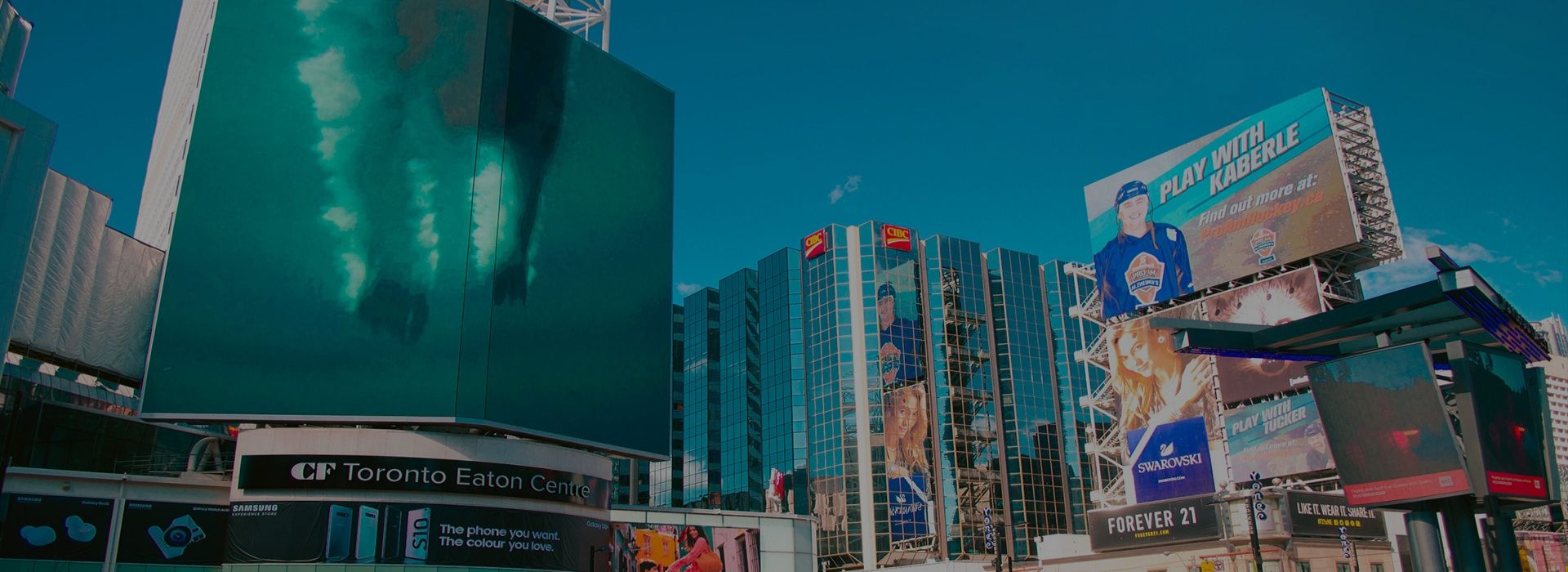
What is an Outdoor Commercial LED Screen?
An outdoor LED advertising screen is a modular screen composed of LED lamp beads, modules, and cabinets. It can display text, pictures, and dynamic videos infinitely and seamlessly.
Outdoor LED billboards are highly protective and highly adaptable to the environment. They can play normally regardless of the scorching sun, rain, or snow. It is an advertising method with a high return rate.
To ensure consistent viewing quality at varying viewing distances, outdoor LED displays offer a variety of pixel pitch options. For closer viewing distances, choose a smaller pixel pitch, such as a P4 LED display; for farther viewing distances, choose a larger pitch, such as a P10 LED display.
Most outdoor advertising LED displays come in sizes of 960*960 mm, 500*1000 mm, and 640*960 mm. These sizes vary to accommodate various fixed-size projects. Custom sizes are also available, but the processing time and cost will increase. (Learn: Factors Affecting LED Display Prices)
While this page focuses on specialized advertising solutions, it remains a core part of our broader [Outdoor LED Display] category, where we offer a full range of high-performance screens for every outdoor application.”
Common Outdoor Advertising Applications
Outdoor advertising LED displays are widely used across commercial, transportation, retail, and public infrastructure environments. Different advertising scenarios require different screen sizes, pixel pitches, brightness levels, and installation methods. Whether for roadside billboards, shopping centers, gas stations, building facades, or airport advertising networks, LED displays provide high visibility, dynamic content delivery, and long-term advertising value.
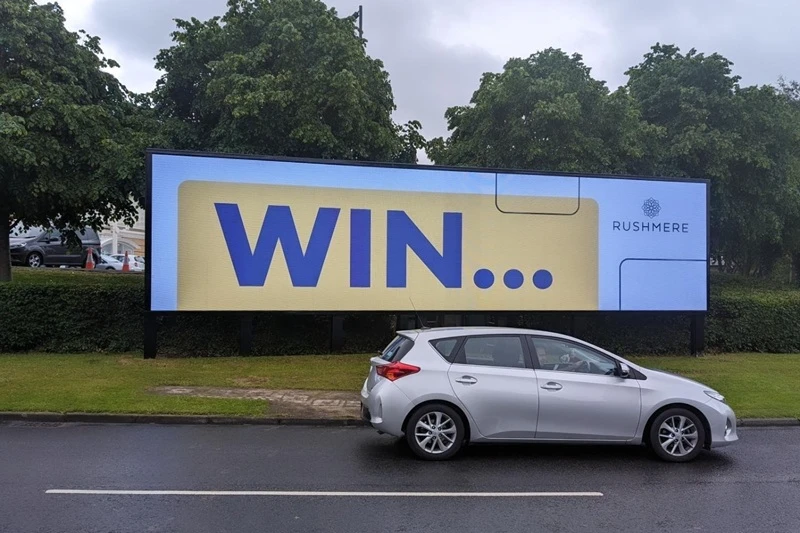
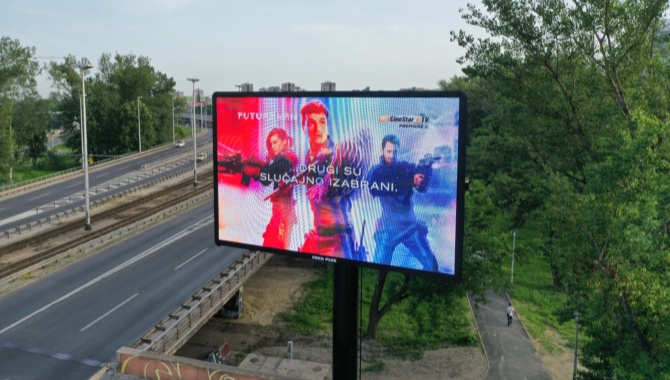
Outdoor LED displays are widely used along highways, major roads, and urban intersections to maximize advertising exposure. With high brightness and long viewing distances, they ensure clear visibility day and night, helping advertisers reach thousands of drivers and pedestrians every day.
Recommended Pixel Pitch: P6 / P8 / P10
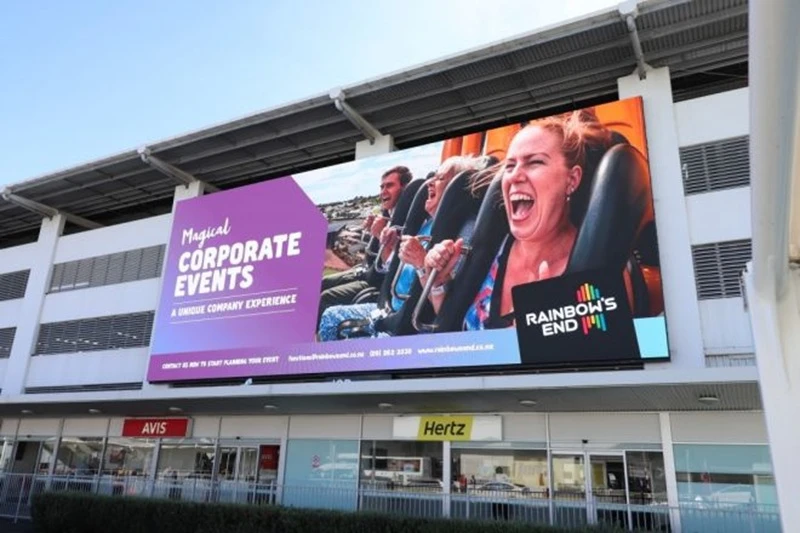
LED displays installed at shopping mall entrances, plazas, and commercial streets help brands attract customers with dynamic content and vivid visuals. These displays are ideal for promotional campaigns, product launches, and seasonal advertising activities.
Recommended Pixel Pitch: P3.9 / P4 / P5
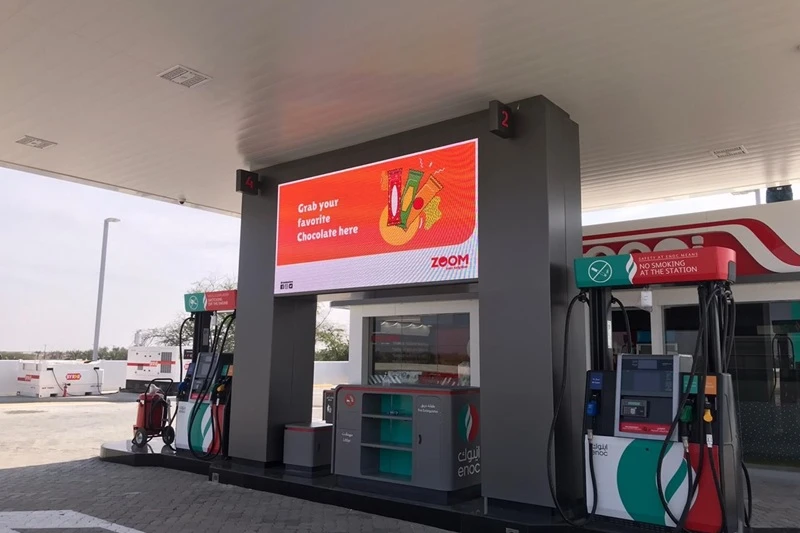
Gas station LED displays provide an effective platform for fuel promotions, convenience store advertising, and local business marketing. Their weather-resistant design and 24/7 operation make them suitable for long-term outdoor advertising applications.
Recommended Pixel Pitch: P4 / P5 / P6
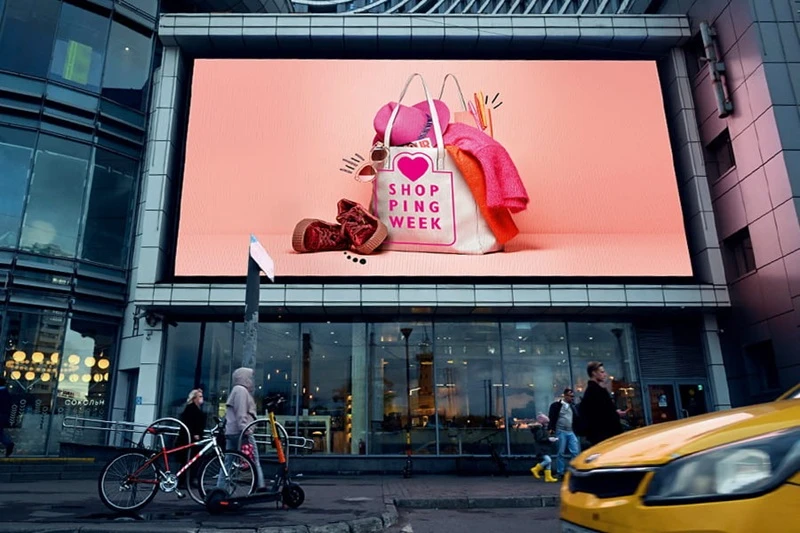
Large-format LED displays mounted on building facades create eye-catching digital landmarks in urban environments. They are commonly used for brand awareness campaigns, commercial advertising, and public information broadcasting in high-traffic areas.
Recommended Pixel Pitch: P6 / P8 / P10
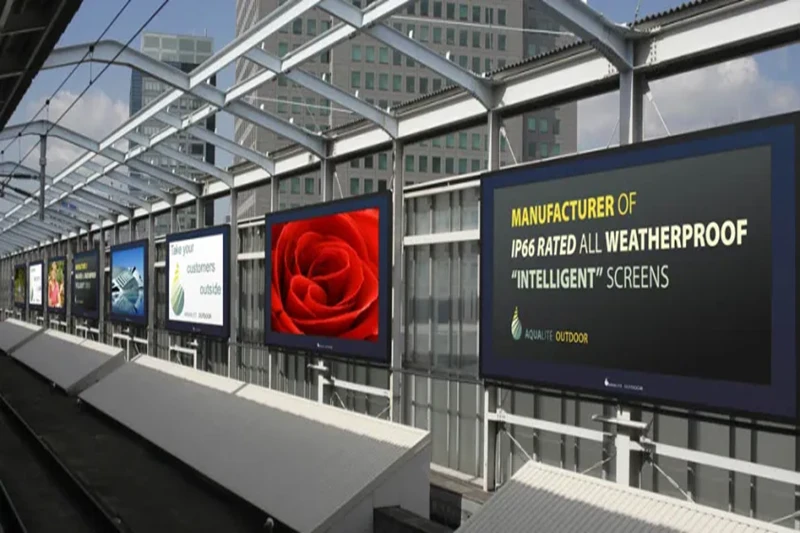
Airport LED displays offer premium advertising opportunities by reaching large numbers of travelers and business professionals. They support real-time content updates and deliver high-impact visual communication in transportation hubs.
Recommended Pixel Pitch: P3.9 / P4 / P5
Outdoor Advertising Product Series
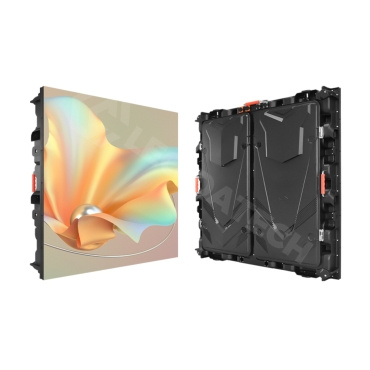
P2.5, P3, P4, P5, P6, P8, P10 Size: 960×960 mm
It is 28 kg, 20% lighter than ordinary iron cabinets, and supports six common installation methods
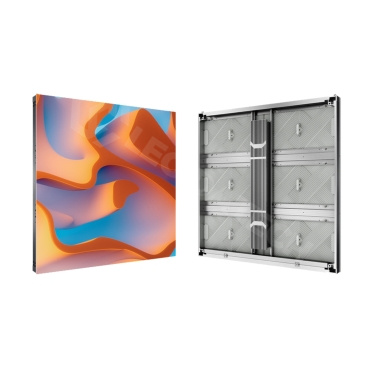
P5, P6.667, P8, P10 Size: 960×640mm, 960×960mm, 960×1280mm
Advantages: Multi-panel size; front and rear double maintenance; super energy saving; 3D large billboard can be realized.
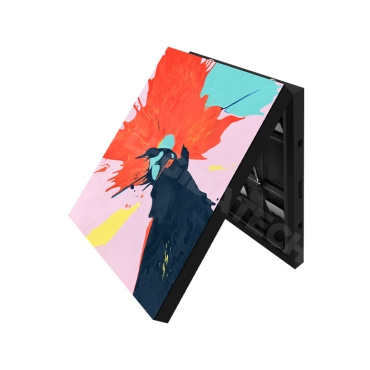
P2.5, P3, P4, P5, P6, P8, P10 Size: Customized
Advantage: Flip screen is easy to maintain and supports single- and double-sided screens
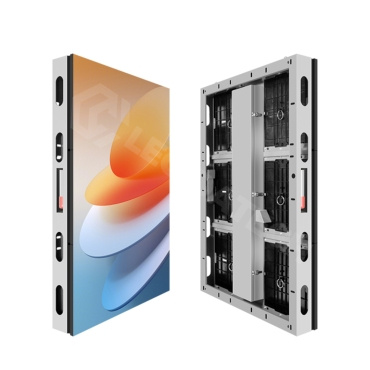
Especially DIP P10 Size: 960×640mm, 960×1280mm
While it is bright, it is environmentally friendly, consumes little energy and saves energy.
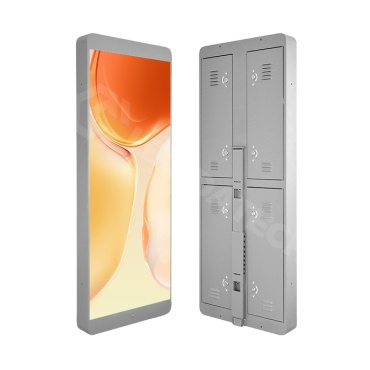
P3.3, P4, P5 Size: Customized
Advantage: Remote group control; Multifunctional; Smart control with 4G/Wifi; Quick cooling

Why Choose LED for Advertising

Remain visible even under direct sunlight with brightness levels up to 10,000 nits, ensuring your message can be seen clearly throughout the day.

Display videos, animations, images, and real-time promotions to create more engaging advertising experiences than traditional printed billboards.
Built for continuous operation in outdoor environments, LED displays provide reliable performance for round-the-clock advertising campaigns.
Support multiple advertisements on a single screen, helping operators maximize revenue while reducing printing and replacement costs.
Features of Outdoor Advertising LED Display
The outdoor LED display screen has bright colors and rich graphics and text, which can bring good visual effects to the audience. It is also waterproof, anti-corrosion, windproof, and shockproof, so the LED display can work stably and long-lasting in bad weather.
Today’s digital LED signs are not only easy to install and maintain, but they are also energy efficient and environmentally friendly. Extend the life of your advertising screens while consuming less energy.
Unique advantages of outdoor LED billboard
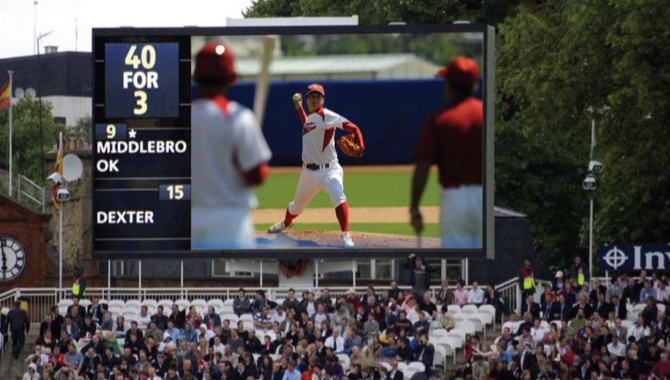
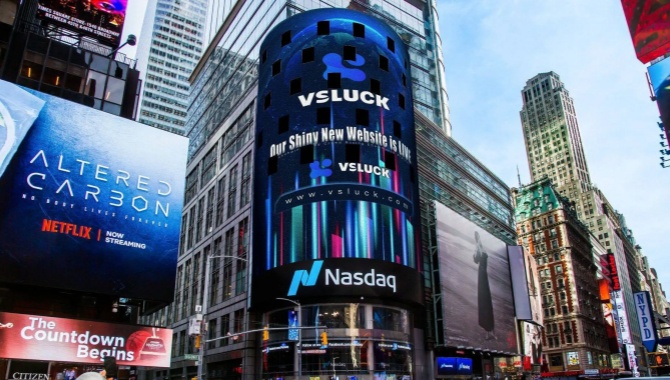
Compared with static billboards and LED light boxes, dynamic LED displays have more advantages in advertising. It has high brightness and rich colors and can be very eye-catching in the sun, so it has high visibility and interactivity, increasing advertising exposure. Attract the attention of passersby.
The most important thing is that it can play dynamic pictures and videos, and just listening to the sound can bring advertising effects. Moreover, the vivid video can attract passers-by to stop and watch or even take photos, making the advertisement deeply rooted in people’s hearts…
Get a return on your advertising investment
Outdoor advertising screens can generally be installed in squares or buildings with a large flow of people, traffic arteries, or neighborhoods. Capture your audience’s attention with vivid videos and achieve greater reach
The playback content of the advertising display screen can be switched at will and can be controlled remotely. There is no need to manually change the main body, which reduces advertising costs and improves efficiency.
In the long run, the investment cost of an Outdoor Advertising LED Display is low; it has a long service life and low maintenance costs. And it can serve ads for multiple advertisers at the same time, with a better publicity effect and a higher return rate.
How to Choose a Good Outdoor Advertising LED Display?
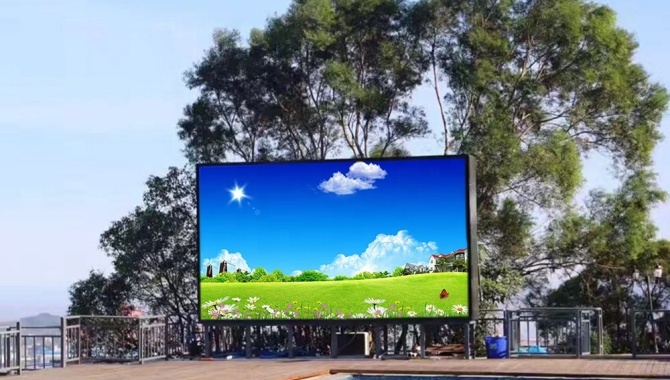
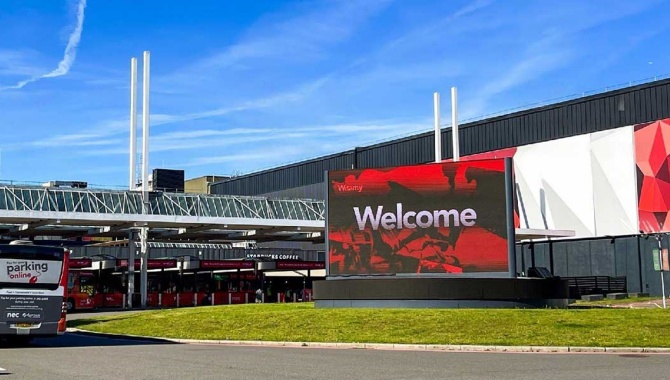
Many LED display customers are buying digital advertising displays from China for the first time, and they need to consider a lot if they want to choose a better LED screen from thousands of products. Suggestions are mainly made from two aspects: suppliers and products.
1. Check whether the supplier is experienced and professional enough
- Does the supplier have an LED display factory?
- Can the supplier understand your needs and provide professional suggestions during the chat?
- Whether the quotation is complete and fully equipped
2. Check whether the LED screen information is professional and credible
- Ask about the cooperative brands of product materials, such as lamp beads and control systems.
- Understand the performance of the product, such as brightness, refresh, and waterproofing
- Whether the product has a warranty period
In addition to the above, you cannot choose similar products if the price is too low, and the quality will not be very good.
WHY CHOOSE LEGIDATECH?

LEGIDATECH is an LED screen manufacturer with many years of experience in display screens, with dealer offices overseas in South Africa, Malaysia, the United States, and Nigeria.
In the past 13 years, we have completed nearly 400 outdoor display projects with various installation methods.
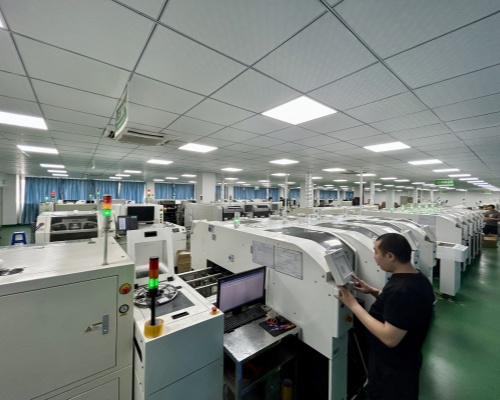
LEGIDATECH has offices and factories in Shenzhen and Hunan.
Shenzhen has more than 1,000 square meters of fully automated machine production and assembly lines, with manual quality inspection to ensure compliance.
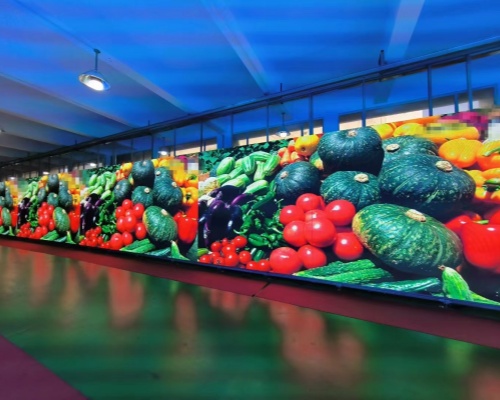
There are basically no negative reviews, and we only sell products of medium and above quality.
In order to ensure brand reputation and reputation, cheap and low-quality products are not within our scope.
Resource Center
- Outdoor Screen Blogs
- Cases Show
- Videos
How to Measure LED Screen Size
5 Steps to Teach You How to Clean LED Screen Correctly
What are the advantages of outdoor LED advertising screen?
Double Sided Outdoor LED display Screen
Factors causing the large price gap between outdoor LED display panels
Outdoor P3.9 LED Display:What You Need to Know
A Detail Guide Of Outdoor P6 LED Screen For Advertising
Best Guide: How to Protect Your Outdoor LED Display from Humidity
How to make outdoor LED billboard screen longer lifespan?
Outdoor LED Display Buying Guide
LED display resolution revealed: from standard definition to 8K
The Impact Of LED Display Working At High Temperature
LED Screen display Basic Knowledge Guide
LED Video Wall Controller: Everything You Need To Know


It depends on your viewing distance. For roadside billboards viewed from 15 meters or more, P8 or P10 is the standard choice. For commercial street displays viewed from 5 to 10 meters, P5 or P6 delivers better image clarity. For close-range signage at mall entrances or gas stations, P3 to P4 is recommended.
A minimum of 5,500 nits is recommended for most outdoor advertising applications. For screens installed in direct sunlight or along highways, 7,000 to 10,000 nits ensures clear visibility throughout the day. Screens with automatic brightness adjustment can optimize both visibility and energy consumption at different times of day.
There is no fixed minimum, but very small screens — under 2 square meters — are rarely cost-effective for outdoor advertising. For roadside or building facade installations, screens of 10 square meters or more are typical. For pole-mounted or gas station displays, smaller formats of 2 to 6 square meters are common.
As a general reference, multiply the pixel pitch in millimeters by 1,000 to get the approximate maximum comfortable viewing distance in meters. A P10 screen is clear up to around 100 meters. A P5 screen is clear up to around 50 meters. Minimum viewing distance — the closest point where the image still looks sharp — is typically equal to the pixel pitch value in meters (e.g., P5 = 5 meters minimum).
The typical rated lifespan of an LED display is approximately 100,000 hours (until brightness drops to 50%). Actual lifespan depends on factors such as maintenance, environment, and temperature.
Maintenance includes cleaning (dust/dirt removal), inspecting modules, ensuring proper ventilation/power supply, and regular calibration.
Viewing distance (in meters) ≈ pixel pitch (in millimeters) (or other variables). For a minimum viewing distance of 6 meters, choose P5/P6.
Screen size is directly proportional to pixel pitch. For larger screens, choose a larger pitch. A sufficient resolution is sufficient.
Yes, outdoor LED billboard supports full-motion video playback and custom creative shapes (corners, curves) to achieve naked-eye 3D effects, as long as there is corresponding 3D playback video material.
Related Screens

Outdoor Advertising LED Display Buying Guide: Pixel Pitch, Size & Brightness
If you are searching for an outdoor advertising LED display, an outdoor LED billboard, or an outdoor commercial LED screen, you are looking for the same type of product. These terms are used interchangeably in the market, and they all refer to high-brightness, weatherproof LED screens designed for permanent outdoor installation.
Choosing the right one is not complicated, but there are three decisions that every buyer needs to get right before placing an order:
- Pixel pitch — which one matches your viewing distance?
- Screen size — how do you calculate the right dimensions for your location?
- Brightness — how many nits do you actually need?
Get these three right, and you will have a screen that performs well, lasts long, and delivers strong advertising returns. Get them wrong, and you risk paying for performance you cannot see — or buying a screen that looks unclear at your target viewing distance.
This guide walks you through each decision step by step, with real specs and practical recommendations. Whether you are installing a roadside billboard, a shopping mall facade screen, or a building-mounted advertising display, you will find the answers here.
Browse our full range of outdoor commercial LED screens or explore all outdoor LED display solutions to see what fits your project.
What Is Pixel Pitch and Why It Matters for Outdoor Advertising
Pixel pitch is the distance in millimeters between the center points of two adjacent LED pixels on a screen. It is one of the most important specs to understand before buying an outdoor advertising LED display.
The rule is simple:
Smaller pixel pitch = higher pixel density = clearer image at close range — but higher cost.
Larger pixel pitch = lower pixel density = suitable for long-distance viewing — and lower cost.
For outdoor advertising, most buyers do not need the smallest pixel pitch available. What matters is matching the pixel pitch to your actual viewing distance. A P10 screen viewed from 20 meters away looks perfectly clear. The same screen viewed from 3 meters will look grainy. Paying for a P4 screen when your audience is 15 meters away is unnecessary.
Here is a quick reference:
| Pixel Pitch | Minimum Viewing Distance | Typical Application |
|---|---|---|
| P3 / P4 | 3 – 6 m | Mall entrance, gas station, close-range signage |
| P5 / P6 | 5 – 10 m | Commercial street, building facade, roadside retail |
| P8 / P10 | 8 – 20 m | Roadside billboard, highway, large outdoor advertising |
For most outdoor advertising installations, P5 to P10 covers the majority of real-world use cases. A P5 outdoor advertising LED display is a good choice for commercial areas where viewers pass within 5–8 meters. For large roadside billboards where the minimum viewing distance is 10 meters or more, a P10 LED display delivers strong visual clarity at a significantly lower cost per square meter.
One more thing to keep in mind: pixel pitch also affects cabinet size options and whether custom dimensions are available. We cover this in the screen size section below.
Recommended Pixel Pitch by Advertising Application
Different advertising locations have different viewing distances, installation conditions, and content requirements. Here is a practical breakdown by application to help you choose the right pixel pitch for your project.
2.1 Roadside Billboard & Highway Advertising
Recommended pixel pitch: P8 / P10
Roadside and highway billboards are typically viewed from 15 meters or more. At this distance, P8 and P10 deliver sharp, clear images without requiring a high pixel density. This keeps the cost per square meter reasonable, which matters when the screen size is large.
For this application, high brightness and strong weather protection are essential. The screen needs to stay visible in direct sunlight and operate reliably through rain, dust, and temperature changes. Both iron cabinets and die-cast aluminum cabinets work well here, depending on your budget and structural requirements.
Recommended products: P10 outdoor LED billboard — B Pro Series, AD Series
2.2 Shopping Mall & Commercial Street
Recommended pixel pitch: P4 / P5 / P6
Viewers in commercial areas typically pass within 3 to 8 meters of the screen. At this range, pixel pitch matters more — a P8 or P10 screen will look noticeably grainy. P4, P5, and P6 deliver the image clarity and color accuracy needed for product advertising, brand campaigns, and promotional content.
Good color reproduction is particularly important here, as shoppers are close enough to notice differences between what they see on screen and what they expect from the advertised product.
Recommended products: B Series outdoor commercial LED screen (P5 / P6), OK Series
2.3 Building Facade & Large Format Billboard
Recommended pixel pitch: P6 / P8 / P10
Large building facade screens and landmark billboards are typically viewed from 10 meters or more, often from moving vehicles or open public spaces. P6 to P10 covers this range well. The priority here is structural: large-format screens require lightweight cabinet materials to reduce load on the building, and aluminum-magnesium alloy cabinets are the standard choice for this reason.
Custom sizes are often required for building facades. Most standard cabinets come in 960×960mm, but manufacturers can accommodate irregular dimensions — expect longer lead times and higher unit costs for custom configurations.
For high-traffic landmark locations, some buyers also use this format to run 3D outdoor LED billboard content, which delivers strong visual impact and attracts significant attention.
Recommended product: OK Series outdoor advertising LED billboard
2.4 Airport & Transportation Hub
Recommended pixel pitch: P3.9 / P4 / P5
In airports, train stations, and transit hubs, viewers are typically within 3 to 6 meters of the screen and often standing still waiting. This means image clarity is more noticeable than in a roadside setting. P3.9 to P5 is the right range for this environment.
Stability and uptime are the top priorities here. Screens in transportation hubs run 24 hours a day, 7 days a week, and any failure causes immediate operational disruption. Look for products with dual redundant power backup, front maintenance access, and a proven track record in high-uptime environments.
Recommended resource: LED screen for airport applications
2.5 Gas Station & Roadside Retail
Recommended pixel pitch: P4 / P5 / P6
Gas station displays and roadside retail signs are typically viewed from 5 to 10 meters. P4 to P6 covers this range well and delivers clear promotional content for fuel pricing, convenience store offers, and local business advertising.
Screens in this category are usually smaller in size, which makes weatherproofing and ease of maintenance more important than raw image resolution. Look for screens with IP65-rated enclosures and front maintenance access, which allow servicing without disassembling the cabinet from its mounting structure.
For locations that need visibility from both sides of the road, a double-sided configuration is worth considering. For pole-mounted installations along streets or parking areas, a dedicated pole-mount design offers cleaner installation and better structural stability.
Recommended products: EDS Series outdoor digital signage display, Lamp Post LED Display
How to Calculate the Right Screen Size for Your Location
One of the most common mistakes first-time buyers make is assuming the screen can be built to any exact dimension. In practice, outdoor LED displays are assembled by tiling cabinets together, and the final screen size is determined by how many cabinets fit within your available space — not the other way around.
Here is a simple three-step process to work out the right screen size for your location.
Step 1: Measure Your Available Installation Space
Start with the maximum width and height available at your installation site. This might be limited by a wall opening, a steel frame structure, a building facade section, or a planning permit. Write down both dimensions in meters.
Example: Available space = 10m wide × 6m high
Step 2: Calculate How Many Cabinets Fit
Divide your available dimensions by the cabinet size to find how many cabinets fit in each direction. Round down to the nearest whole number — you cannot use partial cabinets.
The most common cabinet size for outdoor advertising LED displays is 960×960mm. Other standard sizes include 960×640mm and 500×1000mm, depending on the product series.
Using the 960×960mm cabinet as an example:
- Width: 10,000mm ÷ 960mm = 10.4 → round down to 10 cabinets
- Height: 6,000mm ÷ 960mm = 6.25 → round down to 6 cabinets
Step 3: Calculate the Actual Display Area
Multiply the number of cabinets by the cabinet size to get your actual screen dimensions.
- Actual width: 10 × 960mm = 9,600mm (9.6m)
- Actual height: 6 × 960mm = 5,760mm (5.76m)
- Actual display area: 9.6m × 5.76m = 55.3 m²
The final screen will be slightly smaller than your available space, which is normal. The gap can be covered by the steel frame or edging trim.
A Note on Custom Sizes
Standard cabinet sizes exist because they are manufactured at scale, which keeps costs low and lead times short. Custom cabinet sizes are possible — some product series support non-standard module dimensions — but they will increase unit cost and extend lead time. For most advertising projects, working within standard cabinet dimensions is the more practical and cost-efficient approach.
For a detailed breakdown of what affects outdoor LED display price, including cabinet size, pixel pitch, and quantity, see our pricing reference page. If you want a clearer understanding of how screen dimensions are measured and specified, our guide on how to measure LED screen size covers this in full detail.
Brightness Requirements for Outdoor Advertising LED Displays
Brightness is one of the most critical specs for any outdoor advertising LED display. Unlike indoor screens, outdoor displays compete directly with natural light — including direct sunlight, which can reach 100,000 lux on a clear day. A screen that is not bright enough simply becomes invisible to your audience, which defeats the entire purpose of the installation.
Brightness is measured in nits (cd/m²). The higher the number, the more visible the screen is in bright conditions.
How Much Brightness Do You Actually Need?
The right brightness level depends on where your screen is installed and how much ambient light it has to compete with.
| Environment | Recommended Brightness |
|---|---|
| Shaded or covered areas | 3,000 – 5,000 nits |
| Urban street / indirect sunlight | 5,000 – 7,000 nits |
| Direct sunlight / highway | 7,000 – 10,000 nits |
For most outdoor advertising installations — roadside billboards, building facades, commercial street displays — a minimum of 5,500 nits is the practical baseline. Below this level, content may appear washed out during daylight hours, reducing the effectiveness of your advertising.
For highway billboards and screens facing direct sunlight for most of the day, 7,000 nits or above is strongly recommended. A high brightness outdoor LED billboard in this range will remain clearly visible even at midday in summer.
Automatic Brightness Adjustment
Most quality outdoor advertising LED displays include an ambient light sensor that automatically adjusts screen brightness based on surrounding light conditions. This serves two practical purposes.
First, it saves energy. Running a screen at maximum brightness at night is unnecessary and wastes electricity. Automatic dimming at night can reduce power consumption significantly.
Second, it extends the lifespan of the LED lamp beads. Running LEDs at full brightness continuously accelerates degradation. Automatic adjustment keeps brightness at the right level for conditions rather than always at maximum, which helps the screen maintain consistent performance over its rated lifespan.
High operating temperatures also affect brightness performance and long-term reliability. If your screen is installed in a hot climate or exposed to direct sunlight for extended periods, thermal management becomes equally important alongside brightness spec. For a detailed look at this issue, see our article on the impact of LED display working at high temperature.
Other Key Specs to Check Before Placing an Order
Pixel pitch, screen size, and brightness are the three decisions that shape your purchase. But before you finalize an order, there are several additional specs worth checking. These are less visible in marketing materials but have a direct impact on long-term performance, maintenance costs, and operational reliability.
5.1 IP Rating
For any outdoor advertising LED display, the minimum acceptable IP rating is IP65.
IP65 means the enclosure is fully dust-tight and protected against water jets from any direction. This covers the conditions most outdoor screens face — rain, dust, cleaning with a hose, and general weather exposure. Screens with a lower rating risk water ingress into the cabinet, which can damage the power supply, circuit boards, and LED modules.
When reviewing product specs, check the IP rating of both the cabinet and the front module. Both should meet IP65 or above.
5.2 Refresh Rate
Refresh rate is how many times per second the screen redraws its image, measured in Hz. For outdoor advertising displays, the minimum recommended refresh rate is ≥1,920 Hz.
At this level, the screen will appear smooth and flicker-free to the human eye, and standard cameras and smartphones will capture clean footage without horizontal banding or water ripple effects. This matters if your client or venue will be photographing or filming the screen as part of their advertising content.
If the installation involves live broadcasting, film production, or frequent professional photography, specify a refresh rate of ≥3,840 Hz to eliminate any risk of banding under high-speed cameras.
5.3 Cabinet Material
Cabinet material affects weight, structural precision, durability, and cost. There are three main options for outdoor advertising LED displays:
Aluminum-magnesium alloy — lightweight and corrosion-resistant, the standard choice for large building facade installations where reducing structural load is a priority.
Die-cast aluminum — higher dimensional precision, better resistance to deformation over time, and a cleaner overall finish. The right choice for high-end projects where long-term flatness and appearance matter. The OK Series uses die-cast aluminum cabinets and is a good reference point for this category.
Iron cabinet — lower cost and heavier, suitable for fixed ground-mounted or wall-mounted installations where budget is the primary constraint and weight is not a concern.
5.4 Maintenance Method
Outdoor advertising LED displays require periodic maintenance — module replacement, cleaning, power supply checks. How easy this is depends on whether the screen supports front maintenance or rear maintenance.
Rear maintenance requires access to the back of the screen, which is straightforward for freestanding structures but impractical for wall-mounted or facade installations.
Front maintenance allows technicians to service the screen from the front, without needing access to the back of the cabinet. For any screen installed flush against a wall or building surface, front maintenance is not optional — it is a requirement. Check whether the product supports this before ordering. Our outdoor commercial LED screen range includes front-service options across multiple series.
5.5 Warranty & After-Sales Support
Before placing an order, confirm the following with your supplier:
- Whole-screen warranty: A minimum of 2 years is standard for quality outdoor advertising LED displays. Some manufacturers offer 3 years.
- LED lamp bead lifespan: Quality lamp beads are rated for 100,000 hours. Ask which brand of LED chips is used — Nationstar and Kinglight are reliable references.
- Spare parts availability: Confirm that replacement modules, power supplies, and receiving cards will be available for at least 5 years after purchase. This is critical for long-term projects.
- On-site support or remote diagnostics: Ask whether technical support is available after installation, and what the process is for handling faults under warranty.
5.6 Control System
The control system manages content playback, brightness scheduling, and real-time monitoring of the screen. There are two main types:
Asynchronous control system — stores content locally on a memory card and plays it back without needing a connected computer. Simpler to operate and lower cost. Suitable for small to medium-sized outdoor advertising screens running standard promotional content.
Synchronous control system — requires a connected computer or network to send content in real time. Supports live video, dynamic data feeds, and multi-screen synchronization. Necessary for large-area outdoor advertising installations or any setup requiring real-time content control. Novastar is one of the most widely used and reliable brands for synchronous control systems. You can access Novastar system software and set up resources here.
For most standalone roadside billboards and fixed advertising screens, an asynchronous system is sufficient. For network-managed advertising across multiple screens, a synchronous system is the right choice.
Quick Comparison — Which Outdoor Advertising LED Display Series Is Right for You?
If you already know your viewing distance, installation environment, and budget range, use this table to find the right product series quickly.
| Series | Pixel Pitch | Cabinet | Best For | |
|---|---|---|---|---|
| B Series | P5 – P10 | Aluminum-magnesium alloy | General outdoor advertising, roadside, commercial street | View → |
| OK Series | P5 – P10 | Die-cast aluminum | Extreme environments — seaside, desert, cold regions | View → |
| B Pro Series | P10.667 | Iron | Large-format billboard, budget-conscious fixed projects | View → |
| AD Series | P5 – P10 | Die-cast aluminum | Column advertising, stadium perimeter screens | View → |
| EDS Series | P2.5 – P10 | Custom | Double-sided billboard, outdoor digital signage | View → |
| SLP Series | P3.3 – P5 | Custom | Lamp post display, street pole advertising | View → |
Not sure which series fits your project? Browse all outdoor advertising LED displays or contact us for a free recommendation based on your location, viewing distance, and budget.
Conclusion
Choosing the right outdoor advertising LED display comes down to three decisions:
- Pixel pitch — match it to your viewing distance. Longer distance means a larger pitch is acceptable, which also reduces cost.
- Screen size — calculate it based on your available installation space and standard cabinet dimensions, not the other way around.
- Brightness — match it to your environment. Most outdoor installations need a minimum of 5,500 nits. Direct sunlight locations need 7,000 nits or above.
Get these three right, and the rest — cabinet material, IP rating, and control system—becomes easier to decide based on your specific site conditions and budget.
If you would like a free project assessment, our team can recommend the right product, calculate the screen size for your location, and provide a full quotation including the control system, steel structure reference, and spare parts.