A P6 outdoor LED display is the workhorse of outdoor digital signage: sharp enough for a shopping-mall facade, bright enough for direct sun, and priced below finer pitches such as P4 or P5. But “P6” is also one of the most loosely used labels in the LED industry — two suppliers can quote the same size, the same brightness and the same cabinet, yet deliver screens with different pixel counts and different real-world clarity.
This guide is written from the factory floor rather than a spec sheet. It explains what P6 actually means, how P6.0 and P6.67 differ, which module and cabinet combinations produce whole pixels, what a 2026 project should cost, how far the audience can stand, and the eight checks we recommend before you pay any supplier. Every number below is one we use when quoting outdoor projects from our Shenzhen factory.
P6 outdoor LED display — factory overview
P6 outdoor LED display at a glance:
| Pixel pitch | 6.0 mm (P6.0) or 6.67 mm (P6.67, commonly sold as “P6”) |
| Pixel density | 27,777 pixels/m² at P6.0 · 22,500 pixels/m² at P6.67 |
| Module sizes | 192 × 192 mm (P6.0) · 320 × 160 mm or 320 × 320 mm (P6.67) |
| Cabinet sizes | 960 × 960 mm standard · 1280 × 960 mm and custom sizes available |
| Brightness | 6,000–6,500 nits standard · 8,000–10,000 nits high-brightness |
| Weather protection | IP65 front / IP54 rear standard · IP66 optional |
| Best viewing range | About 6 m minimum · 10–18 m comfortable · readable to 60 m |
| Typical use | Billboards, mall facades, plazas, stadium perimeter screens, transport hubs |
What Is a P6 Outdoor LED Display?
A P6 outdoor LED display is a full-color LED screen with a pixel pitch of 6 mm, sealed and brightened for permanent outdoor use. Pixel pitch is the center-to-center distance between two adjacent LEDs. At 6 mm, one square meter holds 27,777 pixels at true P6.0 — enough to render video and readable text from roughly 6 m away, but not so dense that the screen becomes unaffordable at billboard scale.
That balance is why P6 sits in the middle of the outdoor range. P10 and P8 are cheaper per square meter but need longer viewing distances; P4 and P5 look sharper up close but cost more because they pack in more LEDs, more driver ICs and a more demanding production process. P6 is the pitch most cities settle on for facades and roadside screens where the audience starts at 8–15 m and the budget still has to make sense.
The “outdoor” part matters as much as the pitch. An outdoor P6 screen needs 6,000+ nits to compete with sunlight, an IP65 sealed front face, UV-stable masks, corrosion-resistant cabinets and a power system rated for wide temperature swings. An indoor P6 module will fit the same cabinet format but will not survive a rainy facade. If you need the indoor version, start from our P6 LED display product page and confirm the build before you compare prices.

OK series P6 outdoor LED display — sealed aluminum cabinet for permanent facade installation

B series P6 outdoor cabinet — the front-service platform used on the UK project
P6 vs P6.67: Which 6 mm Class Are You Buying?
This is the first question to settle, because it changes the pixel count, the module size and the price. In the outdoor market, “P6” is often used as shorthand for two different pitches:
- P6.0 — a true 6.00 mm pitch. The standard module is 192 × 192 mm with 32 × 32 pixels. A 960 × 960 mm cabinet holds 160 × 160 pixels.
- P6.67 — a 6.67 mm pitch, widely marketed as “P6 outdoor”. The common module is 320 × 160 mm with 48 × 24 pixels. A 960 × 960 mm cabinet holds 144 × 144 pixels.
The difference is about 23% more pixels per square meter at P6.0. At 10 m or more, most viewers will not notice it in video content; at 6–8 m, or when the screen carries small text and numbers, the finer pitch is visibly cleaner. P6.67 became the volume outdoor standard because its 320 × 160 mm module divides a 960 × 960 mm cabinet exactly — three modules across and six down — which keeps cabinet tooling, assembly and spare-part costs under control.
Here is the math that exposes a mislabeled quote: a 320 × 160 mm module cannot produce whole pixels at a true 6.00 mm pitch, because 320 ÷ 6 = 53.33 and 160 ÷ 6 = 26.67. If a supplier describes a 320 × 160 mm module as P6.0, ask for the module resolution in writing. A genuine P6.0 module should read 32 × 32; a P6.67 module should read 48 × 24. If the numbers do not match, the screen is not the pitch you think you are buying.
| Specification | P6.0 | P6.67 |
|---|---|---|
| Pixel pitch | 6.00 mm | 6.67 mm |
| Pixel density | 27,777 pixels/m² | 22,500 pixels/m² |
| Standard module | 192 × 192 mm, 32 × 32 px | 320 × 160 mm, 48 × 24 px |
| Pixels per 960 × 960 cabinet | 160 × 160 px | 144 × 144 px |
| Typical market label | P6, P6.0 | “P6 outdoor”, P6.67 |
| Best fit | Text-heavy facades, 6–10 m viewing | Billboards, 10 m+ viewing, volume projects |
| Relative panel price | Typically 5–10% higher | Lower — the volume outdoor option |
Our OK series outdoor platform is built around the 6.67 mm pitch, which is why project documents often call it “P6”. If your brief specifies true P6.0, tell us at quotation stage — the module and cabinet plan change, and so does the price. For a side-by-side look at how pitch affects resolution and budget, see our P5 vs P6 vs P8 vs P10 outdoor comparison.
P6 Outdoor LED Display Specifications at a Glance
Most reputable P6 outdoor panels converge on a similar specification band. The table below reflects the configuration we quote most often for permanent outdoor installs; treat it as a reference point, not a universal standard, because brightness, cabinet material and control system are all selectable.
| Parameter | Typical P6 outdoor specification |
|---|---|
| Pixel pitch | 6.0 mm or 6.67 mm |
| LED package | SMD2727 / SMD3535, or GOB-encapsulated SMD |
| Pixel density | 27,777 px/m² (P6.0) · 22,500 px/m² (P6.67) |
| Module size | 192 × 192 mm (P6.0) · 320 × 160 / 320 × 320 mm (P6.67) |
| Cabinet size | 960 × 960 mm standard; 1280 × 960 mm and custom |
| Cabinet material | Die-cast aluminum or waterproof steel |
| Brightness | 6,000–6,500 nits standard; 8,000–10,000 nits high-brightness |
| Refresh rate | ≥3,840 Hz standard; 1,920 Hz budget option |
| Grayscale | 14–16 bit |
| Viewing angle | ≥140° horizontal / ≥140° vertical |
| IP rating | IP65 front / IP54 rear; IP66 optional |
| Power consumption | About 240 W/m² average, 650–800 W/m² maximum |
| Operating temperature | −20 °C to +50 °C (confirm for your climate) |
| Lifespan | 100,000 hours rated to 50% brightness |
| Control system | NovaStar, Colorlight or Linsn; synchronous or asynchronous |
| Maintenance | Front service, rear service or dual service |
Two numbers deserve more attention than the rest. The first is brightness: 6,000 nits is a working outdoor figure, but a west-facing facade in a hot climate can wash out in late afternoon unless you specify 7,000–8,000 nits or a high-brightness LED bin. The second is IP rating: IP65 protects the front face against dust and water jets, but the rear compartment and cable entries decide whether the screen survives a decade of rain. Ask for the full IP breakdown, not just the front-face number.
P6 LED Module and Cabinet Sizes That Fit Your Wall
Outdoor LED screens are built on a grid, and the grid decides your final dimensions. A 960 × 960 mm cabinet is the most common building block for P6-class outdoor screens because it is large enough to reduce steelwork and installation time, yet light enough for two technicians to handle.
At true P6.0, a 960 × 960 mm cabinet contains 160 × 160 pixels and takes a 5 × 5 grid of 192 × 192 mm modules. At P6.67, the same cabinet contains 144 × 144 pixels and takes a 3 × 6 grid of 320 × 160 mm modules. Both grids divide exactly, which is why these combinations are standard. The 1280 × 960 mm cabinet is also common in P6.67 projects: it holds 192 × 144 pixels and a 4 × 6 module grid.
| Build | Module grid per 960 × 960 cabinet | Cabinet resolution | Cabinet area |
|---|---|---|---|
| P6.0, 192 × 192 mm module | 5 × 5 | 160 × 160 px | 0.9216 m² |
| P6.67, 320 × 160 mm module | 3 × 6 | 144 × 144 px | 0.9216 m² |
| P6.67, 320 × 320 mm front-service module | 3 × 3 | 144 × 144 px | 0.9216 m² |
| P6.67, 1280 × 960 mm cabinet | 4 × 6 (320 × 160 mm) | 192 × 144 px | 1.2288 m² |
Use the cabinet grid to plan the screen before you plan the content. A 7.2 × 5.76 m wall, for example, is 7.5 cabinets wide by 6 cabinets high — so it becomes 7 cabinets × 6 cabinets, or 6.72 × 5.76 m, unless a half-cabinet is engineered. That is exactly the adjustment we made on a Malaysia project where the client asked for 8 × 6 m: the build settled at 7.2 × 5.76 m using 960 × 960 mm cabinets. The lesson is simple: give your supplier the wall dimensions and the viewing distance, then let the cabinet grid set the final screen size. For the full measurement workflow, see our LED screen size guide.

P6 outdoor LED module — 192 × 192 mm (P6.0) or 320 × 160 mm (P6.67)
SMD vs DIP vs GOB: Choosing the P6 Outdoor LED Panel
Three encapsulation methods show up in P6 outdoor quotes, and they behave very differently over a ten-year service life.
DIP (dual in-line package) uses individual lamp beads soldered through the PCB. It delivers the highest raw brightness — often 7,000–10,000 nits — and handles heat well, but the viewing angle is narrower, the module is heavier, and every solder joint is a potential failure point. DIP is now a legacy choice for very coarse pitches or extreme-brightness niches; most new P6 outdoor projects should not specify it unless the site genuinely needs the extra nits.
SMD (surface-mount device) packages the red, green and blue chips into one lamp. On a P6 outdoor panel, SMD2727 or SMD3535 is the standard. SMD gives a wider viewing angle, smoother color mixing, lower weight and a thinner module than DIP. It is the default for mall facades, billboards and stadium perimeter screens. The trade-off is exposed lamp legs: careless handling during installation or cleaning can damage a bead.
GOB (glue-on-board) starts with an SMD module and fills a transparent epoxy layer over the lamp surface. The glue locks the beads in place and seals the module against moisture, dust and knocks. GOB costs more — typically 10–25% above SMD — but it is the right specification for coastal sites, high-touch locations, dusty industrial areas and screens that will be cleaned frequently. If the screen is within reach of the public, GOB is usually cheaper over the project life than repeated module repairs.
| Factor | DIP P6 | SMD P6 | GOB P6 |
|---|---|---|---|
| Brightness potential | Highest, 7,000–10,000 nits | 6,000–8,000 nits | 6,000–8,000 nits |
| Viewing angle | Narrower | Wide, ≥140° | Wide, ≥140° |
| Moisture / impact protection | Moderate | Basic | Strong — encapsulated |
| Weight and thickness | Heavier, thicker | Light | Light, slightly thicker than SMD |
| Relative cost | Low to moderate | Baseline | Typically +10–25% |
| Best fit | Legacy ultra-bright sites | Most outdoor facades and billboards | Coastal, public-touch, dusty or harsh sites |
For a standard inland billboard, SMD2727 is the sensible baseline. For a seafront facade or a screen beside a busy pedestrian zone, price the GOB version before you commit to SMD — the upgrade is small relative to the cost of a module replacement visit.
Brightness and IP Rating for a P6 Outdoor LED Screen
Brightness and waterproofing are the two specifications that decide whether a P6 screen works outdoors — and they are also the two most commonly oversold. More nits is not automatically better: every extra 1,000 nits adds power draw, heat and cost, and a screen running at full output at night will glare, wash out colors and annoy the neighborhood.
For a typical outdoor facade, 6,000–6,500 nits is the working range. A screen facing direct afternoon sun, especially on a west-facing wall in a hot climate, should be specified at 7,000–8,000 nits. High-brightness 8,000–10,000 nit configurations exist for airports, highway gantries and extreme-sun markets, but they need stronger LEDs, higher-grade driver ICs and better heat management — expect to pay 15–25% more and to budget more power. Pair any specification with an auto-brightness sensor so the screen dims at dusk and ramps up at noon; that single feature extends LED life and cuts electricity more than most hardware upgrades.
On protection, IP65 is the outdoor baseline: dust-tight and protected against water jets from any direction. Most P6 outdoor cabinets are IP65 on the front face and IP54 on the rear, because the rear compartment is shielded by the structure. Coastal sites, high-humidity climates and locations with driving rain deserve IP66, which adds a stronger seal and better protection against powerful water jets. IP65 is not submersible, and it does not excuse poor installation: cable entries, junction boxes and drainage paths must be sealed on site. Our IP65 rating guide explains what the two digits actually test.
| Site condition | Recommended brightness | Recommended IP |
|---|---|---|
| Shaded facade, mild climate | 5,500–6,000 nits | IP65 front / IP54 rear |
| Typical city facade or plaza | 6,000–6,500 nits | IP65 front / IP54 rear |
| Direct sun, hot climate, west-facing wall | 7,000–8,000 nits | IP65 or IP66 |
| Coastal, heavy rain or exposed highway site | 7,000–10,000 nits | IP66 preferred |
P6 outdoor LED screen waterproof test
P6 Outdoor LED Display Viewing Distance
The industry rule of thumb is simple: the minimum viewing distance in meters roughly equals the pixel pitch in millimeters. For P6, that is about 6 m — closer than that, a viewer with normal eyesight can start to resolve individual pixels, especially on high-contrast text. The comfortable distance is usually two to three times the pitch, or 12–18 m, where the pixel grid disappears and the image reads as a continuous picture.
Those are starting points, not hard limits. Screen size, content and brightness all shift the answer. A 7 × 4 m screen viewed from 10 m looks denser than a 3 × 2 m screen viewed from the same spot, because the larger screen fills more of the viewer’s field of view. Small text needs a finer pitch or a closer audience; logos, colors and full-motion video survive much longer distances. This is why a P6 billboard can still work at 40–60 m for brand content, even though nobody should be reading a phone number at that range.
| Viewing distance | What the audience sees | Content that works |
|---|---|---|
| 6–8 m | Pixel structure just visible on fine detail | Large logos, full-screen video, short headlines |
| 8–12 m | Comfortable; edges read cleanly | Video, prices, medium-length headlines |
| 12–20 m | The P6 sweet spot; pixel grid disappears | Full video, clear text, product shots |
| 20–40 m | Fine text softens; shapes and colors hold | Large graphics, short headlines, logos |
| 40–60 m | Impact and color, not detail | Brand campaigns, simple messages |
If you are planning content around a native resolution, the pixel budget matters more than the distance rule. A 1920 × 1080 canvas at true P6.0 measures 11.52 × 6.48 m; at P6.67 it measures 12.80 × 7.20 m. A 4K canvas doubles those dimensions. Fit the screen to whole cabinets first, then produce content for the actual pixel count — not the other way around. Our pixel pitch and viewing distance guide walks through the calculation in more detail.
P6 vs P4 vs P8 vs P10: Where P6 Fits
P6 is a middle pitch, and most projects are really a choice between four neighbors. The table below uses the same 2026 factory price basis as our outdoor price guide, so you can compare like with like.
| Pitch | Pixel density | Minimum viewing distance | 2026 panel range (USD/m²) | Best fit |
|---|---|---|---|---|
| P4 outdoor | 62,500 px/m² | About 4 m | $750–950 | Landmark facades, close-view retail, premium detail |
| P6 outdoor | 27,777 px/m² (P6.0) | About 6 m | $420–680 (P6.67) · $550–880 (P6.0) | Mall facades, plazas, city advertising, stadium perimeter |
| P8 outdoor | 15,625 px/m² | About 8 m | $350–520 | Roadside billboards, building facades, value projects |
| P10 outdoor | 10,000 px/m² | About 10 m | $280–420 | Highway billboards, long-distance advertising |
The decision usually comes down to the closest viewer, not the average one. If the nearest audience position is 6–8 m — a mall entrance, a plaza, a stadium concourse — P6 is the sensible choice; P8 will look coarse and P4 will be over-specified. If the nearest viewer is 15 m or more, P8 or P10 will deliver the same perceived clarity for less money, and the savings are better spent on brightness or structure. For the full decision framework, read our P5 vs P6 vs P8 vs P10 comparison.
P6 Outdoor LED Display Price in 2026
P6 outdoor pricing is usually quoted per square meter for the panel, with control, structure, installation and freight added separately. For 2026, a standard SMD P6.67 outdoor panel typically lands at US$420–680/m²; a true P6.0 panel at US$550–880/m². Those are factory-direct panel ranges, not turnkey project prices, and they move with order volume, cabinet material and destination.
| Configuration | 2026 factory range (USD/m²) | What changes |
|---|---|---|
| P6.67 SMD outdoor, 6,000–6,500 nits | $420–680 | Standard 960 × 960 mm cabinet, NovaStar or Colorlight control |
| P6.0 SMD outdoor, 6,000–6,500 nits | $550–880 | Finer pitch, 27,777 px/m², 192 × 192 mm modules |
| High-brightness 8,000–10,000 nits | +15–25% | Stronger LEDs and ICs, more heat to manage |
| GOB encapsulated panel | +10–25% | Glue layer, better moisture and impact protection |
| Front-service cabinet | +10–20% | Front-removable modules for wall-mounted sites |
| Custom cabinet size or curved build | Project-based | New tooling, structure and installation planning |
Budget the rest of the system alongside the panel. A control system runs about US$300–800 per set; a video processor US$500–2,500 depending on inputs and screen size; steel structure and installation vary widely with site access, height and wind load. As a working example, a 7.2 × 5.76 m wall is 41.47 m², so the panel alone is roughly US$17,400–28,200 at the P6.67 range, before control, steel, installation and shipping. Add 25–40% for a typical turnkey outdoor project, and more if the site needs a tall structure or special access. Our outdoor LED display price guide breaks down the full cost stack.
Get a P6 Outdoor LED Display Quote
Power Consumption and Operating Cost
Power is the second-largest cost after the panel, and it is where a cheap quote can quietly become expensive. A P6 outdoor panel typically averages about 240 W/m² and peaks at 650–800 W/m². The average figure is what your electricity bill sees; the peak figure is what your circuit breakers, cables and generator must survive.
Take a 50 m² P6.67 screen running 12 hours a day at an average 240 W/m². That is 12 kW of average load, 144 kWh per day, or 52,560 kWh per year. At US$0.15/kWh, the annual electricity cost is about US$7,884. If the site runs 24/7, the same screen consumes roughly 105,120 kWh and costs about US$15,768 a year. A common-cathode or energy-saving driver design can cut average consumption by 20–30%, saving US$1,577–2,365 a year on the 12-hour case — often enough to pay back the upgrade within the first few years.
| Scenario | Average load | Annual energy | Annual cost at $0.15/kWh |
|---|---|---|---|
| 50 m², 12 h/day, standard P6 | 12 kW | 52,560 kWh | ≈ $7,884 |
| 50 m², 12 h/day, 25% energy saving | 9 kW | 39,420 kWh | ≈ $5,913 |
| 50 m², 24/7, standard P6 | 12 kW | 105,120 kWh | ≈ $15,768 |
| 50 m², peak demand (not continuous) | 32.5–40 kW | — | Size cables and breakers for this |
Ask for the average and maximum power per square meter in writing, and confirm whether the figures are measured at full white or at typical video content. A supplier who quotes only “max power” is giving you a cable-sizing number, not an operating-cost number.

P6 outdoor power supply and sealed power box — specify the brand and input range in the quotation
P6 Outdoor LED Display Installation and Maintenance
Most permanent P6 outdoor screens use one of four mounting methods: wall-mounted, column or pole-mounted, embedded in a facade, or hoisted on a steel frame. The choice is driven by the building, the viewing direction and — critically — how technicians will reach a failed module.
- Wall-mounted: the most common facade method. Use a galvanized steel sub-frame, seal every penetration, and specify front-service modules if there is no rear access.
- Column or pole-mounted: common for roadside and plaza screens. The pole and foundation must be engineered for wind load and vibration, not just the screen weight.
- Embedded: the screen sits flush with the facade. It looks clean but leaves little room for heat dissipation and service, so plan ventilation and access before construction.
- Hoisted: used for large screens and temporary or semi-permanent structures. The truss and rigging must be rated for the full screen weight plus wind load.
Plan the structure for roughly 30–50 kg/m² including cabinet and steel, then have a local structural engineer confirm the actual wind, seismic and foundation loads for your site. A 960 × 960 mm aluminum cabinet is typically around 25–30 kg, but the steel frame, walkway and cladding add more. Tilt the screen 5–10° downward where the audience is below it; the tilt improves sightlines and reduces sky glare. Seal cable entries with IP68 glands, use stainless fasteners, and bond the steel structure to earth with lightning protection. Waterproofing failures are almost always installation failures, not panel failures.
Maintenance is straightforward if it is designed in. Keep 3–5% spare modules, power supplies and receiving cards on site; wipe the module face with a dry anti-static cloth every one to three months; check for dead pixels and brightness drift each quarter; and inspect power supplies and fans every six months. A module swap should take minutes with front-service cabinets — if it requires dismantling the screen, the service method was wrong for the site.

P6 outdoor cabinet rear structure — plan service access before the steel frame is built
P6 Outdoor LED Display Control System and Content Setup
The control system is the part buyers underestimate. A P6 outdoor screen needs a sending card, receiving cards in each cabinet, a video processor for multiple inputs, and software to schedule and monitor content. NovaStar, Colorlight and Linsn are the three platforms we specify most often; all three support synchronous control for live video and asynchronous playback for scheduled advertising.
For a billboard that runs a playlist, an asynchronous player with 4G or network scheduling is usually enough. For a screen that shows live events, camera feeds or synchronized content across multiple displays, specify a synchronous system with a proper video processor. If the screen is far from the control room, run fiber between the processor and the first cabinet rather than copper. Ask for the exact sending card, receiving card and processor model in the quotation — “NovaStar system” alone is not a specification.

Video control and sending system for a P6 outdoor LED display

Asynchronous media box for scheduled outdoor advertising
Real P6 Outdoor LED Display Projects
Specifications only become useful when they survive a real site. These three projects show how the cabinet grid, brightness and service method play out in practice.
Malaysia: 7.2 × 5.76 m mall facade
The client asked for an 8 × 6 m outdoor waterproof screen for a shopping-mall wall. Because the wall could not take the full 8 × 6 m footprint, the build was set on the 960 × 960 mm cabinet grid at 7.2 × 5.76 m. The screen uses our OK series P6.67 panel, 7,500 nits, 3,840 Hz refresh and 480 × 320 mm aluminum-framed modules, driven by a NovaStar system with 5AS Plus receiving cards. Every cabinet was aged for 72 hours before shipment. Read the Malaysia case.
United Kingdom: 5.76 × 2.88 m front-service billboard
A British customer needed a front-maintenance P6 outdoor screen for a wall where rear access was impossible. The build uses B-series 960 × 960 mm aluminum cabinets, Nationstar 2727 lamps, 6,500 nits and 3,840 Hz refresh, with 320 × 320 mm front-service modules and high-precision quick locks. The finished wall measures 5.76 × 2.88 m. Read the UK case.
Nigeria: 7.7 m² outdoor P6 display
A 7.7 m² outdoor P6 full-color display built from 192 × 192 mm modules, with sending and receiving cards, a video processor and local installation support. The project is a useful reminder that small screens still need a proper control chain and spare parts — the panel is only part of the system. Read the Nigeria case.
LED advertising content running on a factory test screen
P6 outdoor LED screen — a typical facade installation
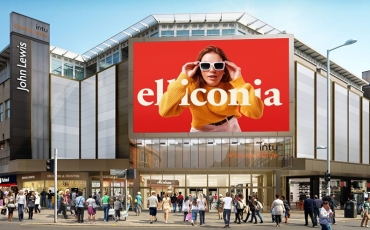
P6-class LED display on a shopping-mall facade
For more outdoor installations, browse our outdoor LED billboard OK series or see the P6 LED display product range.
P6 Outdoor LED Display Buying Checklist
Before you compare final prices, make every supplier answer the same eight questions in writing. The answers separate a genuine P6 outdoor panel from a relabeled module.
| # | What to confirm | Why it matters |
|---|---|---|
| 1 | True pitch: 6.0 mm or 6.67 mm, plus module resolution | A 320 × 160 mm “P6” module cannot be true 6.0 mm; the math exposes it |
| 2 | Brightness at the actual site orientation | 6,000 nits may wash out on a west-facing wall; 8,000 nits adds cost and power |
| 3 | Full IP breakdown: front, rear, cable entries | IP65 front means little if the rear compartment or glands leak |
| 4 | Cabinet material, weight and wind-load plan | Aluminum saves structure cost; steel needs corrosion protection |
| 5 | Service method: front, rear or dual | A wall with no rear access must use front-service modules |
| 6 | Refresh rate and driver IC brand | ≥3,840 Hz avoids camera banding; IC quality drives lifespan |
| 7 | Control system models and content workflow | “NovaStar system” is not enough; specify cards and processor |
| 8 | Aging report, dead-pixel rate, warranty and spares | 72-hour aging and a spare-parts kit protect the project after handover |
If a supplier cannot answer questions 1, 3 and 5 without checking, keep looking. Those are the three that cause the most expensive surprises after the screen is on the wall.
Frequently Asked Questions About P6 Outdoor LED Displays
What is a P6 outdoor LED display?
P6 outdoor LED displays are weather-sealed, high-brightness screens built around a 6 mm pixel pitch. They are designed for permanent outdoor use with 6,000+ nits, IP65 protection and a cabinet rated for wind and rain. P6 sits between P4/P5 and P8/P10 in resolution and cost.
Is P6 the same as P6.67?
Not exactly. P6.0 has a true 6.00 mm pitch and 27,777 pixels/m²; P6.67 has a 6.67 mm pitch and 22,500 pixels/m². Many outdoor suppliers sell P6.67 as “P6” because it is the volume outdoor standard. Ask for the module size and resolution to confirm which one you are buying.
What is the minimum viewing distance for a P6 LED screen?
About 6 m for comfortable viewing, using the rule that minimum distance in meters roughly equals the pitch in millimeters. Most projects place the nearest audience at 8–15 m, where the pixel grid is invisible. A P6 screen can still carry brand content at 40–60 m, but fine text will not be readable there.
How much does a P6 outdoor LED display cost per square meter?
In 2026, a standard SMD P6.67 outdoor panel typically costs US$420–680/m² factory-direct; a true P6.0 panel typically costs US$550–880/m². High-brightness, GOB and front-service versions add 10–25%. Control, steel structure, installation and shipping are extra.
How bright should a P6 outdoor LED screen be?
6,000–6,500 nits suits most city facades and plazas. Use 7,000–8,000 nits for direct sun, hot climates or west-facing walls, and 8,000–10,000 nits only for extreme sites such as airports and highway gantries. Pair the screen with auto-brightness dimming to save power and extend LED life.
Is P6 or P8 better at a 20 m viewing distance?
At 20 m, both work, but P8 usually delivers the same perceived clarity for less money because the audience is well beyond its 8 m minimum distance. Choose P6 only if the same screen also serves a closer audience zone, or if the content needs finer detail. The closest viewer should drive the decision.
Do I need IP66 instead of IP65 for an outdoor P6 screen?
IP65 is enough for most inland facades. Specify IP66 for coastal sites, heavy driving rain, high humidity or exposed highway locations. In every case, the installation must seal cable entries and provide drainage; the IP rating of the panel alone does not waterproof a badly built structure.
How long does a P6 outdoor LED display last?
A quality P6 outdoor panel is rated for about 100,000 hours to 50% brightness — roughly 11 years at 24/7 operation or 22 years at 12 hours a day. Real-world life depends on brightness settings, ambient temperature, power quality and maintenance. Keep spare modules and clean the screen regularly to reach the rated life.
Conclusion: Specify the P6 Outdoor LED Display, Not Just the Price
P6 is a strong middle ground for outdoor advertising: enough resolution for a 6–15 m audience, enough brightness for daylight, and a price that still works at facade scale. The expensive mistakes are almost never about the pitch itself — they are about a mislabeled P6.67 module, an undersized brightness spec, a rear-service cabinet on a wall with no rear access, or a structure that was never engineered for wind.
Use the eight-point checklist, put the true pitch and module resolution in writing, and size the screen to whole cabinets before you produce content. If you send us the wall dimensions, the closest viewing distance and the site photos, our engineers will return a cabinet layout, a brightness recommendation and a factory-direct price — not a generic catalogue page.
Request a P6 Outdoor LED Display Layout
LEGIDATECH is an LED screen manufacturer supplying outdoor LED displays, rental LED screens and indoor LED video walls from our Shenzhen factory.
P6 outdoor LED display quick guide — factory walkthrough
More:
How to Measure LED Screen Size
5 Steps to Teach You How to Clean LED Screen Correctly
P6 LED Display
Outdoor p6 LED display solution in Nigeria
P6 LED screen to UK
P6.67 Outdoor LED Display to Malaysia