


When closing large commercial procurement deals, buyers should carry out targeted cost assessments for P3 Outdoor LED Screen Cost to verify whether LED screen supplier quotations conform to actual construction and engineering limitations.
This inspection ensures high-end price tags correspond to practical benchmarks, including a 111,111-pixel per square meter layout, efficient drive chips, and solid cabinet structural stability.
Dive into our P3 outdoor LED screen cost analysis covering chip, driver IC, cabinet costs, TCO, and brand comparisons to determine if the premium is justified.
P3 Outdoor LED Screen Cost: Breaking Down the Components
LED Chip and Driver IC Cost Allocation
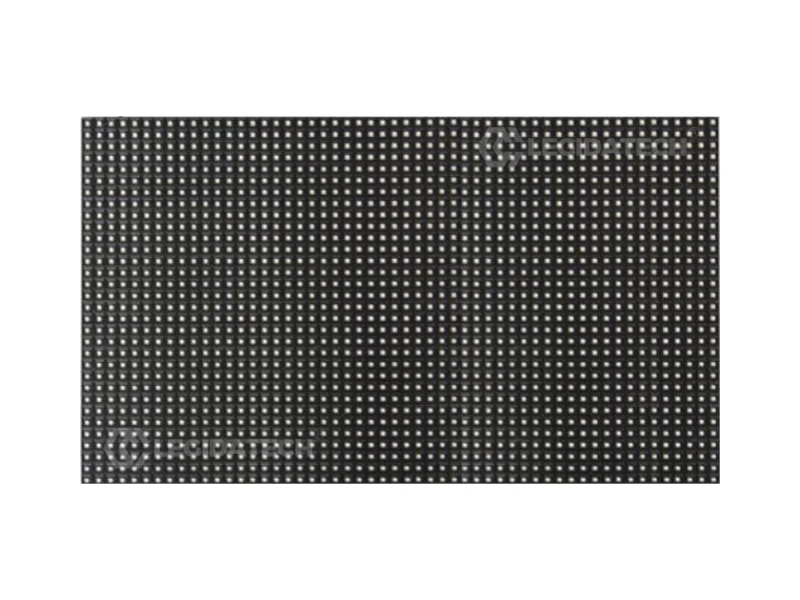
LED light chips constitute the biggest expense component of P3 outdoor LED screens. When calculating the P3 outdoor LED screen cost analysis, chips take up 35% to 45% of the whole module expense. The screen reaches 111,111 pixels within one square meter, so far more SMD lamp beads are needed than wide-pitch products such as P5 and P6.
Every pixel unit relies on an independent constant-current drive chip, most of which adopt 16-channel versions. Chip expenses rise in proportion to pixel count.
A regular 192×192mm P3 panel needs half as many drive chips as an equal-sized P4 panel. Premium drive chips from brands MBI and ICN support a 3840Hz refresh rate and 16-bit grayscale, which will further increase overall material costs.
Cabinet Structural and Power Supply Costs
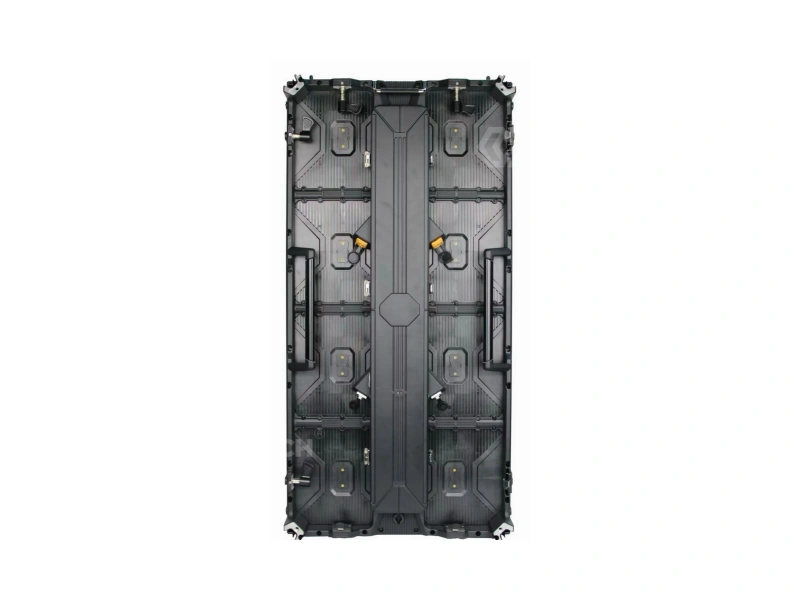
P3 outdoor LED billboard cost analysis: Outdoor P3 display frames made of cast aluminum need to pass strict IP65 dust and waterproof testing. To hit this rating, manufacturers use accurately milled joints, silicone sealing strips, and heavy-duty back panels.
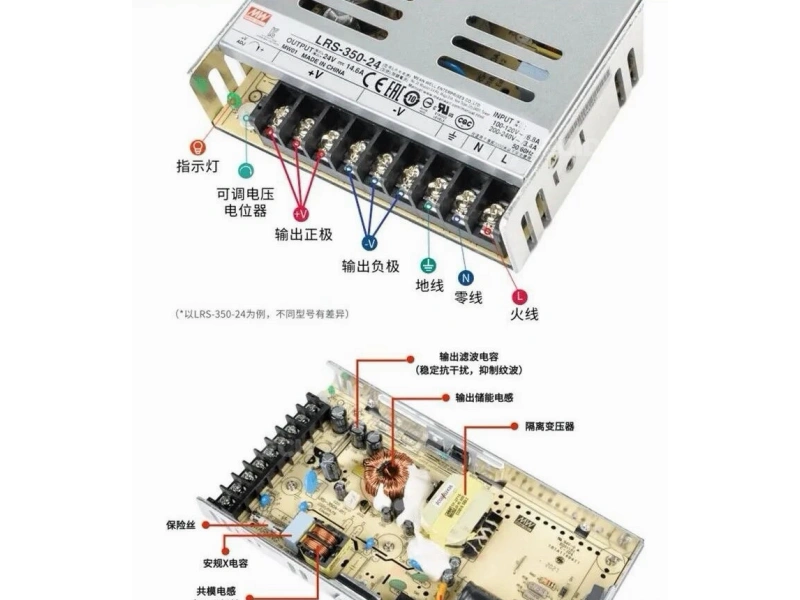
Such parts push cabinet costs up by 15%–20% when compared with indoor cabinets. Besides, power units have to carry extra load to sustain an instant high current from dense lamp bead layouts. Running at 5000 nits brightness, regular outdoor P3 panels draw 25% to 30% more power than equal-brightness P5 versions.
This calls for power supplies with bigger power output and stronger heat resistance. Common cathode designs can cut total power usage, yet they raise production costs due to complex circuit layout and power allocation planning on circuit boards.
Comparative Cost per Square Meter
If we break down the per-square-meter investment of outdoor P3 LED signage, its obvious cost premium will stand out clearly. Side-by-side cost checks between P3 and regular P6 outdoor display panels show the former carries two and a half to three times the unit area cost.
The price gap cannot be explained by LED chips alone. Denser pixel layout calls for ultra-precise SMT mounting and thorough individual pixel tuning, pushing up LED screen manufacturer labor spending and equipment wear expenses.
When calculating full project budgets for outdoor P3 LED solutions, display panels take the dominant share of total spending, ranging from 60% to 65%.
Remaining funds cover supporting hardware such as metal enclosures, power supplies, signal receiver boards, and all wiring fittings. Construction planners cannot ignore the transmission limit of RS485 communication lines: under a 115200 baud rate, signals can only travel roughly 1200 meters stably.
When building extra-large P3 outdoor video walls, signal boosters are often a necessary add-on, which will raise the overall project expenditure correspondingly.
Brightness and Thermal Management: Hidden Cost Drivers in P3 Outdoor
To attain the 5000+ nits high brightness standard for outdoor P3 LED displays, enterprises will bear extra implicit costs in heat dissipation and power system design. Featuring a pixel density of 111,111 pixels per square meter, the screen produces intensive concentrated heat, necessitating professional cooling configurations.
Regular aluminum heat sinks fail to fit the usage scenario, so manufacturers adopt finned die-cast aluminum cabinets or air cooling structures to keep the LED core temperature below 85°C. Improper heat control will accelerate lamp bead aging, cause color distortion, and shorten the display’s service life.
P3 outdoor LED billboard cost analysis: Selecting matching power supplies is a core factor shaping overall project expenses. Outdoor P3 LED modules operating at 5,000 nits consume 25% to 30% more electric current than P5 panels with equal brightness output.
This means each cabinet needs upgraded power units with bigger power capacity—200W models replacing standard 150W ones—and better temperature resistance to keep steady power efficiency in hot surroundings. Energy-saving drive chips and shared cathode structures can cut power consumption by 15% to 20%, yet these high-grade components add a 10%–15% rise to raw material costs.
Besides, wind pressure calculation follows the EN 1991-1-4 standard via the formula P = 0.613 * v² Pa. For a maximum design wind speed of 40 m/s, display cabinets demand thicker reinforced frames, leading to extra material spending and increased total weight of the whole screen structure.
Full cost accounting for outdoor P3 fine-pitch LED displays has to cover heat dissipation supporting parts, an item most sales proposals leave unaccounted for at first. Compared with ordinary indoor P3 display solutions, high-performance power supplies, thermally conductive fillers, and strengthened cabinet structures will raise the overall system expenditure by 20% to 25%.
When working out construction budgets for outdoor P3 signage, clients need to set aside an extra 50 to 80 US dollars per square meter just for cooling hardware. Such extra spending cannot be cut down, as it safeguards long-term stable operation and meets the official 100,000-hour service life standard of the display.
Total Cost of Ownership for the P3 outdoor LED screen cost
Power Consumption: The Recurring Cost Burden
Electricity charges make up the bulk of recurring running costs for outdoor P3 LED walls. When running at standard 5,000 nits brightness, each square meter consumes between 800 and 1,000 watts, a value fluctuating based on the performance of drive ICs and LED lamp cores.
Taking 900 watts per square meter as a moderate benchmark and a power tariff of 0.12 US dollars per kilowatt-hour, a 50-square-meter screen working 12 hours each day will generate around 23,652 US dollars in yearly power bills.
Owing to more lamp chips arranged within every square meter for higher pixel density, this power expense sits 30% to 40% above that of an equal-luminance P5 outdoor LED panel.
Maintenance and Lifespan: The Long-Term Investment
High-density panel structure pushes up the after-sales maintenance fees of outdoor P3 LED signage. With 111,111 pixels arranged on each square meter, faulty single modules will disrupt a wide range of picture points, which may lead to more frequent panel replacement work.
Nevertheless, die-cast aluminum enclosures fitted with IP65 waterproof and dustproof seals can effectively cut breakdown risks brought by humid air and rust. The sealing performance passes ASTM B117 salt spray tests lasting no less than 240 hours.
Top-tier outdoor P3 screens equipped with premium LED chips from Nichia, Cree, and other well-known brands feature an L50 half-brightness life of 100,000 operating hours. If kept running all day and night without interruption, such panels can serve steadily for more than 11 years.
Any full-lifecycle cost evaluation for outdoor P3 LED walls needs to reserve funds for standby panels and on-site repair man-hours. Market operators suggest setting aside an annual maintenance fund accounting for 2% to 3% of the whole construction outlay, which covers spare stock and field technical support.
Take a 50 sq. m outdoor display as an example; the yearly budget prepared for after-sales upkeep hits $1,500 to $2,500.
Installing P3 outdoor panels brings higher one-time construction fees because technicians have to conduct accurate splicing and pixel tuning. Nevertheless, such extra early investment helps cut down later repair times significantly.
Total Cost of Ownership (TCO) Calculation
Below is a full breakdown of every expense a 50 sqm outdoor P3 LED wall racks up over ten years of use: Hardware upfront cost: $1,200 to $1,800 per square meter, which covers screen housings, power supplies and all control equipment Site build fees: $150–$250 per square meter, covering metal frame building, cable laying and full system testing post-install Yearly power bill for this 50 sqm screen: $23,652 Annual repair and spare part budget for the wall: $2,000 Total electricity charges over a full decade: $236,520 All maintenance-related spending across ten years: $20,000 Full ten-year overall cost to run the 50 sqm display: $376,520 up to $436,520
When viewers stay within 15 meters of the screen, splurging on P3 instead of P5 is well worth the extra money. Its tighter pixel arrangement delivers much crisper pictures that audiences can easily distinguish up close. Shop front advertising screens and company lobby displays care most about image clarity, so the higher long-term running costs won’t be a waste of budget.
For huge roadside billboards that people view from over 30 meters away, P5 or P6 screens will cut down total long-term spending, and their display quality is still enough for daily use.
Brand and Quality Grade Comparison: P3 outdoor LED screen price
LED Chip Grade: The Foundation of Image Quality and Cost
Which brand supplies the LED chips makes the biggest difference to an outdoor P3 screen’s overall cost and display performance.
Three mainstream chip suppliers, Nichia, Epistar, and Cree, fall into separate quality grades, and each option drastically changes the total cost calculation for P3 outdoor fine-pitch products. Japan-based Nichia is acknowledged across the industry as the top benchmark for steady brightness and consistent color rendering.
Its chips cost 30% to 50% more than ordinary generic chips, yet they feature tighter sorting standards. The panels built with these chips can hit over 97% DCI-P3 color gamut, and their chip junction temperature stays stable, barely showing color distortion even after 100,000 hours of running time.
Epistar from Taiwan delivers mid-tier lamp chips that strike a good balance between pricing and visual output. Such chips are heavily adopted in large-batch projects with tight budget limits, especially for installation scenarios with medium viewing distances ranging from 15 to 25 meters.
If you compare module prices of outdoor P3 screens fitted with Nichia and Epistar chips, the gap usually sits at 20% to 30%. However, panels using Epistar components need regular full-pixel recalibration to keep color and brightness uniform after long-term operation.
P3 outdoor LED video wall pricing. Cree, a U.S.-based chip producer, develops lamp cores tailored for ultra-high brightness outdoor display scenarios. When building P3 outdoor screens that need to hit 5,000 to 6,000 nits of brightness, Cree’s components deliver outstanding light efficiency.
They cut single-chip power draw and ease the overall heat burden of the whole panel. This advantage creates visible changes to the quotation of P3 outdoor modules. Since designers can pick lower-spec drive ICs and power adapters, the total raw material cost of the product drops by 5% to 10%.
Driver IC and PCB Grid Mapping: The Hidden Cost Variables
Outside the LED lamp core, drive ICs rank as the second key part deciding outdoor P3 screen performance. High-end outdoor P3 display walls adopt constant-current drive chips that support 16-bit grayscale and hit a 3840Hz refresh frequency. The amount spent on these ICs rises alongside screen pixel density.
A P3 panel packs 111,111 pixels per square meter, which needs around 1,200 to 1,500 drive ICs for each square meter; the exact number changes based on scanning modes such as 1/8 scan and 1/16 scan. Systems built with 1/8 scan circuitry require more IC components, yet they deliver brighter visuals and run cooler. In turn, this pushes up the overall price of outdoor P3 LED walls by 10% to 15% when matched against 1/16 scan solutions.
Circuit board layout design also creates obvious gaps in overall module expenses. Top-grade outdoor P3 panels adopt four-layer circuit boards with impedance-matched wiring, which keeps signals stable even under high refresh frequency operation. This design feature matters greatly for stable RS485 data transfer over long-distance wiring layouts.
We can reference the calculation formula L_max = (115200 baud × 0.2) / (0.5 × C). If a printed circuit board is made with flawed layouts and high line capacitance (C over 100 pF per meter), the maximum usable transmission cable length will drop by 800 meters.
This will make field wiring harder and drive up construction spending. Opting for well-engineered high-performance circuit boards will raise module costs by an extra $15 to $25 for every square meter, yet it guarantees steady signal transmission at the project’s standard maximum cable length of 1,200 meters.
Cabinet Construction and Environmental Sealing
Display housing stands as the last major cost item when comparing different display solutions. Top-tier outdoor P3 LED walls adopt die-cast aluminum housings whose machining error is controlled within ±0.1 mm, enabling gap-free splicing and flat screen surfaces. This precision is vital to keep pixel spacing consistent when assembling large display arrays.
These enclosures need to pass ASTM B117 salt spray testing for no less than 240 hours, so their IP65 waterproof and dustproof performance can resist rust and erosion in seaside areas.
Ordinary powder-coated steel cabinets cost roughly $80 to $120 per square meter. By contrast, die-cast aluminum versions are priced between $150 and $200 per square meter. They cut overall cabinet weight by 30% and deliver anti-corrosion performance that can last up to 50 years.
All these hardware material selections will directly affect the full cost breakdown of outdoor P3 LED advertising screens. Panels fitted with Nichia chips and housed in cast aluminum frames carry a unit price of $1,800 to $2,200 per square meter.
On the other hand, modules using Epistar lamp cores paired with ordinary steel cabinets only run $1,200 to $1,500 per square meter.
Spending extra on high-end configurations makes perfect sense for projects that need stable operation over a decade or longer with little routine upkeep. Typical use cases include downtown roadside billboards with heavy pedestrian flow and brand headquarters’ exterior display walls.
P3 outdoor LED Screen Cost Conclusion / Summary
When evaluating P3 Outdoor LED Screen Cost, businesses should not rely solely on the initial module price. A proper cost assessment must combine real project conditions with long-term operating expenses, following a Total Cost of Ownership (TCO) approach.
In outdoor fine-pitch LED display projects, the overall cost includes more than LED cabinets. It also covers power consumption, structural steel construction, heat dissipation systems, and long-term maintenance requirements.
For example, a P3 outdoor LED screen with 111,111 pixels per square meter and 5000-nit brightness typically generates a power load of 800–1000W per square meter, requiring advanced cooling systems such as high-efficiency fans and heat sinks.
While these thermal solutions increase upfront costs by around 8%–12%, they help maintain LED chip temperatures below 85°C, significantly extending product lifespan and reducing failure risks in outdoor environments.

Structural engineering is another major cost factor often underestimated in P3 outdoor LED screen cost calculations. According to EN 1991-1-4 wind load standards, outdoor LED installations must withstand wind speeds of up to 40 m/s (approximately 144 km/h), resulting in pressure levels of 980.8 Pa.
Because P3 LED screens use higher pixel density and heavier die-cast aluminum cabinets, their steel frame structures typically cost 15%–20% more than lower-resolution alternatives such as P8 or P10 displays.
In addition, maintenance costs should also be considered in the total investment. Due to the compact pixel layout, P3 outdoor LED screens require more precise servicing and calibration. A single faulty driver IC may affect a 16×16 pixel area, requiring careful repair and full-screen recalibration. This increases long-term maintenance complexity and spare part requirements.
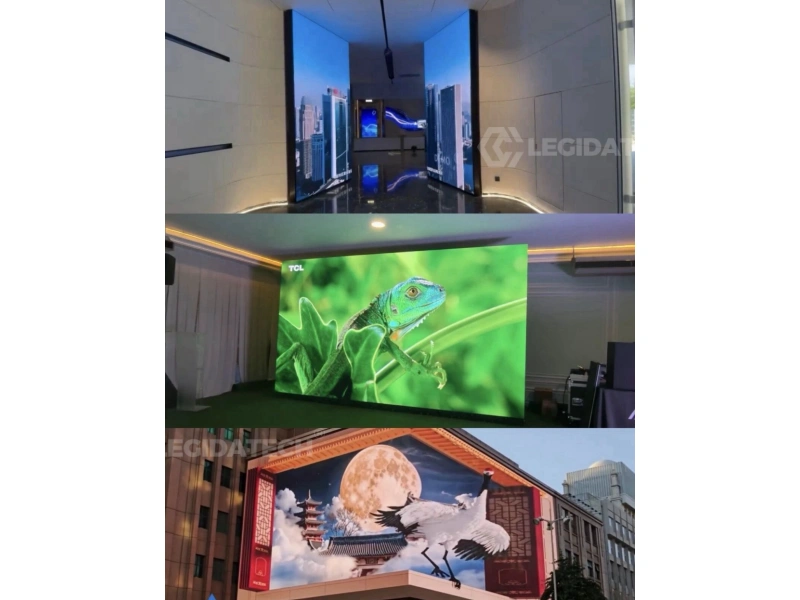
For this reason, the P3 Outdoor LED Screen cost is not suitable for every project. It is most cost-effective when viewers are within 15 meters and when ultra-high-definition visual performance is required, such as luxury brand storefronts, corporate plazas, or high-end commercial landmarks.
For viewing distances beyond 25 meters, P4 or P5 outdoor LED screens usually provide better cost efficiency without noticeable visual loss.
In conclusion, the premium cost of a P3 outdoor LED display is justified only when image precision and brand presentation are top priorities. Businesses should evaluate not just the purchase price but the full lifecycle cost before making a final decision.
For project-specific consultation or a detailed quotation on P3 Outdoor LED Screen Cost, feel free to contact our engineering team for professional guidance.
Feel free to contact us for consultation when you are working out project solutions for P3 and fine-pitch LED displays.
Related P3 Outdoor LED Screen Post:
P3 vs P4 Outdoor LED Display ROI: Which Pixel Pitch Maximizes Profit for Street Retail?
P3.9 Outdoor LED Display Installation: UK Case Study
P3 LED Module-Detailed guidance
FAQ: Real B2B LED Industry Queries Answered
Q: How much does a P3 outdoor LED screen usually cost?
A: P3 outdoor LED display pricing varies from $800 to $2,200 per square meter depending on configuration: entry-level lamp and steel-cabinet builds run around $1,200–$1,500/m², while premium Nichia-chip panels in die-cast aluminum cabinets reach $1,800–$2,200/m². The final price changes based on screen brightness, waterproof level, and cabinet build. High-brightness 5000+ nit models and aluminum alloy cabinets improve outdoor stability but raise costs slightly. You can get accurate and budget-friendly factory offers from professional manufacturers.
Q: Is there a simple reference standard to choose the LED pixel pitch?
A: A handy practical guideline for pixel pitch selection: the shortest suitable viewing distance (meters) matches the pixel pitch value (mm). Take P3 LED screens as an example; audiences get clear visuals when standing 3 meters or farther. Outdoor projects also need to factor in surrounding brightness. Though P3 delivers delicate display effects, its price is relatively higher. It’s necessary to coordinate resolution, budget, and viewing range before finalizing the model.
Q: What factors decide the overall price of outdoor LED panels?
A: Outdoor LED panel pricing varies widely based on pixel density. Standard large-pitch variants such as P10 cost $280 to $420 per square meter, while high-definition P3 models start above $1,200 per square meter. When budgeting for P3 outdoor signage, don’t overlook extra expenses, including mounting frames, control systems, and on-site installation, which may raise total spending by 30% to 50%. LEGIDATECH delivers direct factory pricing with reliable weather-resistant panels, bringing long-term cost advantages for commercial advertising and event rental projects.