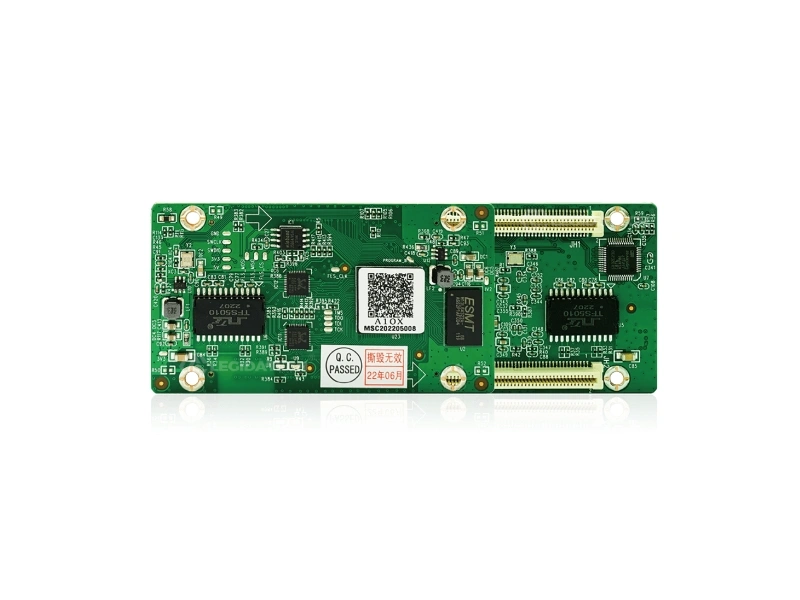
Every LED cabinet needs a receiving card. The A10X is the pixel-level engine inside — transforming Gigabit Ethernet data into stunning LED display visuals. Factory-direct from LEGIDATECH with pre-installed, pre-configured LED cabinets.
A10X Overview — What It Is, What It Does, Who Needs It
What Is It?
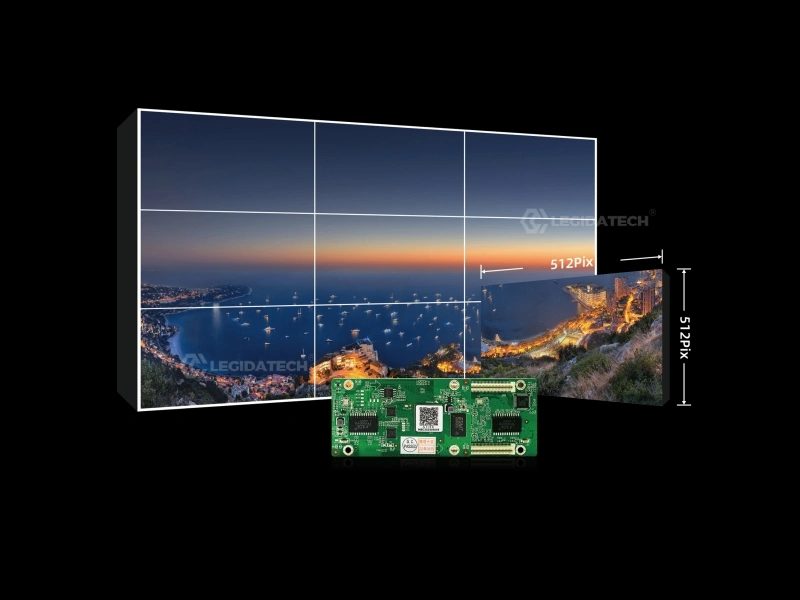
A small form-factor LED receiving card (80×45mm, 20.2g) by Mooncell. Installed inside each LED cabinet, it receives pixel data from the sending card and drives 512×640 pixels per card via 32 groups of RGB parallel data.
What Does It Do?
Decodes Gigabit Ethernet signals into row/column driver data for LED modules. Applies 22-bit grayscale, pixel-level calibration, 3D processing, and RGB Gamma — making every pixel uniform, smooth, and color-accurate across the entire LED video wall.
Who Needs It?
LED integrators building cabinets, maintenance teams replacing cards, rental companies stocking spares — and anyone procuring a complete LED display system who wants factory pre-installed, pre-configured receiving cards.
Where the A10X Fits — The LED Display Signal Chain
Every pixel on an LED video wall passes through a receiving card. Here’s exactly how the A10X transforms data into light.
📹
Video Source
→
⚙️
Video Processor
→
🔌
A10X Receiving Card
Decode · Calibrate · Drive
→
🖥️
LED Display
Seamless Video Wall
Gigabit Ethernet data arrives at the A10X from the sending card. The A10X’s FPGA decodes the signal into row/column driver data, applies 22-bit grayscale processing and pixel-level calibration, then outputs 32 groups of RGB parallel data through the 120PIN connector directly to the LED module. One A10X per cabinet — hundreds of cards working in perfect synchronization.
How Many A10X Cards Does Your LED Display Need?
Quick Calculation Formula
Total A10X Cards = Total LED Pixels ÷ 262,144 (standard load: 512×512) Total A10X Cards = Total LED Pixels ÷ 327,680 (PWM mode: 512×640)
Cause: No Gigabit network signal or power issue. Solution: Check Ethernet cable connection to sending card. Verify 3.5-5.5V DC power at EXT_5V pins. Status LED = uniform slow flash means card working normally.
Screen Section Not Displaying
Cause: Receiving card not detected or ribbon cable loose. Solution: Run AutoLED network port debugging to detect card position and connection line. Check 120PIN connector is fully seated. Verify card is within 1-128 scan support.
Color Inconsistency Across Cabinets
Cause: Pixel-level calibration not applied or lost. Solution: Run brightness and chromaticity correction via AutoLED software. Enable RGB independent Gamma adjustment. Read back configuration parameters to verify calibration data is saved in card Flash.
Frequently Asked Questions
What is the Mooncell A10X receiving card?▾
A small form-factor (80×45mm) LED receiving card by Mooncell. Maximum load 512×640 pixels (PWM), 32-group RGB parallel data, 22-bit grayscale, pixel-level calibration. Installed in each LED cabinet to receive data from the sending card and drive LED modules.
How many A10X cards per LED cabinet?▾
Typically 1 A10X card per cabinet. The per-card load is 512×512 (conventional) or 512×640 (PWM). For a 1920×1080 Full HD wall, approximately 8 A10X cards are needed total. Each cabinet gets 1 card pre-installed by LEGIDATECH.
Does A10X support rental LED screens?▾
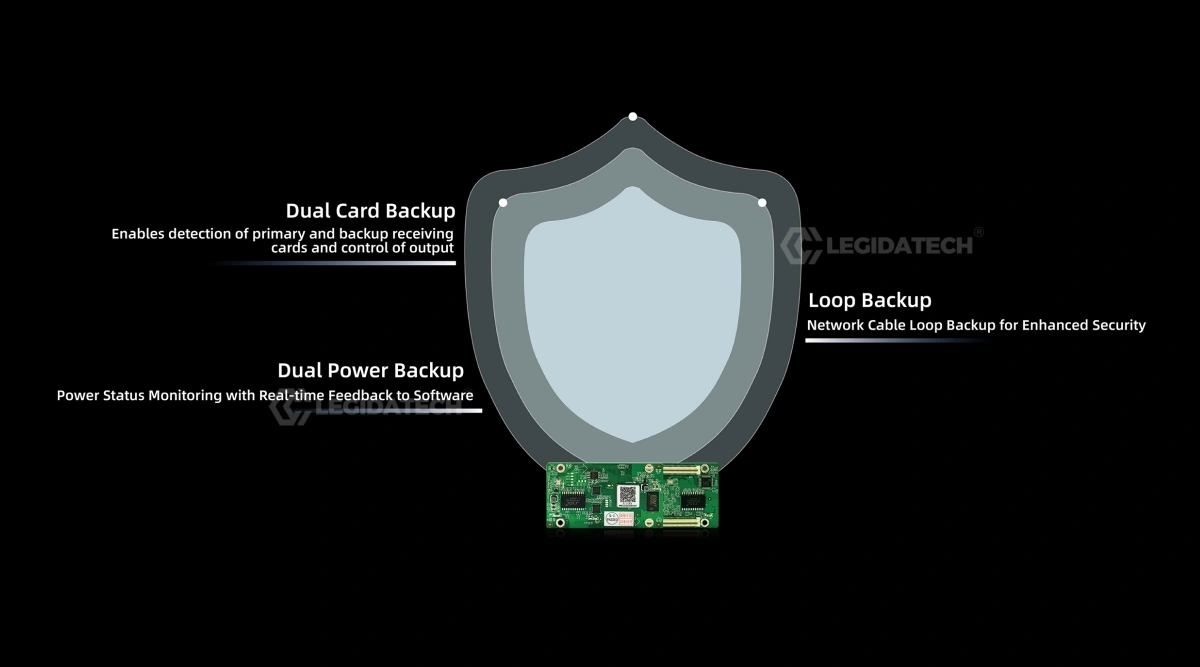
Yes. The A10X supports dual-card hot backup and loop backup — critical for rental/staging where reliability is non-negotiable. If one card fails, the backup takes over instantly.
Can I buy A10X cards separately without LED cabinets?▾
Yes. LEGIDATECH supplies A10X cards as standalone spares or bulk purchases (100 PCS/box). Also available pre-installed in complete LED cabinets for turnkey projects.
How to configure A10X with AutoLED software?▾
Download AutoLED from Mooncell or LEGIDATECH download center. Connect via USB-B or LAN. Use network port debugging to detect each A10X card position. Set resolution, scan mode, and calibration data.
A10X receiving cards + LEGIDATECH LED displays — one supplier, complete solution.
Explore the Mooncell LED Control System Hub →Complete guide to the Mooncell LED control system — how processors, controllers and receiving cards work together, full product comparison, selection logic and applications.