Nightclub LED Screen in Nigeria: Toppest P2.5 Case Study
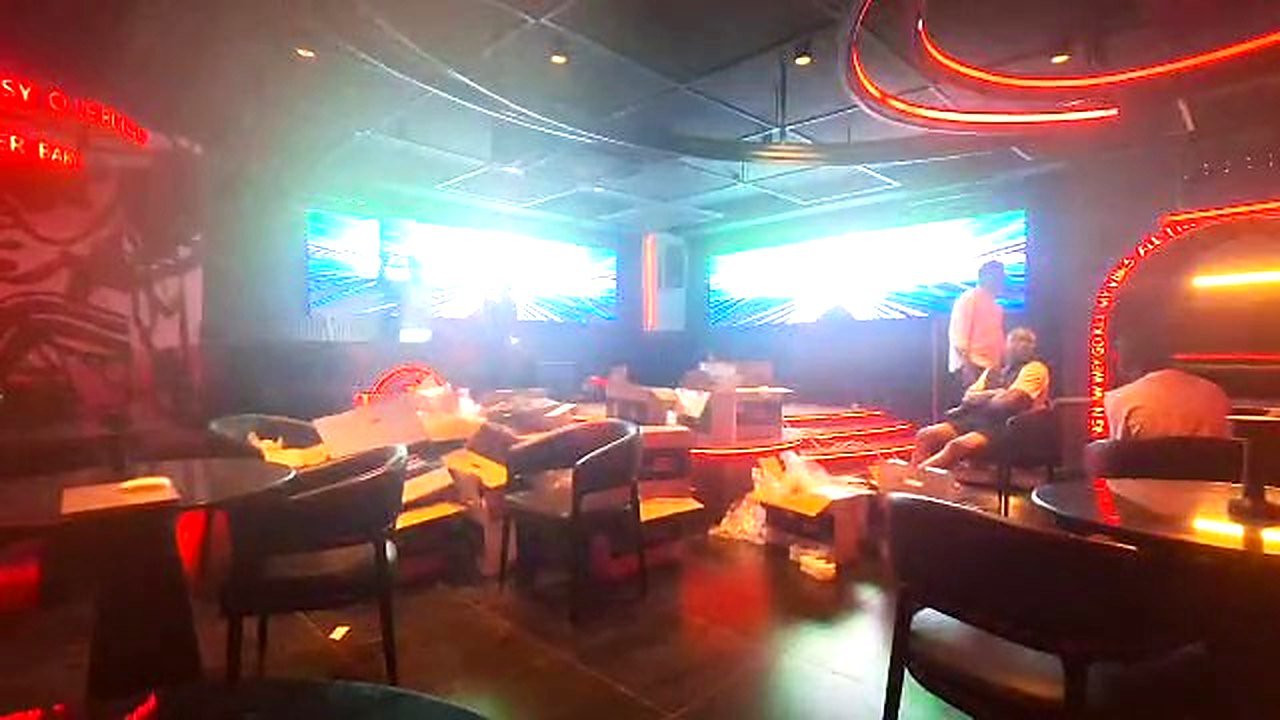
This is a real installation, documented on site. In November 2025, Toppest, a nightclub in Lekki, Lagos, installed two Ehonor P2.5 LED screens — 3.84 × 0.96 m each — on the walls above its main floor. The photos and video below were taken at the venue while the final installation was still in progress.
Short answer: Toppest nightclub in Lekki, Lagos runs two 3.84 × 0.96 m P2.5 indoor LED screens (Ehonor series), one on each side of the main floor. At 2.5 mm pixel pitch, each 3.84 m strip resolves 1536 × 384 pixels — sharp at club viewing distances and camera-friendly on event nights. LEGIDATECH built and shipped both screens as a standard-panel system.
Project Facts
| Client | Toppest (nightclub) |
|---|---|
| Country | Nigeria — Lekki, Lagos |
| Application | Nightclub main floor — twin feature screens above the seating and DJ area |
| Product | Ehonor Series indoor fixed LED display |
| Pixel Pitch | P2.5 (2.5 mm) |
| Screen Size | 3.84 × 0.96 m per screen × 2 sets (≈ 7.4 m² total) |
| Resolution | 1536 × 384 px per screen |
| Screen Type | Indoor fixed installation, wide-format horizontal strips |
| Supplier | LEGIDATECH |
- Two identical 3.84 × 0.96 m screens, one mounted on each side of the room above the booth seating and the DJ area.
- P2.5 pixel pitch — 160,000 pixels per square metre — suits a dark room where guests sit a few metres from the screens.
- Each screen resolves 1536 × 384 pixels; the 4:1 strip format follows the long walls instead of interrupting them.
- Both screens were already playing content when the photos were taken; the venue was still being fitted out around them.
The Client
Toppest is a nightclub in Lekki, one of Lagos’s main nightlife districts. The venue was finished around a simple idea: the screens are part of the room, not an afterthought. Long, narrow LED strips run along both sides of the main floor, above the booth seating and the DJ area, so visuals stay in the guests’ line of sight from almost every table. That is how nightclub LED screen projects in Nigeria are being specified now — fixed, always on, and matched to the room’s geometry. For lounges, KTV rooms and bars that want the same treatment, our KTV and club LED screen solutions page collects the layouts that work.
The Screen: Ehonor Series P2.5 Indoor LED Display
Both screens are Ehonor Series P2.5 indoor LED displays — the fine-pitch indoor line behind several of our Nigeria installations. Four things matter for a club build like this:
- P2.5 resolution at club distance. At 2.5 mm, each 3.84 m strip resolves 1536 × 384 pixels. Guests sit a few metres away, so text, logos and VJ graphics hold up cleanly without a visible pixel grid.
- Indoor design for a dark room. A fixed indoor build of slim 480 × 320 mm cabinets, with brightness that can be tuned down so the screens set the mood instead of fighting it.
- Camera-friendly refresh. Clubs get filmed — by guests and by event crews. A high refresh rate keeps the screens clean on camera: the project photos and site video were shot on ordinary phones, and the screens read smooth, without scan lines.
- Standard panel system. Each screen is built from 24 standard 480 × 320 mm cabinets. Standard parts mean a spare module is a plug-and-play fix — exactly what you want when the nearest factory is a flight away.
Installation: What the Site Photos and Footage Show
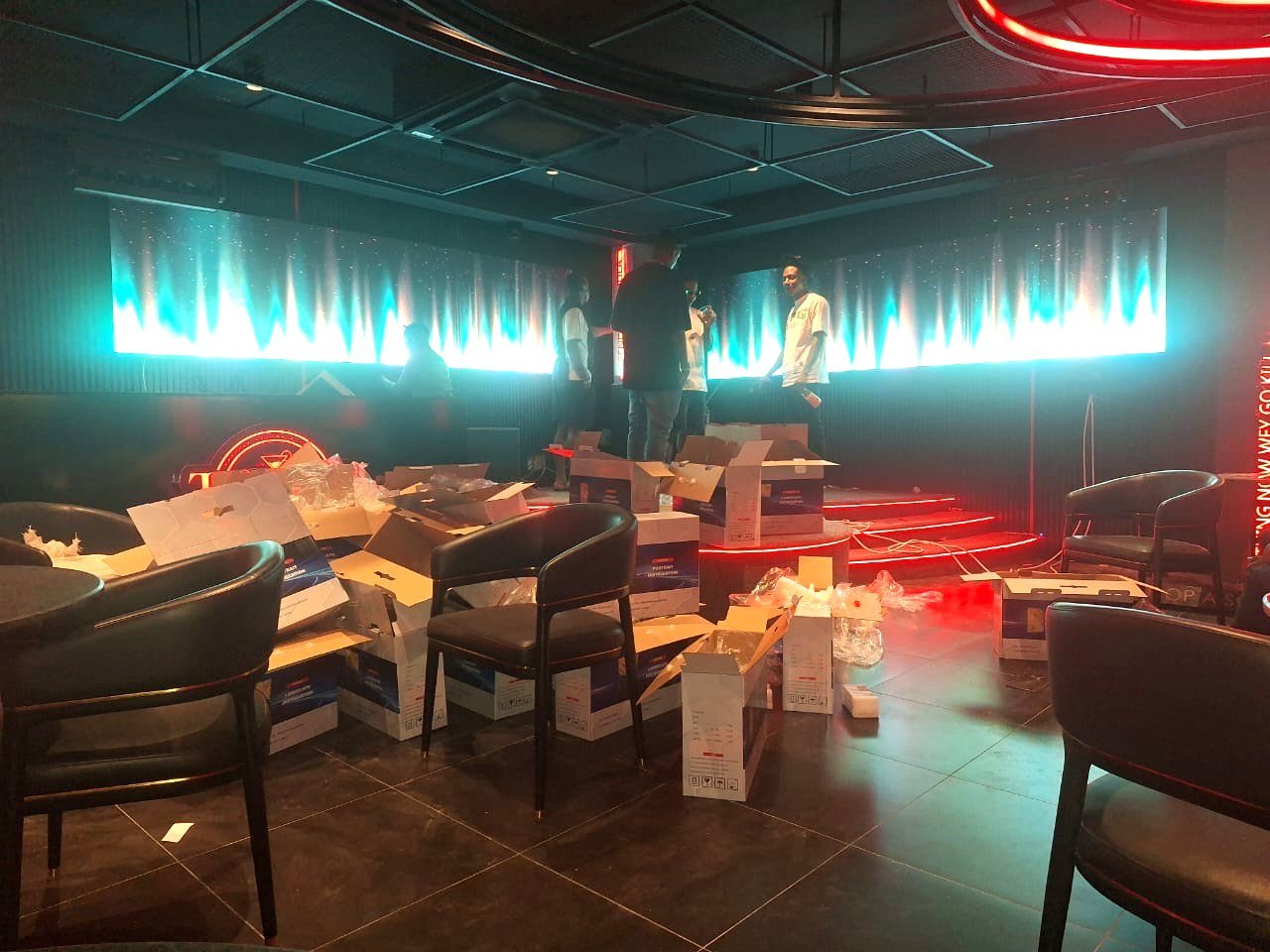
The site photos show the installation as it happened rather than staged for a showroom. Both screens were already mounted high on their walls and playing content, while the venue was still being fitted out around them — packing crates and the club’s chairs are still on the floor, and the red-lit stage steps were already running.
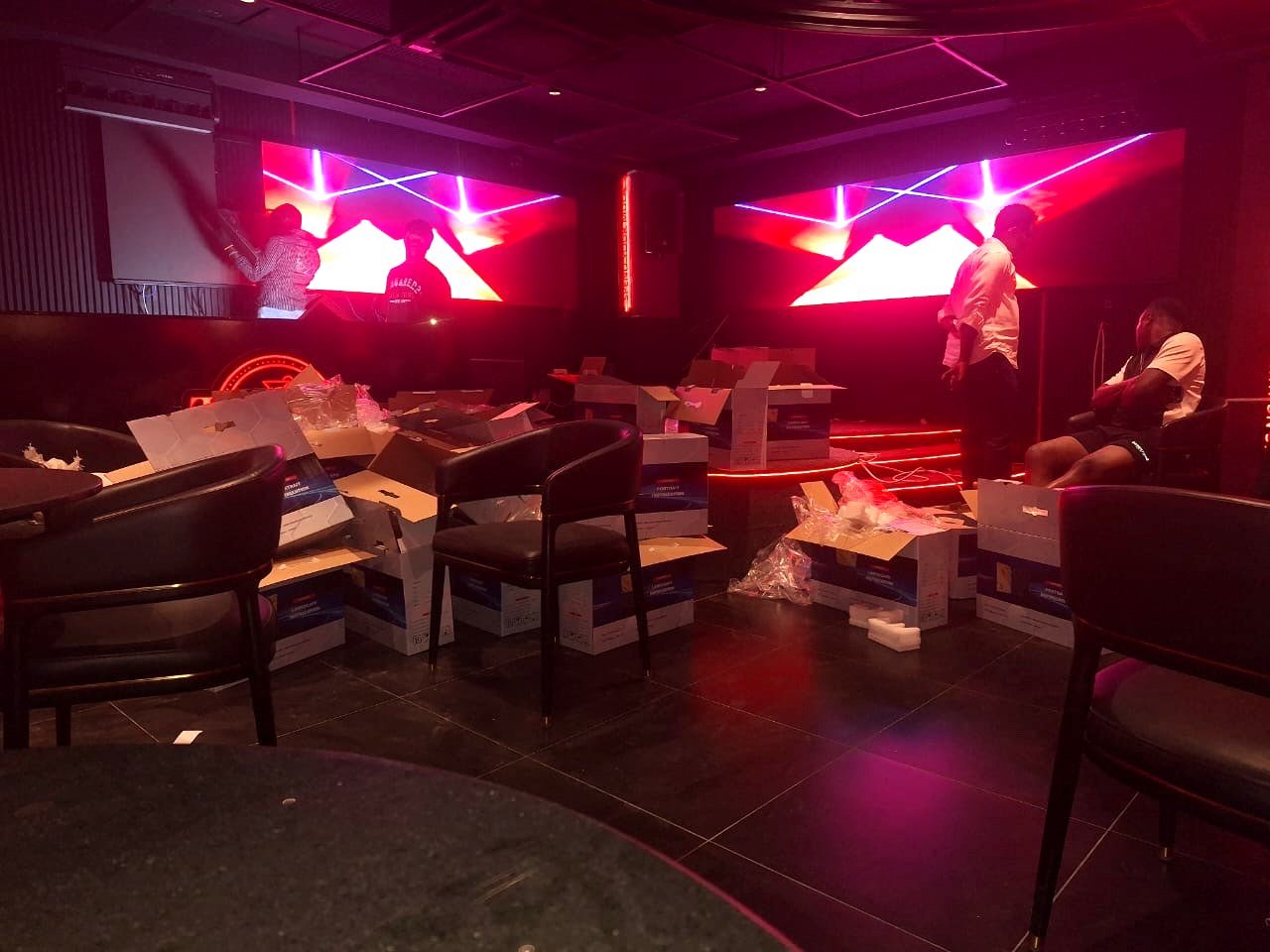
The geometry shows why the 4:1 strip format was chosen. Each wall gets one long, continuous band of display above the seating line — enough to carry the room’s visuals without stealing head height or floor space. A single square screen could not sit in the same place without redesigning the wall.
The Screen in Action
The short video recorded on site shows both screens switching through VJ content — laser-style graphics, flame-like visuals, radial patterns — the kind of loops a nightclub runs from doors-open to close. Content plays from a standard LED controller, so the operator can change looks for themed nights, brand takeovers or artist sets without touching the hardware.
Because the clip was filmed handheld on a phone in a dark room, it doubles as a camera test: the screens stay smooth and band-free across the footage — the reason guests’ videos from the club come out clean too.
Why P2.5 Works Well for a Nightclub LED Screen
Nightclubs are a specific viewing problem: dark room, short distances, moving content, cameras everywhere. P2.5 answers each part of it.
Viewing distance. The screens sit above booth seating, so the closest guests are a few metres out. At 2.5 mm pixel pitch, the picture holds together from roughly three metres onward — closer, you would want a finer pitch; well beyond it, a coarser one looks grainy. For a typical club layout, P2.5 sits in the sweet spot.
LED screen vs projector in a dark room. Projectors struggle exactly where clubs live: they need throw distance, they wash out under lighting, and their blacks go grey the moment haze and spot beams fill the room. An LED screen is self-emissive — it keeps its contrast with the lights on or off, runs all night without lamp replacements, and fills a long wall with the 4:1 format a projector cannot match. Where a projector suits a temporary setup, a fixed nightclub LED display is built to be part of the room.
LED Screens in Nigeria Nightclubs
Lagos runs one of the most active nightlife economies in West Africa, and the Lekki axis keeps adding clubs and lounges that compete on production value. Screens are a big part of that: a nightclub LED display carries the room’s visual identity all night, and the same panel logic extends to KTV rooms and bars — our KTV LED screen cases and creative LED display ideas for bars show the range.
Nigeria is also one of the destinations our P2.5 indoor line ships to most often. The Ehonor series has already been documented in a P2.5 installation in a Lagos mall and in a church LED screen case study in Abuja, alongside several other Nigeria shipments. The newest: the Salem Christian Ministry church LED screen in Lekki, Lagos, installed the same month. The Toppest project adds the nightclub side of that record.
FAQ
What LED screens did Toppest install?
Two 3.84 × 0.96 m Ehonor Series P2.5 indoor LED screens — one on each side of the main floor. Each screen resolves 1536 × 384 pixels, giving the venue about 7.4 m² of display in total.
What pixel pitch is right for a nightclub LED screen?
For guests seated a few metres from the screen, P2.5 is the sweet spot — fine enough for close viewing, without paying for detail the distance hides. Larger rooms where the closest guest is beyond five metres can step up to P3, and temporary stage or rental builds commonly use P3.9.
Why do nightclubs install LED screens instead of projectors or TVs?
LED screens are self-emissive, so they keep contrast in a dark room, run all night, and cover long wall formats that projectors and TVs cannot. They also stay camera-friendly, which matters in a venue where guests and event crews are filming every night.
Can LED screens be shipped to Nigeria?
Yes. LEGIDATECH ships LED screens to Nigeria regularly — this Toppest project, a P2.5 installation in a Lagos mall, and a church screen in Abuja all went through Lagos or Abuja ports. Screens travel in export packing with spare modules included, and support continues remotely after delivery.
How much does a nightclub LED screen cost in Nigeria?
Factory-direct indoor screens typically price between US$350 and US$1,500 per square metre depending on pitch and configuration. A twin 3.84 × 0.96 m setup is about 7.4 m², so the screens themselves land in the low-to-mid five figures before sea freight and clearing — for P2.5, expect the upper half of that range. The full breakdown, including freight and duties, is in our LED screen price guide for Nigeria.
LED screen vs projector in a nightclub — what is the difference?
A projector needs throw distance and loses contrast the moment club lighting and haze go up, and its lamp needs replacing on a schedule. An LED screen keeps black levels in the dark, fills a long wall edge to edge, runs all night with no consumables, and photographs cleanly. For a fixed nightclub installation, the LED screen wins on every point that matters daily.
Building or refitting a nightclub, lounge, KTV or bar in Nigeria? Send us your wall dimensions and viewing distance — we will come back with a pitch recommendation, a layout, and a factory-direct quote — two standard-panel P2.5 strips, playing content the day they go up. Request a quote for your venue’s LED screens.