Why Creative LED Displays Beat Plain Lighting in Bars
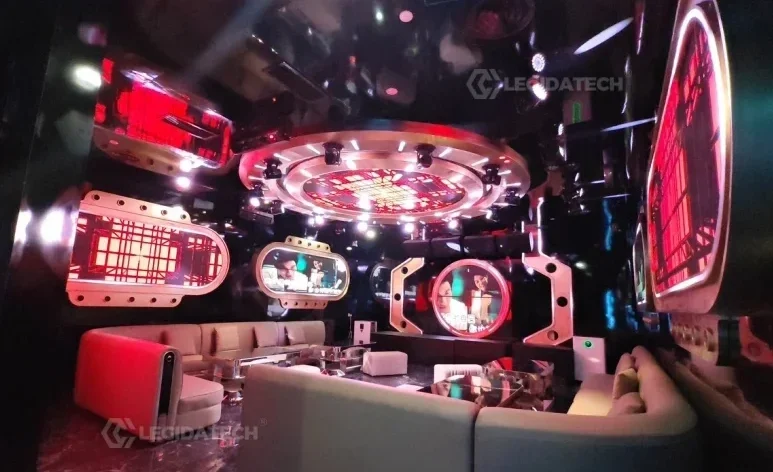
Bar design has changed. Static neon signs and spotlights still work, but the venues that keep guests coming back are the ones where the interior itself moves. A creative LED display does what traditional lighting cannot: it changes scene by scene, follows the music, and turns the bar itself into the reason guests take photos and post them.
Three reasons bar owners choose creative LED screens over plain lighting:
- Atmosphere on demand — the same bar can run a warm lounge mood at 7 pm and a party wall at midnight, from one media player.
- Photo-worthy interiors — guests share what they see; a dynamic LED backdrop is the most shared visual in a modern bar.
- Lower running cost than you think — LED modules last up to 100,000 hours and use far less power per square meter than older lighting rigs.
This guide collects the creative LED display ideas our customers use most in bars, lounges and pubs — each one buildable with standard indoor LED products from a factory-direct LED screen manufacturer.
Creative LED Display Ideas for Bar Zones
A bar is made of zones, and each zone has a different viewing distance and a different job for the screen. Here is how to treat each one.
1. Back Bar Wall — the Brand Wall
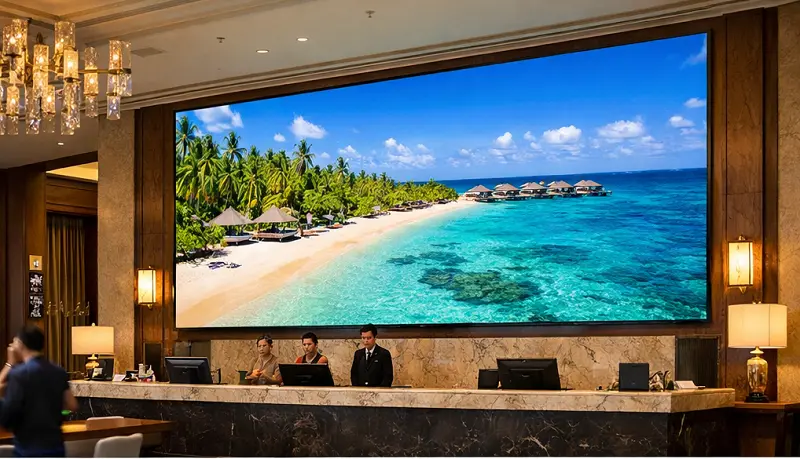
The wall behind the bartender is the most photographed surface in the building. A flat LED video wall built from indoor LED screen cabinets here can show the drinks menu during dinner service, slow visual art in the evening, and full party visuals when the DJ starts. Because guests watch it from 2–4 meters away, a P2–P2.5 indoor screen is the right pitch, and a 16:9 area keeps menu layouts simple.
2. Ceiling — the Immersive Roof
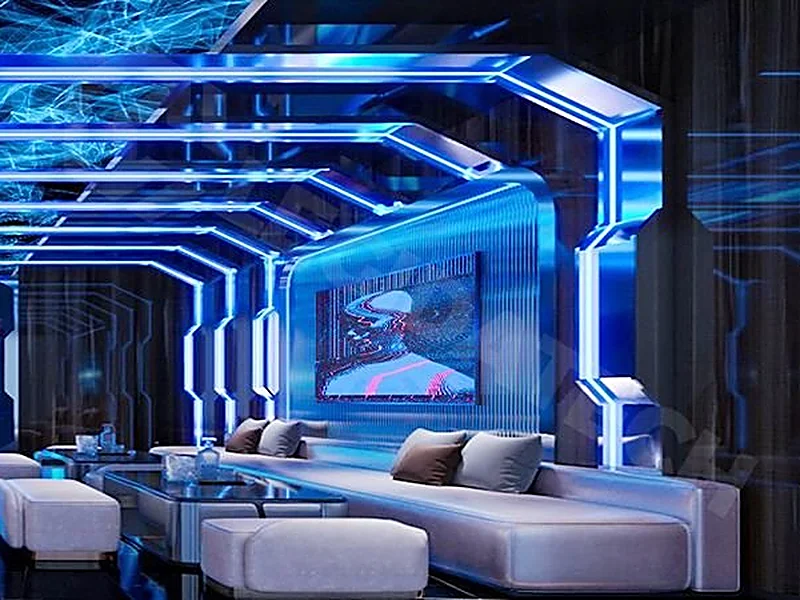
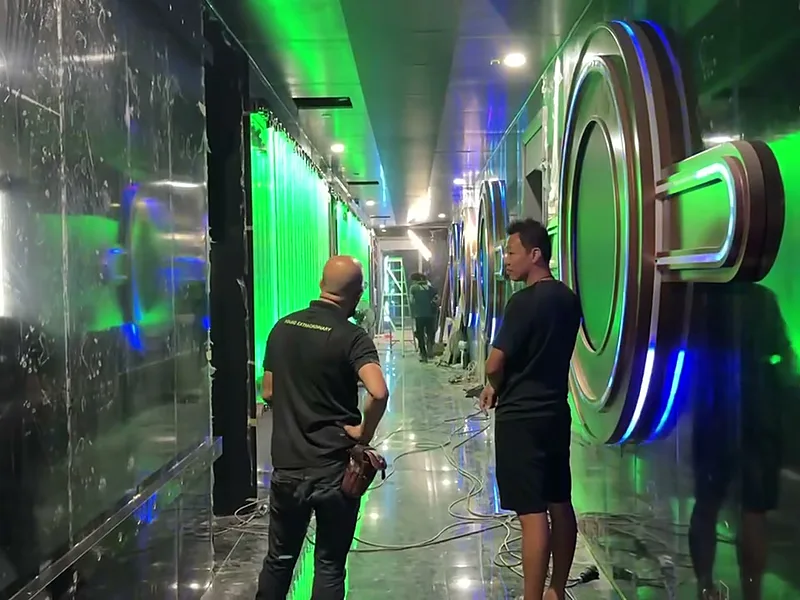
A ceiling LED display turns the whole room into an immersive box. Install slim LED panels above the seating area and run slow ambient visuals — clouds, waves, abstract color — instead of static paint. Ceiling screens are also the fastest way to make a small bar feel twice as big. Watch a real ceiling installation:
3. Columns and Curves — Turn Obstacles into Features
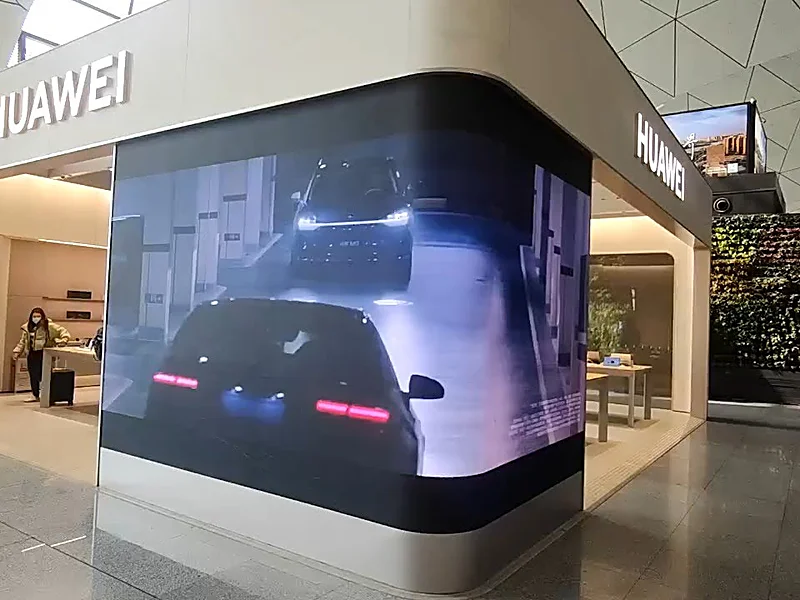
Every bar has structural columns. Wrap them with flexible LED modules and the column becomes a 360° light pillar that anchors the room. Curved walls work the same way: soft modules bend to the wall radius, so the screen follows the architecture instead of fighting it.
4. LED Strips and Shelf Lighting
Above the bottle shelves, along the bar front and under the counter, thin LED strips and bar-shaped modules add color lines that tie the whole interior together. Strip lighting is the most affordable creative upgrade: one controller can drive every strip in the venue in sync with the main wall.
5. Creative and 3D Shapes — the Signature Piece
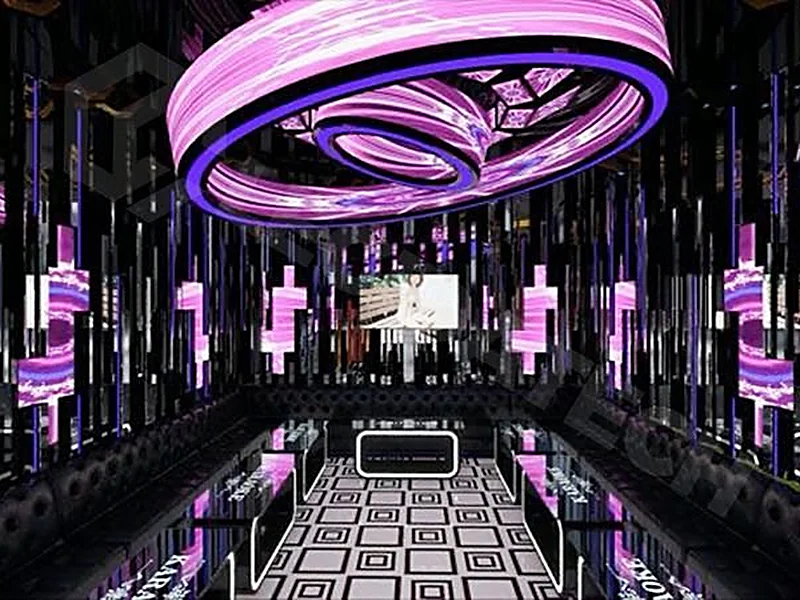
For the venue that wants one unforgettable feature: a sphere display hanging over the dance floor, a 3D-effect screen behind the DJ, or a custom-shaped piece built to the interior designer’s drawing. Special-shape controllers drive irregular layouts, so the screen shape is limited only by the design brief.
6. Entrance and Stage — the First and Loudest Screen
The entrance screen is the first thing guests see from the street; the stage screen carries live performance nights. Both need higher brightness to compete with ambient light, and a stage-grade LED screen with high refresh rate so phone cameras capture it cleanly.
Bar LED Screen Size & Pixel Pitch Quick Reference
Use this as a starting point before asking a supplier for a quote. The rule of thumb: minimum comfortable viewing distance in meters equals the pixel pitch in millimeters.
| Bar Zone | Typical Viewing Distance | Recommended Pitch | Suggested Size |
|---|---|---|---|
| Back bar wall | 2–4 m | P2–P2.5 | 2.0×1.1 m – 3.0×1.7 m |
| Ceiling | 2–5 m | P2–P2.5 | Strips or 1.5–2 m² panels |
| Column wrap | 1–2 m | P2–P2.5 flexible | Wrap-to-fit |
| Shelf strips | 1–2 m | P2–P3 | 0.5–1 m long strips |
| Stage / entrance | 3–6 m | P2.5–P3.9 | 3.0×1.7 m and up |
For the full requirements comparison across KTV rooms, nightclubs, bars and DJ stages — including brightness and screen format — see our KTV, club & bar LED display solution page.
Installation Notes for Bar LED Screens
- Front maintenance is non-negotiable — bar screens are installed against finished walls; choose magnetic front-service cabinets so modules can be replaced without rear access.
- Mind the moisture — for screens near the bar counter and drink areas, GOB-coated modules add splash protection for a small cost premium.
- Brightness should match the zone — 600–1,000 nits is comfortable for seating areas; entrance and stage screens need more against daylight or stage spots.
- One controller for the whole venue — running every zone from one video processor keeps all screens in sync with the music and makes daily operation a one-person job.
- Plan content, not just hardware — a creative screen is only as good as what plays on it; budget for a media player that staff can update from a phone — see the LED display control system guide for player options.
FAQ
How much do creative LED displays for bars cost?
Cost depends on the zone, pixel pitch, cabinet type and total area — strips are the most affordable upgrade, back wall and ceiling screens are the main budget items, and custom shapes cost more because of engineering time. For pricing factors, see the LED screen price guide.
Can a bar LED screen sync with the music?
Yes. A professional LED control system takes the audio or DJ feed and drives every screen and strip in the venue on the same beat, together with DMX512 lighting.
Which pixel pitch is right for a back bar wall?
For viewing distances of 2–4 meters, P2 to P2.5 keeps menus and visuals sharp. Finer pitch only pays off if guests watch from closer than 2 meters.
Can LED screens be installed on existing bar walls?
Yes — magnetic front-service indoor cabinets mount directly on finished walls and ceilings. No rear maintenance space is needed, which is why they suit renovated venues.
Start With the Zone, Then Talk to the Factory
Creative bar screens are a system project: the zones decide the pitch, the controller ties everything to the music, and the installation method decides how fast the bar can reopen. LEGIDATECH engineers start every bar project from your floor plan — send the room layout and we will return zone-by-zone screen recommendations with a factory-direct quotation. About LEGIDATECH covers the factory, quality control and warranty behind every project. For a broader look at entertainment venues, read our KTV LED screen solutions guide.