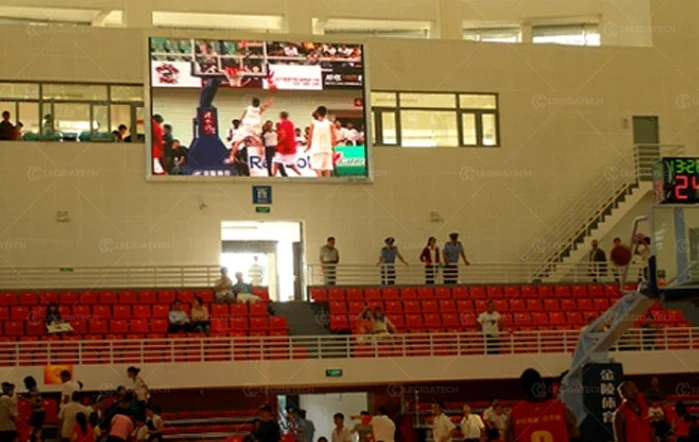
How to Start an LED Screen Rental Business: Cost, Equipment & Profit (2026)
Every festival season, the same math repeats across the events market: production companies pay daily rates for LED walls they do not own, and someone in that supply chain collects the margin between the daily rate and the hardware cost. That someone can be you — but only if you buy the right panels, price the inventory correctly, and keep the kit booked. This guide walks through how to start an LED screen rental business in 2026 with numbers on the table: factory-direct equipment costs, three startup budget tiers, a worked break-even example, and the operating expenses that decide whether the business compounds or stalls. The figures come from the manufacturing side — we build rental LED displays and ship them to rental startups in more than 50 countries, so the equipment pricing below is what we invoice, not what a reseller marks up.
Short answer: A lean entry into the LED screen rental business starts at roughly $12,000–$20,000 — a 24- to 32-panel indoor kit with controller, flight cases, ground support, and spares. A full-service inventory that covers indoor and outdoor events typically lands between $50,000 and $100,000. Rental-grade LED panels cost $650–$1,450 per square meter factory-direct in 2026 (P2.6–P3.91), and a booked kit can recover its hardware cost within its first season when weekend demand holds. Plan quoting around $60–$150 per panel per day as a starting assumption, then tune to your local market.
What Does an LED Screen Rental Business Actually Do?
An LED screen rental business owns rental-grade LED display equipment and rents it out by the day or by the event to organizers who need a big screen for a weekend, not a decade. The customers are predictable: concert and festival promoters, wedding planners, corporate event teams, houses of worship running seasonal programs, sports bars, political campaigns, and municipal fairs. Your revenue arrives as a rental fee plus delivery, setup labor, and an on-site technician. Your profit is decided by one variable above all others — how many days per month the kit is actually out working. If you are weighing short-term rental inventory against a permanent installation, our rental LED vs fixed LED display comparison lays out the differences.
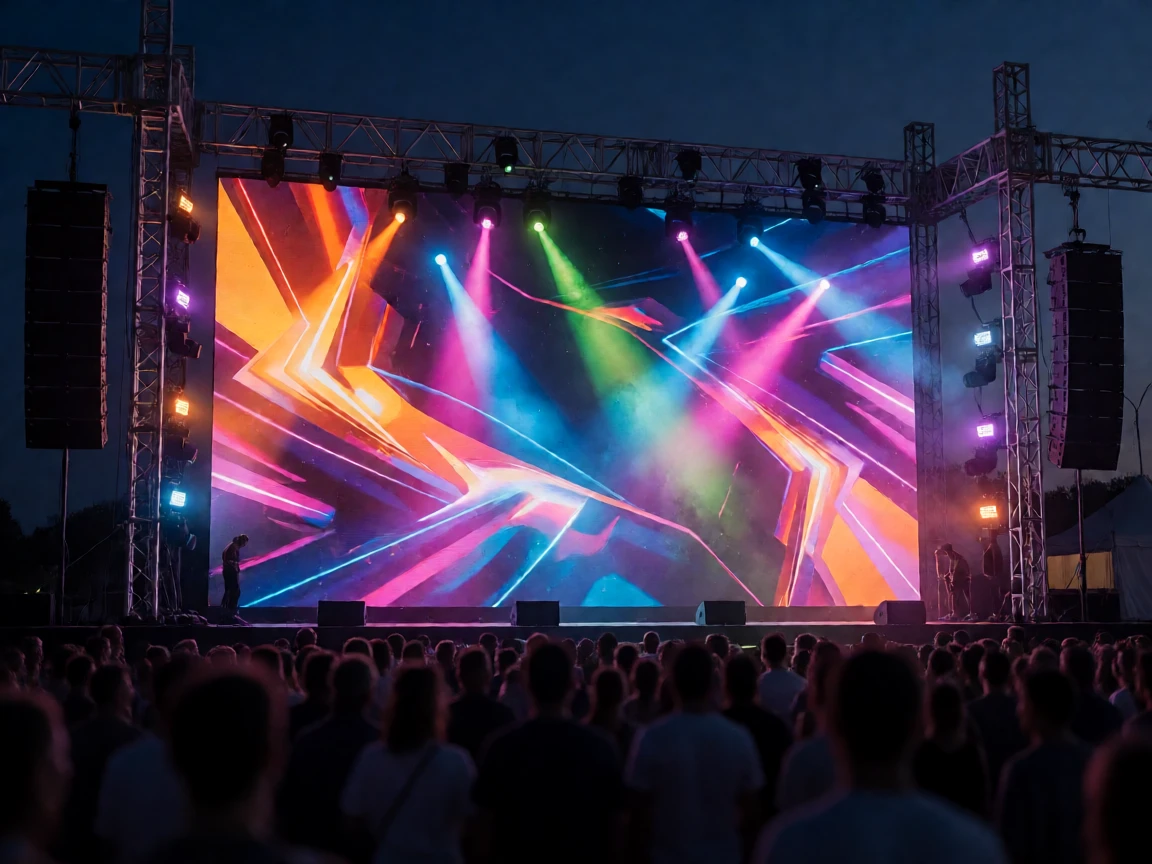
The business model sits between two jobs: owning an asset and running a service. The stage rental LED display in the video below shows the product category in its natural habitat — a stage background wall that goes up in the afternoon and comes down after the show. Everything in this guide serves that cycle.
Three traits separate a rental LED screen from a fixed-installation panel, and each one shapes what you should buy:
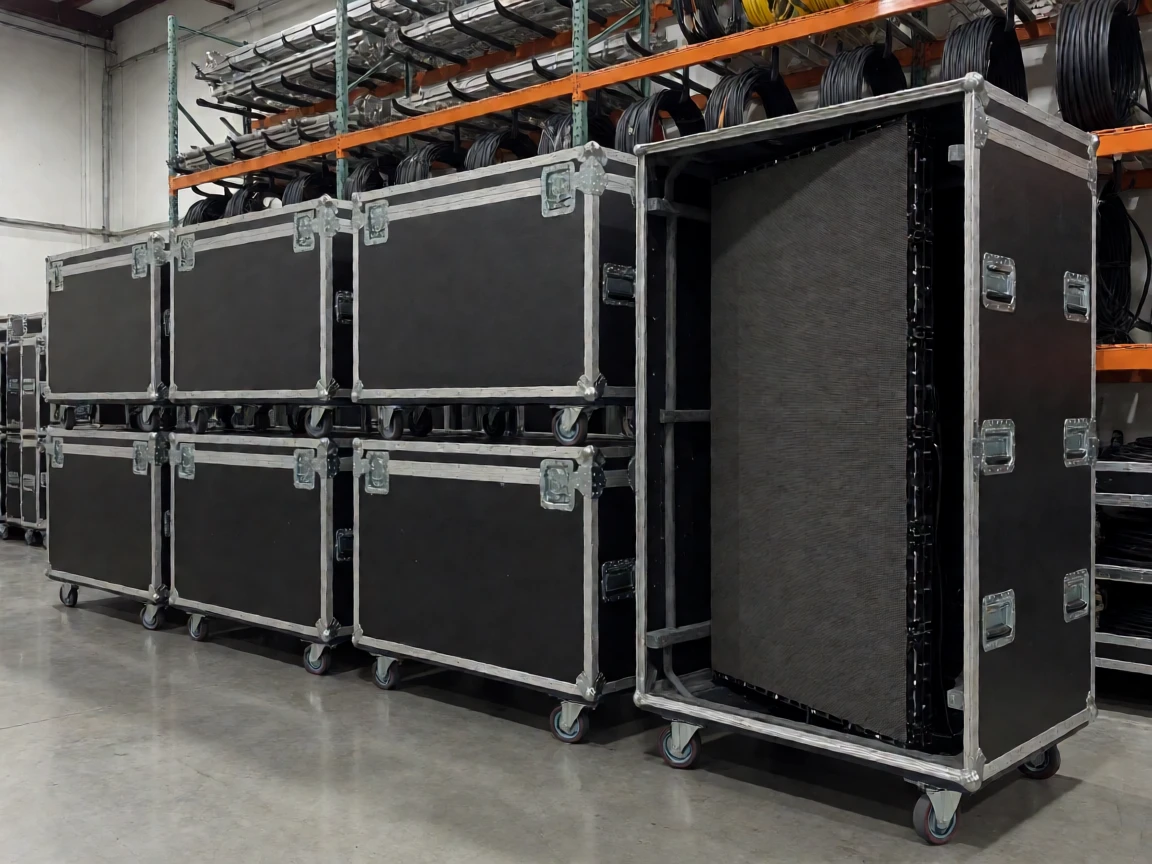
- Rental cabinets are built for handling. Die-cast aluminum bodies around 500×500 mm, quick-lock connectors, and weights near 7–9 kg per panel mean a two-person crew can assemble a wall without a forklift.
- Cosmetics tolerate close viewing. Event audiences stand meters away, so P2.6–P3.91 covers most work; you do not pay fine-pitch prices for a product that will never hang in a boardroom.
- Curves and creative shapes rent at a premium. Curved-capable cabinets let you quote arcs and DJ-booth wraps that fixed-format competitors cannot supply.
How Much Does It Cost to Start an LED Screen Rental Business?
The startup budget has two layers: the screen-side hardware (panels, controller, cases, support structure, spares) and the business-side costs (vehicle, insurance, storage, marketing). Most first-timers underbudget the second layer, then discover that a wall without transport and insurance earns nothing.
What Does Rental LED Screen Equipment Cost?
Factory-direct, rental-grade panels price by pitch and environment. Our current 2026 price book, consistent with the published LED screen price guide, puts rental panels at $650–$1,450 per square meter (P2.6–P3.91); the P3.91 workhorse runs about $750–$980/m² in its indoor version and $800–$1,200/m² in the outdoor version. Since one 500×500 mm cabinet covers 0.25 m², a single panel lands roughly between $190 and $300 depending on pitch and spec. For a pitch-by-pitch rental price table, our rental LED screen price guide lists current per-square-meter rates.
| Equipment item | Typical spec for a starter kit | Factory-direct reference (2026) |
|---|---|---|
| Rental LED panels | 24–32 × 500×500 mm, P2.9 indoor (6–8 m² wall) | $4,200–$7,800 |
| Video controller | All-in-one send unit or processor + receiving cards | $400–$2,000 |
| Flight cases | 3–4 cases, 8 panels each | $600–$1,400 |
| Ground support / rigging bar | Rated for 3×2 m to 4×2.5 m wall | $800–$2,000 |
| Spare stock | 5% spare panels + 2–3% spare modules, power supplies | $300–$900 |
| Cabling, rigging hardware, spares box | Power + Ethernet + safety bonds | $300–$700 |
That puts a complete indoor starter kit at roughly $6,600–$12,800 in hardware before the business layer. A 40-panel (10 m²) version scales the panel line to $7,000–$9,000 for P2.9 and to $8,000–$12,000 for the outdoor P3.91 build.
What Other Startup Costs Should You Budget?
The hardware table is not the whole budget. These items decide whether the kit ever leaves the garage:
| Cost item | Realistic 2026 range | Notes |
|---|---|---|
| Delivery vehicle | $8,000–$20,000 (used cargo van to box truck) | The most common underbudgeted line (LendControl, 2026) |
| Liability & equipment insurance | $2,000–$5,000 per year | Venues increasingly require a certificate before load-in (LendControl, 2026) |
| Warehouse / storage | $300–$1,200 per month | Cases stack, but a 100-panel inventory needs real floor area |
| Booking & inventory software | $50–$150 per month | Double-booking a weekend is the fastest way to lose a client (LendControl, 2026) |
| Marketing & website | $1,000–$3,000 initial | Portfolio photos of real builds outperform ad spend |
| Training | $0–$1,000 | Manufacturer remote commissioning sessions are usually free |
What Startup Budget Fits Which Stage?
| Stage | Budget | Inventory | Jobs it can serve |
|---|---|---|---|
| Entry | $12,000–$20,000 | 24–32 indoor panels, 1 controller rig, ground support, van rental or personal vehicle | Weddings, church programs, corporate meetings, small club nights |
| Standard | $50,000–$80,000 | 100–150 panels across indoor P2.9 + outdoor P3.91, 2 controller rigs, 15+ cases, cargo van | Festivals, fairs, conference plenary stages, political events |
| Pro fleet | $200,000+ | 300+ panels, curved and creative formats, floor tiles, multiple processors, box truck, warehouse | Festival main stages, touring productions, broadcast-adjacent work |
Three key differences between the tiers:
- Weather exposure. Entry kits stay indoors; the Standard tier unlocks outdoor work where the P3.91 outdoor build and IP-rated handling begin to matter.
- Crew depth. One person can run an Entry kit; a Standard inventory needs a second technician because two jobs will eventually land on the same weekend.
- Rate resilience. Curved and creative formats at the Pro tier defend premium day rates, because substitute inventory is scarce in most regional markets.
Which LED Screens Should You Buy First for Rental?
Equipment selection is where factory-direct buying pays its largest dividend, because the wrong cabinet format multiplies every later cost — handling time, case count, and spare compatibility.
Indoor or Outdoor Rental Panels First?
Buy indoor rental LED screens first unless your region’s demand is clearly outdoor-led. Indoor work — weddings, corporate stages, church programs, clubs — books year-round, tolerates P2.6–P2.9, and avoids the weather risk that turns one rained-out weekend into an insurance claim. Outdoor rental LED screens need higher brightness (4,500–5,500 nits against 800–1,200 indoor), sealed cabinets, and heavier support structure, which is why the outdoor P3.91 version carries a $50–$220/m² premium over its indoor sibling. A pragmatic sequence: master indoor jobs in year one, add an outdoor sub-kit in year two once the calendar justifies it. For a side-by-side of indoor and outdoor rental hardware, see our indoor vs outdoor rental LED display guide.
Which Cabinet Format Works Best for Rental Work?
The 500×500 mm die-cast format dominates rental for good reason: two-person handling, case-friendly stacking, and wall areas that assemble in 0.25 m² increments. The 500×1000 mm half-panel halves the count of seams on large walls and speeds up builds, at the cost of heavier single units. Our own rental line reflects both — the AF500 curved 500×500 mm rental screen bends into arcs and DJ-booth wraps, while the AF1000 500×1000 mm half-panel covers big walls faster. Before committing to any format, work through a cabinet checklist — panel weight, lock type, module compatibility, and case pairing — as laid out in our guide to choosing an LED screen cabinet for events.
The setup demo above shows why curved-capable rental cabinets earn their premium: the same inventory that builds a flat wall also builds the arc behind a DJ booth, and the assembly time stays inside a two-crew afternoon.
Which Control System Do Rental Rigs Need?
Rental changes the control-system math. A fixed installation configures once; a rental rig reconfigures every Friday. That pushes rental operators toward all-in-one controllers (send processor with video scaling built in) and toward saving scene presets per client so load-in becomes recall, not re-engineering. The NovaStar and Colorlight ecosystems both serve this — the decision between an all-in-one unit and a separate processor-plus-receiving-card stack is mainly about screen count and redundancy, which our LED display control system guide breaks down. One rule holds across brands: put the controller on a UPS, because the most expensive repair in this business is a corrupted configuration on show day. For model-level selection, our LED video wall controller buying guide compares processors, all-in-one units, and receiving cards.
How Do You Price LED Screen Rentals for Profit?
What Do Rental Companies Charge per Day?
Rental pricing in this category is quoted per panel per day, with a per-event minimum and separate lines for delivery, crew, and content playback. As a planning assumption, model $60–$150 per panel per day and tune against quotes from three local competitors before your first job — the spread between markets is wide, and underpricing is far easier to fix before you have a rate history than after. A 24-panel indoor kit modeled at $80 per panel bills about $1,900 per event day; the same kit at $120 bills about $2,900. Delivery-and-crew fees typically add $300–$800 per job and exist to protect margin on small bookings, not to pad the invoice.
How Do You Calculate Break-Even on a Rental Kit?
Work the payback as a three-step calculation before you buy anything:
- Hardware cost. The 24-panel P2.9 indoor kit from the table above: about $8,000 with controller, cases, support, and spares.
- Net rate per event day. $1,900 gross minus roughly 35–40% for crew, transport, insurance, and consumables — call it $1,150–$1,250 net per booked day.
- Break-even bookings. $8,000 ÷ $1,200 ≈ 7 booked event days to recover the hardware, assuming the kit is actually out.
General AV rental guidance says a piece of equipment should recover its cost within 15–25 rentals (LendControl, 2026); an LED wall bills several times higher per day than projectors or lighting rigs, so a properly priced kit beats that benchmark when utilization holds. The honest caveat: break-even on paper and break-even in the bank differ by exactly one variable — how many weekends you book.
What Utilization Rate Makes an LED Rental Business Work?
Utilization is the whole game. An event-equipment rental income survey puts LED screen setups in a $4,000–$50,000 per month income band (EventBuildup, 2026) — a spread so wide precisely because utilization ranges from a hobbyist’s two weekends a month to a full-service operator’s 12+ booked days. To keep the calendar full: cluster inventory around seasonal peaks (wedding season, year-end corporate events, festival summer), partner with staging and lighting companies who need screens but do not own them, and price midweek corporate jobs aggressively since that inventory would otherwise sit in cases.
What Operating Costs Eat Into LED Screen Rental Profit?
Between the gross day rate and the net margin sit five recurring costs. Budget them explicitly or they will quietly consume the payback math above:
- Consumables and repairs — 3–5% of hardware value per year. Modules, power supplies, and cables fail in proportion to how many times cases get stacked. Buy spare stock with the original order; factory spares match batch binning, which keeps brightness consistent after repairs.
- Transport and crew — 15–25% of revenue. Fuel, van maintenance, and technician day rates scale with every booking; routing two jobs to the same weekend is the single biggest efficiency lever in this business.
- Case and packaging upkeep. Broken latches and foam turn into crushed corners on panels; our LED screen flight case package guide covers what protects panels between jobs and what to restock.
- Insurance and certifications. Annual premiums plus any venue-mandated electrical or rigging certificates for your techs.
- Refresh cycle. Rental panels work hard; plan inventory rotation on a 3–5 year horizon and price depreciation into the day rate instead of discovering it in year four.
Where Should You Buy Rental LED Screens for Your Inventory?
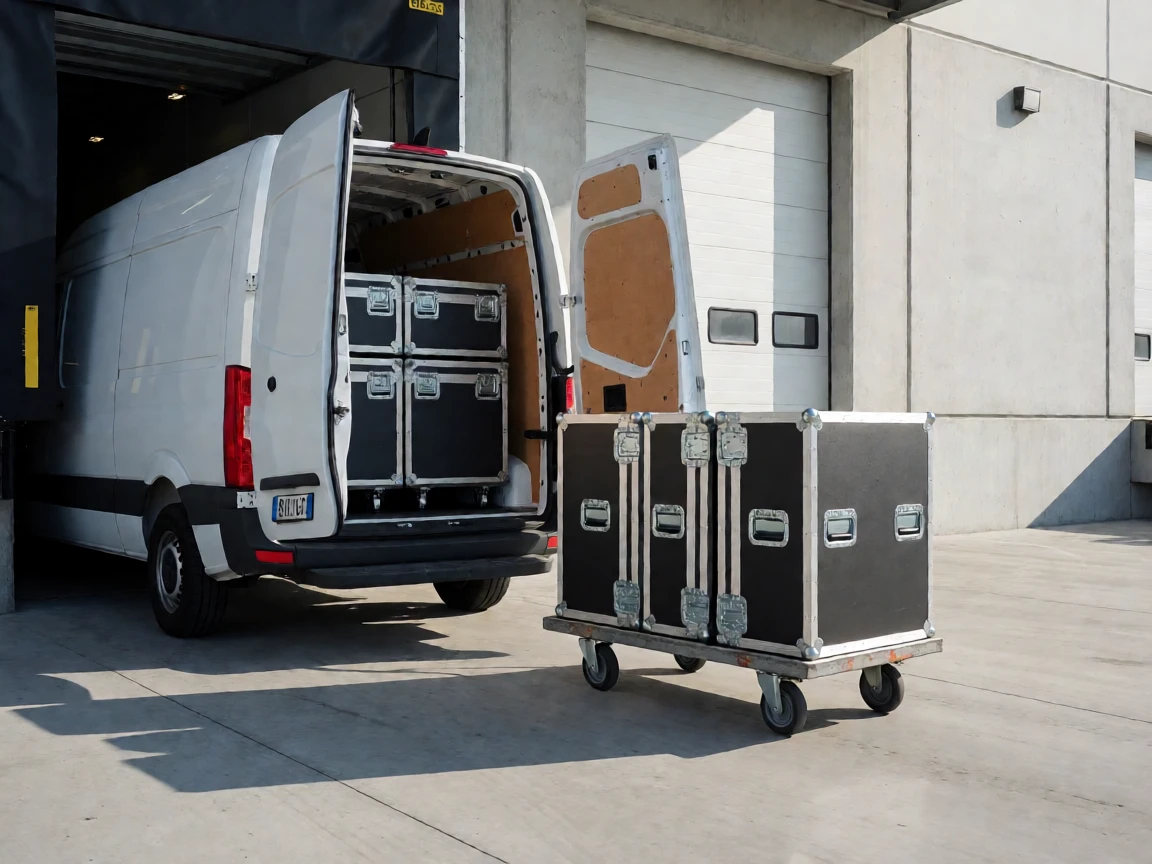
You have three sourcing routes: a local AV reseller, a trading company, or the factory that builds the cabinets. The reseller wins on immediacy and loses on price (typically a 30–50% markup over factory-direct); the trading company wins on nothing except a polished catalog; the factory wins on price and loses, sometimes, on lead time — 3–5 weeks of production plus freight against a reseller’s shelf stock. Rental startups ordering 24–150 panels almost always justify the wait, and the guide to importing LED screens from China covers landed cost, terms, and inspection so the freight math holds up.
Whatever route you choose, put these five demands in the purchase order:
- Spare stock with the order — 5% panels, 2–3% modules, binned from the same production batch.
- Flight cases specified — quantity, foam condition, and latch quality, matched to the cabinet format.
- Controller pre-configured — receiving-card mapping and presets loaded so the first load-in is a recall, not a build.
- Burn-in test report — 48–72 hours powered aging before shipment, with photos.
- Warranty terms in writing — typically 2–3 years on rental-grade builds, with remote diagnosis support.
We manufacture rental LED displays across every format in this guide — the RA Magic rental series for touring-grade walls, the Enova concert rental series for stage-scale builds, and the Metastar stage LED wall for fixed-format stage backgrounds — and ship them with spares, cases, and remote commissioning to rental startups worldwide. You can see the full range on our rental LED display category page, or the deeper stage LED screen buyer guide for pitch-by-pitch selection. If your projects are in South Africa, we also operate a local rental service there — contact us for short-term screen hire. Everywhere else, we supply the hardware and you run the calendar: request a quote for rental-grade inventory.
How Do You Get Your First LED Screen Rental Clients?
Bookings come from six channels, in roughly this order of payoff for a new operator:
- Event planners and production agencies — they rent screens every week and resell your kit to their clients at a markup; one reliable agency relationship can fill a third of a calendar.
- Wedding and social-event planners — smaller walls, higher frequency, off-season-friendly.
- Staging, lighting, and sound companies — the partnership channel; they own truss and crew, you own pixels.
- Venues — hotels, conference centers, and clubs refer booked-out clients to whoever answers first.
- Local search — a Google Business profile with real build photos converts better than paid ads for “LED wall rental near me” searches.
- Repeat and referral business — the corporate client who rented a wall for a product launch needs one for the town hall; price year-two repeat work deliberately.
LED Screen Rental Business: Frequently Asked Questions
How much does it cost to start an LED screen rental business?
A lean entry runs $12,000–$20,000: a 24–32 panel P2.9 indoor kit ($6,600–$12,800 in hardware) plus insurance, marketing, and software. A standard two-rig inventory with indoor and outdoor coverage lands at $50,000–$80,000. Anything below about $10,000 forces compromises on spares and cases that show up later as show-day failures.
Is an LED screen rental business profitable?
Yes, when utilization holds. Hardware payback on a properly priced kit takes roughly 7–15 booked event days; LED screen setups generate $4,000–$50,000 per month across the operator market (EventBuildup, 2026). The failures in this business are rarely price failures — they are calendar failures.
What pixel pitch is best for rental LED screens?
P2.6–P2.9 for indoor walls viewed from 3–15 meters, and P3.91 for the outdoor workhorse. Finer pitches raise cost without adding revenue on stage distances; coarser than P4.8 outdoors starts to show structure at 10-meter viewing.
How much can I charge per day for an LED screen rental?
Model $60–$150 per panel per day as a starting assumption and validate against three local quotes. A 24-panel kit bills $1,400–$3,600 per event day across that band, plus delivery and crew fees of $300–$800 per job.
What equipment do I need besides rental LED panels?
A video controller or all-in-one processor, flight cases matched to the cabinet format, ground support or rigging hardware rated for the wall size, a 5% spare panel stock plus modules and power supplies, cabling and safety bonds, and a delivery vehicle. Insurance and booking software belong on the business side of the ledger.
Do you sell rental LED screens to new rental companies?
Yes — factory-direct, with spares binned from the same batch, cases, pre-configured controllers, and remote commissioning; minimum orders start around 20–30 panels. In South Africa we also run a local rental service for short-term screen hire. Rental startups elsewhere get the same hardware their established competitors use, at factory pricing.
Conclusion: Building a Profitable LED Screen Rental Business
Starting an LED screen rental business in 2026 is a straightforward asset-and-calendar business: buy the right cabinet format at factory pricing ($650–$1,450/m² for rental panels), model day rates at $60–$150 per panel, hold utilization above two booked weekends a month, and the hardware pays for itself inside its first season. The two mistakes that sink new operators — underbudgeting the business layer and buying the wrong cabinet format — are both avoidable on paper, which is where this guide is meant to keep them. And if the fixed-installation side of the market interests you instead, the same factory-direct math applies to outdoor advertising: see how much digital billboards make in our revenue guide.