


LED Video Wall — Indoor & Outdoor Systems from the Factory
An LED video wall is a seamless display built from tiled LED cabinets with zero bezel between panels. LEGIDATECH builds indoor, outdoor, rental and fine pitch walls from P0.9 to P10 — factory-direct pricing, engineering drawings before production, and a 5-year warranty on 100,000-hour screens.
✓5-year factory warranty
✓Quoted layout in 24 h
✓Ships to 60+ countries
What Is an LED Video Wall?
An LED video wall is a large-format display assembled from individual LED cabinets. Each cabinet holds several LED modules, a receiving card and a power supply. The cabinets lock together mechanically and are driven by a single controller, so the finished wall shows one continuous image with zero bezel — the defining difference from an LCD video wall, where every panel carries a 0.88–3.5 mm border.
Because the wall is modular, its size is not fixed by a panel format. A 500×500 mm cabinet array can be built 3×2 for a 1.5×1 m meeting-room screen or 20×6 for a 10×3 m arena screen using the identical parts. This is why they dominate applications where the screen has to match architecture rather than the other way round.
LED Video Wall vs LCD Video Wall
| Seam between panels | LED: 0 mm | LCD: 0.88–3.5 mm |
| Brightness | LED: 600–8,000 nits | LCD: 500–700 nits |
| Rated lifespan | LED: 100,000 h | LCD: 50,000–60,000 h |
| Outdoor capable | LED: yes (IP65) | LCD: no |
| Shape freedom | LED: curved, cylindrical, custom | LCD: flat only |
Seamless mixed splicing in action: separate LED cabinets locked magnetically into one continuous video wall with no visible seams.
LED Video Wall Types: Indoor, Outdoor, Rental & Fine Pitch
Six families cover almost every commercial brief. The difference between them is not brand — it is pixel pitch, brightness, ingress protection and cabinet construction. Pick the family first, then the pitch.
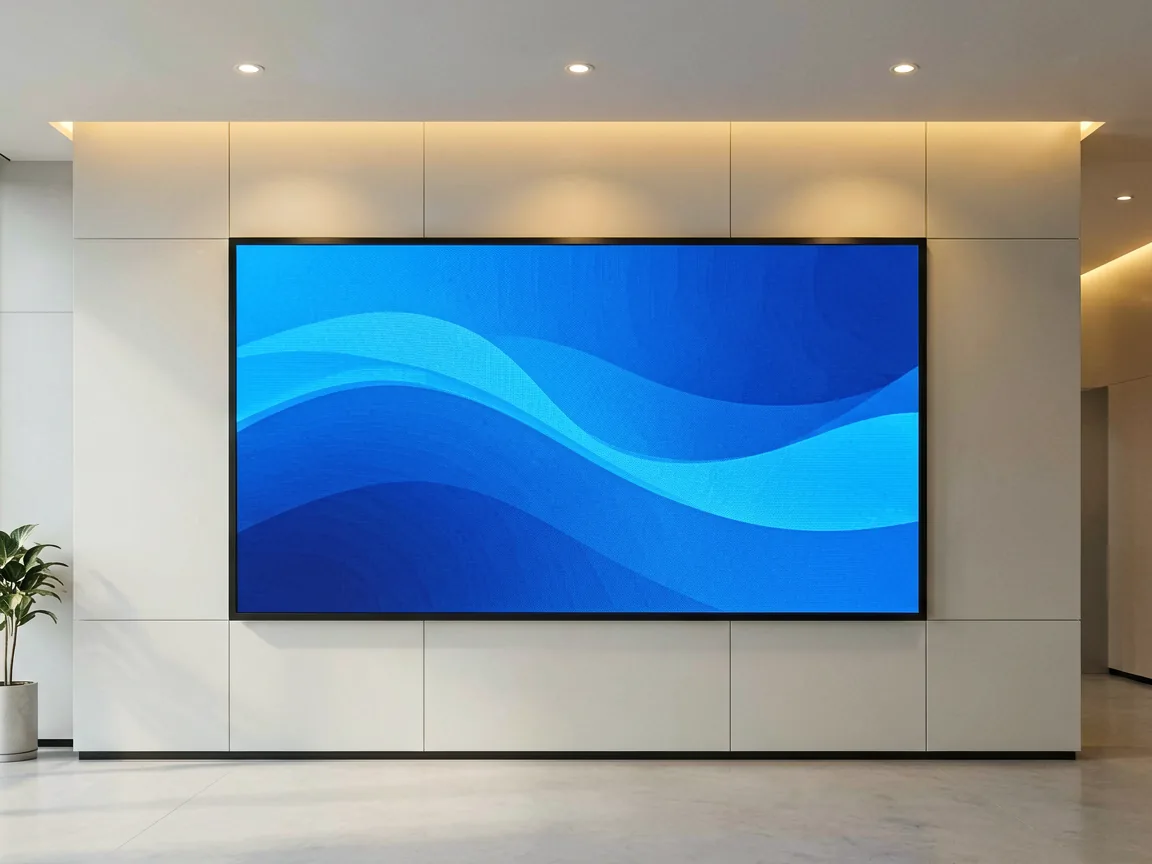
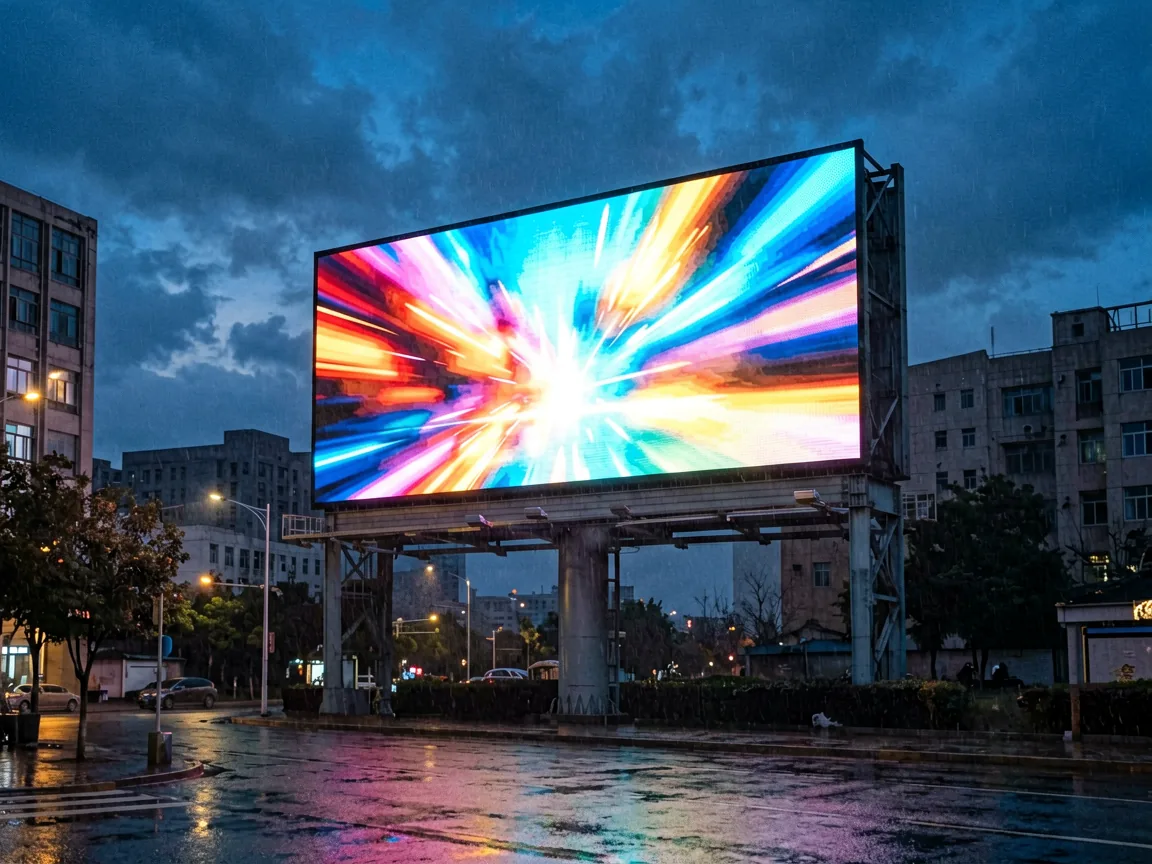
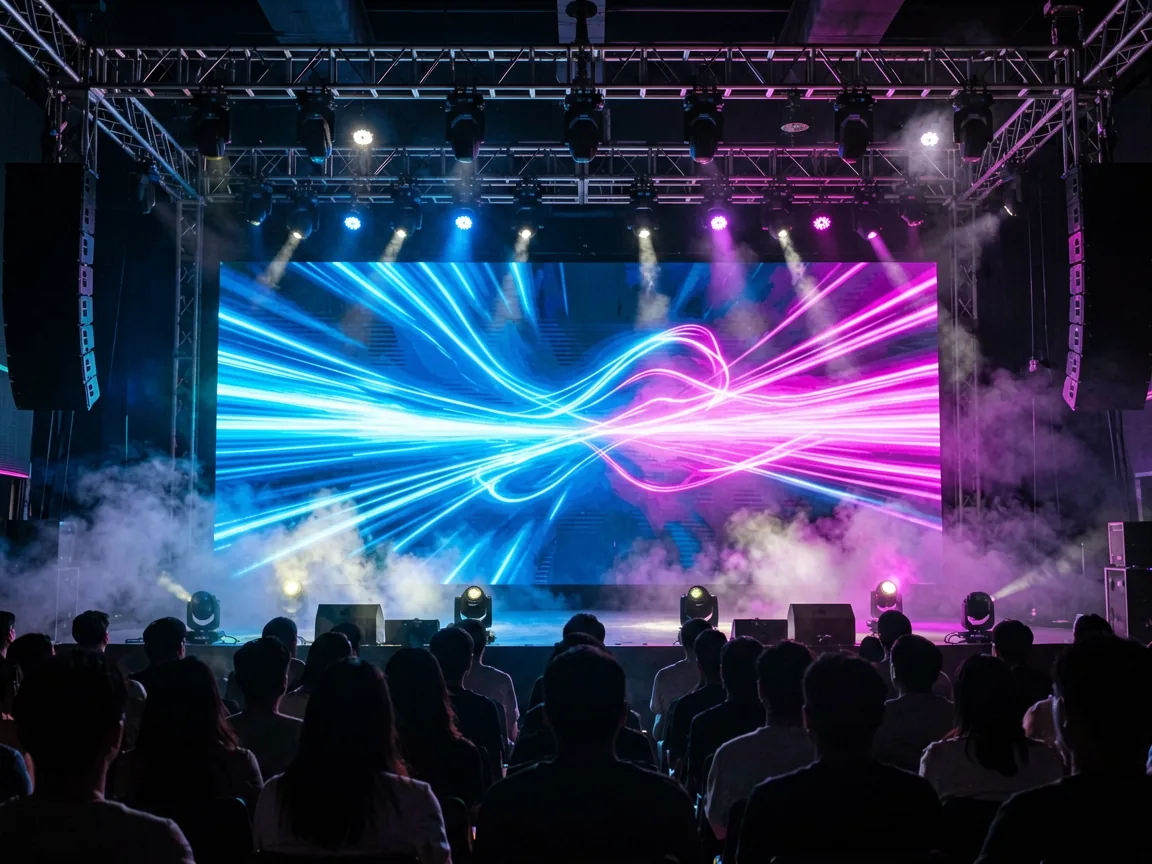
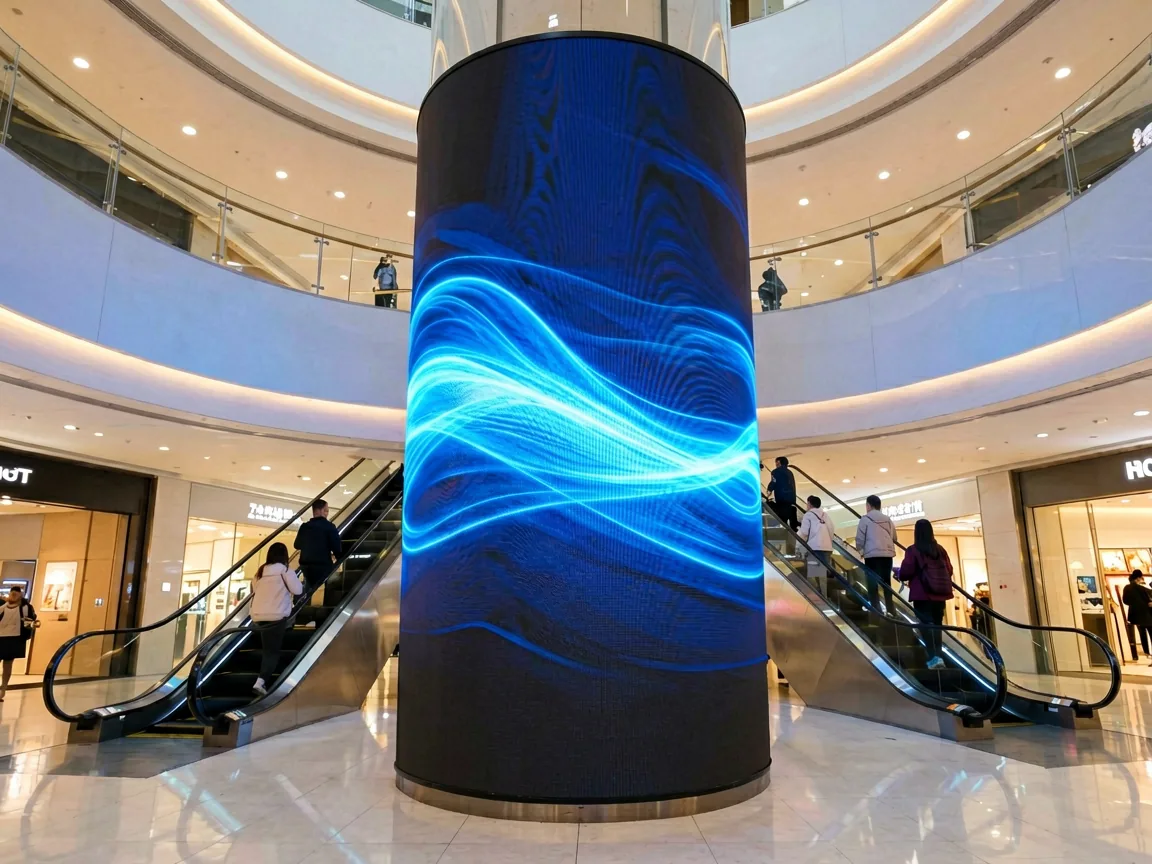
LED Video Wall Specifications by Pixel Pitch
Pixel pitch is the centre-to-centre distance between two adjacent LEDs, measured in millimetres. It sets resolution per square metre, minimum comfortable viewing distance and — more than any other single variable — price. The table below covers the panel range LEGIDATECH manufactures.
| Pixel Pitch | Pixels / m² | Min. Viewing Distance | Brightness | Environment | Typical Use |
|---|---|---|---|---|---|
| P0.9 | 1,234,568 | 0.9 m | 400–800 nits | Indoor | Broadcast, XR studio |
| P1.25 | 640,000 | 1.25 m | 500–1,000 nits | Indoor | Control room, trading floor |
| P1.53 | 427,350 | 1.5 m | 600–1,000 nits | Indoor | Boardroom, showroom |
| P1.86 | 289,255 | 1.9 m | 600–1,200 nits | Indoor | Conference, lobby |
| P2.5 best seller | 160,000 | 2.5 m | 800–1,200 nits | Indoor | Retail, house of worship |
| P2.97 / P3.91 | 113,379 / 65,404 | 3–4 m | 1,000–4,500 nits | Indoor / Rental | Stage, concert, events |
| P4 | 62,500 | 4 m | 5,500–6,500 nits | Outdoor | Storefront, plaza |
| P5 / P6.67 | 40,000 / 22,500 | 5–7 m | 6,000–7,500 nits | Outdoor | Building facade, stadium |
| P8 / P10 | 15,625 / 10,000 | 8–10 m | 7,000–8,000 nits | Outdoor | Highway billboard |
How Much Does an LED Video Wall Cost?
A complete LED video wall costs between USD 350 and USD 4,200 per square metre ex-works, depending almost entirely on pixel pitch. Below are LEGIDATECH factory-direct FOB Shenzhen ranges covering the cabinet, module, power supply and receiving card. They exclude freight, duty, the control system and installation labour — the four line items most quotations leave out.
| Configuration | Factory Direct (FOB) / m² | Typical 10 m² Wall | Best For |
|---|---|---|---|
| Outdoor P8 / P10 | $350 – $550 | $3,500 – $5,500 | Highway billboards |
| Outdoor P6.67 | $450 – $700 | $4,500 – $7,000 | Facades, stadiums |
| Indoor P3 – P4 | $550 – $850 | $5,500 – $8,500 | Large halls, worship |
| Rental P3.91 | $600 – $950 | $6,000 – $9,500 | Touring, events |
| Indoor P2.5 | $700 – $1,100 | $7,000 – $11,000 | Retail, conference |
| Outdoor P4 / P5 | $600 – $1,300 | $6,000 – $13,000 | Storefront, plaza |
| Indoor P1.53 – P1.86 | $1,500 – $2,600 | $15,000 – $26,000 | Boardroom, showroom |
| Fine Pitch COB P1.25 | $2,600 – $4,200 | $26,000 – $42,000 | Control rooms, broadcast |
Indoor LED Video Wall Price — Worked Example
A 4×2.25 m indoor P2.5 wall (9 m², 1600×900 native) built from 640×480 mm cabinets needs 6 across and 5 down, so 30 cabinets. At $850/m² the screen itself is $7,650. Add a sending card and video processor ($600–$2,500), a wall-mount frame ($400–$900), sea freight to a US or EU port ($700–$1,400) and installation labour ($1,200–$3,000). Delivered and commissioned, the realistic total is $10,500–$15,500.
US resellers list comparable turnkey packages at $10,950–$15,275 for a physically smaller 10 ft × 5 ft P2.9 wall. The difference is channel margin, not build quality.
What Actually Drives the Cost
- Pixel pitch — halving the pitch quadruples LED count per m²
- Encapsulation — COB adds 25–40% over SMD at the same pitch
- Driver IC — common-cathode cuts power draw roughly 20% but costs more
- Cabinet material — die-cast aluminium over steel adds 15–25%
- Control system — Novastar or Colorlight, $600–$2,500
Send Your Wall Size — Get a Priced Layout in 24 h
Indoor vs Outdoor vs Rental LED Video Wall
One factory, every line: stage screens, indoor screens, outdoor advertising screens and poster screens side by side.
| Criterion | Indoor | Outdoor | Rental |
|---|---|---|---|
| Pixel pitch | P0.9–P4 | P4–P10 | P2.6–P4.81 |
| Brightness | 600–1,200 nits | 5,000–8,000 | 1,000–4,500 |
| IP rating | IP30–40 | IP65 / IP65 | IP43–54 |
| Cabinet size | 640×480 mm | 960×960 mm | 500×500 mm |
| Weight per m² | 18–25 kg | 38–55 kg | 24–30 kg |
| Service access | Front | Front or rear | Front + rear |
| Install time / 10 m² | 4–8 h | 1–3 days | 20–40 min |
| Duty cycle | 12–18 h/day | 24/7 | Event-based |
How to Choose an LED Video Wall
Four decisions, taken in this order. Reversing the order is the most common and most expensive specification mistake — teams pick a pitch they like, then discover the audience sits too close or the room cannot supply the power.
Viewing Distance to Pixel Pitch
The working rule: minimum comfortable viewing distance in metres is approximately equal to pixel pitch in millimetres. Viewers at 3 m need P3 or finer. Viewers at 15 m gain nothing from anything below P6.67.
Ambient Light to Brightness
Controlled indoor lighting needs 600–800 nits. A retail window facing daylight needs 2,500–3,500. Direct sun demands 5,000–8,000. Over-specifying brightness shortens LED life and raises the power bill for no visible gain.
Wall Size to Cabinet Size
Total wall dimensions must be whole multiples of the cabinet. A 5 m width divides cleanly by 500 mm into 10 cabinets, but not by 640 mm. Choosing the cabinet before the wall size is what produces awkward filler strips.
Resolution to Control System
One Novastar MCTRL660 drives roughly 1.3 million pixels. Above that you need a larger controller or multiple sending cards. Under-specifying the processor is the most frequent cause of a wall that cannot display its own native resolution.
LED Video Wall Applications
Eight environments account for the majority of projects LEGIDATECH ships. Each drives a different combination of pixel pitch, brightness and cabinet type.
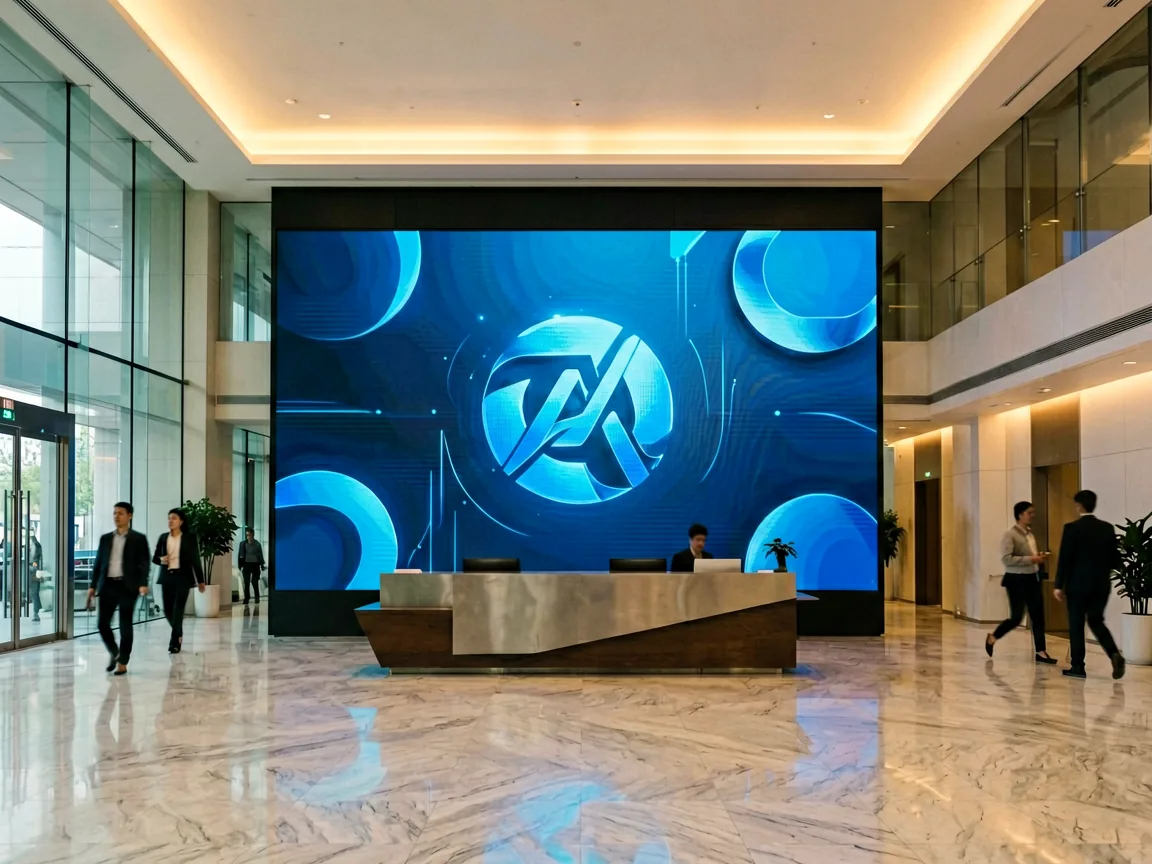
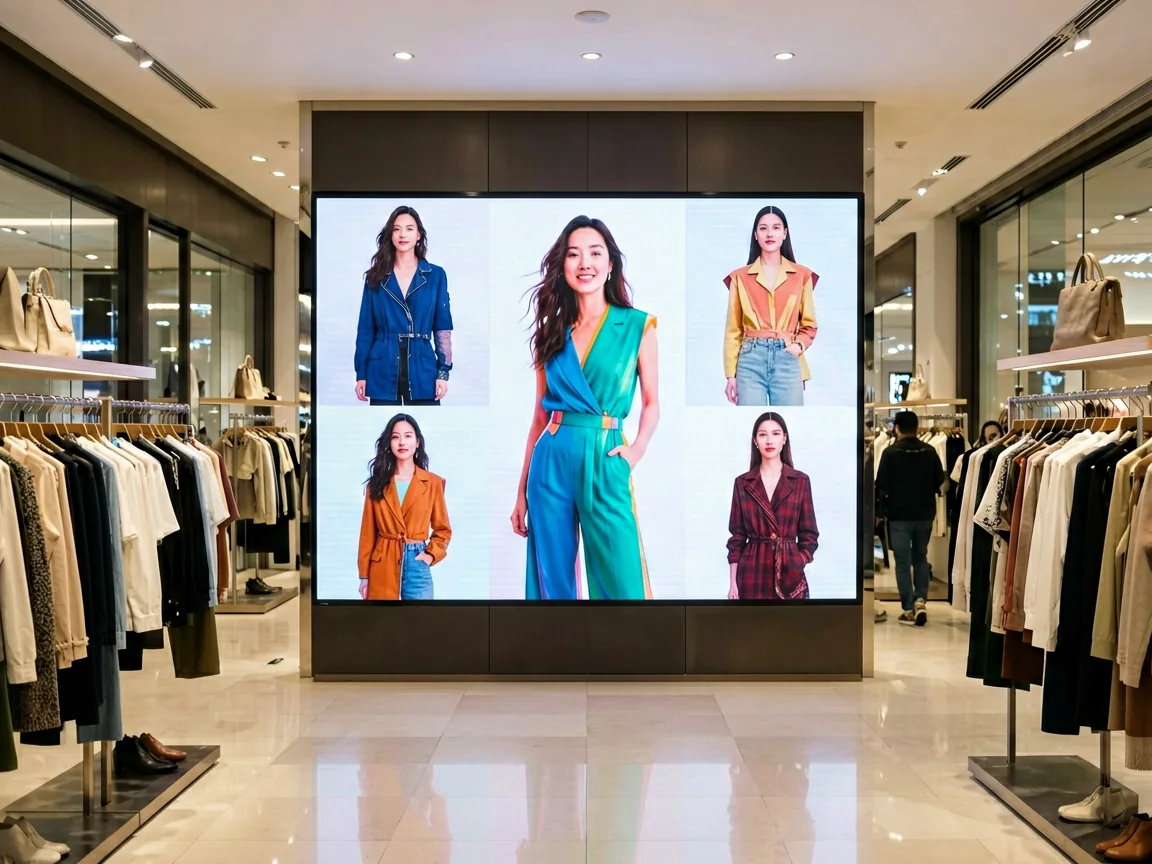
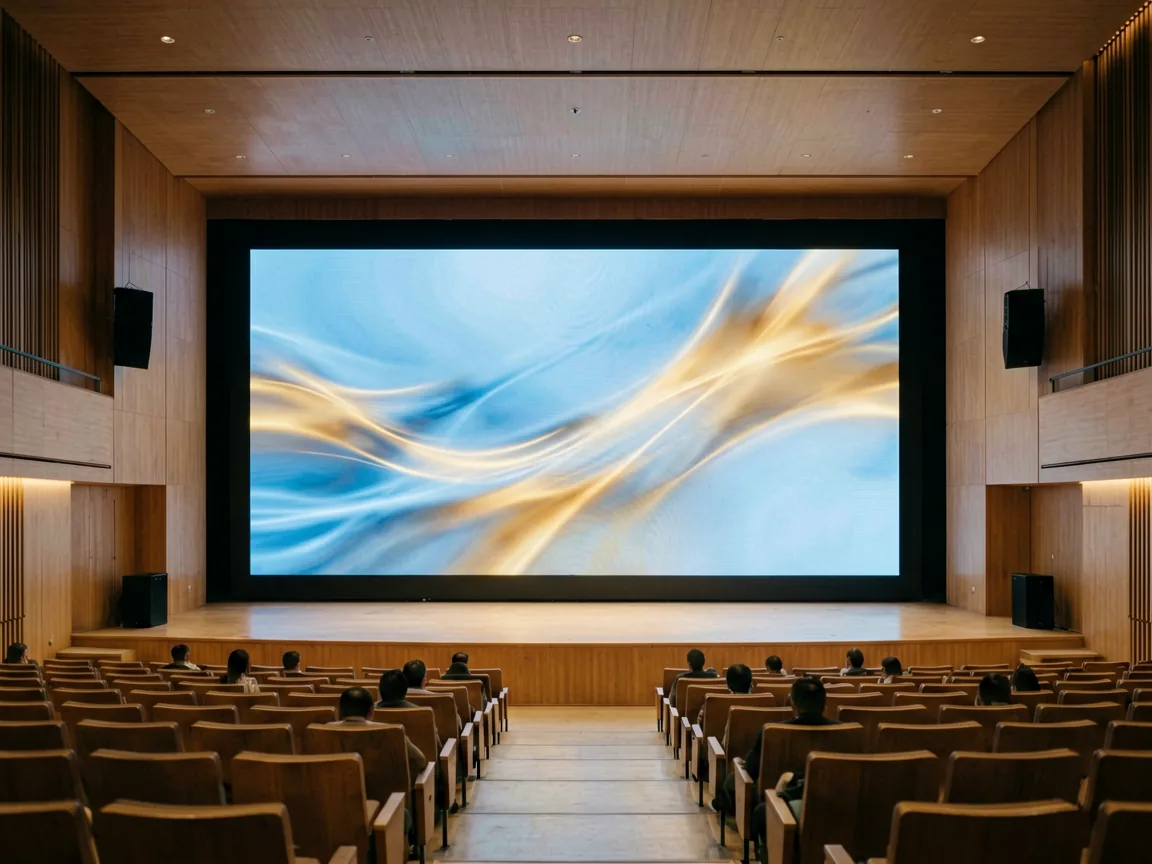
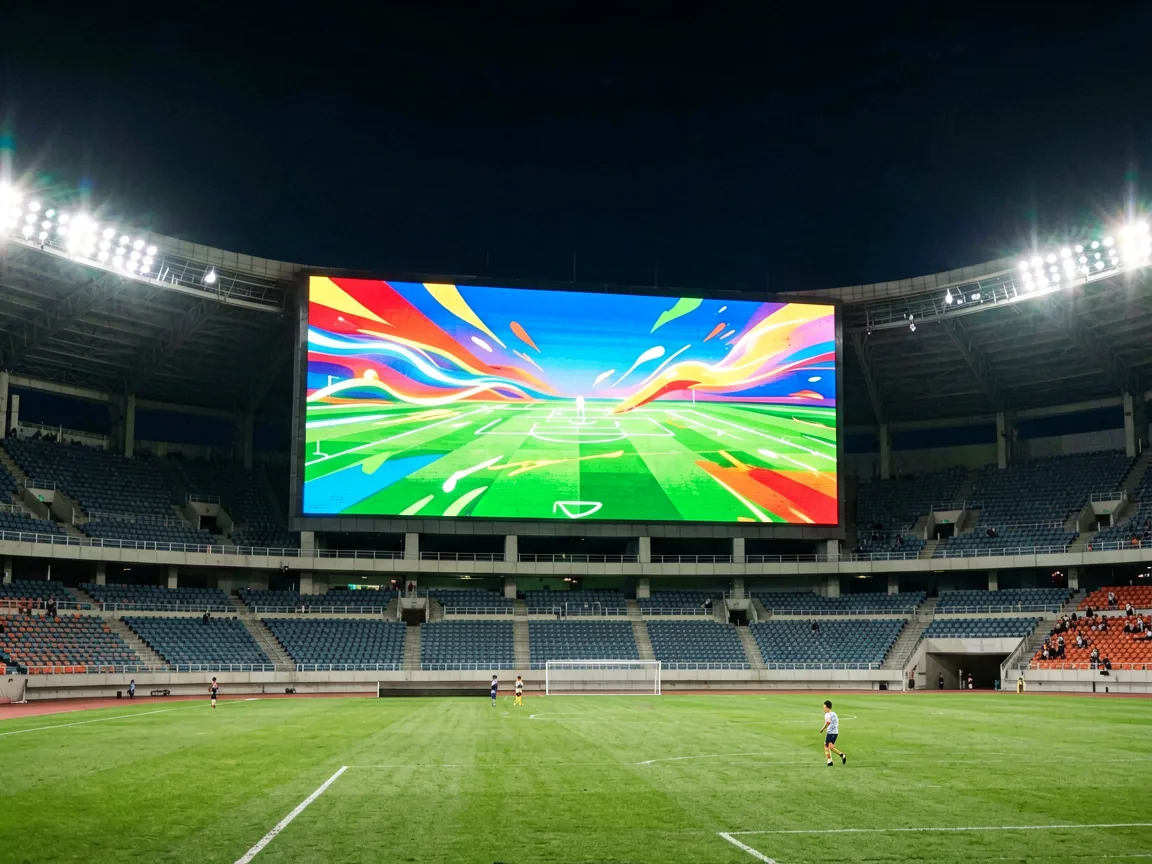
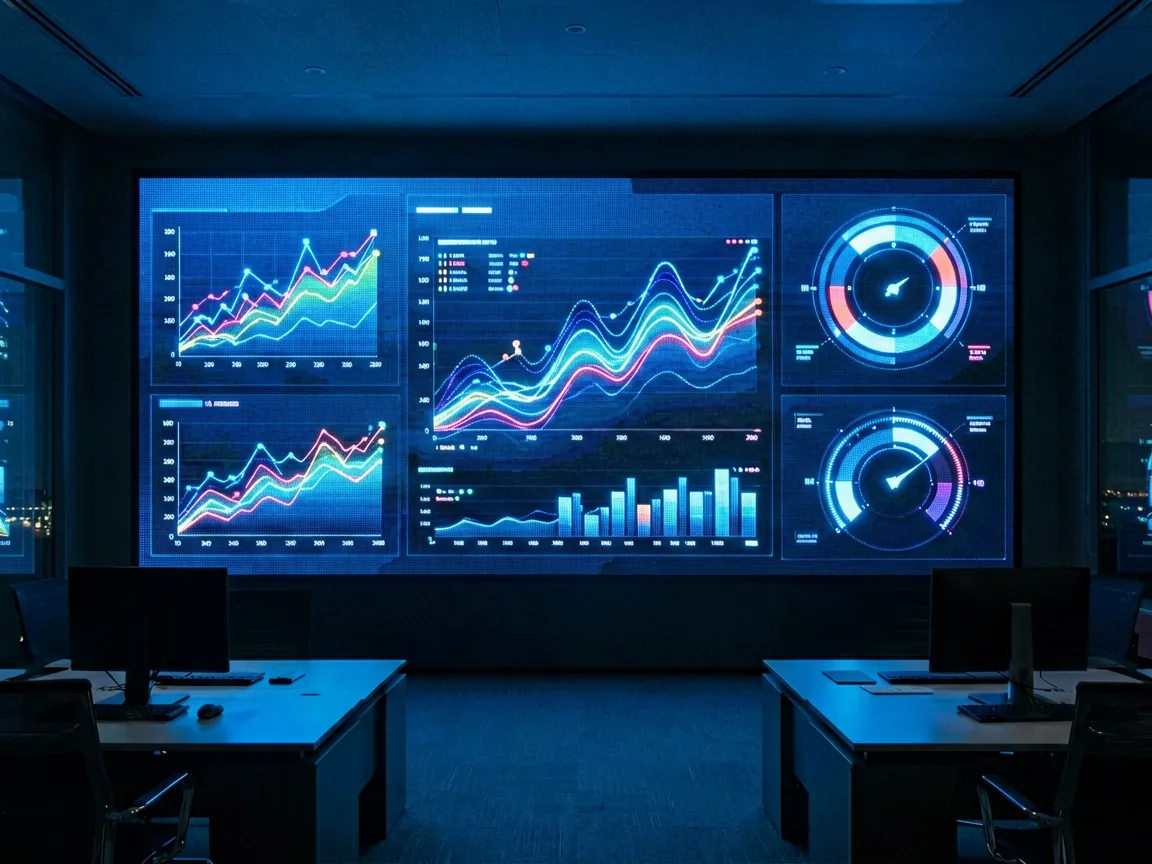
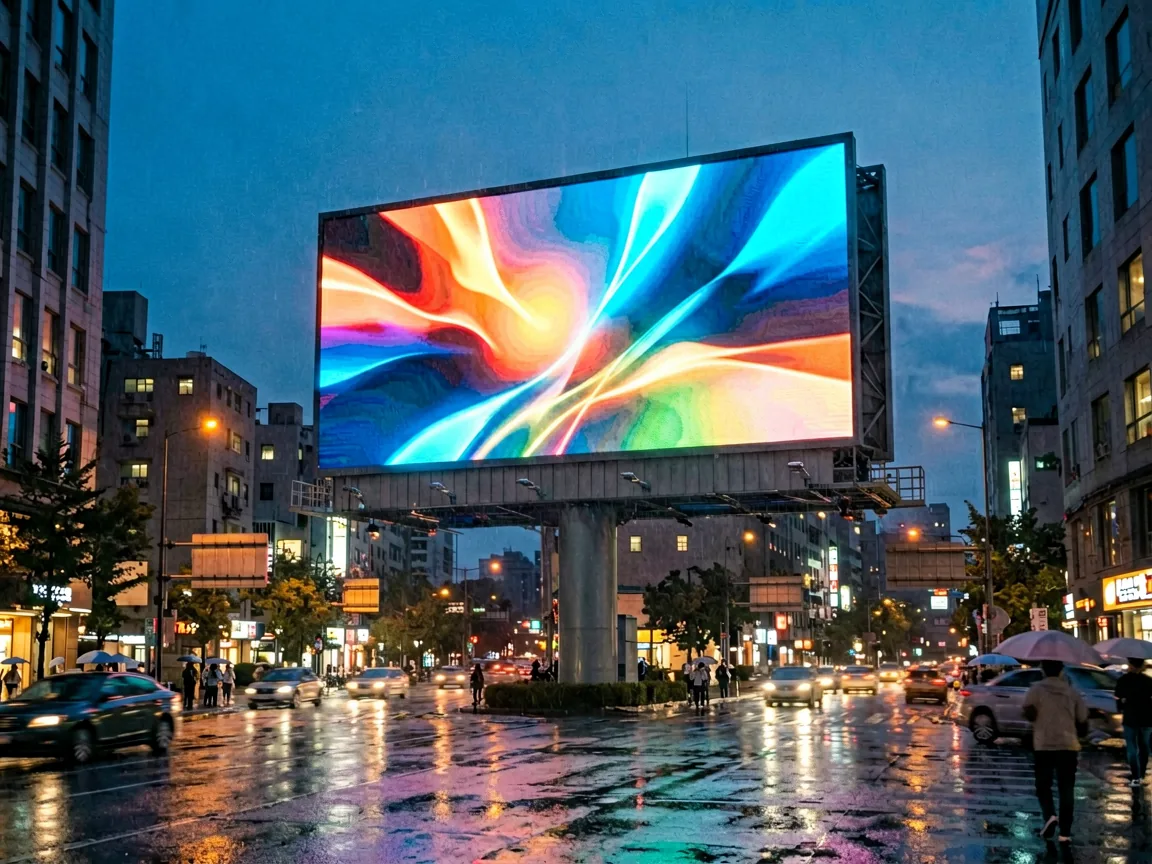
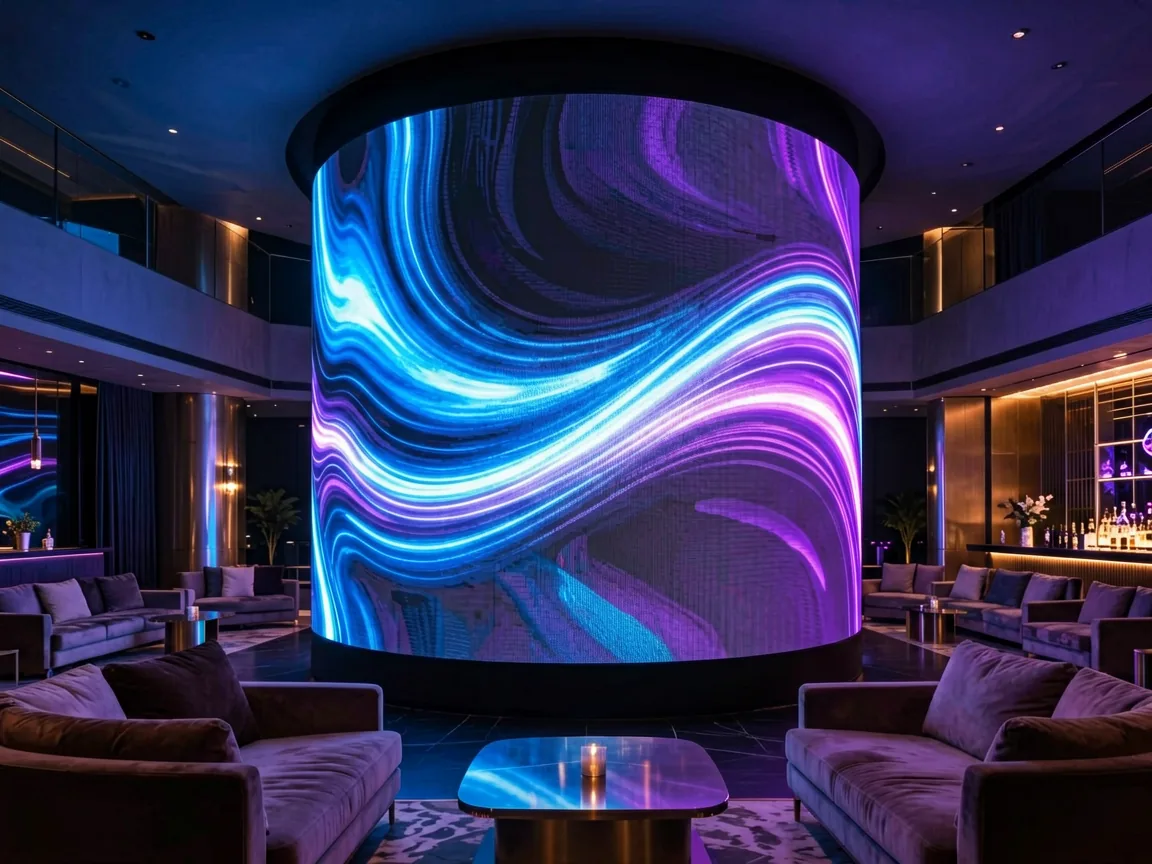
The complete LED display installation journey: unboxing, steel structure, cabinet mounting and first light-up.
LED Video Wall Installation & Maintenance
Installation runs in five stages: mount the steel or aluminium support frame, hang and lock the cabinets row by row from the bottom up, connect power and data in daisy chains, load the cabinet map into the controller, then run a module-level brightness and colour calibration. A trained two-person crew completes about 10 m² of indoor wall in four to eight hours.
Frame flatness is the variable that decides whether the finished wall looks seamless. Tolerance across the whole frame must stay within ±1 mm; beyond that, adjacent cabinets sit at slightly different depths and the seam catches light at grazing angles. This is a steelwork problem, not a screen problem, and it is where most disappointing installations originate.
Every LEGIDATECH order ships with a cabinet layout drawing, a power and data topology diagram, spare modules and a spare power supply. Front-service cabinets let a single technician swap a failed module magnetically in under 60 seconds without touching the neighbouring cabinets.
How Long Do LED Video Walls Last?
The LED dies are rated at 100,000 hours to 50% brightness (L50). Running 12 hours a day, that is roughly 22 years. In practice the limiting components are the switching power supplies, typically rated 30,000–50,000 hours, and the electrolytic capacitors inside them.
Why Choose LEGIDATECH as Your LED Video Wall Manufacturer
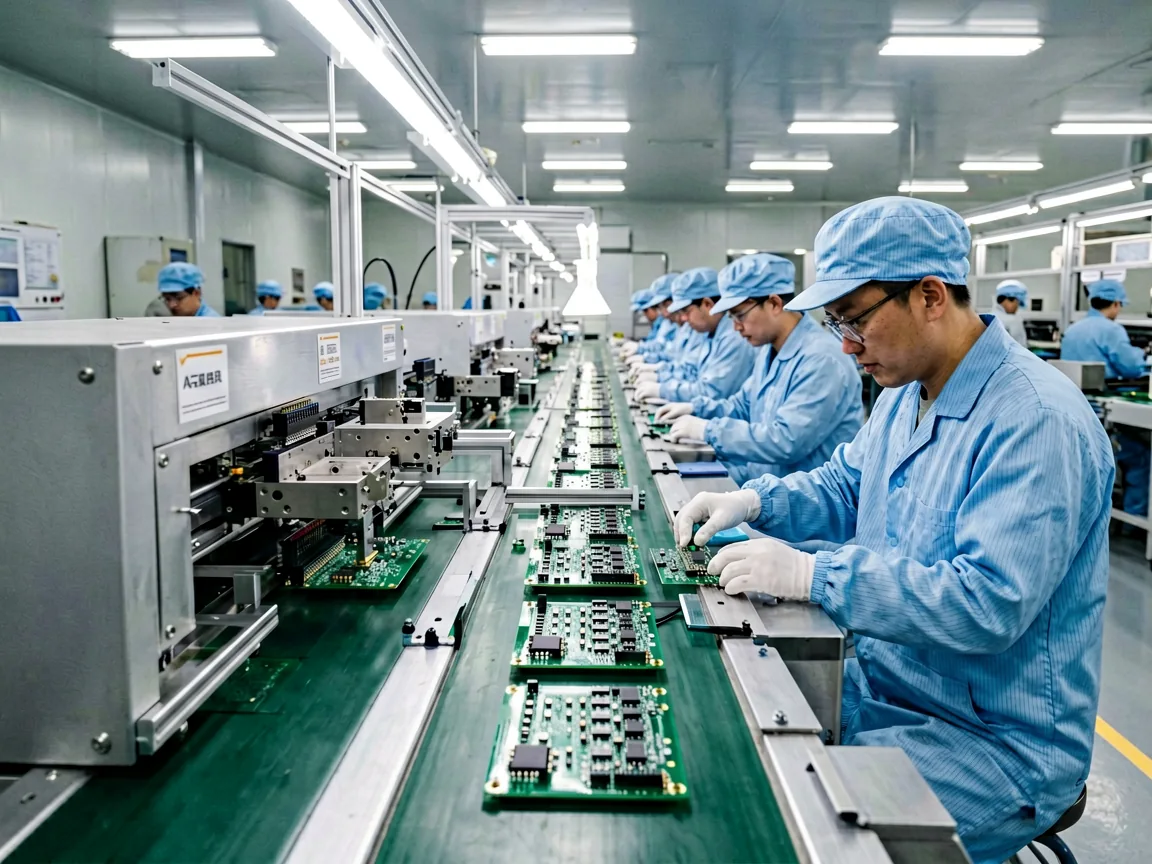
LEGIDATECH is a Shenzhen-based LED screen manufacturer with our own SMT lines, module assembly, cabinet machining and ageing test facility. Five of the eight suppliers ranking for these searches in the United States are distributors who buy from factories like ours and resell with a channel margin attached.
That distinction is not marketing. It determines whether you can change a cabinet size, request a non-standard pitch, get a bill of materials showing the actual lamp bead and driver IC brand, or reach the engineer who built your screen when something needs diagnosing three years later.
Every cabinet completes a 72-hour burn-in ageing test at full load before packing. This is the stage that surfaces infant-mortality failures in lamp beads and power supplies — failures that otherwise appear in the first month on your wall, on the far side of an ocean.
LED Video Wall FAQ
Get Your LED Video Wall Priced by the Factory
Send us the wall dimensions, viewing distance and environment. Within 24 hours you receive a cabinet layout drawing, full specification sheet and factory-direct quotation — no distributor margin.
LED Video Wall Buying Guide 2026: Cost Structure, Specification Traps and Ten-Year Ownership
Most buying guides published by suppliers are product brochures with headings. This one is written from the manufacturing side and covers what the quotation does not show you: where the money actually goes, which specification lines are routinely inflated, and what a wall costs to own for a decade rather than to buy on day one.
The Real Cost Structure Behind an LED Video Wall
Break a finished LED cabinet into its bill of materials and the proportions are remarkably consistent across manufacturers. The LED lamp beads account for roughly 40 to 55 per cent of material cost, and that share climbs as pitch gets finer. The driver ICs take another 10 to 15 per cent. The switching power supply is 8 to 12 per cent, the receiving card 5 to 8 per cent, the PCB 6 to 10 per cent, and the cabinet housing 10 to 18 per cent depending on whether it is folded steel or die-cast aluminium.
This matters because it tells you which cost reductions are real engineering choices and which are quality reductions in disguise. A supplier who saves money by using a folded steel cabinet instead of die-cast aluminium has made a legitimate trade: the wall is heavier and less precise at the seams, but the electronics are untouched. A supplier who saves the same amount by substituting a lower-bin lamp bead has changed the thing that determines colour consistency, brightness decay rate and the useful life of the entire screen — and that substitution will not appear anywhere on the quotation.
Lamp bead binning is the single most opaque variable in this pricing. Manufacturers sort LEDs from the same wafer into bins by wavelength, luminous intensity and forward voltage. Tighter binning means the thousands of individual LEDs in your wall age at similar rates and stay colour-matched. Loose binning is cheaper per bead and looks identical on day one, then produces visible patchiness within eighteen to thirty months as different bins decay at different rates. When two quotations for the same pitch differ by 20 per cent, binning is one of the first places to look.
The second place to look is the power supply. A quality Meanwell or equivalent supply rated for 50,000 hours costs roughly three times a generic unit rated for 20,000. In a wall running 12 hours a day, that is the difference between replacing power supplies in year eleven and replacing them in year four and a half — each replacement requiring a technician, access equipment and screen downtime.
Pixel Pitch Economics: Why P2.5 Often Beats P1.5
Pixel pitch is the variable buyers over-specify most often, and it is the most expensive place to be wrong. The relationship between pitch and cost is not linear; it is roughly inverse-square, because halving the pitch quadruples the number of LEDs per square metre. P2.5 carries 160,000 pixels per square metre. P1.25 carries 640,000 — four times the lamp beads, four times the driver channels, four times the placement operations on the SMT line.
The perceptual return on that spending is governed by human visual acuity, which does not scale with your budget. A person with 20/20 vision resolves detail down to about one arcminute. Translated into practical terms, this produces the widely used rule that minimum comfortable viewing distance in metres roughly equals pixel pitch in millimetres. At three metres, a P3 wall and a P1.5 wall look essentially identical to most viewers, because the eye cannot resolve the difference at that range. The P1.5 wall costs about three times more.

The correct method is to measure the distance to your nearest habitual viewer — not the average viewer, and not the furthest. In a hotel lobby where guests walk past at four metres but occasionally pause at two, P2 or P2.5 is the honest answer. In a boardroom where the nearest participant sits 2.5 metres from the screen and reads spreadsheets on it, P1.86 earns its cost. In a church where the front row is eight metres back, P3.91 is sufficient and the money saved buys a significantly better control system and a proper installation.
There is one legitimate reason to specify finer than the distance rule suggests: content containing small text or fine detail, such as spreadsheets, network diagrams or medical imaging. Text legibility depends on having enough pixels to render character strokes cleanly, and it fails before general image quality does. If your wall will display 10-point text, go one pitch step finer than the distance rule indicates. If it will display video, photography and large-format graphics, the distance rule holds.
Reading a Spec Sheet Like a Buyer, Not a Brochure
Specification sheets contain a predictable set of numbers that are technically true and practically misleading. Learning to read past them is the highest-return skill in this purchase.
Brightness is quoted at maximum output on a full white screen with new lamp beads. Every wall is commissioned well below that figure — typically 60 to 70 per cent indoors — because maximum brightness is visually uncomfortable indoors and accelerates decay. A wall specified at 1,200 nits will run at 700 to 800. That is fine, provided you knew it. It becomes a problem when a supplier quotes 800 nits maximum for an application that needs 800 nits in use, leaving no headroom for the 20 to 30 per cent brightness decline expected over the first several years.
Contrast ratio is measured in a fully darkened room. Real ambient light raises the black level dramatically, which is why COB and GOB encapsulation matter more than the headline contrast number: they reduce surface reflection, so blacks stay black under room lighting. A 15,000:1 COB panel and a 5,000:1 SMD panel differ far less in a dark lab than they do in a lit lobby, where the COB panel visibly wins.
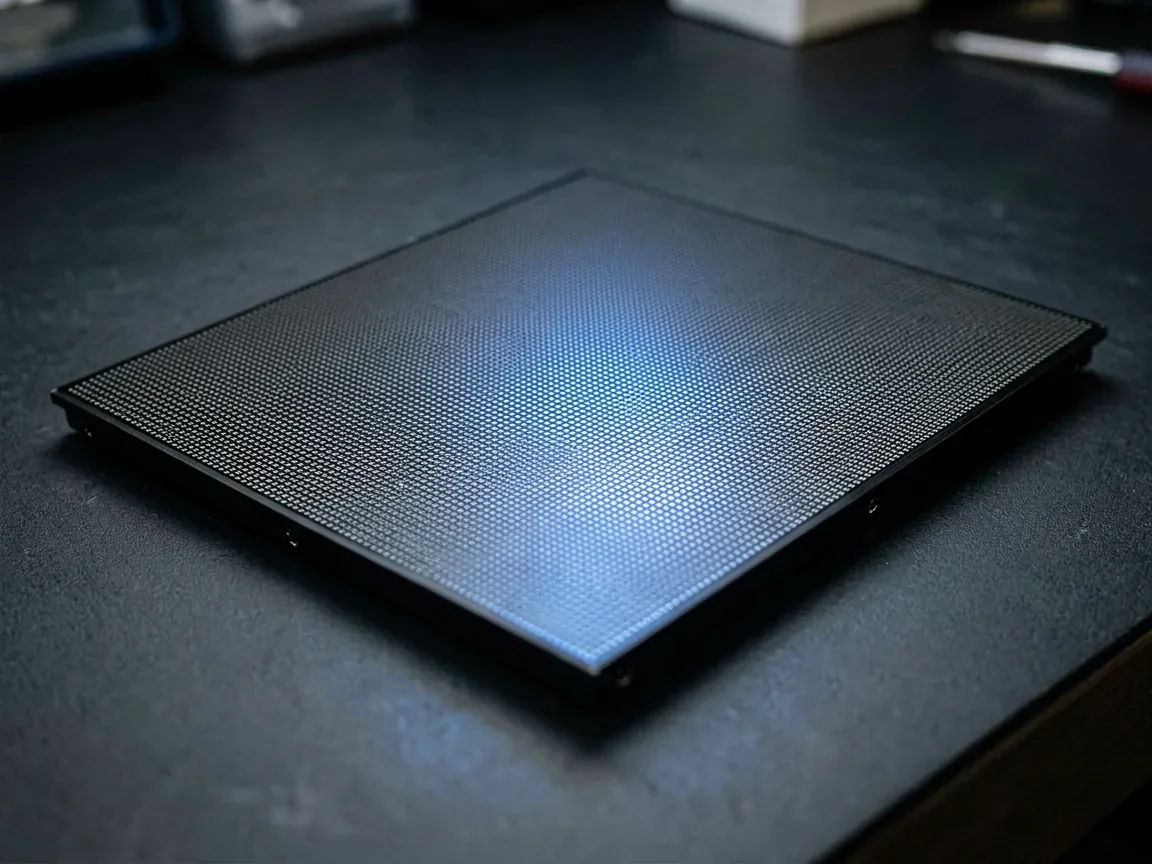
Refresh rate is the specification most often quietly under-delivered, and the easiest to verify. Point a phone camera at the wall and record. If horizontal scan bands roll through the footage, the refresh rate is below the claimed figure. Anything under 1,920 Hz will band on camera; 3,840 Hz is the current standard for any wall that will appear in video. Ask for the driver IC part number rather than the refresh figure — the IC determines what is achievable, and the part number is checkable against the manufacturer datasheet.
Greyscale depth determines how many brightness steps exist between black and full output. At 14-bit, there are 16,384 steps; at 16-bit, 65,536. This is invisible at high brightness and glaringly obvious at low brightness, where insufficient greyscale produces stepped, blotchy gradients in dark scenes. Since fine pitch walls in control rooms and boardrooms run at 300 to 500 nits — deep in the low-brightness region — greyscale depth matters far more for those installations than the brightness specification everyone focuses on.
IP rating for outdoor walls should read IP65 front and IP65 rear. A specification reading IP65/IP54 protects the face but not the back, which is adequate in dry climates and a slow failure in humid ones. Condensation inside a cabinet corrodes solder joints over a period of two to four years, producing intermittent dead pixels that are difficult to diagnose and expensive to fix at height.
Total Cost of Ownership Over Ten Years
Purchase price is between 55 and 70 per cent of what the wall costs over a decade. The remainder is electricity, spare parts, maintenance labour and eventual power supply replacement, and none of it appears on the quotation.
Take a 10 m² indoor P2.5 wall running 12 hours a day. Average draw is roughly 200 W/m², so 2 kW total, or 24 kWh per day. Over a year that is about 8,760 kWh. At USD 0.15 per kWh, electricity costs approximately USD 1,314 annually, or USD 13,140 over ten years — comparable to the original purchase price of the screen itself. This is why the common-cathode driver architecture, which reduces power draw by around 20 per cent for a modest cost premium, pays for itself several times over on any wall with long daily operating hours.
Spare parts are the second line. Budget one to two per cent of module count as replacement stock. On a 10 m² P2.5 wall of roughly 65 modules, that means one or two spares, which a competent supplier includes in the original shipment. Buying them later means matching the original lamp bead bin, which becomes difficult after two years and impossible after four — a mismatched replacement module shows as a visibly different colour patch.
Power supply replacement is the predictable major event. On a 50,000-hour supply running 12 hours daily, expect replacement somewhere between years nine and eleven. On a 20,000-hour supply, expect it in year four or five. For a 10 m² wall, that is roughly 20 units at USD 25 to 60 each plus a day of labour. Specifying quality power supplies at purchase typically adds USD 200 to 400 to a 10 m² wall and defers a USD 1,500 event by six years.
Factory-Direct Versus Reseller: Where the Markup Goes
A survey of current search results for this purchase shows that most of the highest-ranking commercial pages belong to regional distributors rather than manufacturers. Their turnkey packages typically list at two to three times the factory FOB price of the same hardware. That margin is not pure profit; it covers local inventory, domestic warranty handling, installation crews and same-timezone support, all of which have genuine value.
Whether that value justifies the premium depends entirely on project scale and internal capability. For a single small wall bought by an organisation with no AV staff and no appetite for import logistics, a local integrator is usually the right choice. For a multi-screen rollout, a project with unusual dimensions, or a buyer with an AV contractor already engaged, the distributor layer adds cost without adding much.
What buying direct genuinely changes is access. Working with the factory, you can specify a non-standard cabinet size to fit an architectural opening, request a specific lamp bead brand and bin, obtain the actual bill of materials, and reach the engineer who built your screen when a fault needs diagnosing years later. Distributors generally cannot offer any of these, because they are buying finished cabinets from a catalogue themselves.
The honest counterpoint is that buying direct transfers responsibility. You handle customs clearance, arrange installation, and manage warranty claims across a time zone. A serious factory reduces that friction — export documentation, compliance certificates, engineering drawings, spare parts in the original shipment, remote diagnostic support — but it does not eliminate it. Buyers who want a single accountable local party should pay the distributor margin knowingly rather than discover the trade-off after the container arrives.
Installation Realities Most Suppliers Do Not Mention
The most common cause of a disappointing wall is not the screen. It is the frame behind it.
Cabinets are manufactured to tolerances measured in tenths of a millimetre, but they are only as flat as the structure they hang on. If the support frame varies by more than about one millimetre across its face, adjacent cabinets sit at slightly different depths. The seam then catches light at grazing angles and reads as a visible grid, precisely the defect an LED wall is bought to avoid. Frame flatness must be verified with a laser level before a single cabinet is hung, and correcting it afterwards means dismounting everything.
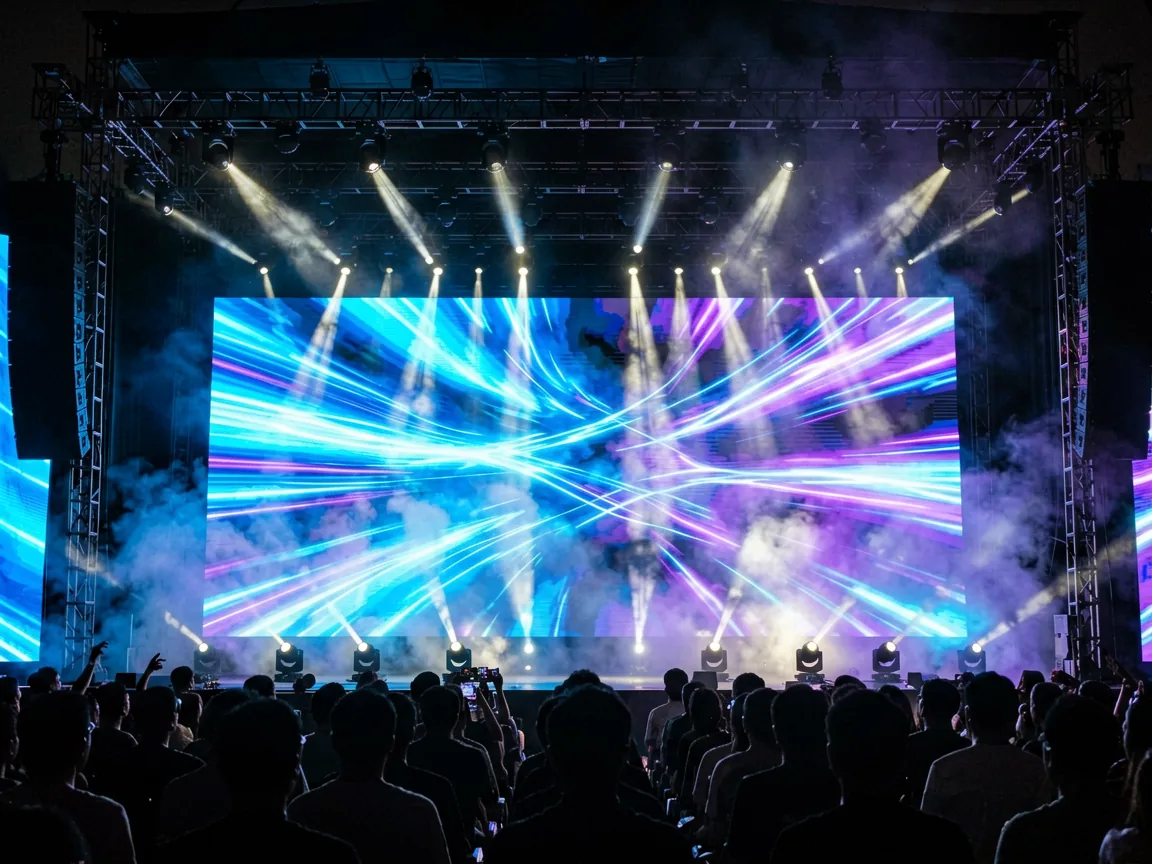
Electrical supply is the second recurring problem. Peak draw on a full white screen is three to four times the average. A 10 m² indoor wall averaging 2 kW can momentarily demand 6 to 8 kW. Breakers sized on the average figure trip during white-heavy content, usually during a demonstration. Size the circuit on peak; budget the electricity bill on average.
Heat is the third. LED walls convert a substantial fraction of input power to heat, and fine pitch walls concentrate it into a small area. A recessed wall in a room without airflow can push cabinet ambient temperature above 45 °C, which measurably accelerates lamp bead decay and shortens power supply life. Leave at least 100 mm of clearance behind the wall, and treat any fully enclosed installation as requiring active ventilation.
Finally, plan the calibration. A new wall is not colour-uniform out of the box; modules from different production batches differ slightly. Module-level brightness and chromaticity calibration is what makes a wall look like one screen instead of a grid of panels. Reputable factories calibrate before shipping and provide the calibration file with the cabinet map. Ask for it explicitly — recalibrating on site requires a colorimeter and a trained operator.
Five Mistakes That Cost Buyers the Most Money
1. Specifying pitch by budget rather than by distance. Teams decide they want the finest pitch affordable, rather than calculating what the room requires. On a wall viewed from six metres, the difference between P2.5 and P1.5 is invisible and costs roughly three times more. Measure first, specify second.
2. Choosing the cabinet before the wall dimensions. Wall size must be a whole multiple of cabinet size. A 5,000 mm opening divides cleanly by 500 mm cabinets into ten columns, but 640 mm cabinets give 7.8 columns — forcing either a filler strip or a redesign. Send the opening dimensions to the factory and let cabinet selection follow.
3. Under-specifying the control system. A single Novastar MCTRL660 handles about 1.3 million pixels. A 4×2.25 m P1.53 wall exceeds that, requiring a larger controller or multiple sending cards. Discovering this after delivery means the wall cannot display its own native resolution until additional hardware arrives.
4. Treating the warranty period as the whole story. A five-year warranty is only as good as the parts supply behind it. Ask specifically whether replacement modules will be produced from the same lamp bead bin, and what happens when that bin is exhausted. A warranty that supplies a visibly mismatched module technically honours the contract while leaving you with a patchy wall.
5. Omitting spares from the original order. Spare modules and power supplies cost a fraction of the wall when ordered with it and are shipped in the same container. Ordered separately two years later, they carry standalone freight, minimum order quantities, and the near-certainty of a bin mismatch. One spare module per twenty installed, plus two spare power supplies, is the standard that avoids this.
Specify It Once, Correctly
Send LEGIDATECH your wall dimensions, nearest viewing distance, ambient lighting conditions and content type. We return a cabinet layout drawing, a full specification sheet naming the actual lamp bead and driver IC, a power and data topology diagram, and a factory-direct quotation — within 24 hours, with no obligation.
Factory-direct price ranges by pixel pitch, plus the freight, control system and installation costs that make up a real quote.
Indoor fixed installations from P1.25 to P4: cabinet construction, front service and specification data.
IP65 outdoor walls and billboards from P4 to P10, built for 24/7 operation in sun, rain and heat.
Quick-lock touring cabinets for concerts and events, from P2.6 to P4.81, with curve locks and flight cases.
Novastar, Colorlight and Huidu sending cards, receiving cards and video processors matched to your wall.
Stadium, retail, worship, broadcast and transport applications, mapped to the right product line.