


500x500mm LED Floor Tile Screen — 73mm Thin Aluminum-Base Interactive Floor Display
A 500x500mm LED floor tile screen turns ordinary floor space into a walkable, interactive display — and this is the thinnest, lightest way to build one. The aluminum-base cabinet measures just 73 mm deep and weighs 11 kg per tile, runs seven pixel pitches from P1.56 to P6.25, carries 1.5–2.0 tons per square meter on a lab-tested COD-sealed surface, and installs tool-free with magnetic front service. Quoted factory-direct from our Shenzhen plant, with engineering drawings before production.
✓ 73 mm thin cabinet
✓ 11 kg per tile
✓ P1.56–P6.25, seven pitches
✓ 1.5–2.0 t/㎡ walkable load
✓ Magnetic front service
✓ 3-year warranty
What Is a 500x500mm LED Floor Tile Screen?
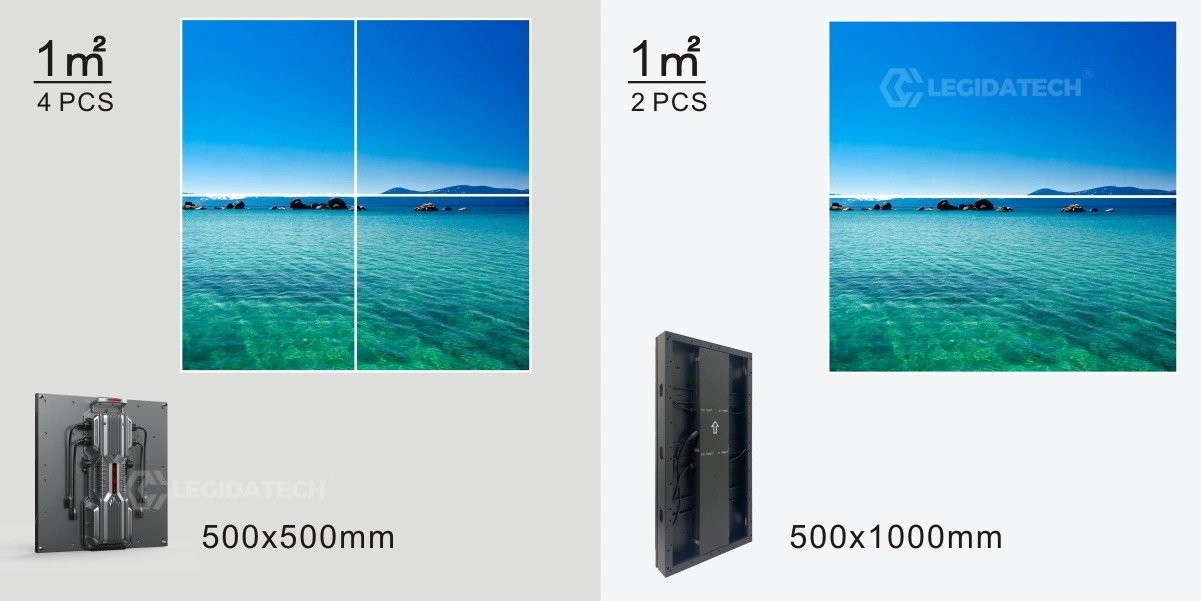
A 500x500mm LED floor tile screen is a walkable video display built from square, floor-rated LED cabinets — each one a self-contained 500 × 500 mm tile with its own LED module, power supply, receiving card and protective surface. The tiles interlock edge to edge like floor panels, so any floor area can become a playing video surface: 4 tiles make a 1 m² panel, 100 tiles make a 25 m² brand stage, and a 400-tile grid covers a full 100 m² showroom floor.
What separates a floor tile screen from a normal LED panel is what happens underneath and on top: a load-bearing cabinet structure that carries footsteps instead of hanging from a wall, a surface sealing system that survives shoes, spills and cleaning machines, and — when specified — a sensor layer that turns every step into interactive content. It is a different product category from a wall display that happens to sit low, and it is part of the wider family of LED dance floor and floor display solutions we build for retail, studios and events.
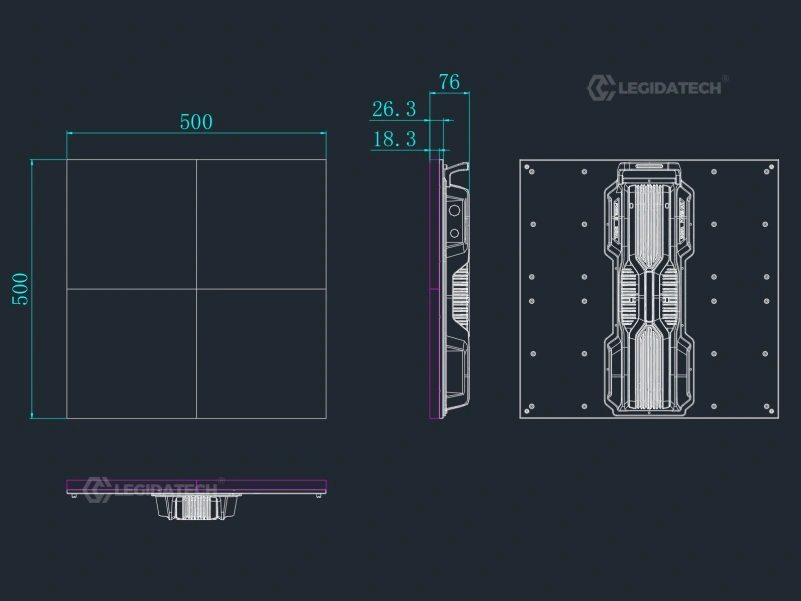
The 500 × 500 mm square is the industry’s most practical floor format. It matches the 250 × 250 mm module grid exactly (a 2 × 2 module array per tile), keeps every tile light enough for one-person handling, and lets installers build rectangles, L-shapes, islands and full floors from one standard part. That standardization is also why spares, replacement modules and later floor extensions stay simple years after the first install.
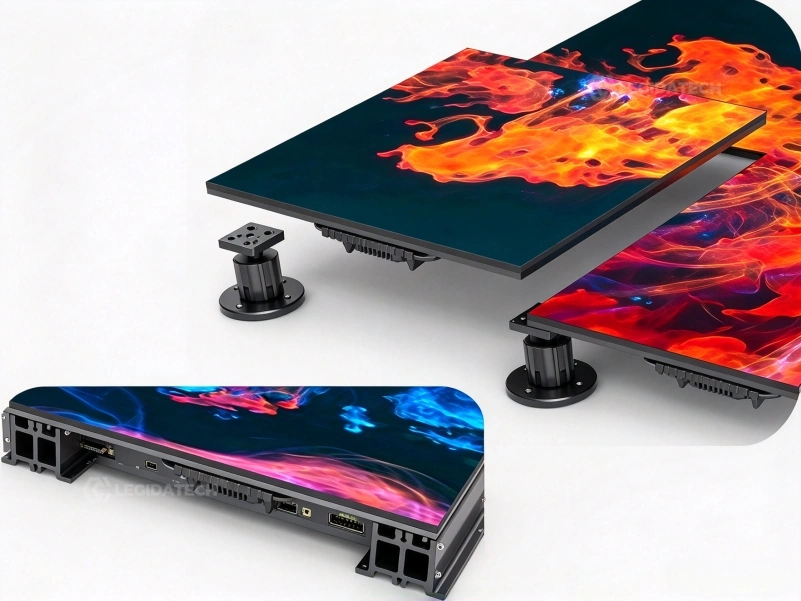
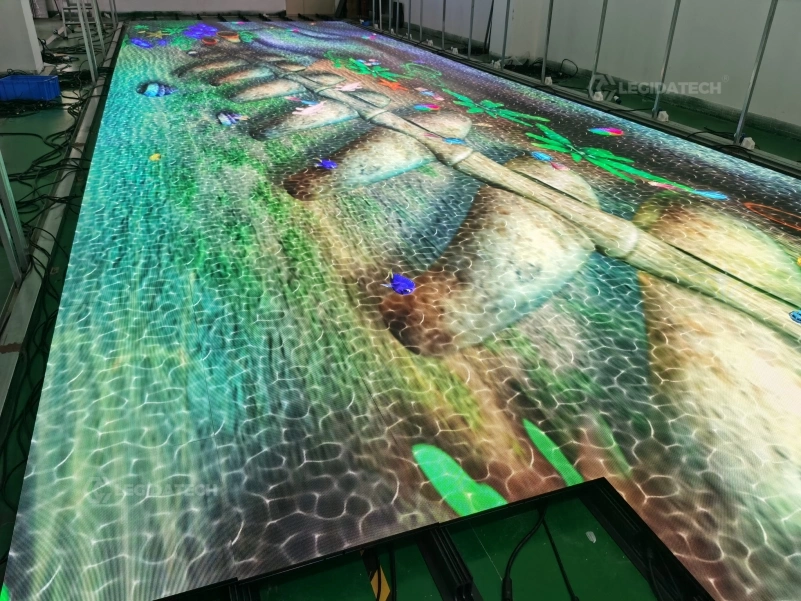
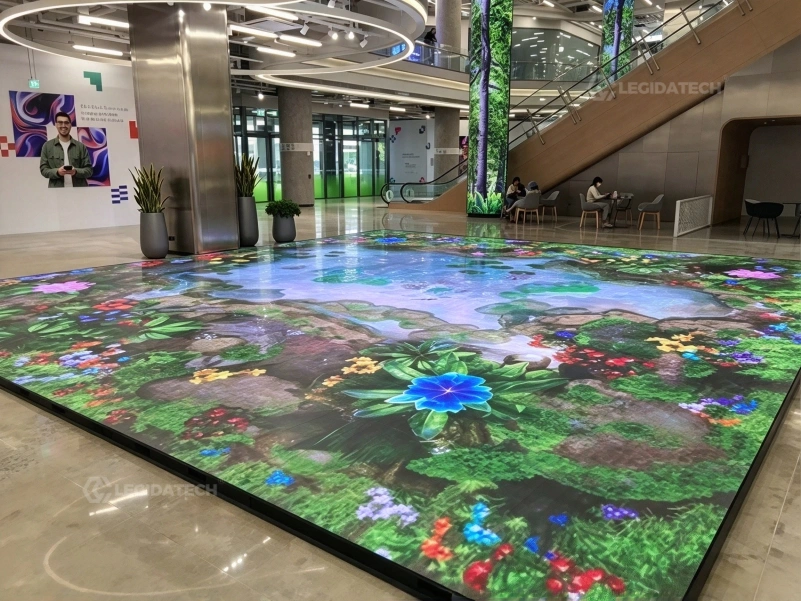
A 500x500mm floor tile screen interlocks from single tiles into any floor size or shape.
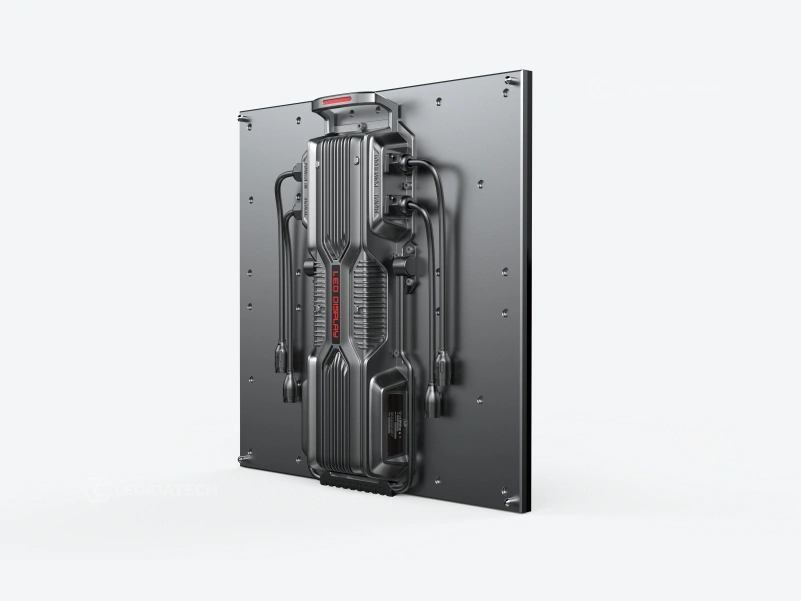
Why the 500x500mm LED Floor Tile Screen Uses an Aluminum-Base Cabinet
Most floor screens on the market use steel sheet boxes or heavy die-cast shells. This series does something structurally different: the LED module itself is built on an aluminum base plate, and a die-cast rear cover closes the cabinet. The aluminum base plate is not just a backing — it is the electrical circuit carrier, the heatsink and the structural spine at the same time. Heat from the LEDs conducts straight into the plate and away without fans; the plate’s own rigidity keeps the LED face flat under load; and because the plate carries the circuit, no separate steel chassis is needed. That is how a walkable floor tile ends up 73 mm thin and 11 kg light while still meeting a 1.5–2.0 t/㎡ load rating.
The material choice matters most in the three places floor screens usually fail:
Aluminum conducts heat roughly ten times better than steel, so LED junction temperature stays low with no fans, no vents and no dust intake — quieter floors, longer LED life, and no filter maintenance in a public floor.
A floor is walked on, so the surface must return to shape. The aluminum base plate resists permanent deformation and recovers its form, keeping seams and flatness within ≤0.1 mm year after year — measurable, and listed on our pre-shipment checklist below.
Steel boxes push a 100 m² floor past structural and labor limits; full die-cast shells add cost and mass. At 11 kg per tile, this design needs no crane, no reinforced subfloor in most buildings, and no two-person lift on site.
One honest note on low temperatures: standard die-cast aluminum shells can become brittle and crack under repeated cold-weather impact, which is why event floors built from them demand careful winter handling. The aluminum-base design here separates roles — the base plate carries load and heat, the die-cast rear cover only closes the box — so the load path never depends on a thick cast wall.
500x500mm LED Floor Tile Screen COD Surface Sealing — Durability Backed by Lab Data
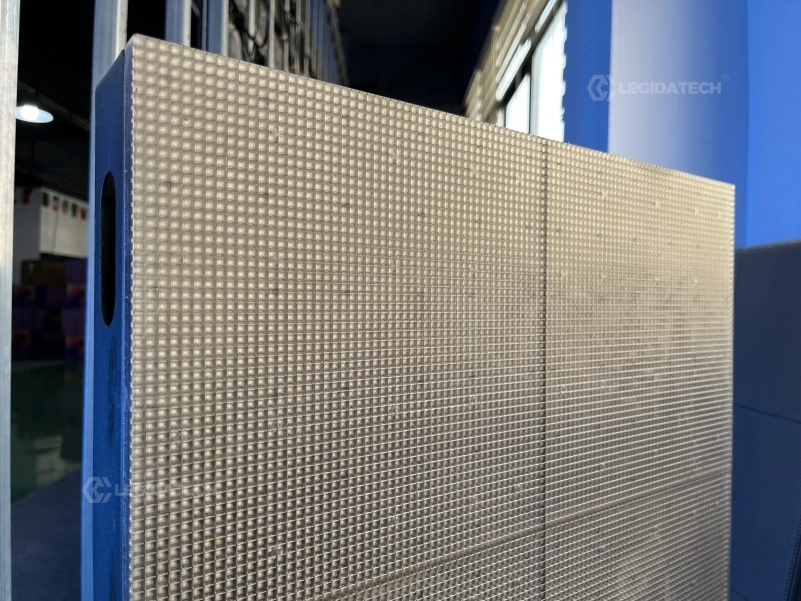
The surface is the part of a 500x500mm LED floor tile screen that actually gets abused, so this series specifies a COD gel-sealed surface rather than a bare or thinly-coated one. During production, a liquid gel compound is dispensed over the LED face and cured into a flexible, seamless sealing layer that fills every gap around each lamp. The result is a floor surface with no exposed solder joints, no dust-collecting seams around the LEDs, and a matte, anti-glare finish that photographs well under showroom lighting. The gel layer also carries anti-static and easy-clean properties — spills wipe off, and routine cleaning needs nothing more aggressive than a damp mop.
Because claims are cheap, the sealing system was put through standardized laboratory testing. These are the numbers we hand to procurement teams and building inspectors:
Laser Interaction on the 500x500mm LED Floor Tile Screen That Doesn’t False-Trigger
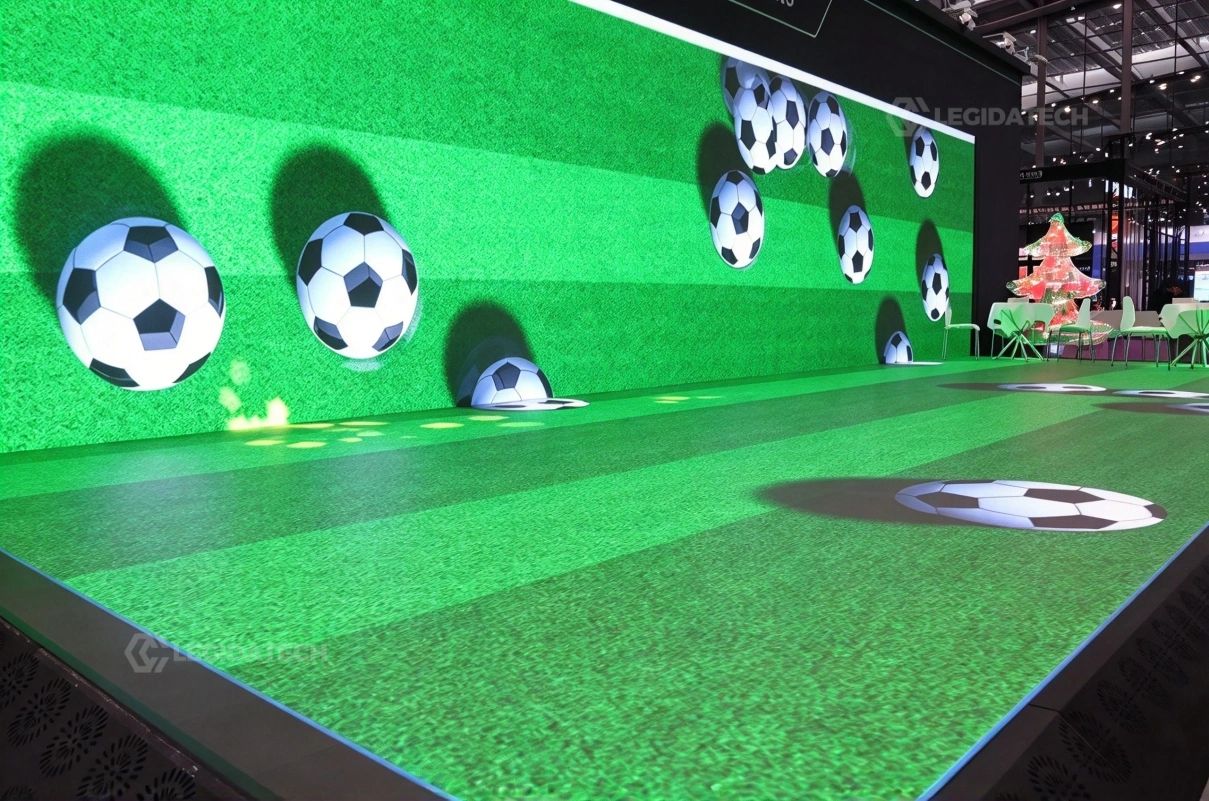
Interaction is where floor screens earn their price premium — and where cheap ones embarrass their owners. What makes this 500x500mm series a true interactive LED floor screen is the laser distance sensor in every tile, paired with a dedicated MCU: each tile measures the distance to whatever is above it and reports a trigger in about 10 milliseconds — faster than a foot is fully down — so ripples, footprints and game effects land exactly where the visitor is standing. Because each tile senses independently, dozens of visitors can play on the same floor at once with every step tracked separately.
The reason we specify laser rather than the capacitive or infrared grids common on bargain floors is interference. Retail floors run under spotlight banks; event floors run under moving heads. The comparison below is the one we walk buyers through before they choose:
Interaction content runs from ripples and footprint trails to branded games and motion graphics, driven through the same control system as the video itself. If your project is an event or stage application that needs the heavier, award-winning interactive floor built for rental abuse, see the dedicated 500x500mm interactive LED dance floor page — this aluminum-base page is the close-viewing, architectural sibling of that product.
The Load-Bearing Patent: Why the 500x500mm LED Floor Tile Screen Survives Two Tons
A floor screen rated 1.5–2.0 t/㎡ is not rated that way by luck. On most designs, a heavy point load — a display plinth, a forklift wheel, a stage riser leg — presses directly through the LED face into the solder joints, and the screen slowly fails from the top down. Our design is covered by a patented force-distribution structure that routes load around the display instead of through it.
The force path is engineered in stages: the surface mask first spreads the load into the cabinet’s base shell, the shell passes it down through the structural frame to the PCB carrier, and only then onto the aluminum base plate that closes the cabinet. At no point does the LED module body carry structural load — the electronics sit inside the protected core while the cabinet skeleton does the work. That is what lets a display which weighs 11 kg accept two tons pressing on it, and why we can put the rating in writing rather than in marketing adjectives.
In practice, 1.5–2.0 t/㎡ covers everything a floor normally meets: standing crowds at events, retail display plinths and mannequins, wheeled dollies and cleaning machines, even light vehicles on show-car turntables. If your use case involves heavier concentrated loads, tell us — the structural team verifies the point-load math per project before quoting, and the answer arrives with the quote, not after it.
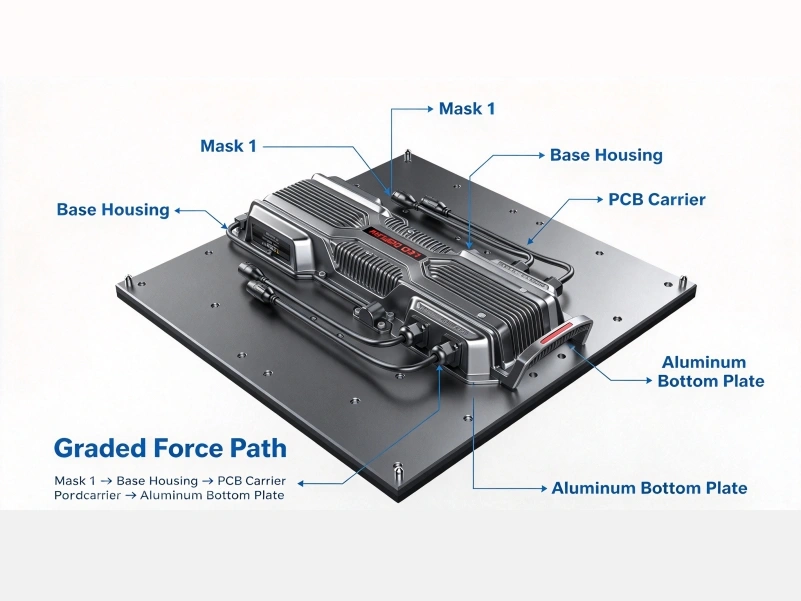
Patented staged force path: mask → base shell → PCB carrier → aluminum base plate.
500x500mm LED Floor Tile Screen Specifications
Seven pixel pitches share one 500 × 500 mm aluminum-base cabinet, so the choice is purely about viewing distance and budget. As a rule of thumb, the minimum comfortable viewing distance in meters roughly equals the pixel pitch number: P1.56 reads cleanly from about 1.5 m, which is why it is the retail-floor pitch, while P6.25 suits lobby and event floors seen from 6 m and beyond. For wider-pitch event and stage floors, compare our P3.91–P6.25 dance floor series.
System Parameters (all pitches)
Control runs on mainstream LED controller platforms with the receiving card mounted inside each cabinet, so the floor plugs into the same playback and scheduling stack you already run on other LEGIDATECH screens — one content workflow across your walls, floors and totems. Every order ships with a labeled wiring plan and a recommended spare kit: most clients hold 5% spare modules plus a small stock of power supplies, which keeps a floor serviceable a decade later without special-order waits. If you want a second opinion on pitch selection, send us your floor plan and the closest viewing position — we answer with a marked-up layout, not a brochure.
500x500mm LED Floor Tile Screen Installation: Rail, Pit or Adjustable Feet
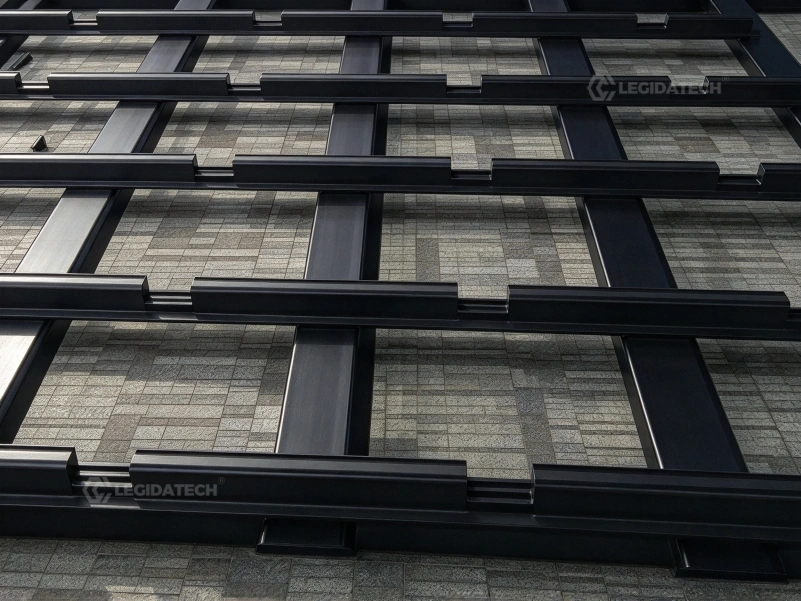
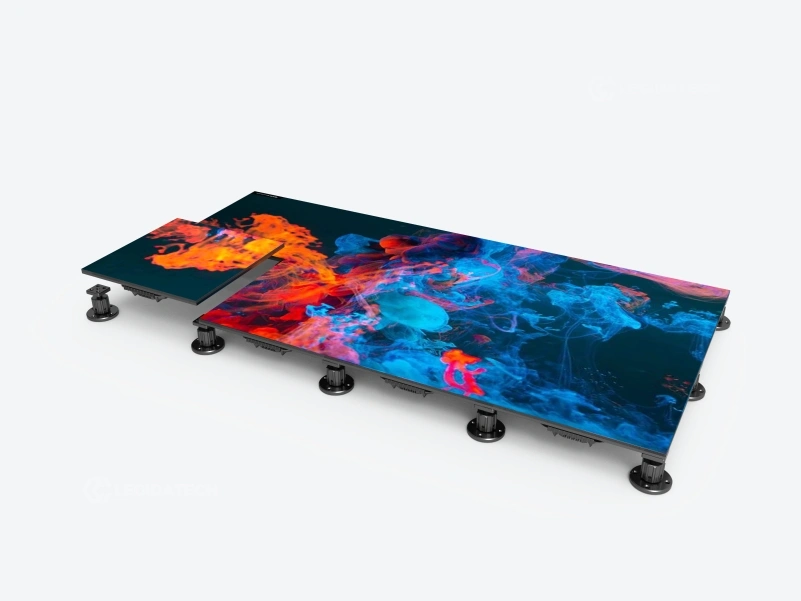
At 73 mm deep, this cabinet fits installation scenarios that heavier floors simply cannot use. There are three deployment methods, and the right one depends on whether your floor is a permanent architectural feature or a reconfigurable surface:
Cabinets stand on their own adjustable metal feet directly on the finished floor. No floor works, no pit, no permits — lay a protective underlay, place the tiles, level each foot, done. Ideal for showrooms and rental-style reconfiguration.
Pre-installed rails hold the tiles at a fixed 95 mm height on the COD version — the floor stays a removable, serviceable layer over the building slab, with cabling routed beneath the rail plane and no wet trades involved.
For a screen flush with the finished floor, pour a 300–650 mm pit with a steel structure (supports every 500–1,000 mm) plus ground supports for cabling and power. The screen then sits flush — no step, no threshold, full wheelchair and trolley access.
Whichever method you choose, the assembly logic is the same: tool-free interlocks between cabinets, magnetic front service for modules, and power/signal daisy-chaining cabinet to cabinet. A 100 m² floor is 400 cabinets; with rails pre-assembled and locks tool-free, a 3-person crew typically completes mechanical installation in one working day — roughly 24 person-hours, against 40+ for screw-fixed floor cabinet designs. Alignment matters more than muscle: each tile self-locates to its neighbors, and leveling screws trim the last fractions of a millimeter until the whole surface reads as one plane.
Where a 500x500mm LED Floor Tile Screen Performs Best
The close-viewing pitches and thin cabinet make this the floor screen for places where people stand near it and look down at it — not for a stadium floor watched from 30 meters away:
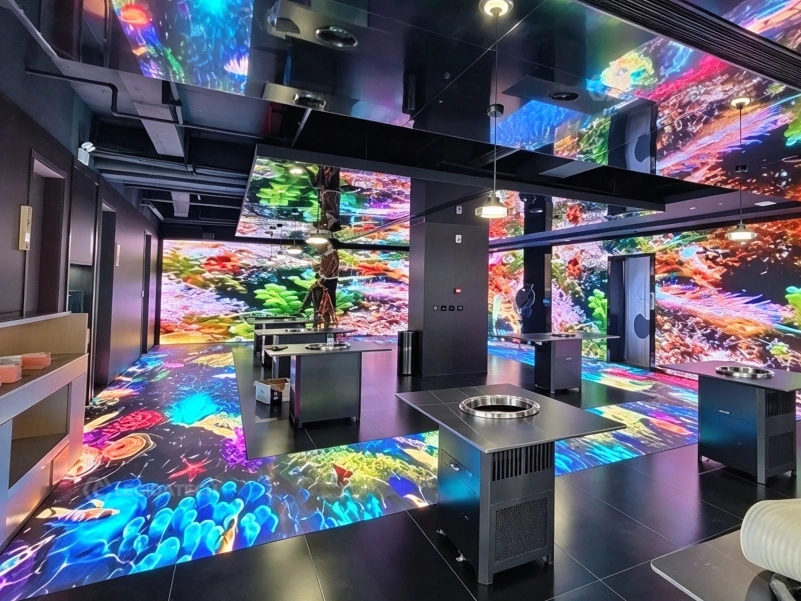
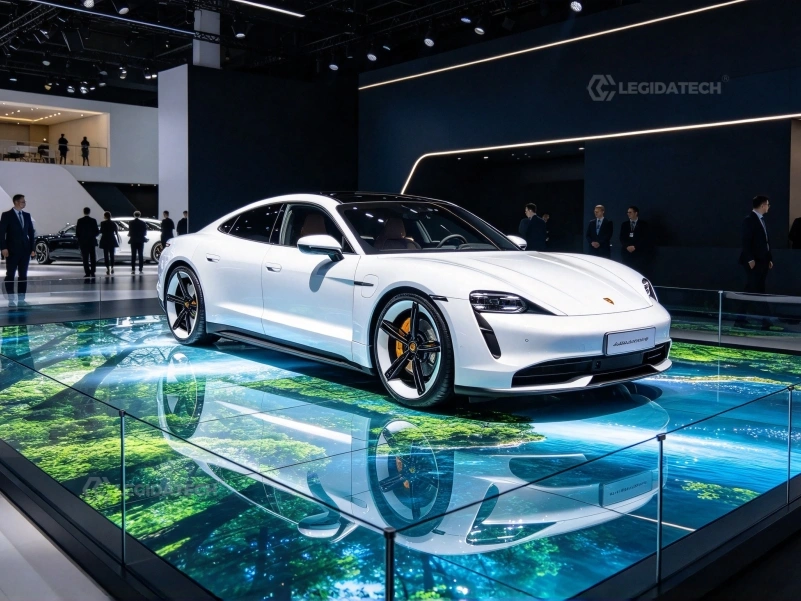
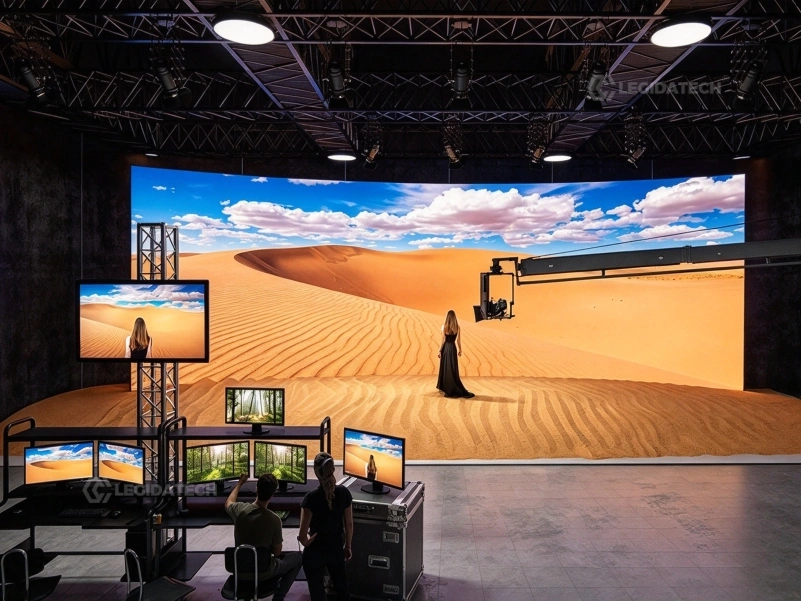
The same logic extends to corporate lobbies, exhibition stands, healthcare showrooms and museum exhibits — anywhere the floor itself is the story. A 36㎡ medical showroom in Guangzhou (P2.9) uses exactly this approach to walk visitors through treatment journeys underfoot, and a 36㎡ P2.6 county-level exhibition hall in Maoming runs product launches on its floor several times a year. And because every tile is a self-contained 500 × 500 mm unit, the floor can grow with the business: start with a 12 m² entrance statement and extend to a full atrium later by adding identical tiles — no re-engineering, no orphaned spares, no visible seam between the old floor and the new.
Real 500x500mm LED Floor Tile Screen Projects: From a Sportswear Flagship to Regional Showrooms
Floor screens fail in public, so the only evidence that matters is floors that have run for years. Alongside the projects below, our interactive floor reference list includes a 306㎡ P3.9 installation for a Nike flagship — a floor that absorbs daily customer traffic in one of the world’s most photographed retail environments — plus a 36㎡ medical showroom in Guangzhou (P2.9) and a 36㎡ exhibition hall in Maoming (P2.6).
Who Is the 500x500mm LED Floor Tile Screen Built For?
Tell us what you do — this screen was built for you.
You run a flagship retail store or brand showroom. Your customers stop, look down and lean in — at half a meter, a coarse floor screen shows its pixel grid and cheapens everything around it. That is exactly what this screen is built for: P1.56/P1.95 keep the surface clean at arm’s length, and the 73 mm cabinet drops onto your existing slab without gutting the store.
You build showrooms for car dealers. Every closed selling day is lost revenue, and heavy floor screens mean tearing up the dealership. That is exactly what this screen is built for: 11 kg tiles one person carries and places, magnetic front service that swaps a module without dismantling anything, and content changes that happen after hours, not around them.
You are an AV integrator bidding museum or corporate lobby jobs. Clients compare quotes line by line, and vague specs lose bids. That is exactly what this screen is built for: seven pitches to match viewing distance to budget, and acceptance-grade numbers — flatness ≤0.1 mm, 3,840 Hz option, CE/FCC/CCC — you can write straight into the tender.
You operate a TV studio. Your floor is on camera every day, under moving lights, crossed by dollies and crew. That is exactly what this screen is built for: 3,840 Hz flicker-free capture, the patented load path under real production weight, and matte sealing that kills glare in every shot angle.
You are a retail technology integrator rolling out multiple stores. One-off installations don’t scale; your program needs a repeatable product. That is exactly what this screen is built for: one standardized 500 × 500 mm module across every site, identical spares, batch pricing, and floors that behave the same in store 2 as they did in store 1.
Where the 500x500mm LED Floor Tile Screen Wins: United States, Germany and the Gulf
We ship floor tile screens worldwide, but three markets keep coming back — because this product’s strengths map directly onto how projects are bought there:
American brand retail and car showroom programs refresh fast, and buyers select by the close-up effect they see on the sample — P1.56/P1.95 fine pitch plus the matte, non-reflective sealed surface is what wins those evaluations. Studio and production clients in the film and broadcast hubs specify the 3,840 Hz option for flicker-free capture, and the standardized 500 × 500 mm module makes multi-store rollouts a repeat, not a re-engineering.
Integrators bill installation by the hour, so tool-free assembly is money, not marketing: with rails pre-installed, a 100 m² floor lands at roughly 24 person-hours — a figure you can put in your own project calculation. Complete CE documentation, batch flatness reports (≤0.1 mm) and acceptance-grade test data pass the project sign-off culture in this region without negotiation.
High-end malls and hotel atriums in Dubai and Riyadh put screens at pedestrian distance, where fine pitch, high refresh and anti-glare matte sealing decide how premium the floor looks. Summer ambient temperatures near 40 ℃ are exactly where the fanless aluminum-base design earns its keep — heat conducts out of the cabinet instead of building up inside it.
What Does a 500x500mm LED Floor Tile Screen Cost?
We publish planning ranges because most suppliers won’t: factory-direct project pricing for this series typically runs $700–$1,800 per square meter, with interaction packages quoted separately. The spread is real, and it is driven by five choices you make:
- Pixel pitch — P1.56 packs roughly 16× the LEDs of P6.25 per square meter, so fine pitch carries the premium; choose by real viewing distance, not by spec-sheet pride.
- Interaction package — laser sensors, MCU boards and interactive content add a per-tile cost; non-interactive floors skip it entirely.
- Refresh and brightness grade — the 3,840 Hz broadcast option costs more than the 1,920 Hz standard drive.
- Quantity — project pricing scales with area; a 100 m² floor prices very differently per square meter than a 10 m² stage island.
- Installation method — adjustable feet and rails ship with the product; a recessed pit adds local steelwork and civil cost that never appears on an LED quote.
The buy-vs-rent rule we give every client: if your floor will run 6 or more days per year — showroom trading days, mall activations, studio productions — ownership beats renting within the first two years, and you stop paying someone else’s crew to reinstall it every time. Below that frequency, ask us about event-appropriate options instead; we will tell you honestly which side of the line your project sits on.
500×500mm LED Floor Tile Screen vs 500×1000mm: Which Format Fits Your Project?
This page is the 500 × 500 mm format; our 500x1000mm LED floor tile screen doubles the tile on the same pitch family. Neither is “better” — they solve different problems:
The Pre-Shipment Checklist Every 500x500mm LED Floor Tile Screen Passes
A floor screen is judged the day it opens to the public, so hold any supplier — us included — to a written checklist before money moves. These are the seven items we ship with every floor tile screen order:
- Flatness report, ≤0.1 mm per batch — measured on the LED surface, because seams you can feel are seams you will call about.
- 72-hour burn-in log — dead-lamp count, brightness uniformity and color temperature recorded per module, not a rubber-stamp pass.
- Full-floor mock-up verification — seam alignment and color consistency checked across an assembled section, not per-tile in isolation.
- 5% spare modules at order time — priced and locked with the main order, so year-three replacements match year-one color.
- Warranty terms in writing — 3-year warranty with defined response commitments, not a brochure promise.
- Certification copies with shipment — CE, FCC and CCC documents that match the serial numbers you receive.
- Engineering drawings before the deposit — layout, load points and wiring plan. A factory that gates drawings behind payment is reselling, not manufacturing.
Every item above exists because a floor fails in public the moment it fails at all — build the checklist into your purchase order, whoever you buy from.
500x500mm LED Floor Tile Screen — FAQ
How much does a 500x500mm LED floor tile screen cost?+
Factory-direct pricing typically runs $700–$1,800 per square meter depending on pixel pitch, refresh grade and quantity, with the laser interaction package quoted separately. A 100㎡ showroom floor at P2.6 sits mid-range; fine-pitch P1.56 floors carry the premium. Send an inquiry with your floor size and nearest viewing distance for an exact quote within 24 hours.
What are the standard sizes of LED floor tiles?+
The industry builds floors from two standard cabinet formats — 500×500mm (this page) and 500×1000mm — both based on 250×250mm LED modules. The 500×500mm tile is the most flexible for creative layouts and close-viewing spaces; the 500×1000mm format doubles coverage per tile for faster installs on large or outdoor floors. See our 500x1000mm LED floor tile screen for that format.
Are digital screen floors real and walkable?+
Yes — with the right cabinet. This floor is rated 1.5–2.0 tons per square meter on a patented force path that routes load around the display electronics, and reference installations — including a 306㎡ P3.9 floor in a global sportswear flagship — handle continuous daily foot traffic. Dollies, display plinths and cleaning machines cross it routinely.
What is the difference between laser, capacitive and infrared interaction?+
Laser distance sensing (used here) triggers in about 10 milliseconds without contact and ignores stage lighting; capacitive floors need physical pressure and false-trigger on wet surfaces; infrared grids get swamped by bright lights and miss dark clothing. For architectural and retail floors under real lighting, laser is the option that stays accurate.
How thin is the cabinet and how deep a pit does it need?+
The cabinet is 73mm deep (76mm variant) and needs no pit at all in most projects — it stands on adjustable feet or mounts on rails at a 95mm height. Only flush-to-floor installations use a recessed pit of 300–650mm with a steel support structure.
Can it be used outdoors?+
By pitch, honestly: fine pitches P1.56–P2.97 are rated IP33 front / IP44 rear — indoor use. Coarse pitches P3.91–P6.25 reach IP65 front / IP54 rear, suitable for covered and semi-outdoor spaces within the 0–40℃ working window. For fully exposed outdoor floors, tell us the conditions first so we recommend the right protection strategy.
How do you replace a module if one breaks?+
Front service is magnetic and tool-free: lift the affected module from above, swap in a replacement, and the floor is back in service in minutes — no opening cabinets from below, no cutting into the finished floor. We recommend ordering 5% spares with the main order so replacements match perfectly.
What is the lead time and warranty?+
Standard lead time is 15–20 working days after drawings and configuration are confirmed, depending on pitch and quantity. Every order ships with CE/FCC/CCC certification copies, a 72-hour burn-in log, and a 3-year warranty with defined support terms.
Ready to Specify Your 500x500mm LED Floor Tile Screen?
Send us your floor dimensions, nearest viewing distance and whether you need interaction — an engineer (not a salesperson) replies with layout drawings, a pitch recommendation and factory-direct pricing within 24 hours.