


AF1000 Series 500x1000mm Rental LED Display — 24 Cabinets per 12m², P2.604 to P5.95
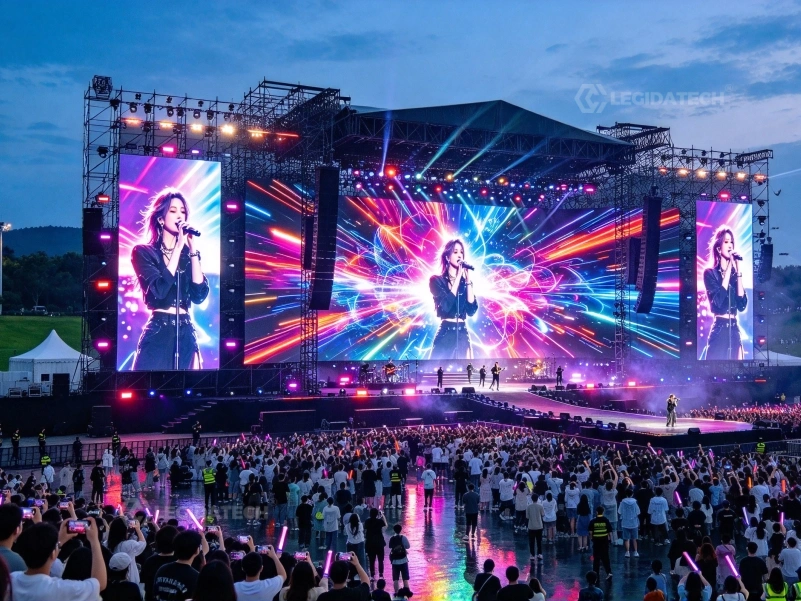
A load-in is not measured in hours. It is measured in repetitions — how many times somebody lifts a panel, seats it and closes a lock. The AF1000 halves that number. Each 500 × 1000 × 84 mm cabinet covers half a square metre, so a 12 m² backdrop takes 24 lift-and-lock cycles instead of 48, with half the seams, half the power jumpers and half the inspection points at load-out. It weighs 14.5 kg with modules fitted, carries eight 250 × 250 mm modules in a 2×4 layout, and shares its locks, handles and power boxes with the smaller AF500 500x500mm cabinet. Eight pixel pitches ride the chassis — five outdoor from P2.604 to P5.95 sealed IP65, three indoor from P2.976 to P4.81 — all at 3840-7680 Hz with a ±5° half-arc lock.
✓ 14.5 kg per cabinet
✓ 2×4 module layout
✓ Half the lock cycles
✓ 3840–7680 Hz refresh
✓ 5-year warranty
What Is a 500x1000mm Rental LED Display? The Half-Panel Explained
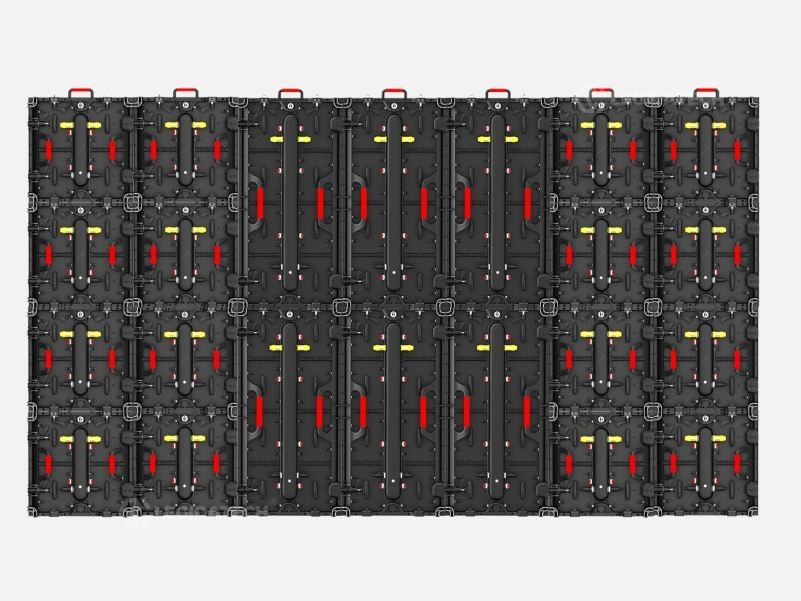
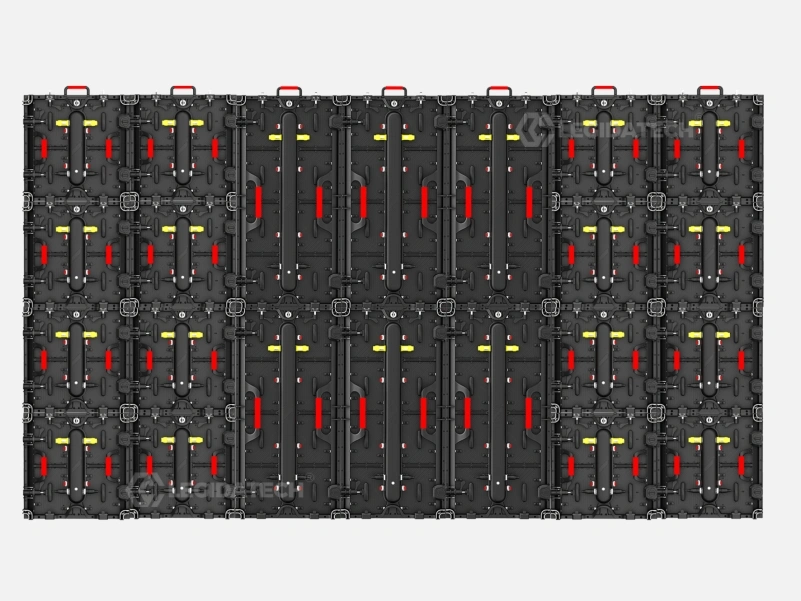
A 500x1000mm rental LED display is the half-panel of the rental world: 500 × 1000 × 84 mm of die-cast aluminum carrying eight 250 × 250 mm modules in a 2×4 layout, locked on all four sides to its neighbours. One cabinet delivers exactly the area of two 500 × 500 mm panels.
That single fact is the whole argument. Big backdrops are big, and load-in windows are not. Every 500 × 1000 mm cabinet you place is one 500 × 500 mm cabinet you do not have to place — which is why the format has become the default for festival main walls, IMAG towers and arena flanks.
The AF1000 runs eight pitches on one chassis: five outdoor from P2.604 to P5.95 with IP65 sealing front and rear, three indoor from P2.976 to P4.81. If your brief needs finer indoor pitches — P1.25 through P2.604 with GOB coating — those live on the 500x500mm rental LED display in the same family, and the two sizes interlock vertically on one frame.
LEGIDATECH has manufactured LED displays in Shenzhen for 19 years, shipping to more than 100 countries. Buyers comparing rental platforms across the range can start at our rental LED display hub.
Marketplace listings quote anything from 1920 Hz to 3840 Hz for this cabinet class, and some datasheets print two figures on facing pages. The AF1000 carries a single stated band — 3840–7680 Hz, all eight pitches. It is the figure the QC bench measures, and it is the figure you receive.
Build Time: Why Half the Cabinets Means Half the Wall Time
This is the section to read if you are deciding between the two cabinet sizes, because it is the only place the two differ in any way that shows up on a call sheet.
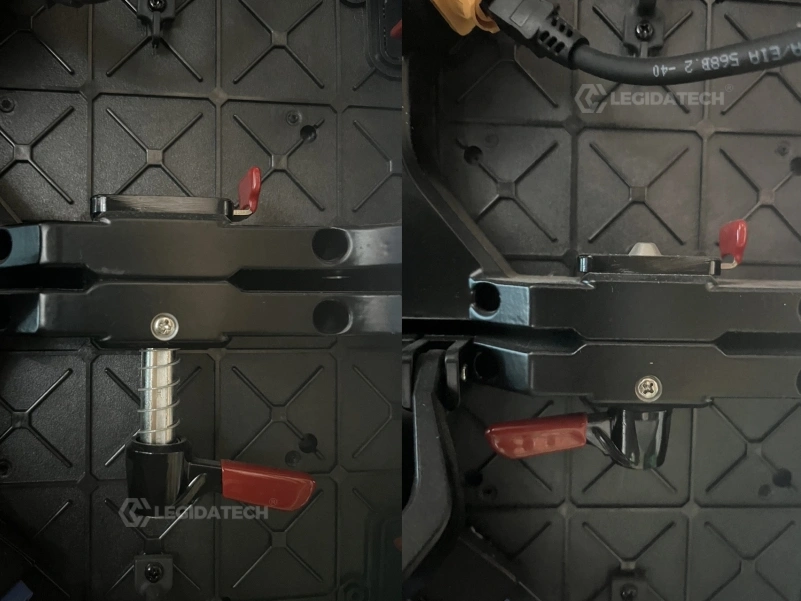
The motion itself is unchanged. Handle, lift, seat, close the travel lock — identical to the 500 × 500 mm cabinet, because the hardware is identical. What changes is how much wall each repetition delivers.
| Screen area | AF1000 cabinets | AF500 cabinets |
| 12 m² — 4 × 3 m wall | 24 | 48 |
| 24 m² — 6 × 4 m backdrop | 48 | 96 |
The saving is a ratio, not a stopwatch. Whatever your crew’s actual pace on a given day, a wall built from the larger cabinet requires half the lift-and-lock cycles, half the inter-cabinet connections and half the lock inspections at load-out. How that converts into hours depends on your crew and the venue — we would rather give you the ratio than invent a minute count.
Three secondary savings follow the same halving. Seams: fewer joints across the image means a cleaner picture and less visible grid. Power: fewer jumpers to daisy-chain and fewer points to fault-find. Inspection: fewer lock points to verify before the doors open and again at load-out.
Load travels down through the lock line, so a cabinet this tall holds its face flat with no bracing behind it. Any module releases from the front for service; from behind, the card, power box and rear cover lift off together in one piece. Because the AF500 500x500mm cabinet carries the same lock hardware, one training session covers both sizes.
Send your stage plot — we will return a cabinet count, a crew estimate and the truck space it packs into.
Eight Problems a Big Backdrop Creates — and the Answers
Large walls concentrate every rental problem. Twice the area means twice the cycle count, twice the joints and twice the chance that something goes wrong on the day. These eight are the ones this cabinet was designed around.
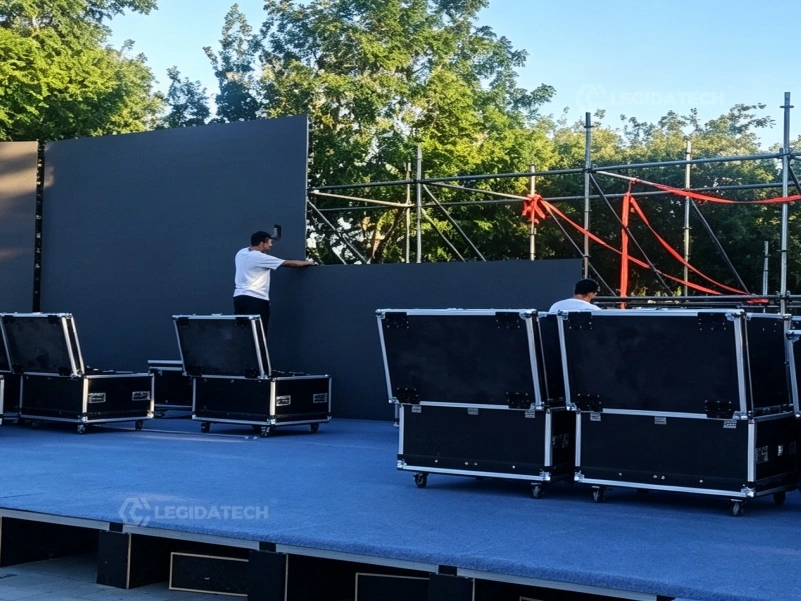
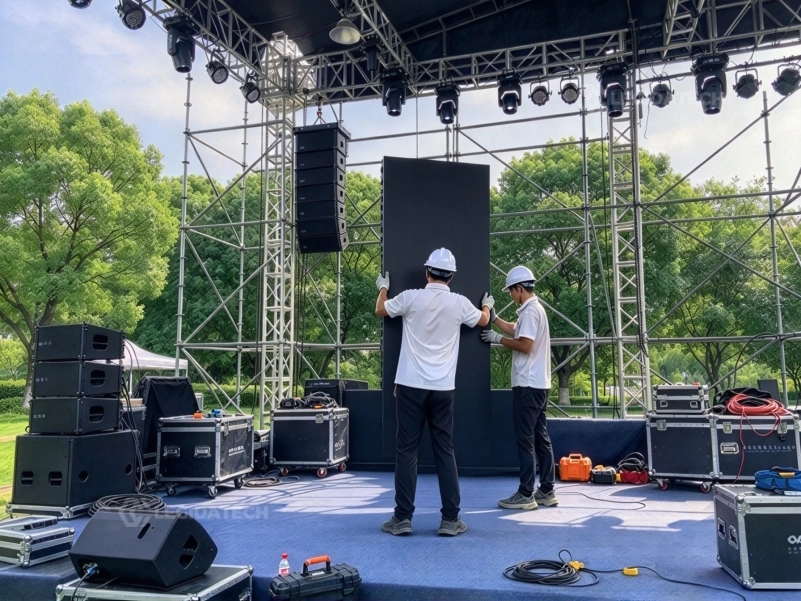
A half square metre per lift changes the shape of the whole build. A 12 m² backdrop closes in 24 cycles rather than 48, and the wall reaches full height while the lighting crew is still focusing. On a festival changeover that margin is the difference between a rehearsal and a guess.
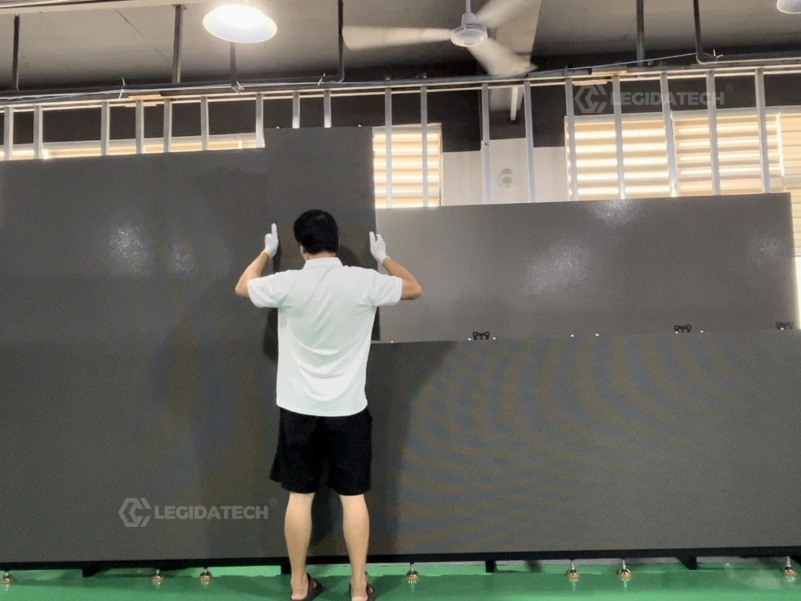
Crew is the largest variable line on any load-in budget. Fewer units to place, fewer connectors to seat and fewer locks to check means the same wall clears with a smaller call — or the same call wraps earlier and stops costing overtime.
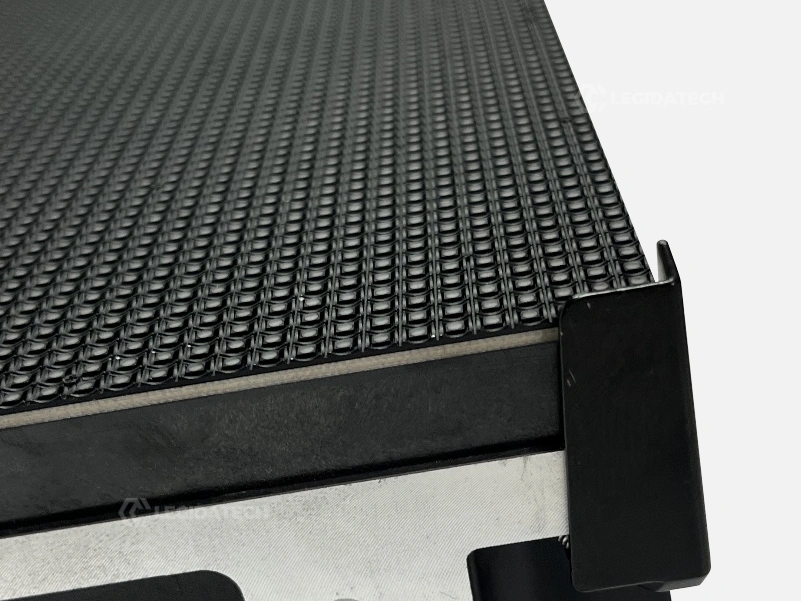
A touring cabinet spends far more hours in a case than on a wall. Corner guards on every edge and an anti-collision bump strip along the base absorb the rack handling and ramp scrapes that would otherwise reach the chassis — and at 14.5 kg the four red-grip handles keep it controllable while it happens.
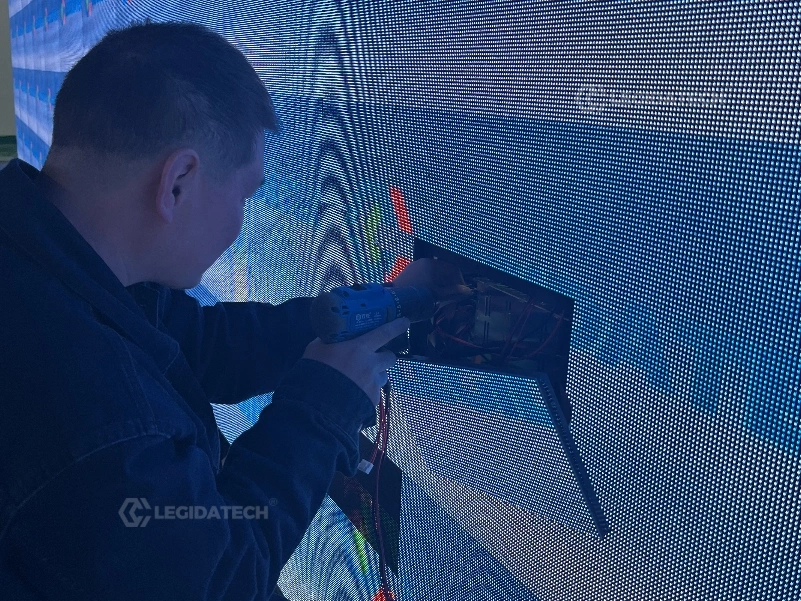
Backdrops get pushed hard against scenery, drapes and venue walls, and nobody leaves a service corridor by accident. Front and rear maintenance is standard on every cabinet, so a module swap happens from the audience side with the screen still standing — and the integrated power box and receiving card come out as one unit from behind when there is room.
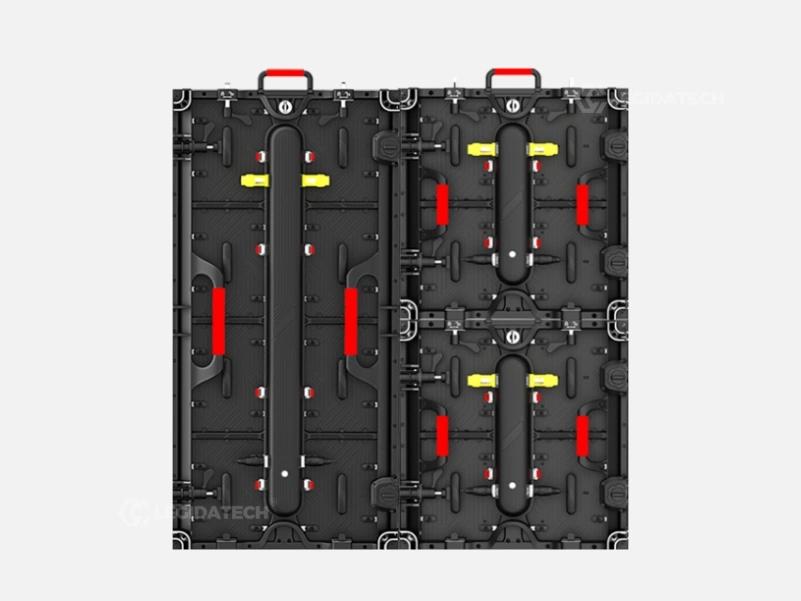
The AF1000 interlocks vertically with the AF500 500x500mm cabinet, and the two share modules, locks, handles and power boxes. Two chassis, one parts bin — which is the difference between running a fleet and running a warehouse problem.
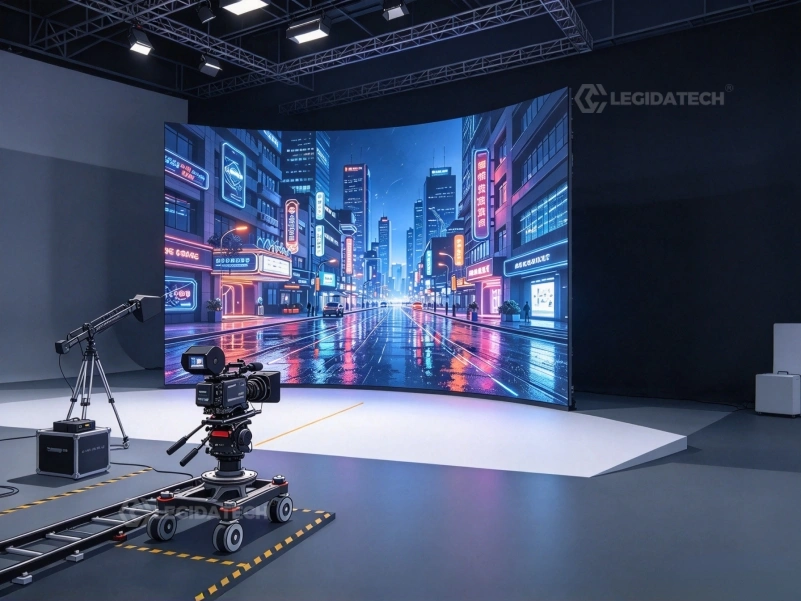
The crowd sees the wall. The broadcast audience sees it through a shutter, and that is where low refresh rates reveal themselves. 3840–7680 Hz with 15000:1 contrast and 12–16 bit gray scale keeps festival IMAG, delay screens and livestream outputs clean.
Outdoor peak is 800 W/m², which is the number that sizes the breaker, while average draw sits at 200–300 W/m². The AC90-264V input range means generator sag and venue fluctuation do not take the screen down with them.
Outdoor builds seal to IP65 on both the crowd-facing surface and the rear cabinet, so rain from the front and hose-down from behind are equally handled. Rated -20 to 60 °C and 10–85% RH for the sites that run in every season.
500x1000mm vs 500x500mm: Which Cabinet Earns Its Place in Your Fleet?
Both cabinets run the same platform, the same module size and the same parts bin. So the decision is not about quality or compatibility — it is about which one your booking calendar rewards. Frame it as build throughput against shape flexibility.
| Factor | AF1000 (500×1000 mm) | AF500 (500×500 mm) |
| Cabinet weight | 14.5 kg | 8 kg |
| Module layout | 2 × 4 | 2 × 2 |
| Cabinets per 12 m² wall | 24 | 48 |
| Large wall build | Half the lift-and-lock cycles | Twice the placements |
| Joints across the image | Half the seams — cleaner picture | More joints |
| Shape flexibility | Wide backdrops, long sweeps | Columns, totems, odd aspect ratios |
| Indoor pitch range | P2.976 – P4.81 | P1.25 – P4.81, GOB on fine pitch |
| Interlock | AF1000 stacks vertically with AF500 on the same frame — both sizes can share one wall | |
The rule we give rental houses: festival backdrops, wide IMAG walls and anything built against a clock go 500 × 1000 mm. Creative shapes, small screens and fine indoor pitch work stay on the 500 × 500 mm cabinet. Very few operators pick one and refuse the other, because carrying both costs one chassis type and no extra spares.
The most common configuration we ship is a mixed wall: a wide field of AF1000 panels doing the bulk of the area, with AF500 500x500mm cabinets closing the column, the doorway return or the edge the grid does not divide evenly into. One frame, one parts bin, two formats.
Full specifications for the smaller cabinet live on the AF500 rental LED display page.
Five Outdoor Pitches, Three Indoor — Picking the Right One
The chassis does not change between an indoor and an outdoor AF1000. What changes is the lamp, the sealing and the brightness — and therefore which rooms the cabinet is allowed into.
That last point matters more than it reads. The AF1000 indoor range starts at P2.976, which covers most arena and exhibition work but not camera-close conference sets. Rather than push the half-panel chassis into pitches it was never designed for, the fine indoor range runs on the 500 × 500 mm cabinet — same fleet, same parts bin, same crew.
Fixed-install counterparts at these pitches are documented in our outdoor rental LED display and indoor rental LED screen collections.
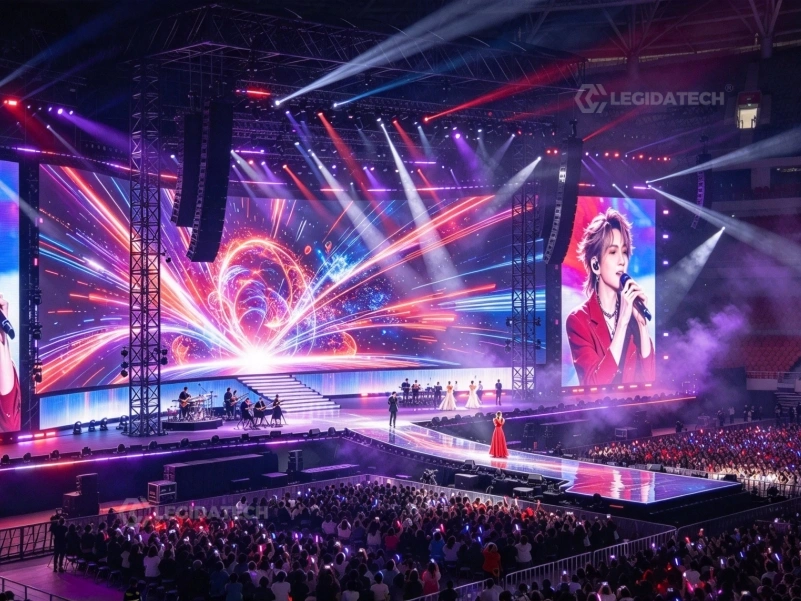
Redundancy for Keynote and Broadcast Walls
A concert audience will forgive a flicker. A keynote, a studio recording or an XR volume will not — the screen is in shot continuously and there is no second take. For those indoor builds the AF1000 can be specified with redundancy inside the cabinet, so a failure is absorbed before anyone in the room sees it.
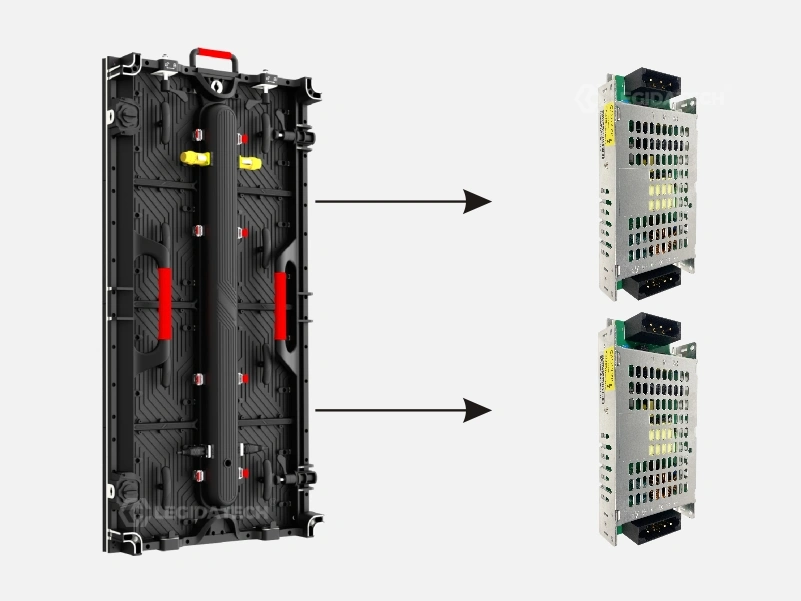
Two supplies carry the cabinet load in parallel. If one unit drops out, the other absorbs the whole load and the wall keeps showing picture — no black frame, no restart cycle. The failed unit is replaced at the next service window, not in front of an audience.
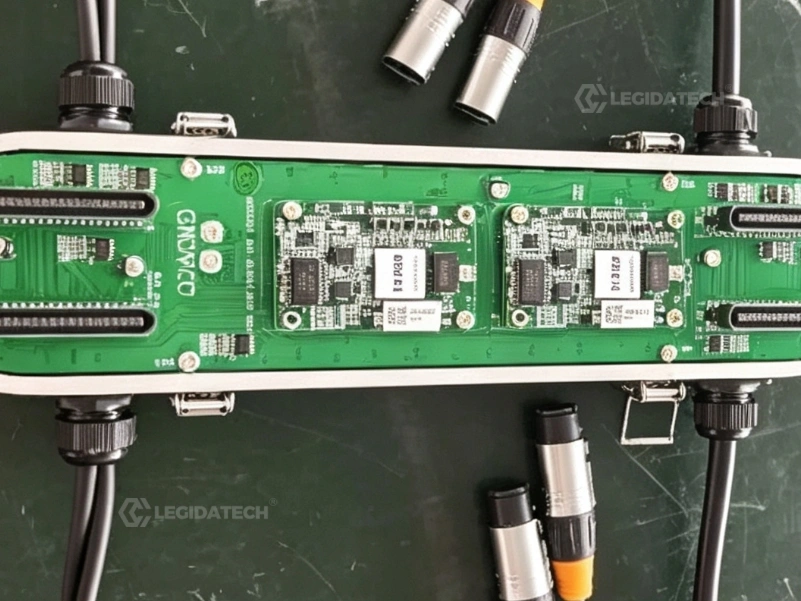
A second receiving card carries the same data as the first. Should the primary card or its cabling give out, the spare completes the circuit and the chain carries on. The changeover happens behind the picture, not on it.
Both options are specified at order time — add “dual power supply + dual receiving card backup, indoor build” to your enquiry and the components are itemised separately in the quotation. On a wall carrying a keynote or a studio calendar, the premium is small next to the cost of one abandoned session.
Where the AF1000 Wins the Booking
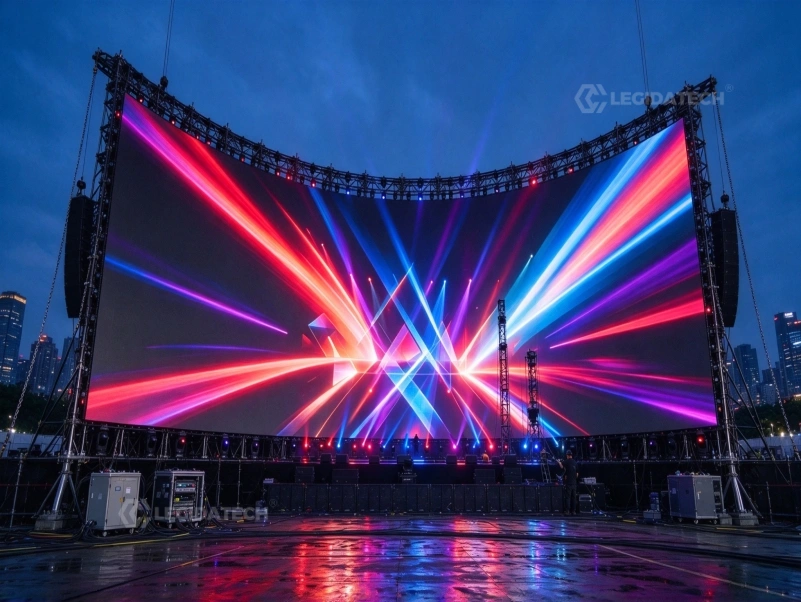
P3.91 to P5.95 outdoor builds: 24 cabinets per 12 m², IP65 front and rear, 5000 nits against the sun. The format that gets a main wall standing before the gates open.
IMAG side walls and delay towers, packed to suit the half-panel footprint. Four handles per cabinet keep load-outs quick across a long tour.
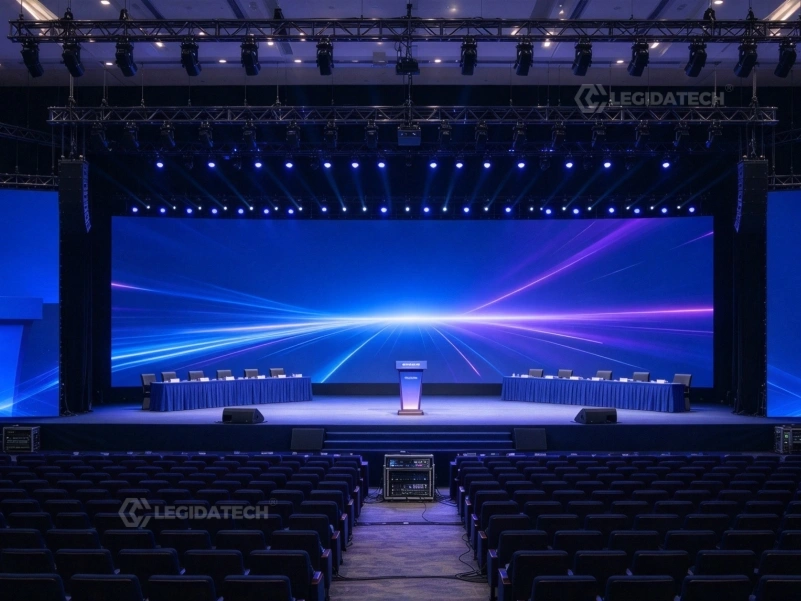
P2.976 to P4.81 indoor builds for keynote backdrops in rooms that turn around in hours rather than days.
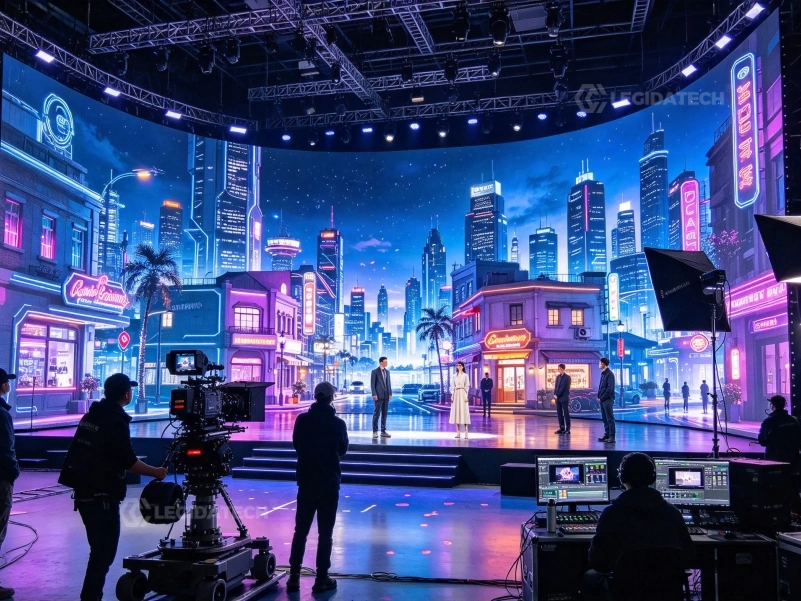
7680 Hz refresh and 15000:1 contrast hold camera-close shots clean, and long AF1000 sweeps form the floor of a virtual production cove.
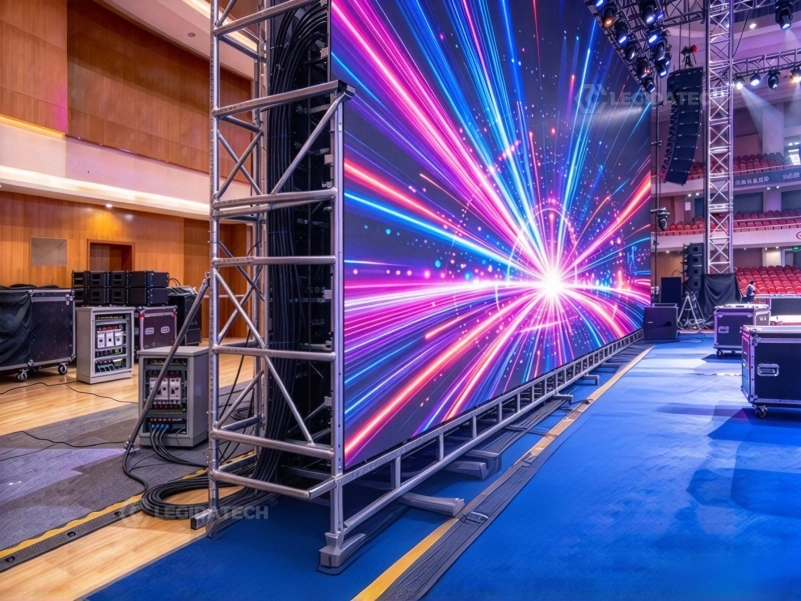
Who Is the AF1000 Built For?
The AF1000 was built for buyers whose profit lives in big walls: fewer cabinets per square meter, fewer truck miles, fewer crew hours. If that is your business, this is your cabinet.
You run an AV rental company. Utilization is your whole business model. The AF1000 covers 12 m² with 24 cabinets — roughly half the truck space and build hours of a 500×500 wall — so the same crew bills more walls per week and the payback lands sooner.
You produce festivals and tours. Your main wall has to stand before the gates open, every week, in every city. IP65 front and rear, 5000 nits against the sun and four handles per cabinet turn a long summer routing into routine load-outs.
You run media or city events. Countdown screens, market walls and fan zones that run all day, every day of the event window — then pack into one truck for the next city, with freight costs you can predict before you quote.
You produce corporate keynotes and conferences. Ballroom wides pre-built and rigged in hours, not days: seamless 500×1000 sweeps, P2.976–P4.81 indoor pitches, front service from the aisle, and dual backup for the twenty minutes that cannot blink.
You are a distributor. One container covers both cabinet sizes your local rental market asks for: the AF500 and AF1000 share modules, lock points and spares, so you stock one parts room for the whole family.
See your business here?
Send us your season calendar and wall sizes — we will come back with a fleet configuration, a truck-pack plan and a spares ratio.
Where the AF1000 Wins Across Europe and North America
Big walls are won where festivals, stadiums and city events run on tight build windows and tighter freight budgets. These are the markets where AF1000 fleets earn the most:
United States — festival circuit & arena touring. Spring-to-fall main stages and IMAG side walls: 5000-nit IP65 backdrops standing before the gates open, half-panel truck packs moving city to city on a weekly routing.
UK & mainland Europe — summer festival season (Jun–Sep). One truck carries more wall per crossing. Fewer ferry miles and fewer crew nights per square meter is precisely why European touring production buys 500×1000.
Germany & France — Christmas & New Year city events (Nov–Jan). Countdown walls running all day outdoors: IP65 front and rear, quiet-hours load-in and all-day reliability for the night the city is watching.
Las Vegas & Orlando — convention main stages. Keynote wides on hour-scale turnarounds: pre-built sweeps rigged straight into the ballroom, front service from the aisle and dual backup on show days.
Stadium fan zones — US & Europe. 5000 nits against the sun, ground-support friendly weight and arc-lock re-leveling for screens that move between venues all season.
Send us the tour or season calendar — we will price the fleet, the cases and the spares to run it, factory-direct.
Curved Builds with a Half-Panel Cabinet
Yes, the AF1000 curves — the same half-arc lock sits in every seam and steps through -5°, -2.5°, 0°, +2.5° and +5°. But be honest about what the half-panel format is good at, because it is not the same thing the 500 × 500 mm cabinet is good at.
A 1000 mm wide cabinet covers twice the arc per joint, so a long, gentle sweep — a wide concave backdrop, a large-radius wrap — needs fewer cabinets and fewer angle steps than a 500 × 500 mm wall of the same radius. That is a genuine advantage on big curved stage walls.
Where it stops being the right tool is tight radii. Columns, totems and small-radius coves need fine angle resolution, and there the 500 × 500 mm cabinet wins. Because the two sizes interlock vertically on the same frame, the practical answer is a mixed wall: AF1000 handling the wide sweep, AF500 closing the tight corner.
Beyond curves, the same cabinet supports lifting and rigging, ground stacking on seat mounts, cylindrical builds and right-angle corners — and converts back to a flat wall with the same hardware, so the angle setting costs you nothing when the brief changes.
AF1000 Series Specifications — 500x1000mm Rental LED Display
Every AF1000 cabinet is 500 × 1000 × 84 mm die-cast aluminum, maintainable from front and rear, and 14.5 kg with modules fitted. Five outdoor pitches run P2.604 to P5.95; the indoor chassis carries P2.976, P3.91 and P4.81.
Outdoor versions — P2.604 to P5.95
| Parameter | P2.604 | P2.976 | P3.91 | P4.81 | P5.95 |
| LED type | SMD1415 | SMD1415 | SMD1921 | SMD1921 | SMD2727 |
| Density (dot/m²) | 147,456 | 112,896 | 65,536 | 43,264 | 28,224 |
| Module resolution | 96×96 | 84×84 | 64×64 | 52×52 | 42×42 |
| Cabinet resolution | 192×384 | 168×336 | 128×256 | 104×208 | 84×168 |
| Brightness (nits) | ≥4500 | ≥4500 | ≥5000 | ≥5000 | ≥5000 |
| Viewing distance (m) | 3-50 | 3-100 | 4-150 | 4-150 | 6-200 |
| Scan mode | 1/32 | 1/28 | 1/16 | 1/13 | 1/7 |
| Shared across all five outdoor pitches: cabinet size 500×1000×84 mm | module size 250×250 mm | module quantity 2×4 | weight 14.5 kg | die-cast aluminum | front & rear maintenance | colour temperature 5000-12000 K optional | viewing angle 160°/160° | contrast 15000:1 | frame frequency 50/60 Hz | gray scale 12-16 bit optional | refresh 3840-7680 Hz | max / average power 800 / 200-300 W/m² | IP65 front & rear | |||||
Indoor versions — P2.976 to P4.81
| Parameter | P2.976 | P3.91 | P4.81 |
| LED type | SMD1515 | SMD2020 | SMD2020 |
| Density (dot/m²) | 112,896 | 65,536 | 43,264 |
| Cabinet resolution | 168×336 | 128×256 | 104×208 |
| Brightness (nits) | ≥800 | ≥1000 | ≥1000 |
| Viewing distance (m) | 6-200 | 6-200 | 4-100 |
| Scan mode | 1/28 | 1/16 | 1/13 |
| Shared across all three indoor pitches: contrast 15000:1 | gray scale 12-16 bit optional | refresh 3840-7680 Hz | max / average power 600 / 200-300 W/m² | IP31 | front & rear maintenance | |||
Need finer indoor pitch? P1.25–P2.604 with GOB coating runs on the 500 × 500 mm chassis in the same fleet — see the AF500 series.
Operating conditions and standards: power input AC90-264V, 47-63 Hz | working temperature -20 to 60 °C | humidity 10-85% RH | CCC / CE / RoHS / FCC / CB / TUV / IEC. These figures are pre-production references and can change as the product iterates — confirm the final datasheet against your order before signing.
Power, Trucks and the Cost of Running a 500x1000mm Wall
Electrically the AF1000 behaves exactly like the 500 × 500 mm platform: 200–300 W/m² average, 800 W/m² outdoor peak, 600 W/m² indoor peak. What changes is the fleet arithmetic around it — with fewer cabinets per square metre there are fewer power jumpers and signal runs, and a shorter chain for each supply to feed.
| Screen size | Average draw | Peak draw |
| 24 m² stage backdrop | 5-7 kW | 19 kW |
| 50 m² festival wall | 10-15 kW | 40 kW |
| 100 m² festival build | 20-30 kW | 80 kW |
Sizing note: specify the feed against peak draw — that is what the breaker sees. The 40 kW peak of a 50 m² festival wall sits inside a 63 A three-phase supply with headroom. Average = 200-300 W/m²; peak = 800 W/m² outdoor, 600 W/m² indoor.
Three fleet economics specific to the 500 × 1000 mm size class:
Factory and QC Behind Every AF1000 Cabinet
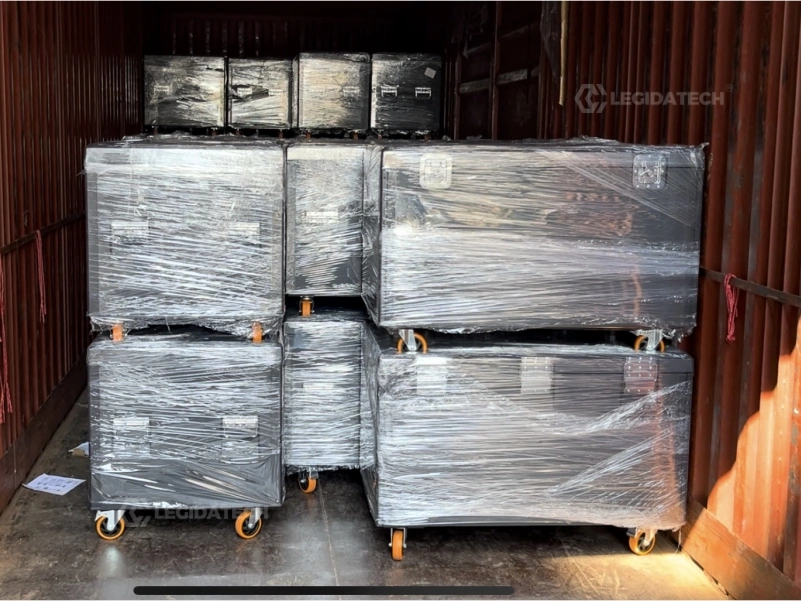
Nothing is boxed before it has been run. Cabinets burn in through powered cycles so a weak lamp, a marginal driver or a loose connector surfaces here rather than at hour forty of a three-day festival.
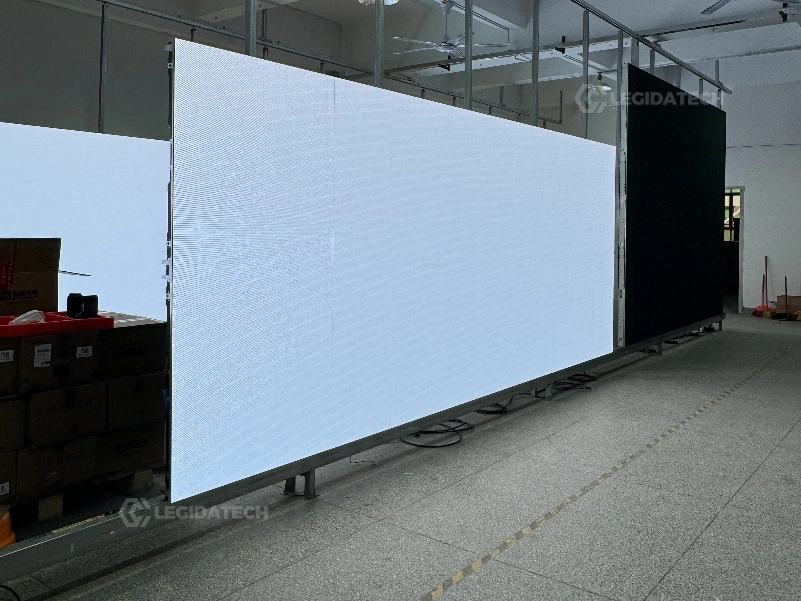
Brightness and colour are then calibrated batch by batch. That test matters most on the largest walls: a 24-cabinet backdrop has no room to hide a cabinet that came off a different production lot at a slightly different white point.
Because we are the factory, orders go out direct, with OEM and ODM work available. Branding, case layout, spares holding and pitch mix are configured fleet by fleet instead of being fixed by a catalogue. Every shipment leaves with its certification pack — CCC, CE, RoHS, FCC, CB and TUV test reports, which clears EU and North American rental tenders without re-testing.
More on our operation: factory | certification | about us.
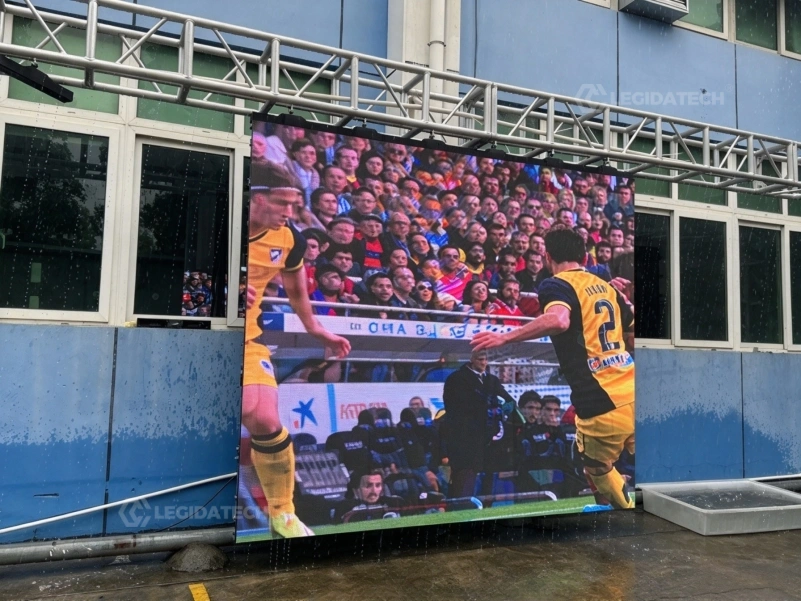
500x1000mm Rental LED Display Price
As a broad planning figure, factory-direct AF1000 cabinets land at roughly USD 550 to 1,300+ per m² depending on pixel pitch, brightness and driver ICs — the coarse outdoor pitches sit at the bottom of that band, the finer indoor pitches at the top. Send your screen size and pitch for an exact quote.
Note what this figure is not saying. The AF1000 is not sold as a cheaper screen — the per-square-metre price sits in a similar band to the 500x500mm format. What you buy with it is throughput: half the cabinets, half the lock cycles, half the seams and half the case count for the same wall. On a busy calendar that is where the money is, not in the unit price.
You will see lower numbers advertised elsewhere. Those listings generally buy generic stock — no batch calibration, no aging report, no certification pack. The AF1000 is quoted against your actual pitch mix, quantity and accessory list, and at like-for-like specification factory-direct pricing is normally the sharper of the two.
Tell us the screen size, the venue type and your pitch preference, and the quote comes back line by line — panels, spare modules, cards, power supplies, cases and the accessory list. As the LED screen manufacturer, we build that bill of materials ourselves rather than assembling it from third-party stock.
P2.976-P4.81 indoor, single-phase power, one truck pack.
P3.91-P4.81, mixed AF1000 and AF500 walls, rigging specification.
P3.91-P5.95 outdoor, IP65, flight-case fleet pricing.
To get an AF1000 fleet quote, email legidatechled@gmail.com or message WhatsApp +86-191-18802497 with your screen size and pitch — or open the form below. For budget context across the wider catalogue, see our LED screen price guide.
500x1000mm Rental LED Display FAQ
As a broad planning band, factory-direct AF1000 cabinets run roughly USD 550 to 1,300+ per m², moving with pixel pitch, brightness and driver ICs. The per-square-metre price is close to the 500x500mm format — the saving comes from needing half as many cabinets, not from a cheaper panel.
14.5 kg for the 500 × 1000 × 84 mm cabinet with modules in. Four red-grip handles let both hands control the lift, and the travel fast lock still closes with one — so a single technician can place a cabinet on a ground stack or rigging line, with pairs simply moving faster.
Speed and image continuity. One cabinet replaces two of the 500 × 500 mm units, which cuts a wall’s placements, joints and connector checks by half. What the smaller cabinet keeps is creative range — columns, totems, tight radii and fine indoor pitch.
Eight on one 500 × 1000 mm chassis. Five outdoor: P2.604, P2.976, P3.91, P4.81 and P5.95. Three indoor: P2.976, P3.91 and P4.81. Anything finer indoors — P1.25 to P2.604, with GOB coating — is carried by the AF500 within the same fleet.
Yes. The 500 × 1000 mm cabinet interlocks vertically with the 500 × 500 mm cabinet on the same support frame, and the two share modules, locks, handles and power boxes. One inventory serves both formats — two chassis types, one parts bin.
Yes. Outdoor builds seal to IP65 on the front face and the rear cabinet both, so driving rain from the crowd side and hose-down from behind are equally handled.
A quarter-turn releases any module from the front. Where there is space behind the wall the integrated power box and card can also be reached from the rear — but front access on its own is enough for a wall that sits against a set.
A camera shutter samples the wall in slices, and a slow refresh leaves banding in every slice. At 3840-7680 Hz with 15000:1 contrast and 12-16 bit gray scale, the picture holds for broadcast cameras, high-speed shots and livestream rigs — visible in the first take rather than in post.
Flight-case packing is built to your fleet specification. Cases are built to your fleet spec. A layer takes the 500 × 1000 mm cabinet without gaps, so a given wall area needs fewer cases, and the spares holding — panels, cards, power boxes — is set by how hard you run the stock. Give us your calendar and utilisation rate and the spares ratio comes back sized to them.
Scale Your Stage Inventory With the AF1000
Eight pitches on one 500 × 1000 mm chassis, 14.5 kg a cabinet, IP65 outdoor and IP31 indoor. Send us your wall size and pitch mix and we will come back with a fleet configuration, a spares ratio and a quote.
Related Rental LED Display Resources
Building a Rental Inventory Around the 500x1000mm Cabinet
A working guide for rental houses, production companies and staging suppliers deciding how the larger half-panel earns its place in a fleet — and where it does not.
1. Begin With the Show Calendar, Not the Catalogue
Before choosing a pitch, write down the shapes of the walls you were actually asked to build last season. Average width, average height, indoor or outdoor, and how far the audience sat. Those four numbers decide more of the specification than any product brochure.
A calendar dominated by wide stage backdrops and festival mains points at the 500 × 1000 mm cabinet immediately — the wall is mostly one large rectangle and every cabinet you do not have to lift is time returned to the crew. A calendar full of columns, product launches and corner builds points the other way. Most real fleets serve both, which is why the two sizes sit on one frame and share one parts bin.
A narrow use case for context: our own LED screen for stage guide covers how touring companies typically split stock between a main wall and a smaller utility wall.
2. What the Half-Panel Actually Changes On Site
Three things change the moment a wall is built from 500 × 1000 mm cabinets rather than 500 × 500 mm ones, and none of them is the picture quality.
The saving is a ratio, not a stopwatch. Whatever your crew’s pace on a given day, the larger cabinet needs half the lift-and-lock cycles for the same wall — how that converts into hours depends on the crew and the venue, and we would rather give you the ratio than invent a minute count.
3. Pitch Strategy Across a Mixed Fleet
The temptation is to buy one pitch that covers everything. In practice a rental fleet earns more from a deliberate spread, because pitch is the single biggest lever on both price and the bookings a wall can accept.
The AF1000 carries five outdoor pitches — P2.604, P2.976, P3.91, P4.81 and P5.95 — and three indoor — P2.976, P3.91 and P4.81. A useful split for most houses is a fine pitch for close-camera work and corporate stages, a mid pitch that will handle the majority of bookings, and a coarse pitch for the large outdoor walls where viewing distances are long and unit cost matters most. Finer indoor work below P2.604 stays with the AF500, which keeps the whole spread on one parts bin.
4. Parts Commonality Is the Margin Line
This is the part that does not appear in a specification sheet and does show up in the accounts. Two chassis that draw on the same panels, locks, handles, power boxes and cards mean a damaged item is covered from one shelf rather than two, and a pitch that stops earning can be rebuilt into a pitch that does.
The AF1000 and AF500 share that inventory and interlock vertically on the same support frame, so a wall can be assembled from both — the wide sweep in the larger cabinet, the tight corner in the smaller one. From the client side it is one screen. From the warehouse side it is one bin with two chassis SKUs.
5. Case Count, Truck Space and Storage
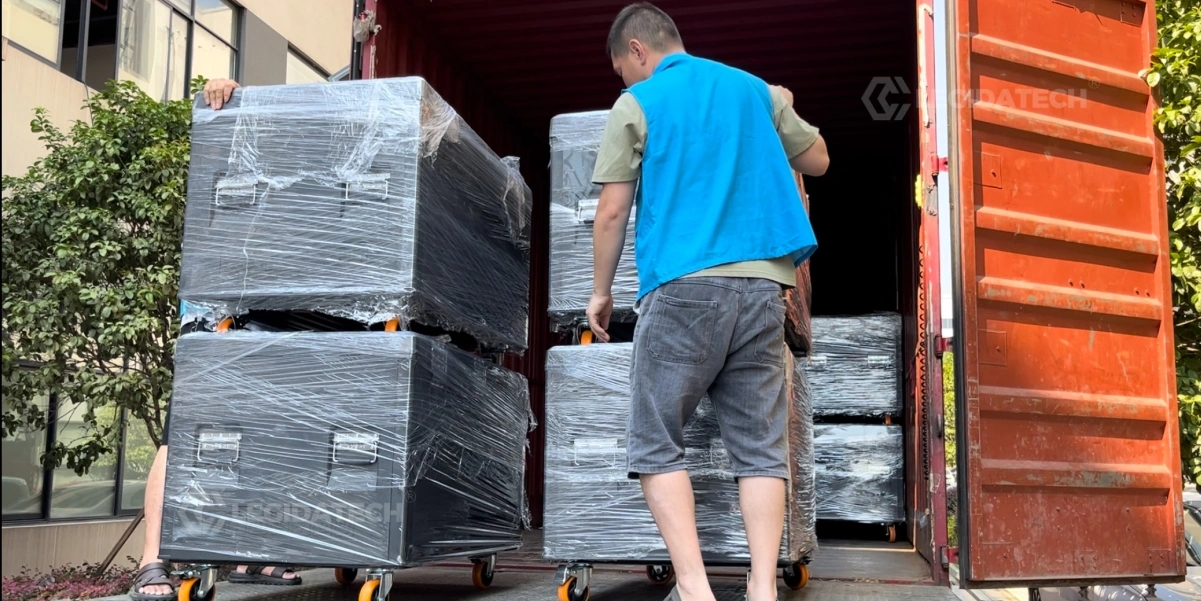
Transport is where a rental fleet quietly loses money. A 500 × 1000 cabinet sits flush in a case layer, so a given wall area needs fewer cases than the same area of 500 × 500 stock. Fewer cases means fewer truck movements, less warehouse floor, and less handling every time the kit goes out and comes back.
When you plan storage, plan the case as the unit rather than the cabinet. Work out how many cases a season’s typical show consumes, then how many the warehouse can stack and retrieve without a forklift reshuffle. That number, not the panel count, usually sets how large a fleet you can actually operate.
6. The Spares Ratio That Survives a Season
A fleet without spares is a fleet that cannot finish a tour. The ratio should follow utilisation — how many shows a year, how far the kit travels, how many different crews handle it — rather than a fixed percentage copied from a supplier’s page.
As a starting conversation, houses running heavy calendars commonly hold a few percent of modules as spares, one card and one power box for every ten cabinets, and a complete spare cabinet for every fifty. Tell us your calendar and utilisation rate and we will propose a ratio sized to it rather than to a default.
7. Power, Control and the Feed Conversation
Bring the venue’s electrician into the conversation at quotation stage, not at load-in. Outdoor cabinets draw 800 W/m² peak and indoor cabinets 600 W/m², with average draw at 200–300 W/m² either way. For sizing, the breaker sees the peak — a 50 m² festival wall peaks at 40 kW, which sits inside a 63 A three-phase supply with headroom.
On the control side, plan the sender and receiving-card map against the wall’s final dimensions before the truck is loaded, and check the spare-port count on the sending card. A wall that grows on site is a wall that needs another port. Our LED display control system guide covers mapping and redundancy for large builds. For signal resilience on broadcast-critical shows, the AF1000 supports dual power supplies and dual receiving cards — see the redundancy section above.
8. A Pre-Purchase Checklist for a 500 × 1000 mm Buy
Work through these eight before you sign anything:
If all eight come back clean, the specification is sound. If any answer is vague, that is the question to take back to the supplier before the order, not after the first show.
Next step: send us the wall sizes on your calendar and your preferred pitch mix. We will come back with an AF1000 fleet configuration, a spares ratio and an itemised quote — cabinets, modules, receiving cards, power supplies, flight cases and spares.