MIP vs COB vs SMD: Which LED Packaging Technology Is Right for Your Project (2026)
If you have specified an LED display in the last year, you have seen three acronyms competing for the same line item: SMD, COB, and now MIP. The confusion is expensive, because the 2026 market split them into different jobs — after ISLE 2026, the industry consensus is that SMD is no longer the recommended architecture for indoor fine-pitch below P2.0, while COB and MIP push toward pitches that were laboratory material two years ago (DOIT VISION, 2026). This guide defines each packaging route, compares them on the specifications that survive real installations, maps nine use cases to the right technology, and closes with the cost and maintenance math. The COB side comes from our own production line — we build COB and HOB modules at P1.25, P1.56 and P2.6 — and every competitor figure carries its source.
Short answer: For indoor fine-pitch in 2026, choose between COB and MIP — SMD stays for outdoor billboards, rental stages and P1.5+ budget signage. COB wins on durability (5H epoxy surface, IP54, ~0.2 dead pixels per 10,000 at 12 months) and now often prices below SMD at P1.2 and below; MIP wins on repairability (pixel-unit swaps), 7,680 Hz refresh and HDR headroom (HDR10, BT.2020). Both reach P0.4; COB faces yield difficulty below P0.6, while MIP’s chip-level route targets mass production in 2027–2028 (DOIT VISION, 2026; UHLED, 2026). Pick by environment and service model, not by acronym.
What Is MIP, COB and SMD in LED Displays?
Each name describes a different step in how an LED pixel gets from chip to screen, and that manufacturing difference drives everything downstream.
SMD (surface-mount device) packaging places each fully assembled LED lamp — three chips pre-molded into one plastic cup with wire bonds — onto the printed circuit board by pick-and-place. The lamp cup stays exposed on the front of the module, which is why SMD pixels read as discrete dots up close and why a knock can pop a lamp off the pad. It is the packaging behind most of the world’s outdoor billboards and rental fleets, and it remains the only route that supports individual lamp replacement in the field. For the packaging routes that predate MIP, our DIP, SMD, and COB packaging comparison covers the older generations.
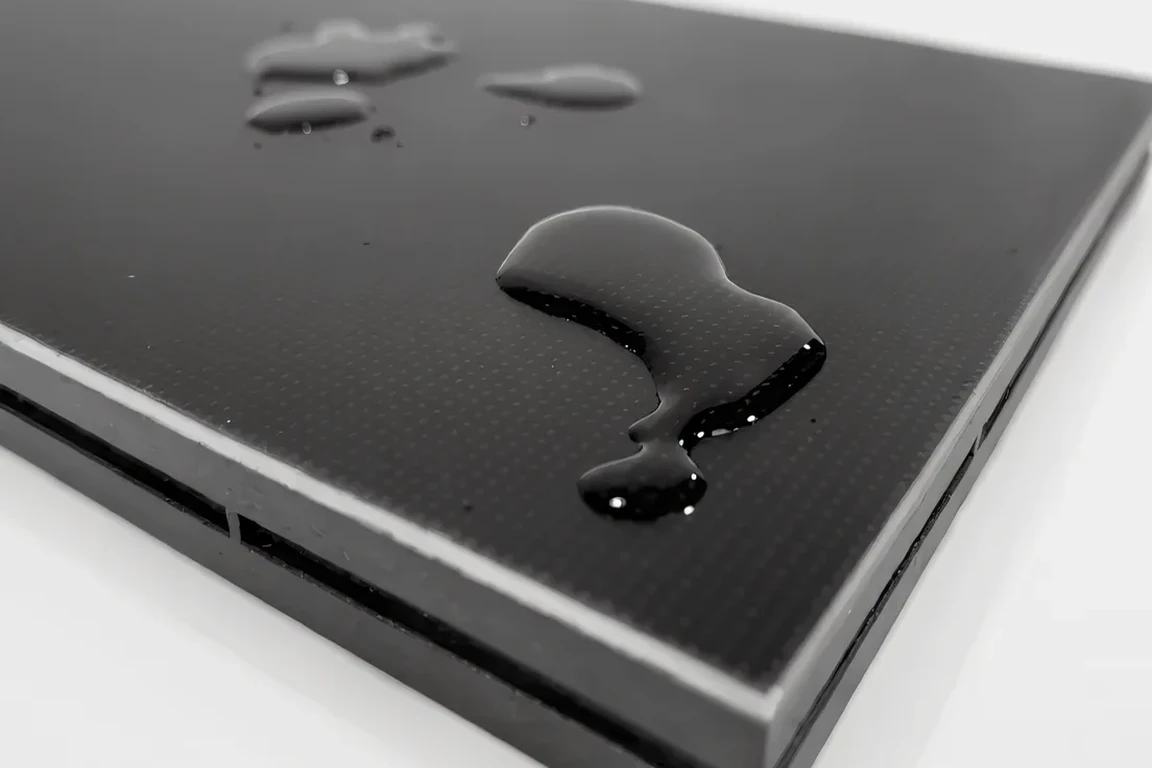
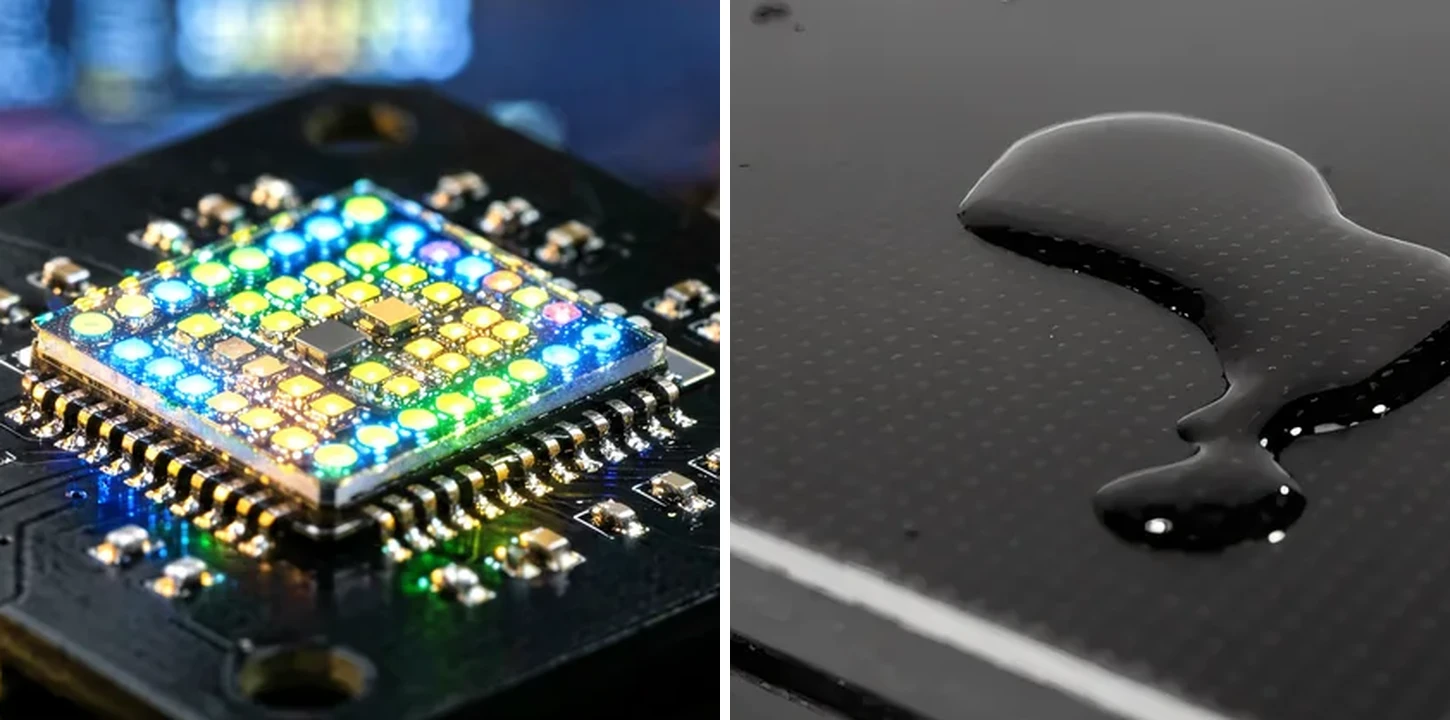
COB (chip-on-board) packaging mounts bare LED chips directly onto the PCB, then encapsulates the whole array under one epoxy or silicon layer. There are no lamp cups, no wire-bond loops exposed to air, and no per-pixel housing — the module front is a single sealed surface rated 5H hardness and IP54 (DOIT VISION, 2026). That construction is why our own COB LED display modules at P1.25, P1.56 and P2.6 tolerate touching, wiping and semi-outdoor dust that would end an SMD wall’s warranty.
MIP (Micro LED in Package) transfers micro-scale LED chips into individual miniature packages on a dedicated line, tests and bins each one, then assembles those units onto the module by SMT — essentially marrying Micro LED’s chip scale to existing surface-mount infrastructure (DOIT VISION, 2026). Because every package is inspected before placement, module-level quality control improves; because the packages are discrete, pixel-unit repair becomes possible. Industry statements collected after ISLE 2026 mark the route’s direction: Leyard notes MiP encapsulates chips below 60 µm where COB typically handles above 100 µm, Absen points out MIP reuses SMD production lines and cuts asset investment, and Unilumin stresses that only a few manufacturers have reached MIP mass production (via DOIT VISION, 2026).
How Do MIP, COB and SMD Compare on Specifications?
The numbers below consolidate 2026 manufacturer and market data (DOIT VISION, 2026), with IMD included for completeness:
| Specification | COB / Micro COB | MIP (2026) | SMD | IMD (N-in-1) |
|---|---|---|---|---|
| Minimum pixel pitch | P0.4 (commercial) | P0.4 (emerging) | P1.2 (practical limit) | P0.4–P0.9 |
| Surface hardness | 5H epoxy | 3H–4H | 1H–2H (exposed beads) | 3H–4H |
| Front protection | IP54 | IP54 | IP33 | IP43 |
| Max refresh rate | 3,840 Hz std (7,680 available) | 7,680 Hz standard | 1,920–3,840 Hz | 3,840 Hz |
| Contrast ratio | 10,000:1+ | 10,000:1+ | 3,000–5,000:1 | 8,000:1+ |
| Energy vs SMD | ~40% lower | ~35% lower | Baseline | ~30% lower |
| Field repair | Module-level swap | Pixel-unit level* | Individual lamp bead | Module-level |
| Dead pixels (12 mo) | ~0.2 / 10,000 | ~0.3 / 10,000 | ~1.8 / 10,000 | ~0.5 / 10,000 |
| HDR / color | BT.709 standard | HDR10, BT.2020 | BT.709 standard | BT.709 |
*Pixel-unit MIP repair requires transfer tooling that few field service teams carry today — plan it as a depot capability, not a ladder-and-screwdriver job.
Three key differences behind that table:
- Protection is structural, not cosmetic. COB’s single encapsulated surface removes the exposed lamp cup — the SMD failure point that moisture, dust and cleaning cloths attack first. For the one-on-one contrast, our SMD vs COB differences analysis isolates the protection and repair trade-offs.
- Refresh and HDR split the studio market. MIP’s 7,680 Hz standard refresh and BT.2020 headroom target camera-facing work; SMD’s 1,920–3,840 Hz range was tuned for live audiences, not lenses.
- Repair granularity trades against failure rate. SMD repairs one lamp; MIP repairs one package; COB swaps a module. COB needs repairs roughly nine times less often at 12 months (0.2 vs 1.8 per 10,000 — DOIT VISION, 2026), which is how the math closes.
Why Is SMD Losing Ground Below P2.0 in 2026?
The 2026 shift is visible on trade-show floors. After ISLE 2026, every major manufacturer — Unilumin, Leyard, Absen and the newer Shenzhen brands — gave premium floor space to COB and MIP, and SMD panels below P1.5 were absent from flagship presentations; the recorded working consensus is that SMD is no longer the recommended architecture for any indoor fine-pitch installation at P2.0 or below (DOIT VISION, 2026). The physics is simple: as pitch shrinks, the SMD lamp cup physically cannot shrink as fast as the pixel grid, so inter-pitch competition below P1.2 became a contest between bare-chip routes.
Our own earlier comparison of DIP, SMD and COB packaging pros and cons was written when SMD still contended for fine-pitch work; the 2026 update is structural — DIP holds outdoor long-throw, SMD holds outdoor and rental, and the indoor fine-pitch conversation is COB versus MIP. For the backlight cousin of this story, see our Mini LED vs Micro LED comparison.
MIP vs COB: Which Fine-Pitch Route Should You Choose?
Where Does COB Still Win?
Choose COB when the display lives in a demanding environment or a public one: control rooms running 24/7, corporate lobbies and boardrooms where visitors touch the wall, semi-outdoor interiors with dust and humidity, and any installation where service visits are costly. The sealed 5H surface, IP54 front and the lowest measured dead-pixel rate in the table are the reasons; the fine-pitch EDI small-spacing screens we build for exactly these rooms use it for that reason. Cost has stopped being a penalty — at P1.2 and below, COB panel prices have fallen below equivalent SMD products at several Chinese manufacturers (DOIT VISION, 2026). For the construction behind that surface, our COB LED display guide covers the packaging route in depth.
Where Does MIP Lead?
Choose MIP when the wall faces cameras or the spec sheet demands HDR: broadcast studios, virtual production volumes, premium showrooms and museum-grade installations. MIP’s standard 7,680 Hz refresh suppresses scan lines on camera, HDR10/BT.2020 color headroom serves grading suites, and package-level binned uniformity tightens low-gray behavior — the three specifications broadcast engineers actually test. It is also the nearer-term route below P0.6: COB yield becomes difficult under P0.6, while MIP’s discrete-package approach scales further, and chip-level MIP targeting below P0.4 is expected to reach mass production in 2027–2028 (DOIT VISION, 2026; UHLED, 2026). The same small-spacing pages that carry our COB builds — small pixel pitch LED screens for indoor use — show where each route lands on pitch and price today.
What About GOB and IMD?
Both are transitional answers worth naming. GOB (glue-on-board) is SMD with a transparent protective coat poured over exposed lamps — it buys durability at low cost but keeps the lamp-cup structure and its pitch limits. IMD (N-in-1) groups four or more SMD pixels into one package, partway between SMD and COB; it improves protection and density while keeping SMT lines, which is why it still ships at P0.4–P0.9 for cost-driven fine-pitch (DOIT VISION, 2026). Our HOB LED modules occupy the same protective niche for semi-outdoor builds. Neither matches COB’s encapsulation or MIP’s chip-scale ceiling, which is why the 2026 debate has narrowed to the two of them. Our GOB vs COB comparison maps where the two systems diverge.
Which LED Packaging Fits Your Use Case?
| Use case | Typical pitch | Recommended packaging | Why |
|---|---|---|---|
| Control room / NOC (24/7) | P0.9–P1.5 | COB | Lowest dead-pixel rate, sealed surface, cool running |
| Broadcast / virtual production | P1.2–P2.6 | MIP (COB at 7,680 Hz) | Camera-safe refresh, HDR10/BT.2020 |
| Corporate boardroom / lobby | P0.9–P1.5 | COB or MIP | Touch-tolerant surface, close viewing |
| Museum / luxury retail | P0.7–P1.2 | MIP | Ultra-fine pitch, color depth |
| Conference / all-in-one meeting display | P1.2–P1.8 | COB | Durability at high daily usage |
| Church / auditorium indoor | P1.5–P2.5 | SMD or COB | Budget decides; COB where cleaning contact is likely |
| Retail signage P1.5–P2.5 | P1.5–P2.5 | SMD (IMD optional) | Cost-effective at these pitches |
| Rental stage / events | P2.6–P3.9 | SMD | Lamp-level field repair, cabinet ecosystem |
| Outdoor billboard | P4–P10 | SMD / DIP | Long throw, brightness, proven weathering |
The pattern is a clean split at P2.0: below it, COB and MIP; above it, SMD. Projects that straddle the line — a semi-outdoor entrance wall, a shopping-mall atrium screen — should price both and weigh the service contract against the exposure. Operators running mixed fleets should also note the spare-parts consequence: an SMD rental stock and a COB fixed-install stock do not share spares, so standardize per environment rather than across the fleet, and carry the 2–3% module spares that match each batch’s binning.
What Do MIP and COB Mean for Cost and Maintenance?
Buy the failure rate, not the acronyms. Over twelve months, equivalent SMD walls record about 1.8 dead pixels per 10,000 against COB’s 0.2 and MIP’s 0.3 (DOIT VISION, 2026) — so a 10 m² P1.2 SMD wall can expect roughly nine times the pixel-failure service of a COB wall, and each SMD visit replaces lamps one by one on a wall that may sit four meters up. Maintenance planning follows the packaging: SMD wants spare lamps and a steady-hand technician; COB wants spare modules and 20 minutes of module swap, then recalibration; MIP wants a depot with transfer tooling for pixel-unit work.
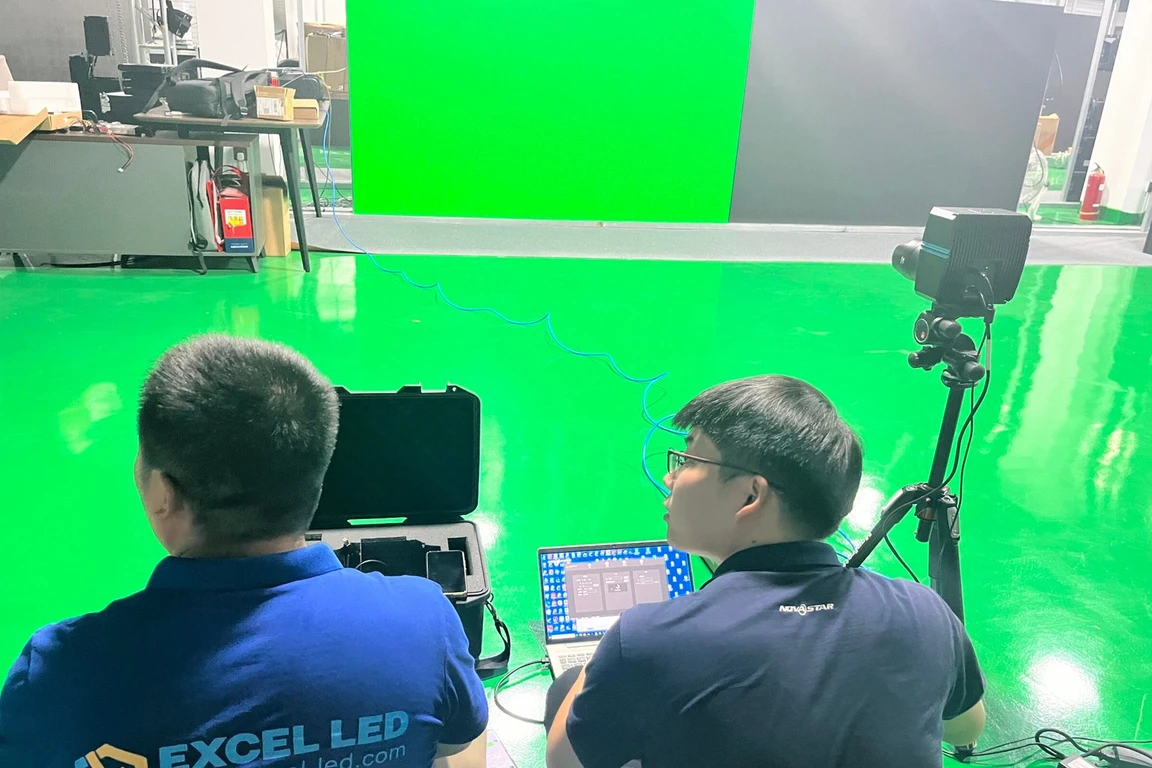
Calibration closes the loop for either fine-pitch route. Both videos below come from our COB calibration sessions — color and brightness uniformity tuning on a finished wall, the step that turns a good module into a matched display; the written walkthrough of one such install is our P1.5 COB calibration case study:
On cost: the historical premium has inverted at the fine end. COB at P1.2 and below now prices below equivalent SMD at several Chinese manufacturers (DOIT VISION, 2026), because COB removes the lamp-packaging step entirely; MIP still carries a premium for the dedicated packaging line, which industry statements expect to shrink as volumes rise through 2026–2027. Driver IC grade and common-cathode design move the numbers too — see our driver IC selection guide and the common-cathode energy-saving breakdown. Control-system compatibility is unchanged across all three packagings: the NovaStar and Colorlight ecosystems drive COB, MIP and SMD alike, with MIP’s full refresh ceiling needing higher-end sending hardware (our 2026 controller buying guide covers the matching).
If your shortlist has narrowed to a room and a pitch, send us the dimensions and viewing distance — request a COB module quote from the factory and we will spec the packaging by environment, not by trend.
MIP vs COB vs SMD: Frequently Asked Questions
What is MIP in LED displays?
MIP (Micro LED in Package) transfers micro-scale LED chips into individual miniature packages, tests and bins each one on a dedicated line, then mounts them by standard SMT. It combines Micro LED chip scale with SMD-style assembly — discrete packages, pixel-unit repair potential, 7,680 Hz standard refresh and HDR10/BT.2020 color (DOIT VISION, 2026).
Is COB better than SMD for indoor fine pitch?
Below P2.0, yes on every reliability measure: 5H hardness versus 1H–2H, IP54 versus IP33, 0.2 versus 1.8 dead pixels per 10,000 at 12 months, and — at P1.2 and below — often a lower panel price in 2026 (DOIT VISION, 2026). SMD keeps the advantage only where individual lamp repair and outdoor-grade brightness matter.
Is MIP better than COB?
Neither is universally better — they are parallel routes. MIP leads on repairability, standard 7,680 Hz refresh and ultra-fine pitch scaling below P0.6; COB leads on surface protection, measured 12-month failure rate and production maturity. Studios and museums lean MIP; control rooms and public lobbies lean COB.
Can COB LED displays be repaired in the field?
Yes, at module level: a technician swaps the affected module — typically a 200 mm square — with a screwdriver, then recalibrates. Because the failure rate is about 0.2 per 10,000 LEDs at 12 months (DOIT VISION, 2026), swaps are infrequent; keeping 2–3% spare modules covers most walls for years.
How much does a COB LED display cost compared to SMD?
At P1.2 and below, COB panels have fallen below equivalent SMD at several Chinese manufacturers (DOIT VISION, 2026). At P1.5–P2.6 the two overlap within grade differences, and MIP carries a premium that industry statements expect to narrow through 2026–2027. Compare quotes on lamp grade, IC and calibration scope, not on packaging alone.
Which packaging should I choose in 2026?
Apply the split: outdoor, rental and P1.5+ budget signage stay SMD; camera-facing walls and ultra-fine pitches go MIP; demanding or public indoor environments go COB. If a single rule helps — pick the packaging whose failure mode you are best equipped to service, then check the price at your exact pitch.
Conclusion: Packaging by Environment, Not by Trend
The 2026 market did not crown a single winner in MIP vs COB LED display debates — it drew a line at P2.0 and assigned each packaging the jobs it survives best. SMD keeps the outdoor and rental world, MIP takes the camera and the sub-P0.6 frontier, and COB owns the demanding indoor middle where failure rates and sealed surfaces decide total cost. Match the packaging to the environment, verify the spec table against the sources, and the acronym stops being a gamble.