


Stadium LED Display Price Overview
Stadium LED displays are one of the most important investments for sports venues. Prices vary depending on the size of the stadium, the pixel pitch, the brightness, and the installation complexity. Understanding these factors helps stadium owners and event organizers plan their budgets more accurately.
In general, stadium LED display prices can be divided into two main categories:
| Stadium Type | Typical Price Range | Notes |
|---|---|---|
| Small or standard stadium | $50,000–$200,000 | Suitable for community stadiums, small arenas, or basic outdoor displays |
| Medium to large stadium or professional events | $200,000–$1,000,000+ | High-definition screens for professional sports, concerts, or large events |
Key Factors Affecting Stadium LED Prices
The cost of an stadium LED display can vary widely. Several main factors determine the final price. Understanding these factors helps buyers plan their budget and choose the right screen for their stadium.
1. Screen Size
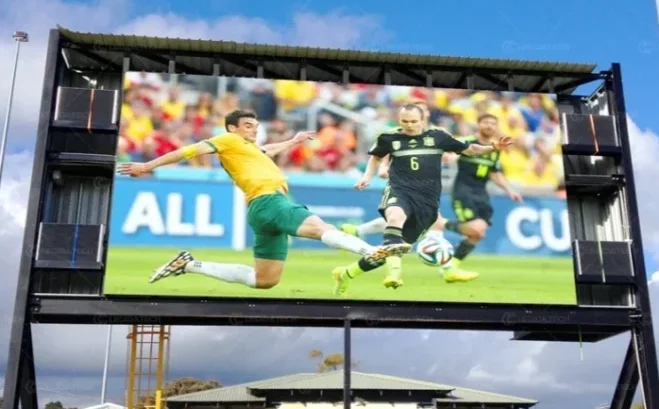
The larger the screen, the higher the price. A full perimeter LED display around a football stadium costs more than a basketball court ring screen. Large screens require more LED modules, frames, and power supply. Extra size also increases installation time and complexity.
2. Pixel Pitch
Pixel pitch is the distance between LED pixels. Common choices for stadiums are P4, P6, and P10.
-
Smaller pixel pitch gives higher resolution and clearer images.
-
Higher resolution screens cost more because they need more LED modules and more precise control.
3. Brightness and IP Rating
Brightness is critical for outdoor stadiums. Screens exposed to direct sunlight need very high brightness to remain visible. Indoor stadiums need less brightness.
IP rating measures protection against water and dust. Outdoor stadiums require higher IP ratings (IP65 or higher), which increase cost. Better protection ensures longer screen life and less maintenance.
4. Type of LED Display
There are different types of LED displays: SMD, DIP, and COB. Each has different brightness, clarity, and price.
Special designs, like 3D screens or curved displays, require custom modules and more advanced installation, which increases the price significantly.
5. Installation and Maintenance
High installation is complex and needs professional labor. Structural support, scaffolding, and transport add to the total cost.
Maintenance costs also vary. Easy-access modules and standard parts reduce long-term expenses.
6. Control System and Accessories
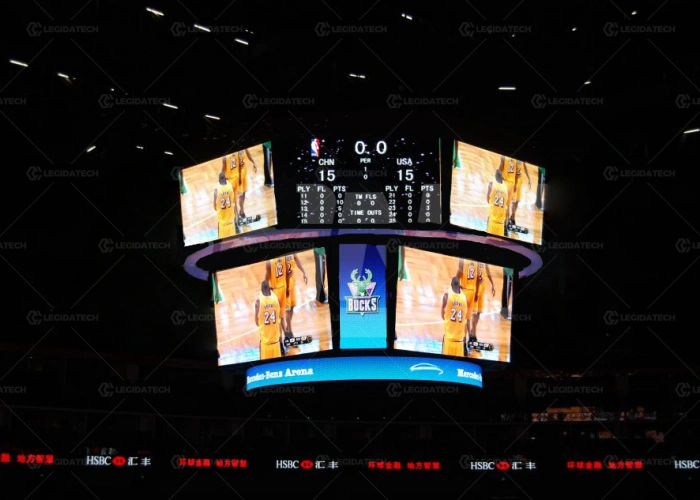
A complete stadium LED solution includes control cards, processors, video matrix, and software. Advanced software can synchronize scores, advertisements, and live feeds. High-end control systems and extra features increase the initial investment but improve performance.
Typical Price Examples by Stadium Type
Stadium LED display prices vary depending on the type of stadium, screen size, and resolution. The following examples show typical costs for different stadium categories. These estimates can help you plan budgets and compare with other LED display types.
| Stadium Type | Screen Type | Screen Area | Typical Price | Notes |
|---|---|---|---|---|
| Small or Community Stadium | P10 outdoor LED screen | ~200㎡ | $50,000–$80,000 | Suitable for local sports venues, small arenas, or basic outdoor displays |
| Medium Professional Stadium | P6 high-definition LED | 500 – 800㎡ | $150,000–$400,000 | Ideal for professional sports, mid-size concerts, or semi-outdoor events |
| Large International Stadium / High-Spec Events | P4 full HD LED | 1,000㎡+ | $500,000–$1,000,000+ | Used for top-level sports events, large concerts, and stadiums with high visibility requirements |
Notes:
-
Smaller pixel pitch (P4 vs. P6/P10) provides sharper images but increases cost.
-
Outdoor stadiums need higher brightness and IP ratings, which adds to the price.
-
Installation complexity, transport, and structural support also affect total cost.
These examples give a clear overview for stadium owners and event organizers. For comparison, you can check prices for other LED display types, including indoor or rental screens, to understand different budgets and applications.
Cost-Saving Tips & Investment Considerations
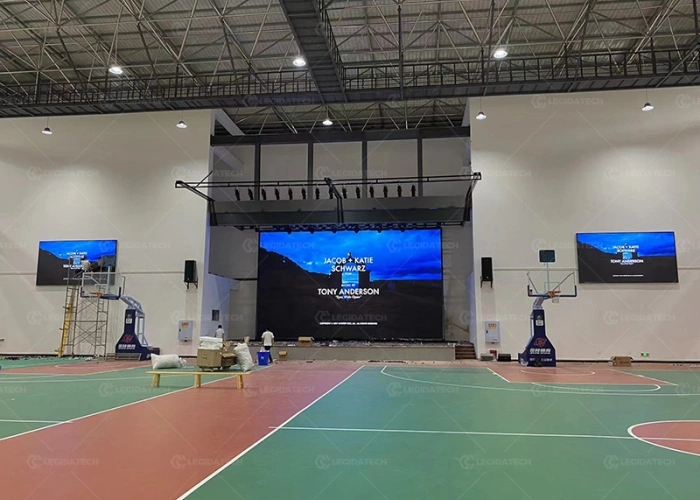
Investing in a stadium LED display is a significant decision. There are several ways to manage costs while ensuring high quality and long-term value.
Modular Design
Choosing a modular LED display allows future expansion or partial replacement. If a section of the screen is damaged or outdated, you can replace only that part instead of the entire display. Modular design reduces long-term maintenance costs and makes upgrades easier.
Lease vs. Purchase
For short-term events or seasonal use, renting a stadium LED display may be more cost-effective than purchasing. Rental displays provide flexibility without a large upfront investment. For long-term installations, buying is usually better. A permanent screen can be customized to meet stadium needs and generate revenue through advertising or event use. For rental solutions, you can refer to our Rental LED Display Price guide.
Choosing the Right Supplier
Selecting a reliable supplier is critical. Low-cost manufacturers may offer cheap options, but quality, durability, and support can be insufficient. Working with experienced and reputable suppliers ensures high-quality LED modules, reliable control systems, and professional installation. For comparison, you can also check Outdoor LED Screen Price to see standard pricing and quality benchmarks.
By considering modular design, rental vs. purchase options, and supplier reliability, stadium owners can make informed decisions, control costs, and ensure a long-lasting LED display investment.
Conclusion
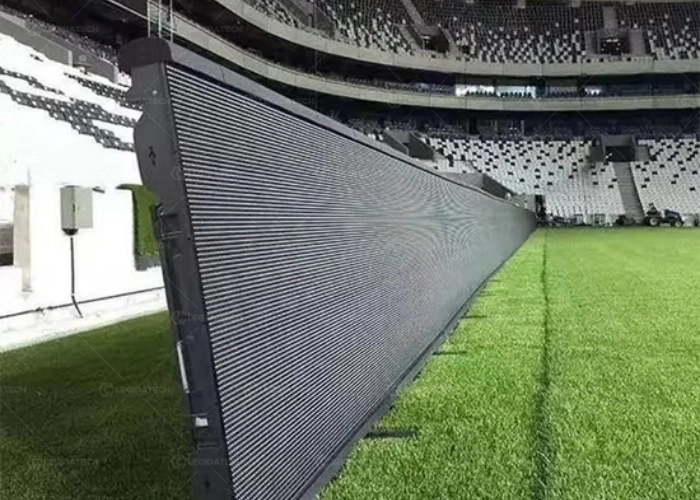
Stadium LED displays are a major investment, and prices vary widely depending on screen size, pixel pitch, brightness, installation complexity, and type of LED modules. Small community stadiums may cost around $50,000 to $80,000, medium professional stadiums typically range from $150,000 to $400,000, and large international stadiums or high-spec event venues can exceed $1,000,000.
Understanding the key factors that affect cost, such as screen size, resolution, brightness, IP rating, installation, and control system, helps stadium owners plan their budgets accurately. Modular designs, choosing between renting or buying, and selecting a reliable supplier can further optimize investment and reduce long-term costs.
For additional guidance and price comparisons, you can refer to our main page of LED display prices. By carefully evaluating your stadium needs and investment options, you can select the right LED display that delivers high performance, durability, and value for your events.
Frequently Asked Questions (FAQ)
Q1: What is the typical price range for a stadium LED display?
A1: Prices vary by stadium size and screen specifications. Small or community stadiums typically cost around $50,000–$80,000. Medium professional stadiums usually range from $150,000 to $400,000. Large international stadiums or high-spec event venues can cost $500,000–$1,000,000 or more.
Q2: What factors affect the cost of a stadium LED display?
A2: The main factors include
-
Screen size—larger screens need more modules and frames.
-
Pixel pitch/resolution—common choices are P4, P6, and P10; smaller pitch gives higher clarity but costs more.
-
Brightness and IP rating—outdoor screens require higher brightness and better dust/water protection.
-
Type of LED display—SMD, DIP, COB, or custom designs like 3D or curved screens.
-
Installation and maintenance—complex structures, scaffolding, and labor add cost.
-
Control system and accessories—processors, control cards, and software—can increase the investment.
Q3: Should a stadium buy or rent an LED display?
A3: It depends on usage. Renting is suitable for short-term events or occasional use, as it reduces upfront investment. Buying is better for long-term installations, frequent events, or revenue-generating purposes, as it ensures stability and customization.
Q4: How do I choose a reliable supplier for a stadium LED display?
A4: Choosing an experienced and reputable supplier is critical. Low-cost vendors may compromise module quality, control system reliability, or after-sales service. A reliable supplier provides high-quality LED modules, professional installation, durable control systems, and proper technical support.
Q5: Can I upgrade or expand my stadium LED screen in the future?
A5: Yes. Modular design allows future expansion or partial module replacement without replacing the entire screen. This approach reduces long-term costs and simplifies maintenance and upgrades.