


A P2.5 LED screen is a high-resolution LED display with a 2.5 mm pixel pitch. It delivers clear images at close viewing distances. This makes it a popular choice for indoor spaces where image detail matters.
P2.5 LED screens are widely used in conference rooms, control rooms, retail stores, churches, and stage backdrops. Many buyers choose P2.5 when they want better image quality than P3 but still need to control the budget.
Before placing an order, most buyers focus on three key questions.
First, what is the P2.5 LED screen price per square meter? Buyers want to know the real market range, not a sample price that excludes key components.
Second, is there a big price difference between indoor and outdoor P2.5 LED screens? The same pixel pitch does not mean the same cost. Brightness, cabinet design, and protection level can change the price a lot.
Third, is P2.5 worth the investment? Many buyers worry about overpaying for resolution they may not fully need. Others fear choosing a lower pitch that affects image quality in real use.
This guide answers these questions from a buyer’s point of view. It explains price ranges, cost factors, and how to decide if P2.5 is the right choice for your project.
P2.5 LED Screen Price at a Glance
The price of a P2.5 LED screen mainly depends on whether it is used indoors or outdoors. Even with the same pixel pitch, the cost difference can be significant.
Typical P2.5 LED Screen Price Table
| Type | Pixel Pitch | Application | Price Range (USD/sqm) |
|---|---|---|---|
| Indoor LED Screen | P2.5 | Conference/Retail | 750–1,100 |
| Outdoor LED Screen | P2.5 | Advertising / Facade | 1,200–1,800 |
In most standard quotations, the price usually includes:
Cabinet or panel structure
Power supply
Basic receiving cards
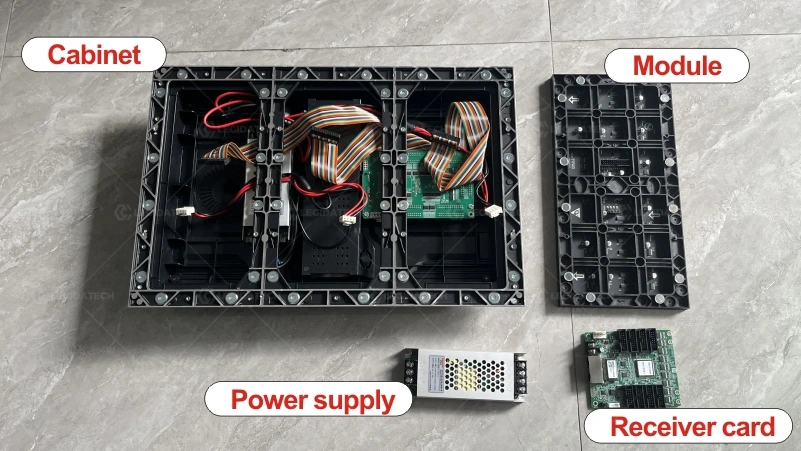
The control system, sending box, spare parts, and installation structure may be quoted separately, depending on the supplier.
Why Indoor and Outdoor P2.5 LED Screen Prices Differ
Indoor P2.5 LED screens are mostly used for fixed installation. They work in stable environments, so brightness, waterproof level, and cabinet strength are not high. Standard metal or aluminum cabinets are enough, which keeps the price lower.
Outdoor P2.5 LED screens must handle rain, dust, heat, and sunlight. They need higher brightness and strong waterproof protection, usually IP65. Cabinets are made from stronger materials such as die-cast aluminum or aluminum-magnesium alloy, which increases the cost.
Because of these differences, outdoor P2.5 LED screens are much more expensive than indoor models.
What Determines P2.5 LED Screen Price?
Many buyers compare P2.5 LED screen prices and find large gaps. In most cases, the difference comes from configuration, not pixel pitch. The factors below have the biggest impact on cost and long-term performance.
LED Lamp Brand & Type
The LED lamp is the core component of a P2.5 LED screen.
Common lamp types include SMD1515 and SMD2121.
SMD1515 is smaller and supports higher image detail, but it costs more and has stricter production requirements. SMD2121 is more common and slightly cheaper, but image sharpness and lifespan may be lower.
Lamp brand also affects price.
Well-known brands such as Nationstar and Kinglight offer better consistency, longer lifespan, and lower dead pixel rates. Generic LED lamps reduce upfront cost but increase the risk of color shift and failure over time.
Refresh Rate & Grayscale
Refresh rate directly affects image stability.
Low-cost P2.5 LED screens often use a 1920 Hz refresh rate. This can cause flicker, especially on camera.
3840 Hz is the standard choice for most indoor projects.
7680 Hz is used for broadcasting, live events, and high-end stages.
Cheap P2.5 screens usually reduce refresh rate and grayscale to cut costs. This is the main reason for flickering, image tearing, and unstable brightness.
Cabinet Material & Design
Cabinet design impacts both price and installation cost.
Die-cast aluminum cabinets are stronger, lighter, and more precise. They offer better flatness and heat dissipation but cost more.
Sheet metal cabinets are cheaper and suitable for fixed indoor installations with lower accuracy requirements.
Maintenance design also matters.
Front maintenance cabinets cost more but save space and reduce installation difficulty.
Rear maintenance cabinets are cheaper but require enough service space behind the screen.
Control System & Power Supply
The control system affects signal stability and compatibility.
NovaStar and Colorlight are the most common control system brands. NovaStar usually costs more and is preferred for higher refresh rates and complex projects. Colorlight is more budget-friendly and works well for standard installations.
Power supply quality is often overlooked.
Well-known power supply brands provide stable voltage and longer service life. Cheap power supplies increase the risk of black screens and module failure, especially in long-term operation.
Is P2.5 the Right Pixel Pitch for Your Project?
P2.5 is not the best choice for every project. It works well only when viewing distance, screen size, and use case are matched correctly.
Recommended Viewing Distance for P2.5 LED Screen
The recommended viewing distance for a P2.5 LED screen is 2.5 to 4 meters.
When the screen is viewed too close, individual pixels become visible and image comfort drops.
When viewed from too far away, the extra resolution brings little real benefit, and the cost is wasted.
If the minimum viewing distance is below 2 meters, a smaller pixel pitch may be better.
If the minimum viewing distance is over 5 meters, P3 or P4 is often more cost-effective.
Common Applications of P2.5 LED Display
Conference rooms
P2.5 is widely used for meeting rooms where viewers sit close to the screen and text clarity is important.
Retail stores and showrooms
It delivers sharp images for product displays and branding at short viewing distances.
Church and stage backdrops
P2.5 works well for medium-size stages where cameras and live audiences need stable image quality.
Control rooms
P2.5 can be used, but it is not always the best option. Many control rooms prefer P1.8 or smaller pixel pitch for long-term close viewing.
P2.5 vs Other Pixel Pitches – Price & Value Comparison
Choosing the right pixel pitch is a balance between image quality and budget. P2.5 sits in the middle of the price range, but it is not always the best option.
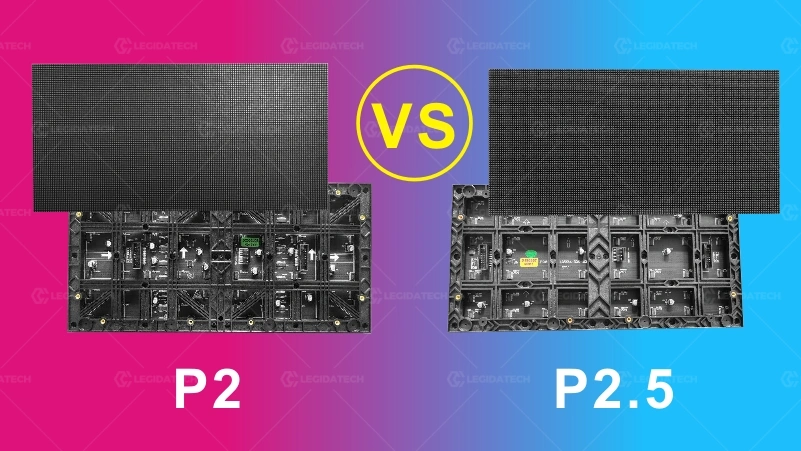
P2.0 vs P2.5: Price vs Image Detail
P2.0 offers higher resolution and finer image detail than P2.5. Text looks sharper at very close viewing distances.
However, the price of P2.0 is usually 20–35% higher than P2.5. For most projects with viewing distance above 2.5 meters, the visual difference is limited.
P2.0 is suitable for:
Very close viewing
High-end meeting rooms
Control rooms
P2.5 is more cost-effective for standard indoor projects.
P2.5 vs P3: Budget Trade-off
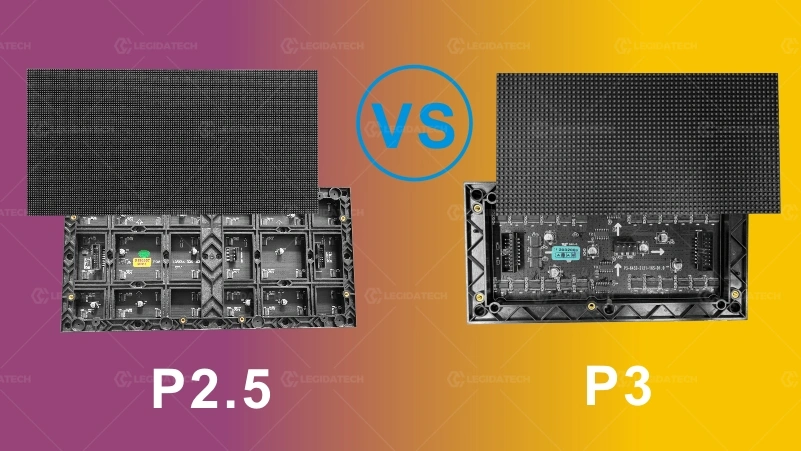
P3 is a common alternative for buyers with limited budgets.
Compared with P2.5, P3 is usually 15–25% cheaper, but image sharpness drops at short distances. Text and fine details are less clear when viewed closely.
P3 works well when:
Viewing distance is over 4 meters
Screen size is large
Budget is the main concern
If viewers sit close to the screen, P2.5 provides a better balance.
When P2.5 Is Not Recommended
P2.5 may not be the right choice in these cases:
Viewing distance below 2 meters
Very high resolution is required
Budget is tight and viewers are far from the screen
In these situations, P2.0 or P3 may be a better fit.
How to Get an Accurate P2.5 LED Screen Quote
To get a real price for a P2.5 LED screen, suppliers need more than just the pixel pitch. Key information includes:
Installation environment – indoor, semi-outdoor, or full outdoor.
Brightness, waterproofing, and cabinet type depend on the environment.Screen size – total width and height of the display.
Price is calculated per square meter, but larger screens may need extra support structures.Use case / application – stage, conference, retail, control room, etc.
Different applications require different refresh rates, grayscale, and accessories.Maintenance method – front or rear maintenance.
This affects cabinet design and installation cost.
Why “just asking for P2.5 price” is inaccurate
Without these details, suppliers can only give a rough range. The real price depends on configuration, material, control system, and installation requirements. Asking only for pixel pitch may lead to misleading or incomplete quotes.
Recommended P2.5 LED Screen Solutions
Here are some recommended P2.5 LED screen solutions, suitable for different projects and budgets.
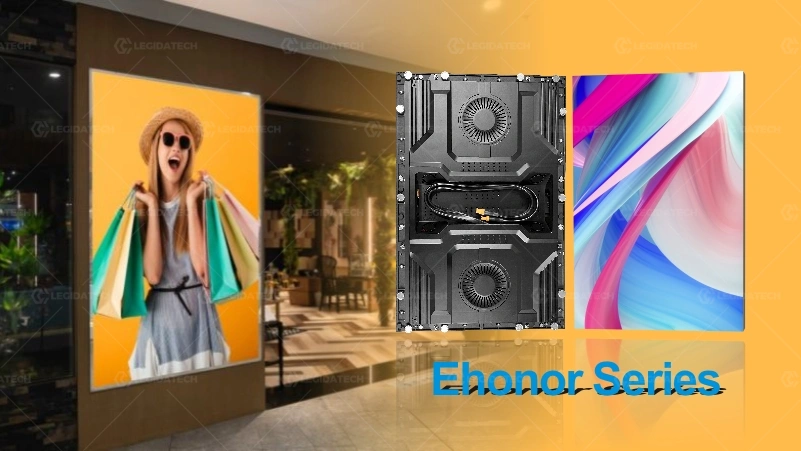
1. Standard Indoor P2.5 LED Panel – Ehonor Series
Best for: Conference rooms, offices, retail stores
Why: Stable performance, high brightness for indoor use, fixed installation
Features: Standard indoor pixel pitch, easy installation, moderate price
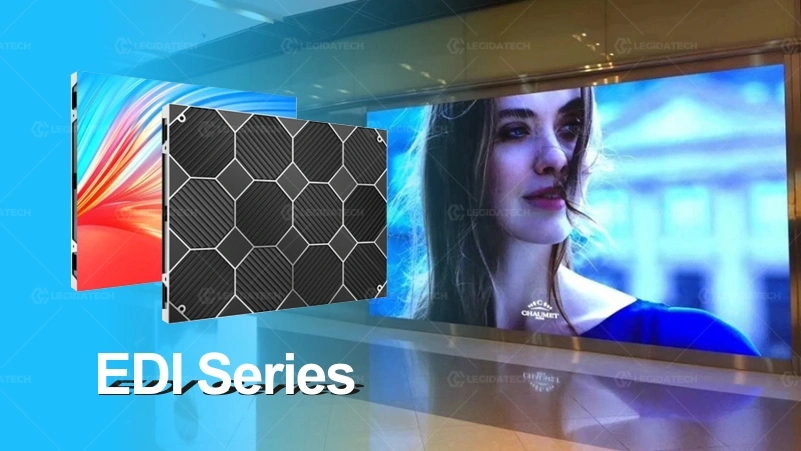
2. Indoor HD Small Pixel Pitch LED – EDI Series
Best for: High-detail indoor displays, showrooms, small stages
Why: Smaller modules give sharper images and clearer text
Features: Front maintenance option, high refresh rate, suitable for close viewing
FAQ – P2.5 LED Screen Price Questions
Q1: Does the P2.5 LED screen price include installation?
A1: Usually, the price per sqm covers the LED modules, cabinet, power supply, and receiving cards. Installation, control system, steel structure, and spare parts are often quoted separately.
Q2: How does P2.5 compare to P3 in image quality?
A2: P2.5 provides sharper images and clearer text at close viewing distances. P3 is suitable for longer viewing distances but may lose detail when viewed up close.
Q3: What is the lifespan of a P2.5 LED screen?
A3: High-quality P2.5 LED screens typically last 50,000–100,000 hours. Lifespan depends on LED brand, brightness, environment, and maintenance.
Q4: Can the P2.5 LED screen be customized in size?
A4: Yes. P2.5 LED screens can be assembled in any size, depending on your project requirements and installation space.
Q5: Why do P2.5 prices vary so much?
A5: Prices vary due to LED lamp type and brand, refresh rate, cabinet material, control system, power supply, and installation requirements.
Conclusion
P2.5 LED screens offer a balance between high resolution and cost. They are ideal for indoor applications, medium-sized stages, showrooms, and conference rooms. Choosing the right pixel pitch, cabinet type, and control system ensures you get the best performance for your budget.
To get an accurate quote, provide your screen size, installation environment, and intended use. This helps avoid overpaying or selecting a screen that doesn’t fit your project.
Ready to get your customized P2.5 LED screen quote?
Contact us now and receive a detailed quotation within 2 hours.
Related Content
Explore other LED screen options and pricing guides to find the best solution for your project:
Pingback: linezolid cost us
Pingback: vibramycin antibiotic
Pingback: stendra 200 mg tablet