


If you’ve been researching outdoor LED displays lately, you’ve probably come across the term “common cathode.” It’s widely used in product specs, and for good reason—it genuinely changes how an LED screen uses power.
This article explains what common cathode technology means, how it differs from the older common anode design, and why it matters for outdoor applications such as large-format LED billboards, outdoor advertising screens, and stadium LED displays.
What Does “Common Cathode” Mean?
In an LED, current flows from anode (+) to cathode (−). In a standard LED display driver chip, the power supply sends a single voltage to all the pixels, regardless of what color each pixel needs at any given moment. Red, green, and blue subpixels all get the same voltage—even though each color has a different forward voltage requirement.
The difference between the supply voltage and the actual forward voltage is lost as heat. This is the core inefficiency that common cathode technology addresses.
With a common cathode design, the driver circuit supplies a separate, optimized voltage to each color channel (R, G, B). Red gets approximately 2.8V, and green and blue get around 3.8V — instead of all three receiving a uniform 5V.
This isn’t just a small tweak; it means a meaningful portion of the energy that used to become waste heat now goes into actually lighting up the pixels. According to publicly available driver IC specifications, LED↗ Wikipedia forward voltages vary significantly by color, which is exactly what the common cathode design accounts for.
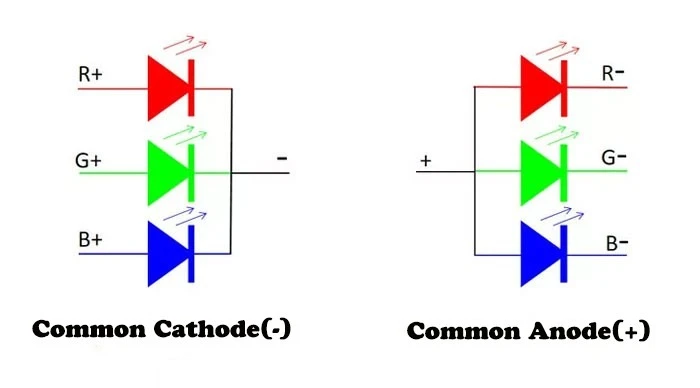
Common Cathode vs Common Anode: A Direct Comparison
| Feature | Common Anode (traditional) | Common Cathode |
|---|---|---|
| Supply voltage per color | Uniform (e.g., 5V to all) | Optimized per channel (R≈2.8V, GB≈3.8V) |
| Power consumption | Higher baseline | Up to 40–50% lower in real-world use |
| Heat generation | More waste heat | Significantly less thermal load |
| Operating temperature | Higher cabinet temp | Lower, extends component life |
| LED lifespan | Standard | Extended due to lower thermal stress |
| Brightness at same power | Lower | Higher (or equal brightness at less power) |
| Driver IC cost | Lower | Slightly higher (more complex driver) |
Why This Matters for Outdoor LED Screens
Outdoor LED displays have to work in ways that indoor screens don’t. They need to hit high brightness levels — often 5,000 to 10,000 nits or more — to remain visible in direct sunlight.
They run continuously, sometimes 18 to 24 hours a day. They’re exposed to heat, humidity, and wide temperature swings. All of these factors make power efficiency and thermal management more important outdoors than in any other environment.
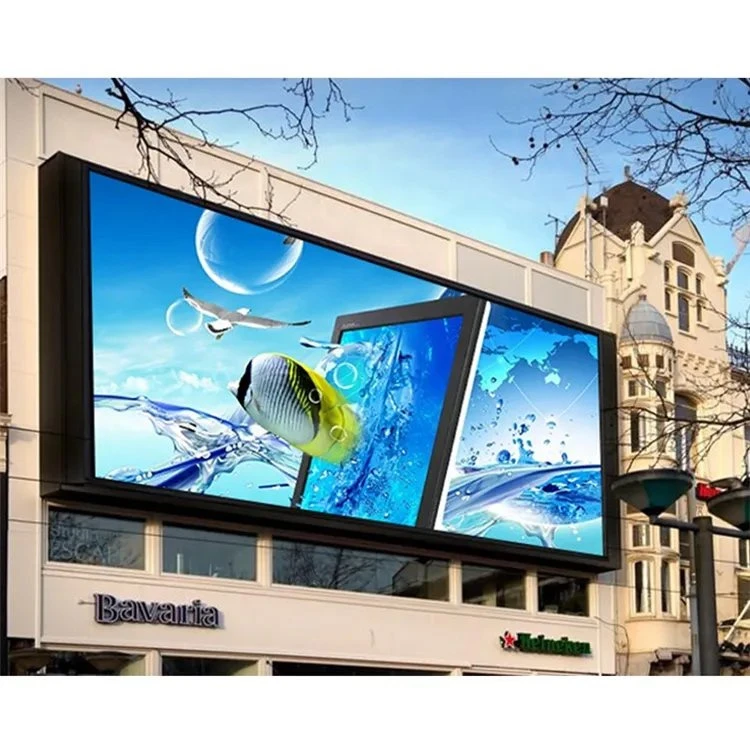
For a large outdoor LED billboard running at high brightness, the power savings from common cathode technology can be substantial. A screen that would otherwise draw 100kW might draw 55–65kW with common cathode drivers.
Over a year of continuous operation, that difference translates into thousands of dollars in electricity costs — and a noticeably cooler cabinet, which means less wear on cooling systems and longer LED life.
The reduced heat is especially important in direct-sun installations. Heat is one of the primary causes of LED degradation over time. Lower junction temperature directly correlates with longer lifespan, as described in the Arrhenius reliability model↗ Wikipedia is commonly used in LED engineering.
This is why common cathode technology is increasingly specified in premium outdoor advertising LED screens and high-end stadium perimeter displays.
Heat Management: The Hidden Benefit
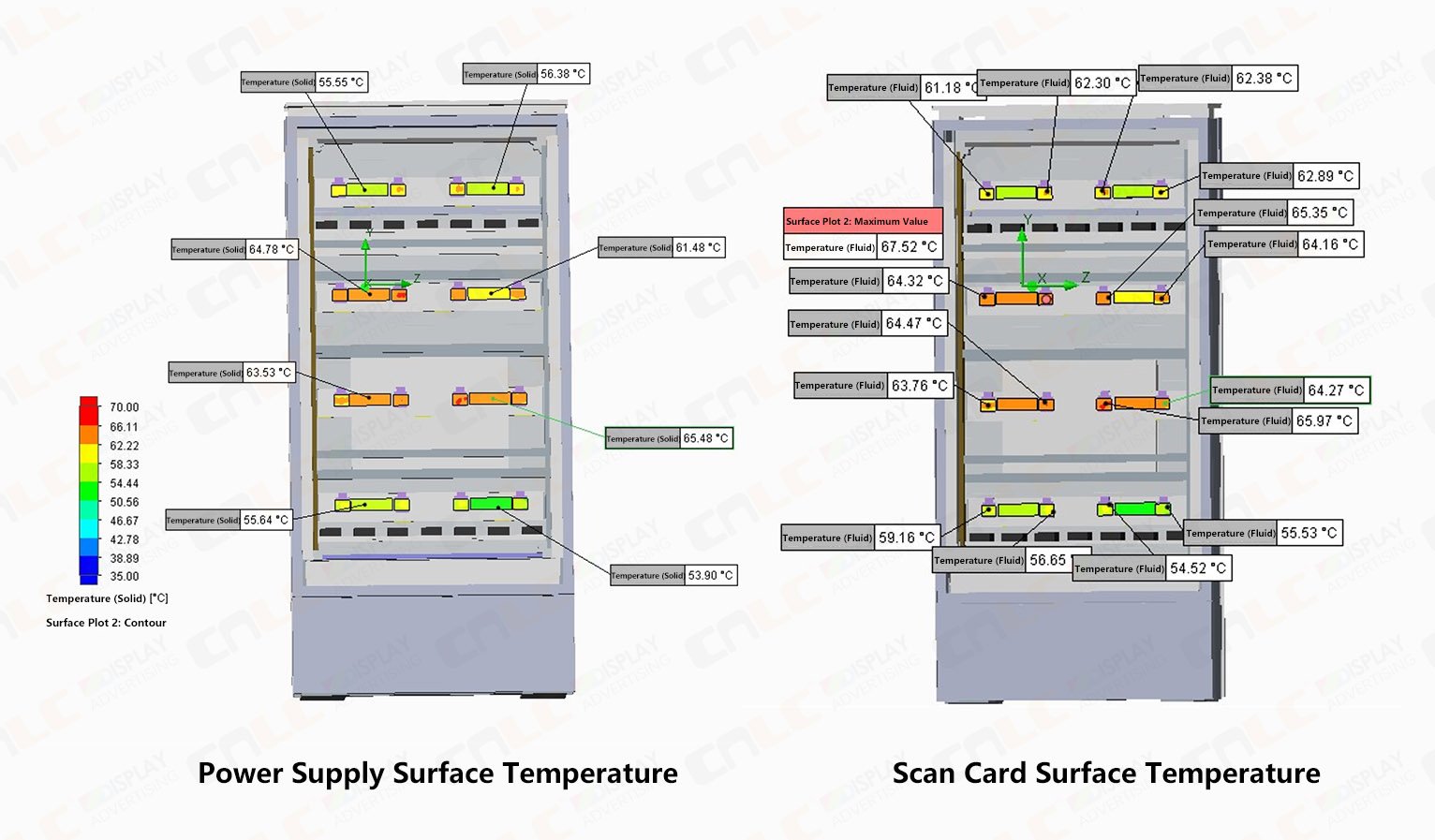
Beyond power bills, heat is the enemy of reliability in outdoor LED screens. Every degree of reduction in operating temperature extends the service life of the LEDs, the driver ICs, and the capacitors in the power supply.
Common cathode displays running significantly cooler than their common anode equivalents aren’t just saving energy — they’re accumulating fewer hours of thermal stress on every component in the cabinet.
In practice, this often means common cathode outdoor displays can operate without active cooling fans in moderate climates, or with smaller, less power-hungry fans in hotter regions.
Fewer moving parts mean fewer failure points and lower maintenance costs over the screen’s lifetime.
Real-World Energy Savings: What to Expect
The “up to 50% power saving” claim you see in marketing materials is technically possible but represents a best-case scenario — typically at lower brightness with a lot of red content, since red has the largest gap between forward voltage and a traditional uniform supply. In real outdoor display use cases, where content is varied and brightness is high, savings typically land in the 30–45% range compared to an equivalent common anode screen running the same content.
Some independent tests by display industry publications have reported verified savings of around 35–40% in controlled comparisons. These figures align with what the underlying physics predicts, so they’re a reasonable benchmark to use when evaluating proposals from outdoor LED screen suppliers.
Does Common Cathode Affect Image Quality?
This is a question that comes up often, and the short answer is no, not negatively. Some users notice that common cathode screens can look slightly different in color rendering, but this is typically due to recalibration of the color balance during manufacturing, not an inherent limitation of the technology.
When properly calibrated, common cathode displays achieve the same or better color uniformity compared to common anode designs.
One area where a common cathode does improve image quality is in grayscale performance at low brightness. Because the driver can supply more precise low-voltage signals to each channel, some common cathode designs show better dark-scene detail. For outdoor digital signage that runs content at night or in low-ambient conditions, this can be a noticeable improvement.
What to Look for When Buying an Outdoor Common Cathode LED Display
Not all products labeled “common cathode” are identical. Here’s what to verify with your supplier:
Driver IC model: Ask which driver chip is being used. Reputable common cathode screens use purpose-designed ICs from established manufacturers. The chip datasheet should confirm separate voltage rails per color channel.
Power consumption specs: Request a power draw specification at both maximum brightness and typical brightness (usually around 50% brightness for average mixed content). Compare these figures across products — this is where real-world efficiency shows up.
Thermal data: Ask for cabinet operating temperature specifications under load. A good common cathode design should show lower temperatures than a comparable common anode product.
Warranty and lifespan claims: Common cathode displays often carry longer rated lifespans. Make sure these are backed by specific LED half-life data (typically expressed as L70 or L50 hours) rather than just marketing claims. For reference, the Illuminating Engineering Society (IES)↗ publishes widely used standards for LED lumen maintenance testing.
Frequently Asked Questions
Is common cathode technology suitable for all outdoor LED applications?
Yes, a common cathode is a good fit for most outdoor LED display applications—billboards, stadium screens, building façades, roadside signage, and outdoor retail displays.
It’s particularly beneficial in applications where the screen runs long hours or needs to achieve high brightness, since those are the conditions where power savings and thermal management matter most. The main trade-off is a slightly higher upfront cost for the driver circuitry, but this is typically recovered through energy savings within the first year or two of operation.
How much does a common cathode outdoor LED display cost compared to a standard one?
The premium varies by manufacturer and screen size, but common cathode displays typically cost 10–20% more than equivalent common anode screens at purchase.
For large installations, this difference is usually offset by reduced electricity bills within 12–24 months, depending on local power costs and how many hours per day the screen operates. For a screen running 18 hours a day at significant brightness, the payback period is often under 18 months.
Can existing outdoor LED screens be upgraded to common cathode?
In most cases, no. Common cathode requires purpose-built driver ICs and a different power distribution architecture within the module. It’s not a firmware update or a simple component swap.
If you currently have a common anode outdoor display and want to benefit from common cathode efficiency, the practical path is replacement rather than retrofit. This is worth factoring in when planning new installations — specifying common cathode from the start avoids the need to upgrade later.
Does common cathode work with all pixel pitches for outdoor screens?
Common cathode driver ICs are now available for a wide range of pixel pitches used in outdoor displays, from P4 up to P16 and beyond.
Smaller pitch outdoor screens (P2.5–P4) have been slightly slower to adopt common cathode due to the higher density of driver ICs involved, but the technology is fully compatible and increasingly available across the full range of outdoor pixel pitches.
How does common cathode affect the brightness of an outdoor LED display?
Common cathode doesn’t limit brightness — if anything, it allows a display to run at the same brightness for less power, or to achieve higher peak brightness within the same power budget.
For outdoor screens that need to compete with direct sunlight (typically requiring 5,000–10,000 nits), this is a real advantage. The efficiency gains mean more of the input power goes to light output rather than heat dissipation.
What’s the lifespan difference between common cathode and common anode outdoordisplays?
LED lifespan is heavily influenced by operating temperature — specifically the junction temperature of the LED chip itself. Common cathode designs run cooler because less energy is wasted as heat. As a rough rule of thumb, reducing junction temperature by 10°C can approximately double the LED’s rated service life.
In practice, outdoor common cathode displays are typically rated for 100,000 hours or more to L70 (70% of initial brightness), compared to 80,000–100,000 hours for well-designed common anode products under similar conditions.
Related to Outdoor LED Screen
80% of customers don’t know what the common cathode of LED display is?
Outdoor LED Screen Visibility: Practical Tips for Sunlight Optimization
Master the key technical standards of outdoor LED displays
Large Outdoor LED Video Wall Structure Safety Guide
How Much Brightness Do You Need for an Outdoor LED Screen? (2026 Ultimate Guide)
What are the advantages of outdoor LED advertising screen?
Best Guide: How to Protect Your Outdoor LED Display from Humidity
Why outdoor LED display quotes proposals vary greatly?—difference between P5 and P10 LED Display
