


Stadium LED screens are made to catch your eye. Behind each big, high-definition screen, there is a lot of work. The steel structure supports many panels and holds their weight. A strong design helps keep the screens safe in wind and adverse weather. Every part of the setup is planned with care.
Whether you own a place, work as a builder, or want to know how these big screens go up, this guide will show you every step of stadium LED screen installation. It covers how the frame is built, how people keep the screen performing well, and how workers create the plan that places every pixel before the screen goes up.
Knowing about stadium LED structure design is not just for engineers. It is something that everyone who wants to start a big LED display project should know. The structure that holds the screen helps the display last longer. It keeps the screen safe while it is in use. It also makes it easier to fix or check the screen over time.
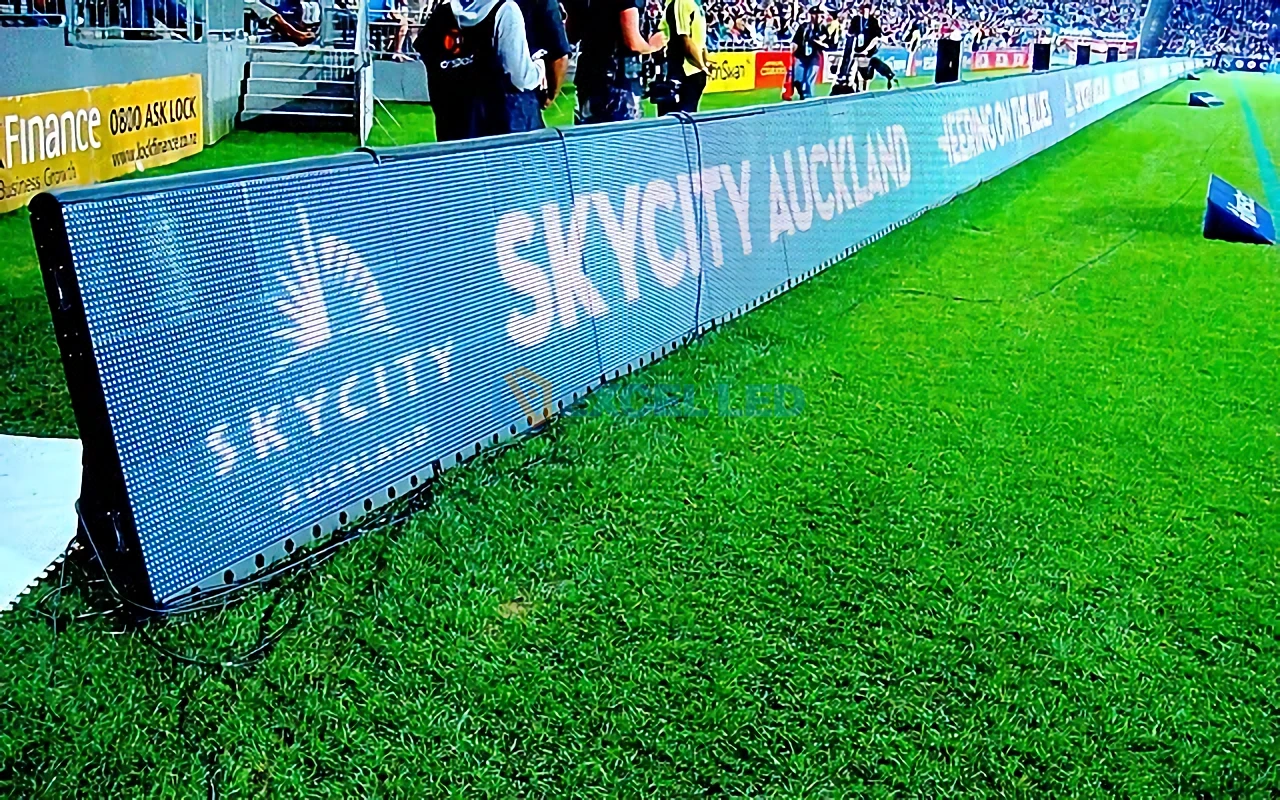
Steel Structure: The Foundation of Every Stadium LED Screen Installation
The steel structure is the backbone of any stadium LED screen installation. Without a well-made steel frame, even the best LED panels will not operate safely or last long.
A high-quality stadium LED steel structure must perform several key functions. The steel frame must support the entire weight of the LED panels, which can be several hundred kilograms per square meter. It also needs to account for wind pressure, crowd shaking, and building movement across all the locations where it is fixed.
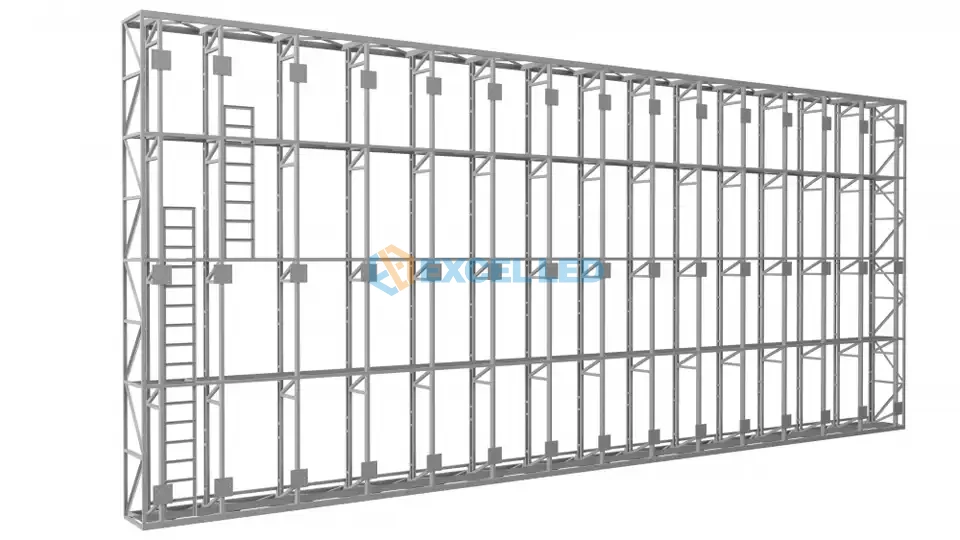
Being exact is as important as being strong. The steel frame must align with the LED cabinet grid, typically in 500 mm × 500 mm or 1000 mm × 500 mm bays. Small alignment errors can affect how the panels fit, how the image appears, and how well the build holds up over time.
Since most stadium screens are installed outdoors, they mustn’t be damaged over time. Hot-dip galvanized or powder-coated steel is the industry’s primary choice. This helps keep the screens protected from rain, humidity, and temperature changes over time.
Every stadium LED structure is designed to fit its place. Engineers assess the screen’s curvature, the fascia angle, and the stadium’s load capacity. This helps ensure the setup is safe, robust, and durable.
Wind-Resistant Design: Keeping Stadium LED Screens Safe in Any Weather
Outdoor stadium LED screens face one of their biggest problems, not because of new things, but because of nature. These large flat screens can act like sails. They catch the wind, and this puts a lot of side-to-side pressure on them. A good wind-resistant design is not just an option. It is a key part of ensuring every stadium LED screen installation is safe and durable.
The engineering process starts with careful wind load calculations. These are completed in accordance with the rules of regional building codes. In the United States, these are in ASCE 7. In Europe, BS EN 1991 is used. These standards say how much wind force a structure should handle. The rules consider the location, screen height, and surface area.
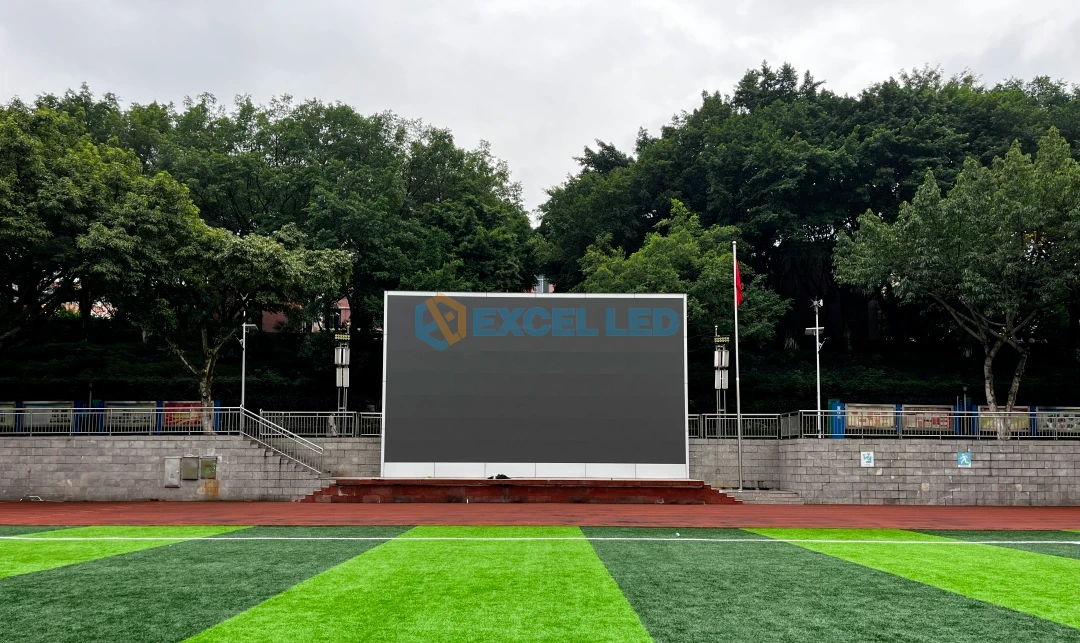
The screen’s construction is also important. Perforated backs and gaps for air circulation help air move through the screen rather than just hit it. This can reduce wind pressure across the entire display area.
Each LED unit is secured with additional anchor points and safety cables. This ensures that even strong winds cannot pull any screen component away from the frame. Screens are set at tilt angles to direct wind away from the surface rather than directly at it.
In stadiums that experience strong winds or adverse weather, some setups are designed to fold up or retract automatically during a storm. This helps keep the equipment safe and makes sure people watching below are not in danger.
For big or very important installations, engineers do more. They use wind tunnel testing and CFD (Computational Fluid Dynamics) simulations. These help model how air will move in the real world before building starts. By doing this, they can identify weak spots and areas of high pressure, even before a single bolt is installed.
Maintenance Access: Keeping Stadium LED Screens Operational Year-Round
A stadium LED screen is a long-term investment. Like other major components of a building, it requires regular maintenance to keep it operating effectively. The main thing is simple. You have to be able to fix it without closing the venue or stopping events.
This is why people plan for LED screen maintenance access from the very beginning. It is not something that gets added later.
The most common way to address this is to use rear-access catwalks and walkways integrated into the steel support structure. These paths are made for the service team. They allow technicians to reach every part quickly and safely, even when events are happening nearby.
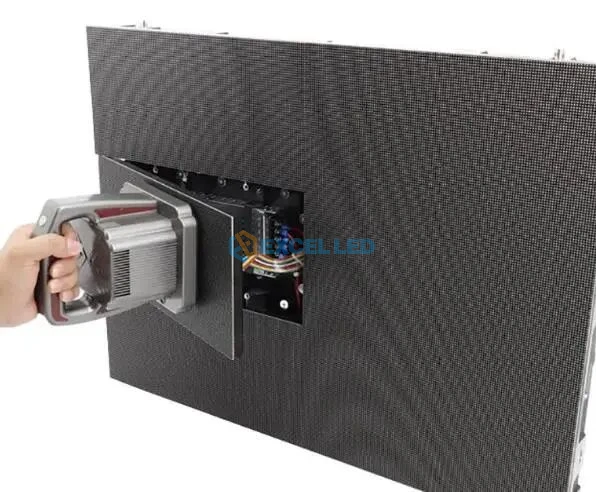
But sometimes, getting to the back is not an option. For ribbon boards and fascia screens located near walls or other stadium areas, the design allows you to work on them from the front. This means workers can take off, inspect, and replace panels from the front without moving anything behind them.
The way the LED cabinet is built helps speed things up. Each is designed to be taken apart with or without tools, using a single simple tool, such as a regular hex key. A skilled worker can replace a faulty panel in just a few minutes, rather than hours. This keeps operations running and ensures minimal downtime.
Behind every screen, power and data trunk runs are easy to see because they are clearly marked. These run along trays designed to hold cables. A clean, tidy cable setup helps people identify faults faster and feel safer when fixing them. Every maintenance person on site benefits from this, improving working conditions.
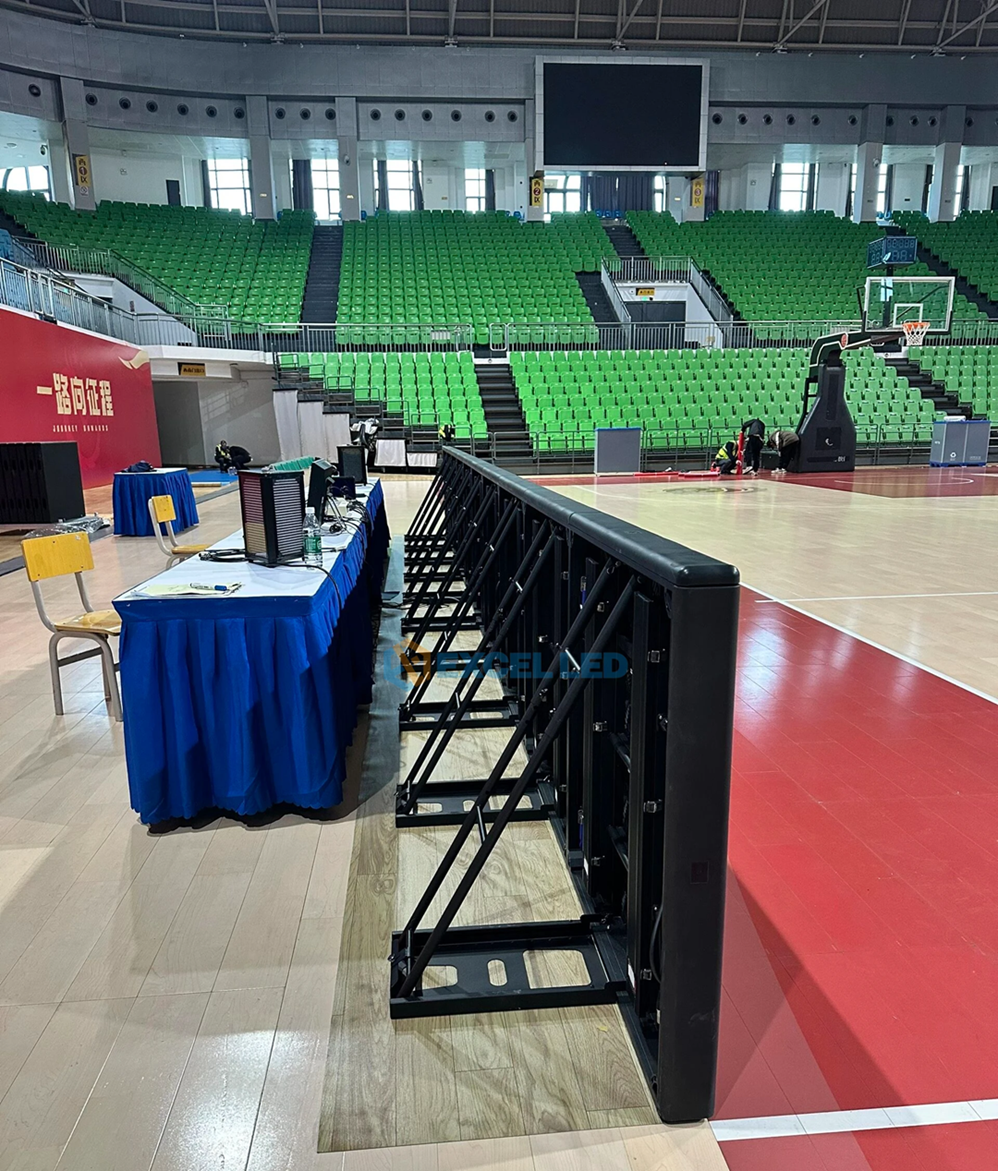
The system’s internal design follows the same modular approach. Modular power supplies and receiving cards are designed for individual replacement. This way, if one part stops working, you do not have to shut down the entire system. If a part fails, you replace it, and the screen is back in operation.
Ultimately, every path used for upkeep has adequate lighting and safety rails. When you work high up in a stadium, it is risky. There must be adequate lighting and safe barriers in place. A responsible stadium LED screen installation needs these things.
Conclusion
A stadium LED screen installation is not just about putting panels on a wall. There is a lot that goes into it. People who know about building things and those who know about design work together.
They make sure the setup is safe, looks good, and works well. The screen should last a long time and work well every year. All steps must work together for the display to function as intended.
The steel structure provides the strength and proper fit every setup requires. The wind-ready design helps the screen remain upright in all weather, including during storms.
Smart upkeep access lets you keep the display working without stopping the events you want it for. The outline creation process makes sure that every pixel, every part, and every wire is in place before you start putting it all together.
When you get all four parts right, you get a stadium LED screen that performs as intended. It shows clear and bright images. It can handle the tough live sports environment. This screen will work well in a stadium for more than ten years.
For those who own a venue, work as a contractor, or plan projects, knowing these basics is the first thing to do. It helps you make better choices. You will be able to pick the right pixel pitch and type and find the right team with the skill to support their display screens.
A good stadium LED screen should not only look good when first installed. It needs to continue to work well and safely for many years. The screen should also remain bright and perform as you expect over time.
More about the stadium LED screen
Main Page: LED Stadium Screen for Sports
What are the Specific Requirements for Stadium LED Screen?
P3.91 Outdoor LED Screen Stadium LED Screen 3x2m in Nigeria——Metastar Series
Stadium LED Display Price Guide 2026
How Stadium LED Screens Are Installed: A Complete Guide
Front Service vs Rear Service Stadium LED Screens: A Guide
Stadium LED Displays for Sports
Stadium LED Video Wall: Market, Types, Applications, and Beyond