


LED Floor Screen Price Summary (Quick Answer)
If you are planning to install an LED floor screen, the first question is always the same: How much does it cost per square meter?
Here is the typical market range based on different types of floor LED displays:
| LED Floor Type | Typical Price (per sqm) | Best For | Notes |
|---|---|---|---|
| Indoor LED Floor Screen | $850–$1,500 | Weddings, retail, exhibitions | Lower waterproof level, lighter structure |
| Outdoor LED Floor Screen | $1,200–$2,500 | Theme parks, plazas, outdoor shows | Strong structure, IP65 waterproof |
| Interactive LED Floor (Sensor Type) | $1,800–$3,500 | Museums, experience zones, shopping malls | With sensors and reinforced design |
| Rental LED Dance Floor | $60–$120 per panel/day or $1,200–$1,800 per sqm | Event companies, stage rentals | Quick installation, anti-slip surface |
This price range is based on common pixel pitches like P2.6, P3.9, P4.8, and P6. Anything with smaller pixel pitch, stronger load-bearing, or higher protection level usually costs more.
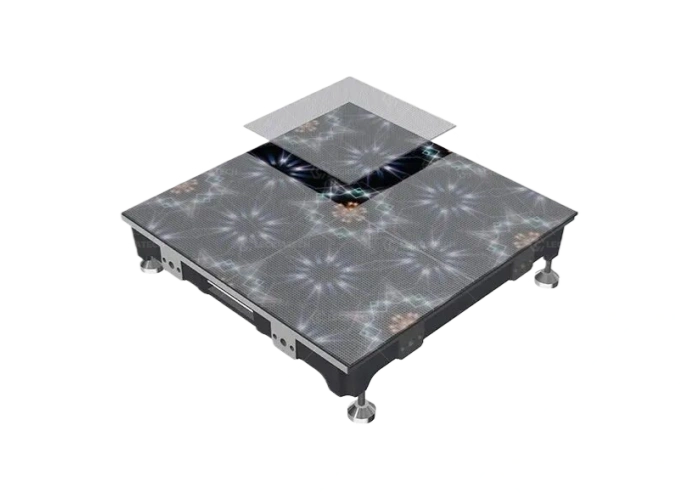
What Affects LED Floor Screen Price?
The price of an LED floor screen can vary a lot depending on its structure, safety features, interactive functions, and display quality. Here are the main factors that affect the cost:
Pixel Pitch (P2.6 / P3.91 / P5.2)
The smaller the pixel pitch, the denser the LEDs and the clearer the image. Smaller pitch also means higher cost.
Common applications:
- Stage, wedding, events: P2.6–P3.91 (high resolution needed)
- Shopping mall, exhibition, interactive areas: P3.91–P5.2 (more economical, moderate clarity)
Key point: Smaller pixel pitch → more LEDs → higher material cost → higher price.
Load-Bearing Capacity
One of the most important specs for floor LED screens is how much weight they can support. Higher load capacity requires stronger structures, which increases cost.
Higher load capacity → thicker cabinet, stronger frame → higher price.
| Type | Load Capacity | Notes |
|---|---|---|
| Standard floor panels | 500–800 kg/m² | Suitable for normal commercial or exhibition use |
| Heavy-duty floor panels | 1500 kg/m² | Suitable for stages, car shows, or high-traffic areas |
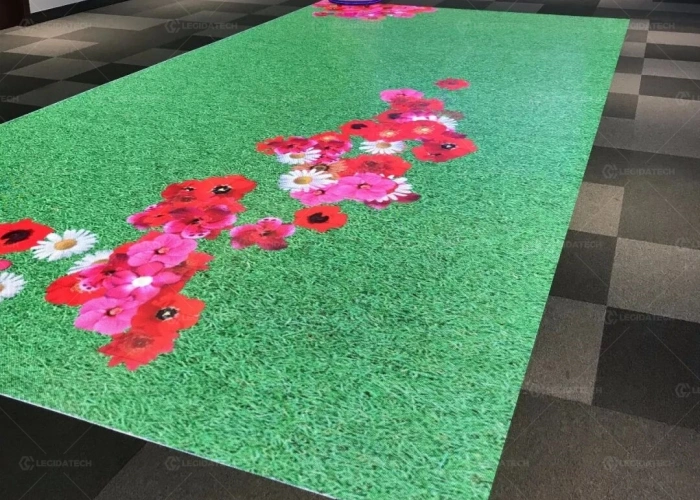
Waterproof & Protection Level
Floor LED screens need to handle foot traffic, liquids, dust, and scratches. The higher the protection level, the higher the price.
| Application | IP Rating | Features |
|---|---|---|
| Indoor | IP54 | Dustproof, drip-proof, suitable for indoor use |
| Outdoor | IP65+ | Fully waterproof, dustproof, anti-collision; 30–50% more expensive |
Outdoor panels need extra sealing, an anti-slip surface, and a durable casing.
Interactive Sensor System
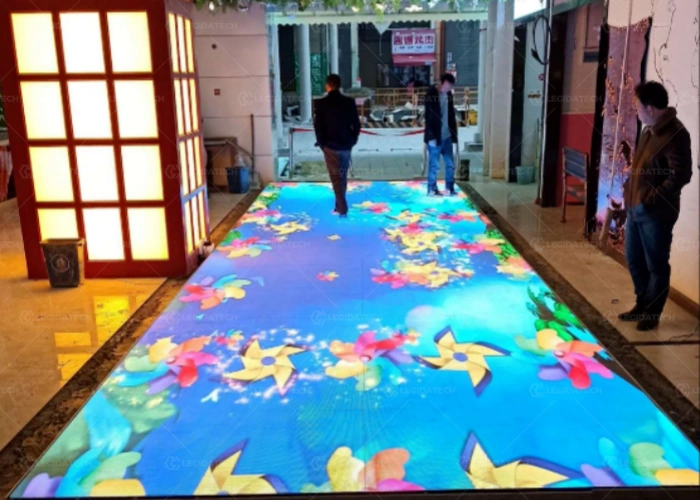
Interactive floor panels (lighting or animation that reacts to footsteps) require extra sensors and systems:
-
Infrared sensors
-
Pressure-sensitive modules
-
Interactive control system
-
Touch or motion chips
Interactive LED floors usually cost 40–60% more than standard panels because they combine display and intelligent sensing.
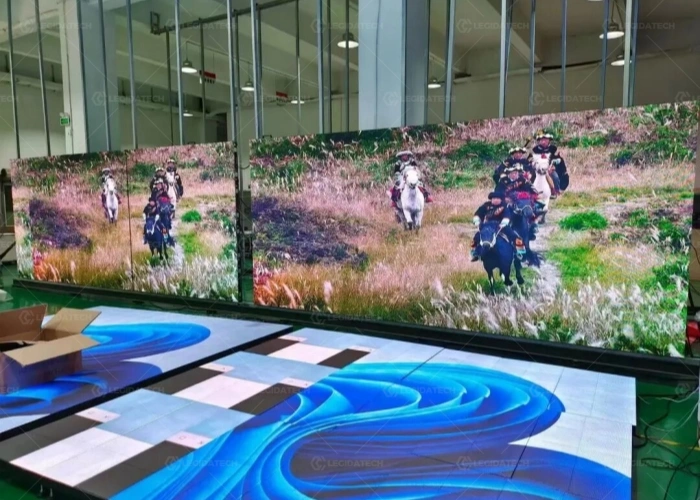
LED Type (SMD / GOB / COB)
The LED encapsulation method affects durability, water resistance, and anti-collision ability:
-
SMD: Most common, lower cost, moderate durability
-
GOB: Glue-encapsulated, strong pressure resistance, waterproof; ideal for floor panels
-
COB: Chip-on-board, very durable and scratch-resistant, but the most expensive
For high-traffic areas, GOB or COB panels are preferred.
Cooling System & Internal Structure
LED floor panels need strong internal structure and heat dissipation because of continuous use and foot traffic:
-
Thicker metal frame
-
Better heat dissipation channels
-
Stable power supply
-
Reinforced support structure
Better cooling and reinforced structure → higher cost, but longer lifespan.
Typical Prices by Scenario
LED floor screens are used in different scenarios, and the price depends on pixel pitch, load capacity, waterproof level, and whether interactive functions are included. Below we break down the typical costs based on real buyer needs.
Wedding & Event Rental LED Dance Floor
-
Pixel pitch: P2.6 / P3.9
-
Price per sqm: $900–$1,300
-
Rental price: $100–$150 per panel per day (approx. $1,200–$1,800 per sqm for short-term rental)
Why this price range:
Wedding and event floors need to handle foot traffic safely, have good brightness, and remain slip-resistant. The panels are usually the indoor type with moderate load-bearing capacity but high visual quality. Rental panels are built for quick installation and removal.
Nightclubs & Bars LED Floor
-
Price per sqm: $1,200–$1,800
Nightclub and bar floors are high-traffic areas. They require:
-
High-definition display for visual effects
-
Efficient heat dissipation due to continuous use
-
Optional interactive effects for dancing or special events
Durable construction and quality LEDs make these panels more expensive than short-term rental event floors.
Shopping Mall / Retail Experience Floor
-
Pixel pitch: P3.9 / P4.8
-
Price per sqm: $1,000–$1,600
For retail experience zones, malls, and showrooms, LED floor screens are mainly used to attract attention and create immersive experiences. The panels need:
-
Medium pixel pitch (good visual quality but cost-effective)
-
Moderate load-bearing for shoppers
-
Indoor waterproof and anti-slip features
Outdoor Public Spaces / Museums / Theme Parks
-
Pixel pitch: P4–P6
-
Price per sqm: $1,800–$2,500
Outdoor LED floors must withstand heavy loads, weather, and long-term usage. Requirements include:
-
IP65+ waterproof rating
-
Reinforced metal structure for safety
-
Anti-slip surface for pedestrians
-
Moderate visual resolution (pixel pitch slightly larger than indoor floors)
The price is higher due to materials, weatherproofing, and structural reinforcement.
Interactive Floor LED Display
-
Price per sqm: $2,000–$3,500
Interactive LED floors combine display panels with sensors, pressure-sensitive modules, or infrared tracking to create dynamic lighting effects. They are often used in:
-
Museums and galleries
-
Theme park experiences
-
High-end retail stores
Why it’s expensive:
-
Integrated interactive sensors
-
Reinforced structure for high traffic
-
Advanced control system and programming
-
Higher quality LEDs for better response and durability
Interactive floors are usually the most expensive type because they combine visual appeal, safety, and intelligent interactivity.
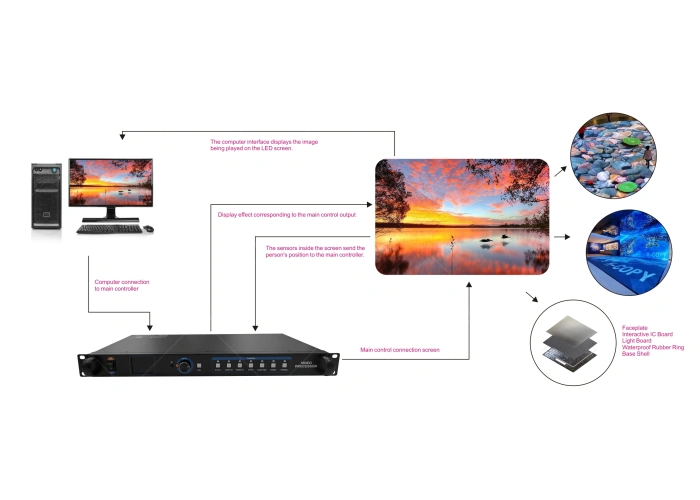
Complete Cost Breakdown
For professional buyers, understanding how the total cost of an LED floor screen is distributed is very important. This helps you plan your budget and compare suppliers more confidently. A typical cost breakdown looks like this:
| Component | Percentage of Total Cost | Notes |
|---|---|---|
| LED Panels | 70–80% | The most expensive part. Includes LED modules, PCB boards, and encapsulation. Higher pixel density increases cost. |
| Cabinet & Load-Bearing Frame | 10–15% | The metal frame, reinforced cabinet, and base structure that supports foot traffic and ensures durability. |
| Interactive Sensors (Optional) | +15–30% | Pressure sensors, infrared modules, motion tracking systems, or touch interaction. Only needed for interactive floors. |
| Control System & Power Supply | 8–12% | Includes power management, signal processing, and control software. Higher quality components improve stability and lifespan. |
Key points for buyers:
-
The LED panels themselves are always the biggest cost—over two-thirds of the total price.
-
Reinforced cabinets and load-bearing frames are critical for safety, especially for heavy-duty or outdoor floors.
-
Interactive features can increase the total cost significantly, but they also add value and attract attention.
-
Investing in a high-quality control system ensures stable operation and a longer lifespan.
Understanding this cost breakdown makes it easier to compare quotes from suppliers and decide which features are essential for your project.
FAQs:
Q1: How much weight can an LED floor screen hold?
Most standard indoor LED floor panels can support 500–800 kg/m², which is enough for regular foot traffic and light equipment. Heavy-duty or outdoor panels can support up to 1,500 kg/m², suitable for stages, car shows, and public areas. Always check the supplier’s specifications to ensure safety.
Q2: Is an LED floor waterproof?
Indoor LED floors usually have IP54 protection (dustproof and splash-resistant). Outdoor LED floors are typically IP65+, fully waterproof, and dustproof. Outdoor panels also feature reinforced cabinets and anti-slip surfaces for safe use in all weather conditions.
Q3: Can I use an LED floor for outdoor weddings?
Yes, but you need outdoor-rated panels with IP65+ waterproofing and anti-slip surfaces. Outdoor floors are stronger and more durable, ensuring safe installation on grass, concrete, or temporary stage setups. Remember that outdoor LED floors are 30–50% more expensive than indoor panels.
Q4: How much does an interactive LED floor cost?
Interactive LED floors (with pressure sensors or infrared tracking) are more expensive than standard panels. Typical prices range from $2,000 to $3,500 per sqm, depending on pixel pitch, load-bearing capacity, and sensor technology. Interactive floors are ideal for museums, theme parks, and retail experiences.
Q5: How long is the lifespan of an LED floor display?
High-quality LED floor panels usually last 50,000–100,000 hours under normal use. Lifespan depends on pixel pitch, panel quality, usage frequency, and maintenance. Reinforced cabinets, proper cooling, and a stable power supply can significantly extend the screen’s life.
How can I control the interaction on an LED floor screen?
Interactive LED floors usually come with control software or a system that manages all sensor responses. Depending on the floor type, you can:
-
Adjust motion tracking sensitivity
-
Set pressure sensor thresholds
-
Customize lighting patterns, colors, or animations
-
Schedule automatic effects for events or shows
Most suppliers provide a user-friendly interface or app, so operators can control effects in real time without technical expertise.
Recommended Reading
Sibling Pages
In-Depth Content

Pingback: hello world
Pingback: ursodiol for dogs