Introduction
Choosing the right LED display for your stadium is a major decision. Beyond the vibrant visuals and crowd-engaging content, you need to consider how you’ll keep the screen running smoothly. This is where the choice between a front service and a rear service LED display becomes crucial.
Each type offers different approaches to installation and maintenance, directly impacting your venue’s long-term operational costs and efficiency. This guide will walk you through the key differences to help you make the best choice for your stadium.
Overview of Stadium LED Screen Maintenance Structures
The way an LED display is built determines how maintenance personnel can access its internal components. These maintenance structures are essential for keeping your display screens in top condition. The two primary designs are front service and rear service, each tailored for different installation environments.
Your choice will depend on factors like where the screen is located, how much space is available behind it, and the type of support structures in place. Understanding these two systems is the first step toward selecting a display that fits your stadium’s unique needs and ensures efficient upkeep.
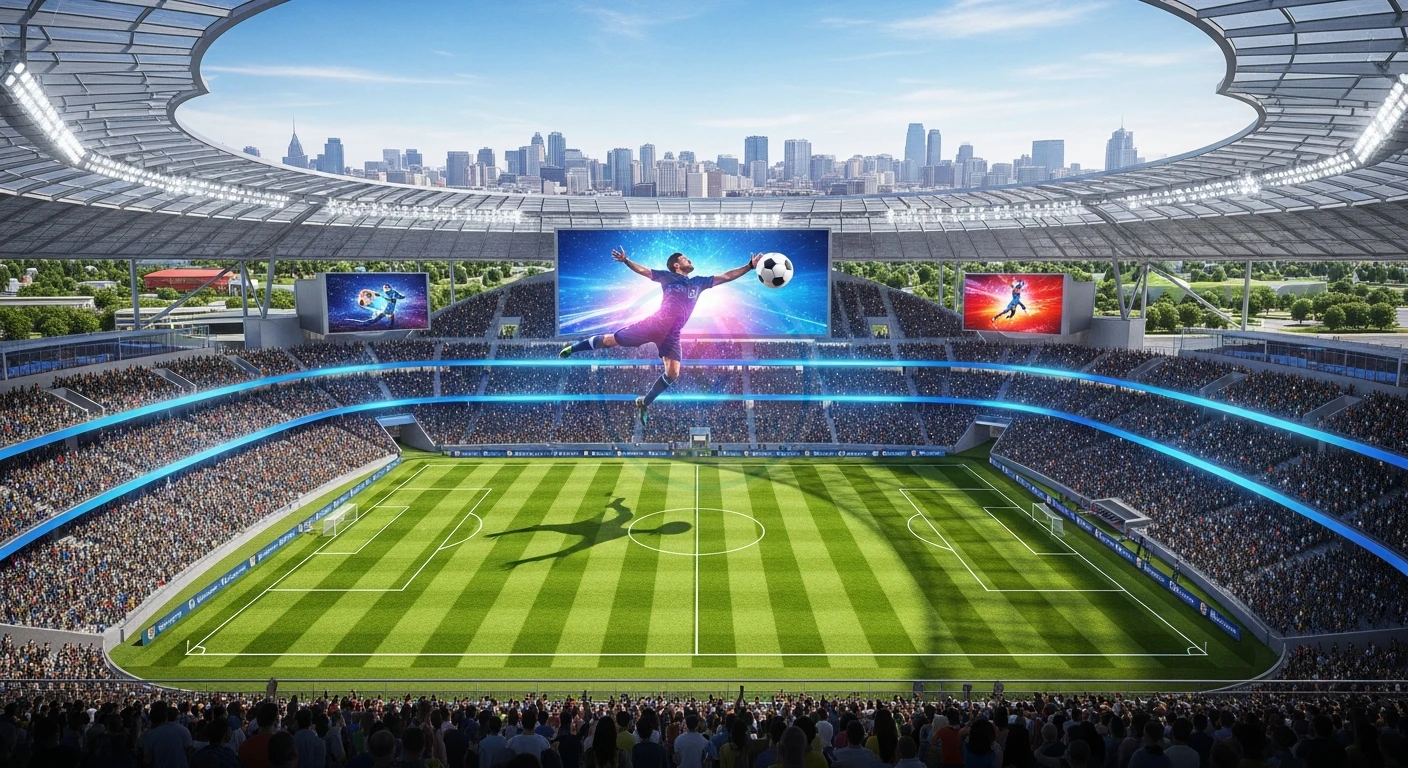
What Is a Front Service LED Display for Stadiums?
A front service LED display for stadiums is designed for maintenance from the viewing side of the screen. Technicians can access and repair components without needing to get behind the display.
This is a game-changer for installations where space is limited, such as screens mounted directly against a wall. The main difference between front and rear service screens is this point of access.
This design often uses magnetic or screw-based mechanisms that allow individual LED modules to be removed from the front. This front access capability significantly improves maintenance efficiency because technicians can quickly swap out a faulty module without disassembling large sections of the screen. This process is known as front maintenance.
Because there’s no need for a rear maintenance corridor, a front service LED display allows for a much slimmer and lighter build. This makes it a popular choice for indoor venues, control rooms, and any stadium application where a sleek, integrated look is a priority and downtime needs to be minimal.
What Is a Rear Maintenance LED Screen in Stadium Settings?
A rear maintenance LED screen, also called a rear service model, follows a more traditional design where all repairs and servicing happen from the back of the display. This requires a dedicated space or walkway behind the screen for technicians to work. This rear access structure is very common for large outdoor displays, like those found in stadiums and on billboards.
With this setup, the LED modules are securely fixed to the front of the cabinet, while components like power supplies and receiving cards are housed inside, accessible through doors or panels at the back.
Technicians can work on the internal wiring and hardware without ever touching the screen’s viewing surface, which can be a benefit for complex repairs.
This structure is particularly well-suited for outdoor environments. The sealed front and accessible back make it easier to design robust, weatherproof cabinets. For massive stadium screens that already require substantial support structures, incorporating a maintenance corridor for rear service is often a practical and cost-effective solution.
Comparing Installation and Maintenance Access
The installation space available at your venue is a primary factor when choosing between a front service or rear service LED screen. If your stadium LED screen will be mounted flush against a wall, front service is likely your only option. Rear service models, on the other hand, require a significant amount of clearance behind them.
This decision has a ripple effect on everything from venue planning to the speed of repairs. How easily your team can access the internal components will determine maintenance downtime and labor costs, making this a critical consideration from the start. Let’s look closer at these differences.
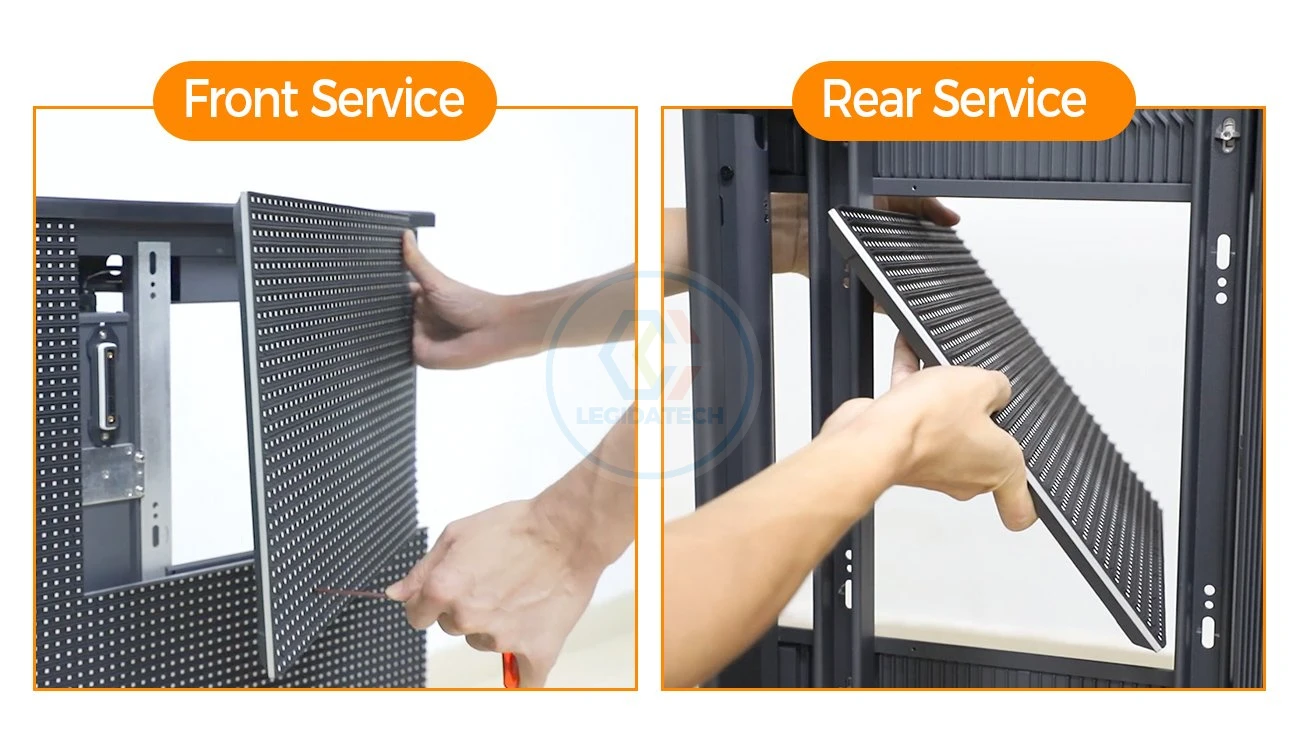
Maintenance Access Differences: Front vs Rear Service
The core differences between front and rear service screens come down to maintenance access. With front access, technicians can work directly on the face of the screen. This is especially useful in crowded stadiums or tight spaces where getting behind the display is impractical. It speeds up repairs and can lead to lower maintenance costs over time.
Rear access, conversely, requires a dedicated corridor behind the display. While this takes up more space, it allows technicians to perform more extensive repairs without disrupting the view from the front.
This can be beneficial for large, complex systems where work might be more involved than simply swapping a module. The choice ultimately hinges on balancing convenience with the scale of the installation.
Here is a simple breakdown of the key differences in maintenance access:
| Feature | Front Service | Rear Service |
|---|---|---|
| Access Point | From the front of the screen | From the back of the screen |
| Space Needed | None behind the display | Requires a rear walkway (80-120 cm) |
| Repair Process | Quick module removal with special tools | Open the rear doors to access internal parts |
| Suited For | Wall-mounted, tight spaces, indoor venues | Large outdoor displays, freestanding installs |
Space Requirements and Venue Planning Considerations
Your stadium’s structure and the planned installation environment are defining factors in your decision. If you have significant space constraints, such as placing a screen in a narrow concourse or directly onto a facade, a front service model is the logical choice. These screens can be mounted flush, saving valuable space.
In contrast, rear service screens demand rear clearance. You must plan for a walkway or platform behind the screen, typically at least 80 to 120 centimeters wide, to allow technicians safe and easy access. This is often factored into the design of large, freestanding pylon signs or scoreboards in open-air stadiums where space is less of a concern.
Learn More about Stadium LED Screens Installation
When planning your venue, consider the following:
- Wall-Mounted Screens: If the display is mounted on a solid wall, front service is necessary because there is no way to get behind it.
- Freestanding Structures: Large scoreboards built on their own support structures can easily accommodate a rear maintenance walkway.
- Architectural Integration: For screens blended into the building’s architecture, a slim front service display helps maintain clean lines and avoids bulky support frames.
Performance and Reliability Factors
When it comes to performance and reliability, both front and rear service LED display models are built to last, but they achieve this in different ways. The structural design of each type influences its durability, especially in demanding outdoor environments. Weatherproofing, in particular, is handled differently between the two.
The modular design of modern screens allows for robust construction regardless of service type. However, factors like cabinet depth and sealing methods can give one an edge over the other, depending on the specific application. Let’s examine how each design holds up in terms of safety and environmental resilience.
Structural Safety and Durability in Stadium Applications
Structural safety and durability are paramount for any large LED screen in a stadium. Both front and rear service designs have their own advantages in this area.
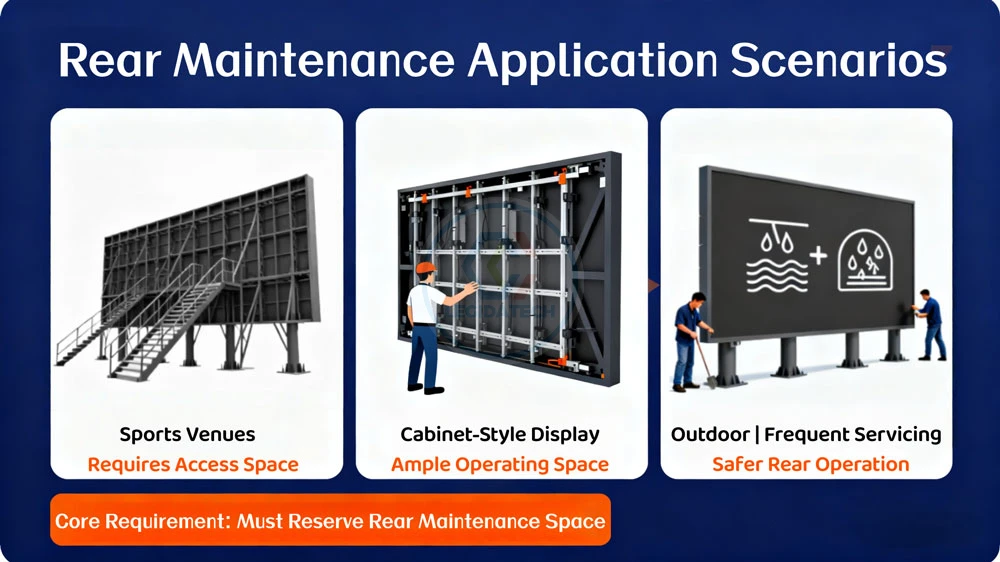
Rear service screens often have a slight edge in raw mechanical strength. Their cabinets are typically built with fixed frames and larger screws, creating a very rigid and robust structure that stands up well to wind, vibrations, and other stresses common in outdoor environments.
Front service models, on the other hand, rely on high-quality magnetic or precision screw systems to hold modules in place. While modern engineering makes these systems extremely reliable, they must be well-designed to prevent any module detachment over time.
High-quality front service screens are built to be just as durable, but the inherent simplicity of a fixed rear service frame is often preferred for the largest and most exposed outdoor installations.
Ultimately, the better choice for a stadium depends on the specific location and size of the LED screen. For massive, exposed scoreboards, the heavy-duty nature of a rear service screen might be preferable.
For screens integrated into the stadium’s architecture or located in more sheltered areas, a front service model offers excellent durability with added maintenance convenience.
Weatherproofing, Environmental Adaptation, and Cabinet Depth
For outdoor LED displays in stadiums, effective weatherproofing is non-negotiable. Rear service designs generally offer a simpler and more inherently reliable sealing method.
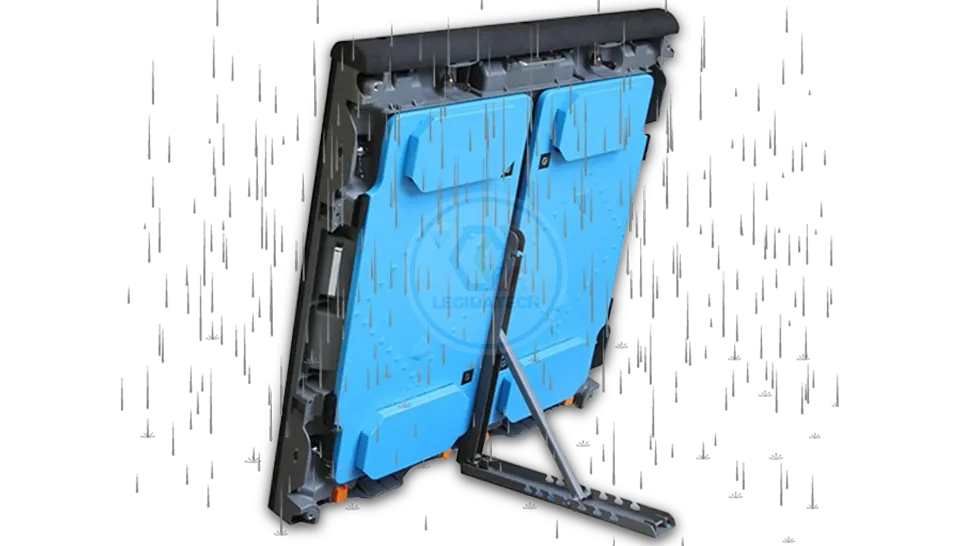
Because the modules are fixed to the front and access doors seal the back, it’s easier to create a fully enclosed cabinet that protects internal components from rain, dust, and humidity.
Front service outdoor LED displays are also available and can achieve high IP ratings for weather resistance, but their engineering is more complex. They require advanced gaskets and sealing mechanisms around each module on the front cover to ensure a watertight fit.
While effective, the simpler approach of rear service models is often seen as more foolproof for long-term environmental adaptation.
Cabinet depth also plays a role in visual integration and design:
- Front Service: Allows for very slim cabinets (sometimes under 60mm), creating a sleek, modern look that blends seamlessly with architecture.
- Rear Service: Requires deeper, stronger cabinet frames to support the structure and rear access, which can be bulkier but adds to its robustness.
Advantages and Disadvantages of Stadium Use
Every stadium has unique needs, and the choice of an LED display should align with them. Both front and rear service screens come with a distinct set of advantages and disadvantages. Front maintenance models excel in convenience and space-saving design, which can be a huge benefit in certain stadium locations.
On the other hand, rear service displays bring their own strengths, particularly for massive outdoor installations where durability is the top priority. Understanding these pros and cons will help you weigh which features are most important for your venue’s success.
Benefits of Front Service LED Displays in Sports Venues
The primary advantage of using a front service LED display in a sports venue is the incredibly easy maintenance. Technicians can access and replace faulty modules from the front in minutes, which is crucial for ensuring minimal downtime during a game or event. This efficient maintenance process keeps your screen looking perfect when it matters most.
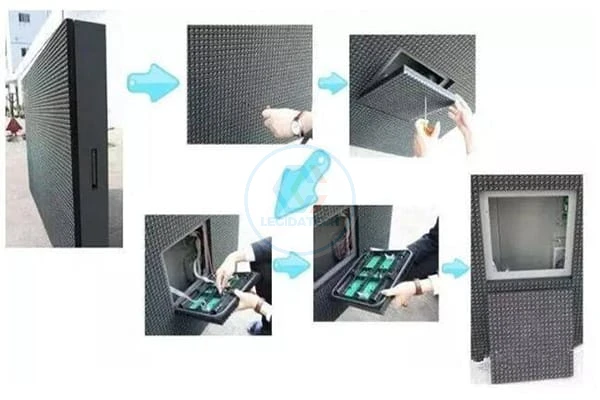
This design also offers maximum flexibility in installation. You can mount the screen directly onto any solid surface without needing to build a separate maintenance corridor behind it. This not only saves a significant amount of space but can also reduce installation complexity and costs. It’s an ideal solution for concourses, luxury suites, and other areas where space is at a premium.
Key benefits of front service displays include:
- Space Savings: Thinner, lighter cabinets allow for flush wall-mounting.
- Faster Repairs: Quick module replacement from the front reduces labor time and screen downtime.
- Aesthetic Integration: A slim profile helps the screen blend seamlessly into the venue’s architecture.
Limitations and Challenges of Rear Maintenance LED Screens
The main disadvantage of a rear maintenance LED screen is its significant space requirement. You must dedicate a corridor or platform at the back of the LED display, which can be a major challenge in venues with limited space. This requirement adds to the complexity and cost of the support structures needed for the installation.
While these screens may sometimes have a lower initial cost for the cabinet itself, the overall project budget can increase due to the need for extensive steelwork and platforms. Routine maintenance can also be more time-consuming if access to the back is difficult, such as requiring technicians to climb tall structures.
Potential challenges of rear maintenance screens include:
- Large Footprint: Requires at least 80-120 cm of clear space behind the screen for access.
- Higher Structural Costs: The need for a maintenance walkway adds to the installation budget.
- Slower Small Repairs: Simple tasks like replacing one module can be less efficient compared to front service models.
Conclusion
In summary, choosing between front service and rear maintenance LED screens for stadiums involves a careful consideration of various factors. Both options have their unique advantages and challenges, from maintenance access to performance reliability. Understanding these differences can help you make an informed decision that best suits your venue’s needs and enhances the spectator experience.
Whether you prioritize convenient maintenance or structural safety, evaluating your specific requirements will ensure that you select the right LED display solution. If you’re ready to explore your options further, don’t hesitate to contact us for a free consultation to find the perfect fit for your stadium!
More about the stadium LED screen
Main Page: LED Stadium Screen for Sports
What are the Specific Requirements for Stadium LED Screen?
P3.91 Outdoor LED Screen Stadium LED Screen 3x2m in Nigeria——Metastar Series
How Stadium LED Screens Are Installed: A Complete Guide
Stadium LED Display Price Guide 2026
Stadium LED Displays for Sports
Stadium LED Video Wall: Market, Types, Applications, and Beyond
Frequently Asked Questions
When should a front service LED screen be chosen over rear maintenance for stadiums?
You should choose a front service LED screen when you have space constraints that prevent rear access, such as a wall-mounted installation. It is the best choice for locations requiring efficient maintenance with minimal downtime, as technicians can quickly access modules from the front without disturbing the entire structure.
Are there cost differences between installing front and rear service LED screens in stadiums?
Yes, there are cost differences. Front service screens may have a higher initial product cost but can lead to lower installation costs and labor costs for maintenance. Rear service screens might be cheaper upfront but require expensive support structures for access, potentially increasing the total project cost.
Can a rear maintenance LED screen be upgraded to front service in a stadium setting?
Upgrading a rear maintenance screen to front service is generally not feasible. The cabinet structure, modular design, and mounting systems are fundamentally different. It would typically require replacing the entire cabinet and module system, making a full replacement a more practical option than an upgrade.