


LED Volume & In-Camera VFX · Factory Direct
Virtual Production LED Wall Solutions for XR Studios, Film & Broadcast
Fine-pitch LED volumes with genlock sync, 3,840 Hz+ refresh and camera-tracking-ready processing — engineered for film sets, broadcast studios and live-streaming stages. Factory-direct pricing, response within 2–4 hours.
What Is a Virtual Production LED Wall?
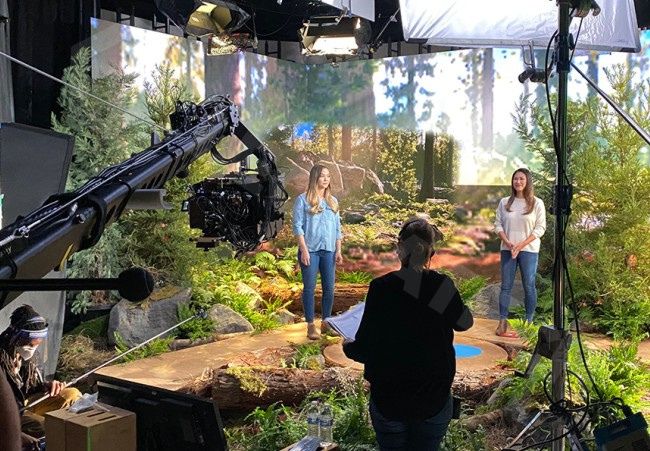
A virtual production LED wall is a large-format, fine-pitch LED display used as the real background of a shot — replacing the green screen. It plays a real-time 3D environment (typically rendered in Unreal Engine), genlocked to the camera, so the actors see the final background and are naturally lit by it while the camera rolls. This technique is called in-camera VFX (ICVFX), and the enclosed screen space it creates is called an LED volume or XR stage.

The workflow is simple in principle: instead of shooting actors against a flat green cloth and compositing backgrounds weeks later in post-production, the background is rendered live and displayed on LED walls surrounding the set. The camera photographs the actors and the environment in a single pass — final pixels in camera, not in the edit suite.
An XR virtual studio takes this one step further: a camera-tracking system reports the camera’s position to the render engine, which draws the virtual world in correct perspective and extends scenery beyond the physical walls. Panning the camera reveals set extensions that do not physically exist. The same volume serves film, episodic TV, broadcast shows, product films and live-streamed events.
Projectors and small TV panels were early alternatives, but both hit hard limits on set: insufficient brightness to expose alongside talent lighting, narrow viewing angles, visible seams and low resolution that collapses on 4K/8K cameras. A fine-pitch LED wall solves all four — high adjustable brightness, customizable size with curvable cabinets, 160°+ viewing angle and true pixel-level sharpness.
Inside an LED Volume: What Makes Up an XR Stage
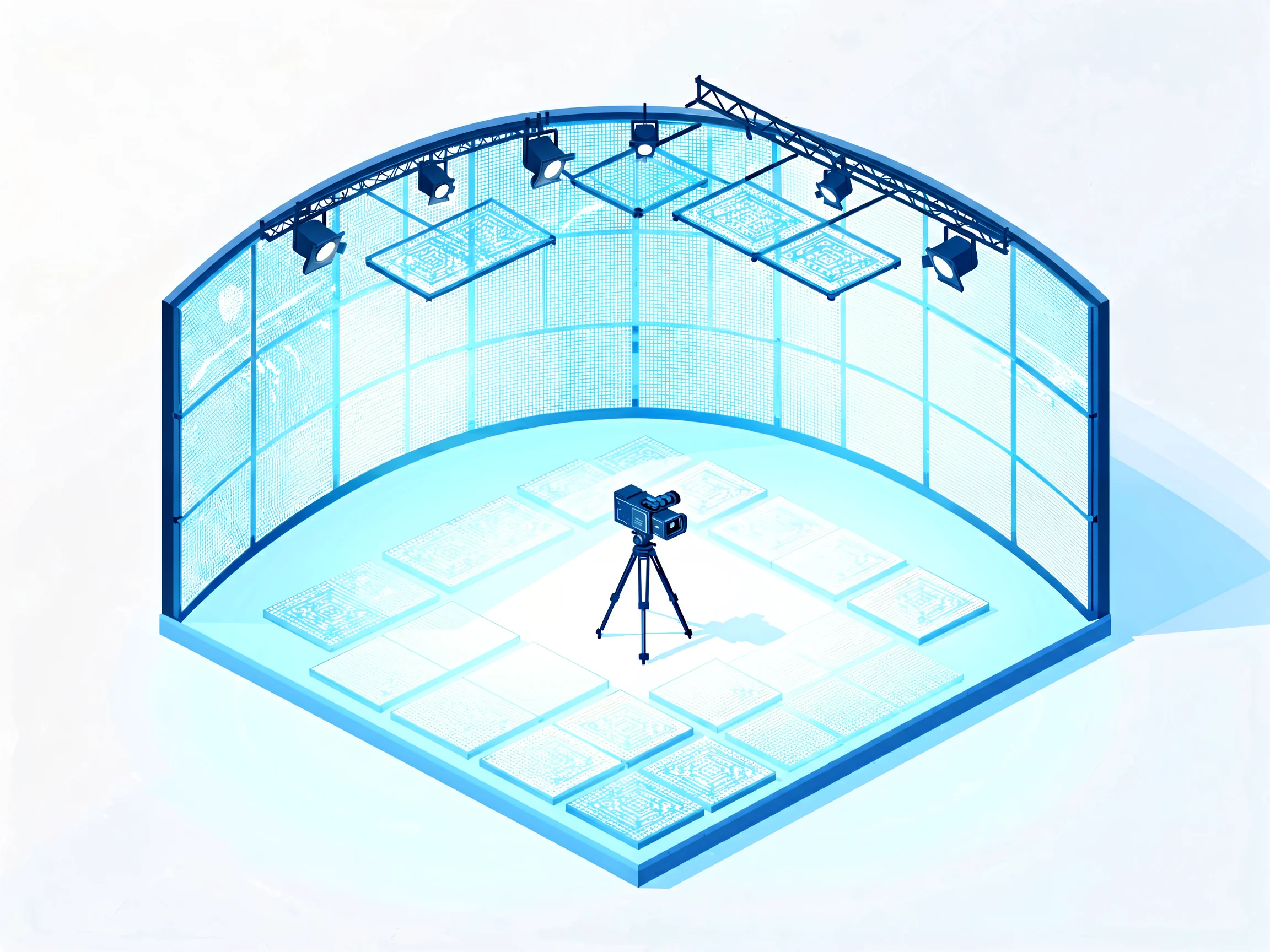
Every volume is a system, not a screen. A production-ready XR stage combines four screen surfaces with a processing backbone:
1. Main wall (the backdrop)
The largest surface — typically a curved wall of 500×500 mm or 500×1000 mm cabinets wrapped 20–40° around the performance area. Curve locks join cabinets at adjustable angles so the wall follows the camera’s field of view. Explore the EXR virtual production series.
2. Ceiling tiles
Overhead LED panels supply realistic reflections on glossy floors, cars, water and eyes — the detail green screen can never fake. Ceiling panels are lighter cabinets hung on rigging points.
3. LED floor
A load-bearing interactive floor completes reflections and lets talent “walk into” the scene. Our LED dance floor systems are engineered for camera duty with protective face panels.
4. Processing backbone
LED processors with genlock, a media server / render engine (Unreal Engine, disguise), and optional camera tracking. See our LED display control systems for the processor layer.
Volumes scale from a single 4×3 m wall for streaming studios to 200+ m² wrap-around volumes for feature films. All LEGIDATECH cabinets share common rigging geometry, so a volume purchased for broadcast today can grow into a film volume tomorrow.
Choosing Pixel Pitch for XR Filming
Rule of thumb: minimum camera-to-wall distance ≈ 3–4× the pixel pitch in millimeters. A P2.6 wall photographs cleanly from about 3 m; closer than that, move to P1.9 or P1.5. The closer your camera works, the finer the pitch you need.
| Camera-to-wall distance | Recommended pitch | Typical use |
|---|---|---|
| 2–3 m | P1.5 – P1.9 | Streaming studios, close-up product films, interview sets |
| 3–5 m | P2.0 – P2.6 | Broadcast XR studios, drama sets, virtual production walls |
| 5–8 m | P2.6 – P3.91 | Music shows, large virtual stages, audience-backed sets |
| 8 m+ | P3.91+ | Concert IMAG, arena volumes, exterior backlots |
Most of our film and broadcast customers land on P2.6 — the sweet spot between resolution, brightness and cost per square meter. P1.5/P1.9 fine pitch is reserved for tight studio spaces where the camera works at 2–3 m. For a full frame-by-frame comparison, see our P3.91 rental screen guide.

What Makes a LED Wall “Film-Grade”
Spec sheets alone don’t make a wall shootable. These are the capabilities that decide whether your XR day succeeds on set:
Moiré control
Black-face SMD LEDs, anti-glare surface treatment and correct camera distance suppress moiré patterns — the #1 cause of unusable wall footage.
Genlock & phase sync
The wall refreshes in lockstep with the camera sensor via tri-level sync, eliminating scan-line banding at any shutter angle.
Camera-tracking ready
Low-latency processor links integrate with Mo-Sys, stYpe and Ncam tracking heads for perspective-correct set extensions.
16-bit color & calibration
Per-chip brightness/chroma calibration and 16-bit processing hold skin tones and gradients across a 200 m² wall — no visible tiles, no color drift.
High refresh, low latency
3,840 Hz+ refresh handles every shutter speed; sub-frame latency keeps foreground and background in sync during fast pans.
Brightness with headroom
Indoor walls run 800–1,200 nits, letting the DP expose the wall like a light source — and dim it 0–100% to match scene mood.
Virtual Production LED Wall Cost: What to Budget
Factory-direct, an XR-ready LED wall lands between roughly $450–$2,100 per m² depending on pixel pitch, with P2.6 the most-specified pitch at $600–$900/m². A complete studio adds processors, rigging, ceiling/floor panels and install — request an itemized quote for your stage size.
| Pixel pitch | Indicative price (FOB, per m²) | Best for |
|---|---|---|
| P3.91 | $450 – $650 | Large volumes, camera ≥5 m |
| P2.9 | $500 – $750 | Broadcast / music stages |
| P2.6 | $600 – $900 | Film & XR studio standard |
| P1.9 | $1,000 – $1,500 | Tight studios, close camera work |
| P1.5 | $1,400 – $2,100 | Premium fine-pitch volumes |
Indicative ex-works ranges for the LED system only; media server, tracking, rigging and freight are quoted separately. Volume pricing improves significantly above 100 m² — see the full LED screen price guide.
Three reference configurations
Live-streaming studio
≈ 24 m² · P2.5
4×3 m curved wall + processor + content templates. Entry setup for e-commerce and talk-format streams, typically shipped and installed within weeks.
Broadcast XR studio
≈ 96 m² · P2.6
12×4 m main wall + 6×4 m side wall + 24 m² ceiling. Camera-tracking ready for daily news, weather and magazine formats.
Film LED volume
≈ 200 m² · P2.6/P3.91
24×6 m curved main wall + 8×3 m LED floor + ceiling arrays. Full ICVFX rig with genlock backbone and tracking integration.
Where XR Virtual Studios Are Used
Film & episodic TV
Shoot “anywhere” without location permits — desert, skyline or spaceship — with final pixels in camera and lighting that matches the environment.
Broadcast & news
One studio, unlimited sets. Switch from weather map to breaking-news backdrop in seconds; the same wall logic powers hotel and venue screens.
Live streaming & e-commerce
24/7 studios for commerce streams and podcasts — swap backgrounds per product line without rebuilding sets.
Concerts & music shows
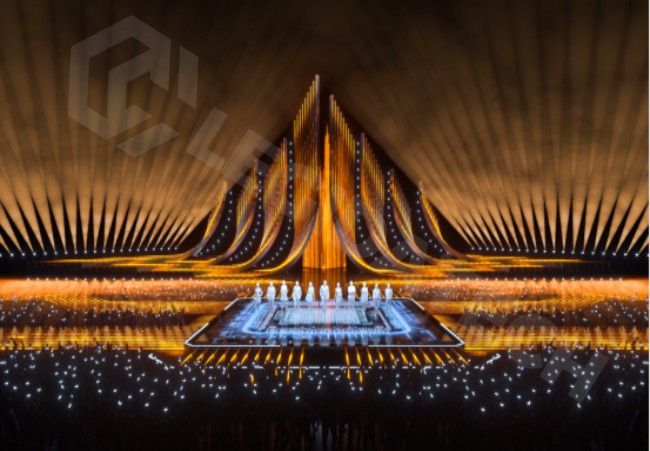
Wrap-around volumes for broadcast music events; rental-grade curved cabinet systems double as touring stock.
Music videos & commercials
Real reflections on cars, glass and chrome make automotive and beauty shots impossible to distinguish from location work.
Education & museums
Immersive history and science environments that visitors walk through — the same volume teaches between film rentals.
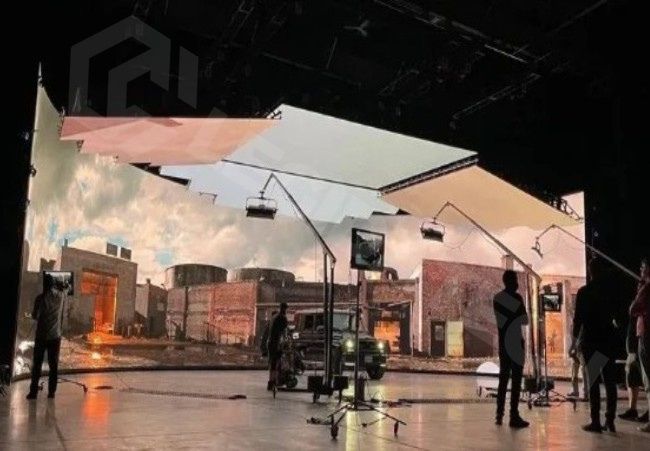
From Our Factory to Your Soundstage
Every XR order runs through a fixed production pipeline before it ships — the same process our factory in Shenzhen applies to broadcast and rental stock:
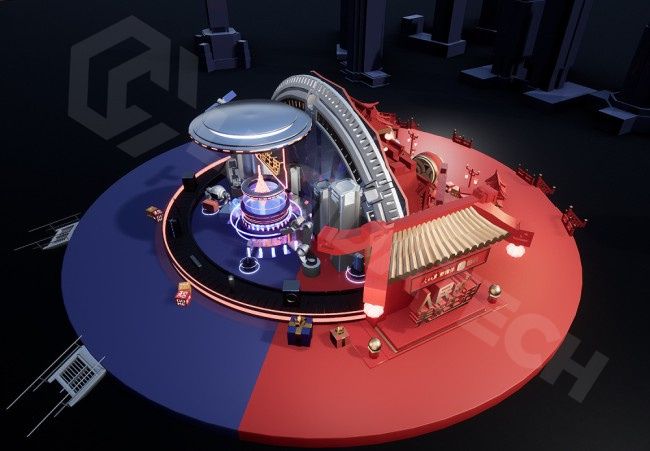
Module-level detail
Black-face SMD modules assembled and calibrated chip by chip — the foundation of even color and moiré control across a 200 m² volume.

Full-wall verification
Every volume runs burn-in with high/low grayscale checks, refresh verification at camera shutter speeds and curve-lock fitment checks — issues surface here, not on your set.
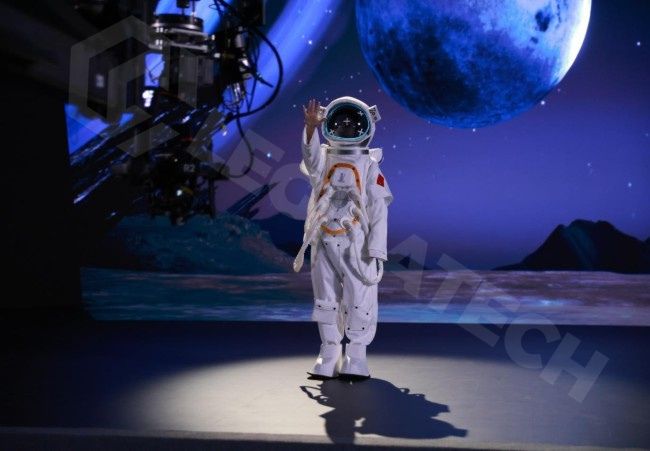
On the volume
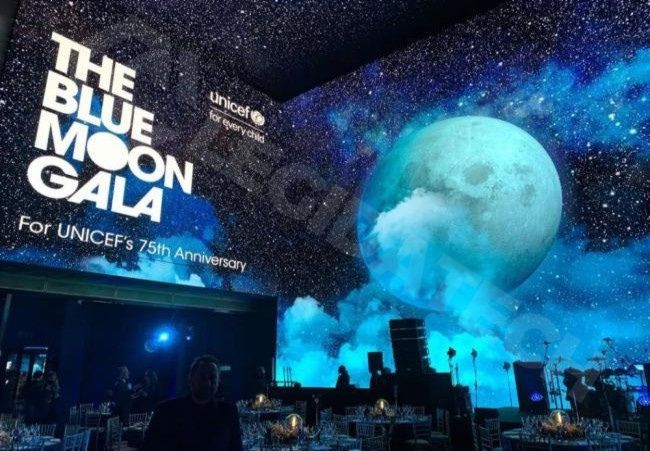
Talent performs inside the live virtual environment — real-time backgrounds, real lighting, final pixels in camera.
LED Volume vs. Green Screen
| Factor | Virtual production LED wall | Green screen |
|---|---|---|
| Final pixels in camera | Yes — background is the shot | No — composited in post |
| Light on actors & props | Real spill light, correct color | None; color spill needs fixing |
| Reflections (cars, glass, eyes) | Real and visible in shot | Impossible |
| Set changes | Minutes — swap content | Hours to days of rebuild |
| Location & time of day | Any, instantly | Restricted to imagination + VFX budget |
| Upfront investment | Higher (asset purchase) | Lower per shoot |
| Reuse across projects | Multi-year production asset | Often single-use |
Green screen still wins for one-off shoots with no reuse. The moment you shoot volume content — episodic, product lines, recurring streams — the LED volume amortizes into the cheaper choice while raising production value.
How We Deliver an XR Studio Project
Stage survey & shot list
Send your studio dimensions, camera plan and shot list. We recommend pitch, wall geometry and ceiling/floor coverage against your budget.
System design
Drawings for wall layout, curves, rigging, processor chain and genlock backbone — plus a content-workflow plan for your render engine.
Factory production & testing
Calibration, burn-in, genlock verification and curved trial assembly, documented with photos and video before packing.
Shipping & installation
Flight-case packed, worldwide freight with on-site or remote-supervised installation and commissioning.
Training & lifetime support
Operator training, spare-part kits, and engineering support on call — the wall is a long-term asset and we keep it shooting.
Why Production Teams Buy LED Volumes from LEGIDATECH
Factory-direct
In-house SMT, assembly and calibration — no trading-company markup. Factory visits and third-party inspections welcome.
Film-literate engineering
We speak genlock, shutter angles and tracking latency — support from engineers who configure walls for cameras daily.
Built to grow
Common rigging geometry across series: start with a broadcast wall, extend into a full volume without discarding cabinets.
Certifications and audit documents available on request — see our certifications and factory tour.
Virtual Production LED Wall — FAQ
What is an XR stage?
An XR stage is a filming environment enclosed by LED walls (and often a ceiling and floor) where virtual backgrounds are displayed in real time and synced to the camera, letting productions capture final visuals in camera instead of compositing green screen in post.
How much does a virtual production LED wall cost?
Indicative factory-direct pricing runs $450–$2,100 per m² depending on pixel pitch — P2.6, the most common film pitch, sits at $600–$900/m². A 24 m² streaming studio and a 200 m² film volume differ by roughly 20× in total budget; request an itemized quote for your stage.
Which pixel pitch is best for XR filming?
Match pitch to camera distance: P1.5–P1.9 for 2–3 m, P2.0–P2.6 for 3–5 m, P2.6–P3.91 for 5 m and beyond. P2.6 is the industry default for film and broadcast volumes because it balances resolution against cost per square meter.
Can an LED wall avoid moiré on camera?
Yes, with the combination of black-face SMD LEDs, anti-glare surface treatment, correct shooting distance and camera focus placement. Moiré appears when the camera sensor resolves the pixel grid; distance and focus depth control it as much as the panel itself.
What is the difference between an XR stage and a virtual production LED volume?
They overlap heavily: “LED volume” describes the physical screen enclosure (wall + ceiling + floor), while “XR stage” emphasizes the extended-reality workflow where tracked cameras interact with virtual scenery. Most modern builds serve both.
Does the wall support genlock and camera tracking?
Yes. Our processors accept tri-level/genlock sync and provide low-latency links compatible with Mo-Sys, stYpe and Ncam tracking systems, keeping wall refresh phase-locked to the camera sensor.
Is it cheaper to rent or buy an XR stage?
Renting wins for single projects. Owning wins once you shoot regularly — typical rental rates in mature markets run $350+ per hour, so frequent users recover the hardware cost while gaining unlimited set changes and scheduling freedom.
How long does it take to build an LED volume?
Production of the LED system typically takes 2–4 weeks depending on size and pitch, plus freight and installation. A 100 m² broadcast studio is commonly shooting-ready within a month of order confirmation.
Does it work with Unreal Engine and disguise?
Yes — the wall is a display endpoint for any render engine. We regularly ship systems for Unreal Engine, disguise and similar media-server workflows, and we support the processor-side configuration your tracking partner needs.
Can I use the LED wall for live streaming instead of film?
Absolutely. Streaming studios are the fastest-growing use: a single P2.5 wall with content templates serves e-commerce streams, podcasts and talk formats, and can be upgraded to full XR with tracking later.
What size LED volume do I need?
Start from your widest lens and tightest blocking: the wall should fill the camera’s field of view plus parallax margin. Streaming studios start around 20 m²; broadcast studios 60–120 m²; film volumes 150 m²+. We size it with you from your shot list.
Do you ship, install and support internationally?
Yes — worldwide freight in flight cases, on-site or remotely-supervised installation, operator training and lifetime engineering support with spare parts shipped from stock.
Recommended Hardware for Your XR Build
EXR Virtual Production Series
Fine-pitch P1.5–P2.6 cabinets, 500×500 mm, curve locks — the core wall hardware for XR volumes.
LED Floor Systems
Load-bearing interactive floor panels that complete the volume and carry reflections.
Control & Processing
Genlock-capable processors and sending systems that bind wall, camera and render engine.
Get Your Virtual Production LED Wall Quote
Send your studio size, target pitch and shoot type — factory-direct pricing and an engineering answer within 2–4 hours.