


KTV • Club • Bar LED Display Solution
KTV LED Screen & Club LED Display Solution
A professional KTV LED screen is more than a display — it is the visual core of the room. LEGIDATECH designs, manufactures and ships indoor LED video walls for KTV private rooms, nightclubs, bars, lounges and DJ stages: the right pixel pitch for your viewing distance, music-synchronized playback, curved and custom shapes, and full installation support from the factory to your venue.
Why Use LED Screens for KTV, Clubs & Bars
For entertainment venues, an LED screen is not a one-time purchase — it is an investment that keeps attracting guests. These are the six business reasons owners choose LED walls over TVs and projectors:
Immersive Visual Experience
LED walls splice seamlessly to any size with no bezels, covering an entire wall or wrapping a room. Guests sing and dance inside the visual scene instead of watching a small TV.
Music-Synchronized Content
With a professional control system, lyrics, music videos, DJ visuals and lighting follow the same beat. The screen reacts to the music instead of playing static footage.
Brand Atmosphere
Color, brightness and motion define the identity of a venue. A themed KTV room or signature club wall makes the space memorable and photo-worthy.
Advertising & Promotion
The same screen promotes new songs, drinks menus, party packages and birthday events during downtime — turning the display into a revenue tool.
Live Performance & DJ
Nightclubs use LED walls as DJ booth backdrops and stage backgrounds, broadcasting live camera feeds and VJ content in real time.
Long-Term Operation
Up to 100,000 hours of lifespan and modular repair keep maintenance costs low. A damaged module is replaced in minutes — the whole screen never needs replacing.
KTV vs Club vs Bar LED Screen Requirements
Different entertainment scenes mean different viewing distances, brightness and screen formats. Using one configuration for every venue is the most common mistake in screen selection.
| Scene | Typical Position | Distanza di visione | Recommended Pitch | Luminosità | Screen Format |
|---|---|---|---|---|---|
| KTV private room | Main wall behind singing area | 1.5–2.5 m | P1.8–P2 | 600–1,000 nits | 16:9 flat or curved rectangle |
| KTV large / VIP room | Main wall + side walls | 2.5–4 m | P2–P2.5 | 600–1,000 nits | Flat + curved wings |
| Nightclub main wall | Dance floor / DJ booth backdrop | 3–8 m | P2.5–P3.9 | 800–1,200 nits | Large flat or curved video wall |
| Bar / Lounge | Back bar, columns, ceiling | 2–6 m | P2–P3.9 | 600–1,000 nits | Strips, columns, small walls |
| DJ stage | Stage background / booth front | 1–3 m | P1.8–P2.5 | 800–1,200 nits | Modular booth screens |
| Corridor / entrance | Ceiling, corridor walls | 1–3 m | P2–P2.5 | 600–1,000 nits | Circular, ceiling, creative shapes |
Starting-point guidance based on standard indoor engineering practice. Final pitch and size are confirmed by LEGIDATECH engineers from your room plan.
Designing a bar or lounge? See zone-by-zone creative LED display ideas for bars — back bar walls, ceiling screens, column wraps and LED strips.
How to Choose the Right LED Screen for Your Venue
Twelve factors decide whether a KTV or club screen looks sharp, survives daily operation and fits the budget. Check each one before you buy.
Passo dei pixel
The distance between LED pixels. Smaller pitch (P1.8, P2) = sharper close-up viewing; larger pitch (P2.5, P3.9) = better value for longer distances.
Distanza di visione
Minimum comfortable distance in meters ≈ pixel pitch in mm. A P2 screen is sharp from 2 m, a P3.9 screen from about 4 m.
Screen Size
Decided by room size and viewing distance, not by a TV-style diagonal. LED walls are built in cabinets so any size is possible.
Risoluzione
Total pixels = width ÷ pitch × height ÷ pitch. Match the screen resolution to 16:9 video content for sharp MVs.
Luminosità
Indoor KTV rooms need 600–1,000 nits; LEGIDATECH indoor screens reach 1,000 nits for rooms with strong ambient light.
Frequenza di aggiornamento
1,920 Hz or higher avoids flicker in phone photos and videos. LEGIDATECH screens refresh at 3,840 Hz — twice a standard indoor screen.
Prestazioni cromatiche
Wide color gamut and grayscale levels keep music video skin tones and club visuals natural at night.
Angolo di visione
Wide horizontal viewing angle keeps the picture consistent for guests watching from the side of the room.
Metodo di installazione
Wall mounting or steel structure — magnetic front-service cabinets mount directly on finished walls without rear access.
Manutenzione frontale
Front-removable modules let staff replace one module in minutes; no need to leave maintenance space behind the wall.
Dimensioni del mobile
Small cabinets (480×320 mm) build screens in fine steps to fit every room wall exactly.
Screen Shape
Flat, curved, circular or 3D — flexible modules and special-shape control deliver the room design you drew.
Further Reading on LED Screen Selection
KTV LED Screen Size & Pixel Pitch Guide
Use the room size first, then the viewing distance, then the pixel pitch — this order prevents the classic mistake of buying a screen that is too coarse for the room or too big for the wall.
| Room Size | Distanza di visione | Recommended Pixel Pitch | Suggested Screen Size (16:9) |
|---|---|---|---|
| Private room 8–15 m² | 1.5–2.5 m | P1.8–P2 | 2.0×1.1 m – 2.5×1.4 m |
| Medium room 15–30 m² | 2.5–4 m | P2–P2.5 | 3.0×1.7 m – 4.0×2.25 m |
| Large / VIP room 30 m²+ | 3–6 m | P2.5–P3 | 4.0×2.25 m – custom |
| Nightclub main wall | 3–8 m | P2.5–P3.9 | 5.0×2.8 m – custom |
Rule of thumb: minimum viewing distance in meters ≈ pixel pitch in millimeters (P2.5 → 2.5 m). This is the same starting formula professional AV integrators use; LEGIDATECH engineers confirm the exact size, pitch and resolution against your room drawing before production.
LED Screen Designs for KTV & Clubs
From a flat lyric wall to a 360° curved room, the screen shape defines the room. These are the designs LEGIDATECH manufactures for entertainment projects:
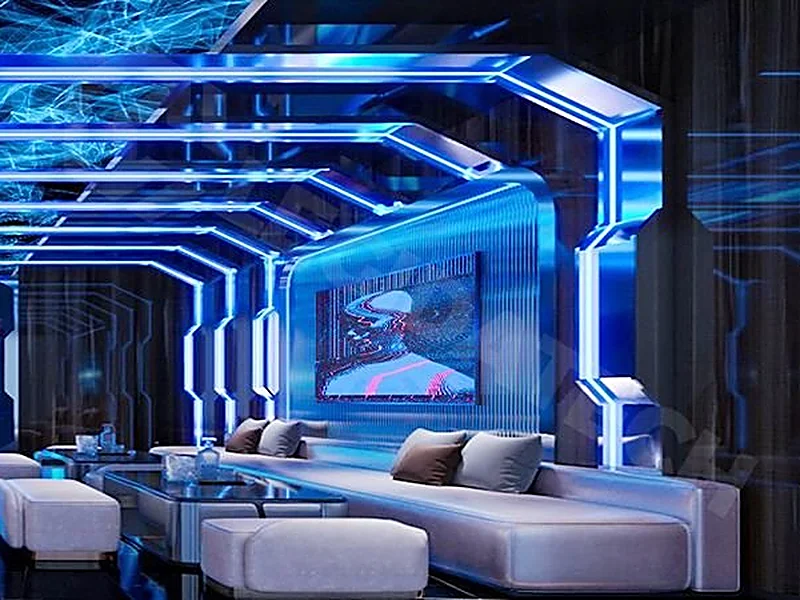
Flat LED Wall
The workhorse of every KTV room: lyrics and MVs on the main wall, seamless to any size. Standard 16:9 cabinets keep content simple.
Indoor LED screen overview →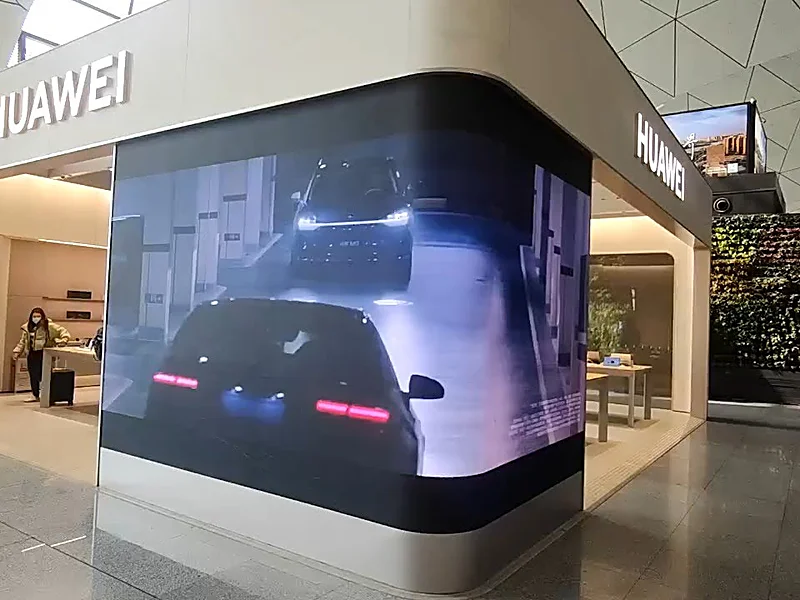
Schermo LED curvo
Curved walls wrap the singing area or DJ booth, pulling guests into the visuals. See the curved wall in action below.
Curved LED display modules →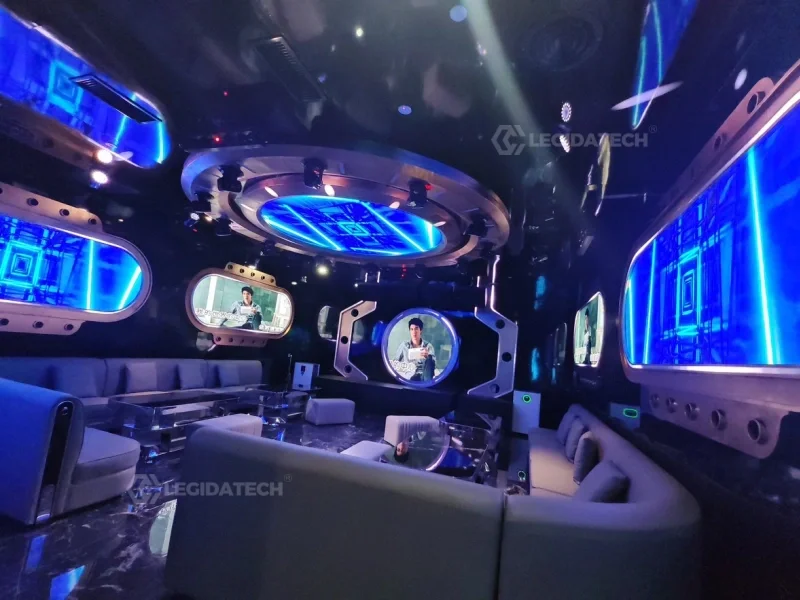
Creative / 3D LED Screen
3D visuals without glasses — deep perspective effects that turn a KTV wall into a stage show.
Creative LED display control guide →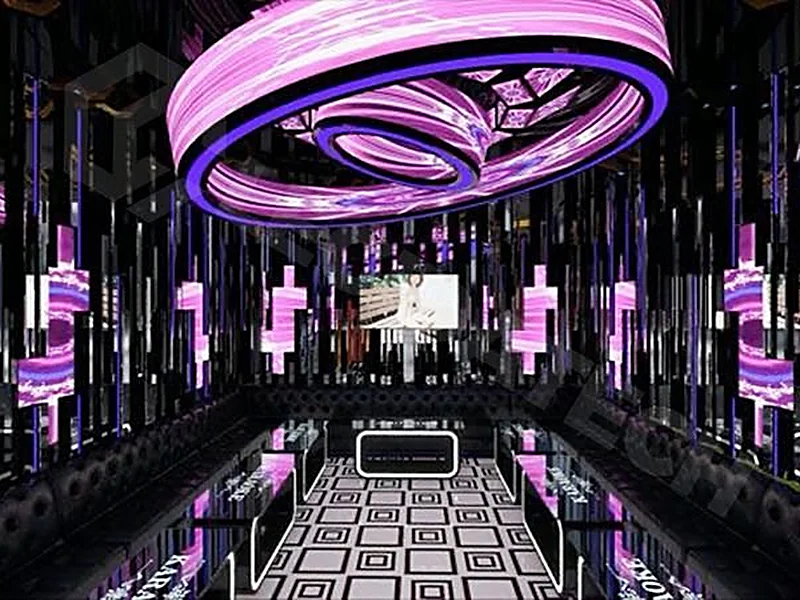
Flexible LED Screen
Flexible soft LED modules bend to cylinders, waves and organic shapes for themed rooms.
Flexible soft LED modules →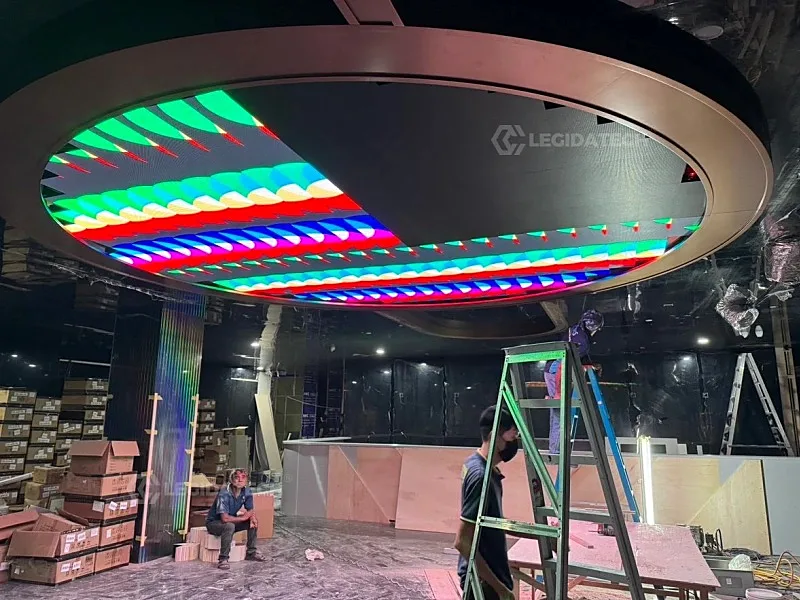
Ceiling LED Display
Ceiling or overhead screens turn the whole room into an immersive box — popular in 5D KTV and party rooms.
LED sphere & suspended displays →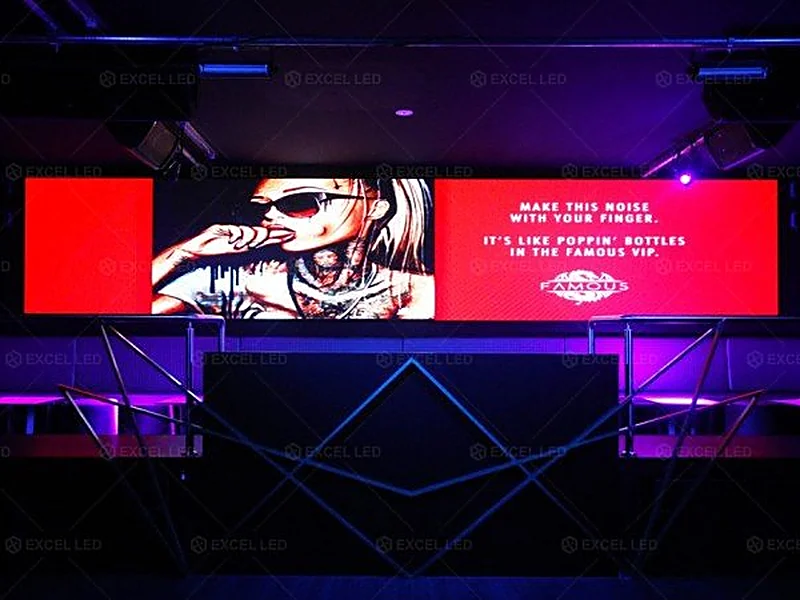
Column & Stage LED Screen
Wrapped columns, stage backgrounds and DJ booth fronts create depth without taking floor space.
Stage LED screen buyer’s guide →360° curved indoor LED wall
Custom shapes in a real KTV project
3D LED effect for KTV rooms
LED Control System for KTV & Club Displays
The screen is only half of the system. A professional LED control chain is what makes lyrics crisp, videos smooth and visuals land on the beat.
For KTV rooms, the processor also synchronizes the screen with lighting and the karaoke system — one beat, one scene, all devices together. LEGIDATECH integrates control systems from the four major brands:
NovaStar
Industry-standard processors and receiving cards for large video walls and multi-screen KTV rooms.
Luce colorata
Cost-effective controllers widely used in indoor entertainment projects.
Huidu
Asynchronous and Wi-Fi cards that let staff update content from a phone.
Cella lunare
Multi-window media servers and creative-screen controllers for shaped displays.
Full system guide: LED Display Control System — Complete Guide. Watch the music – lighting – screen linkage in a real project:
Malaysia KTV project: screen, lighting and sound linkage
Recommended LED Display Types for KTV & Clubs
These are the LEGIDATECH product series our engineers specify most often for entertainment venues — all indoor, all front-service, all factory-direct:
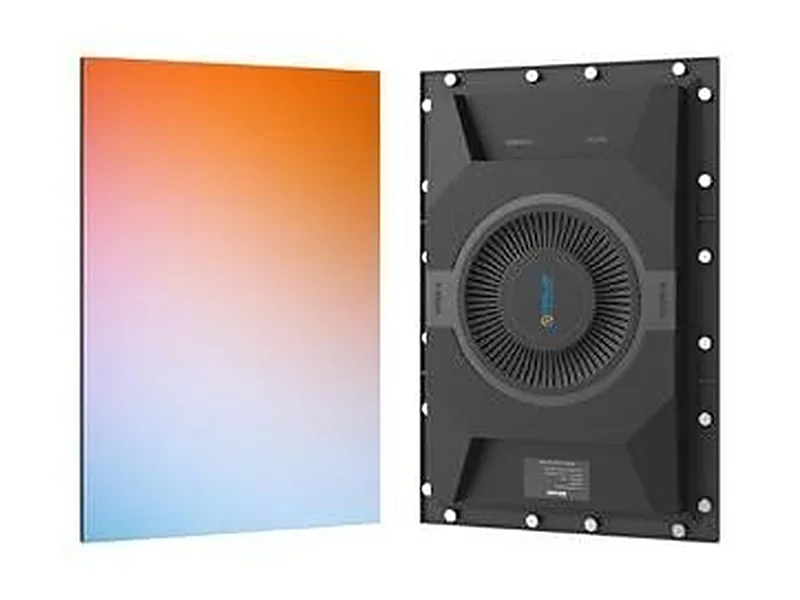
Serie Ehonor
480×320 mm magnetic front-service cabinets, P1.2–P2.5 — the standard choice for KTV private rooms. No screws, no rear access, thin profile.
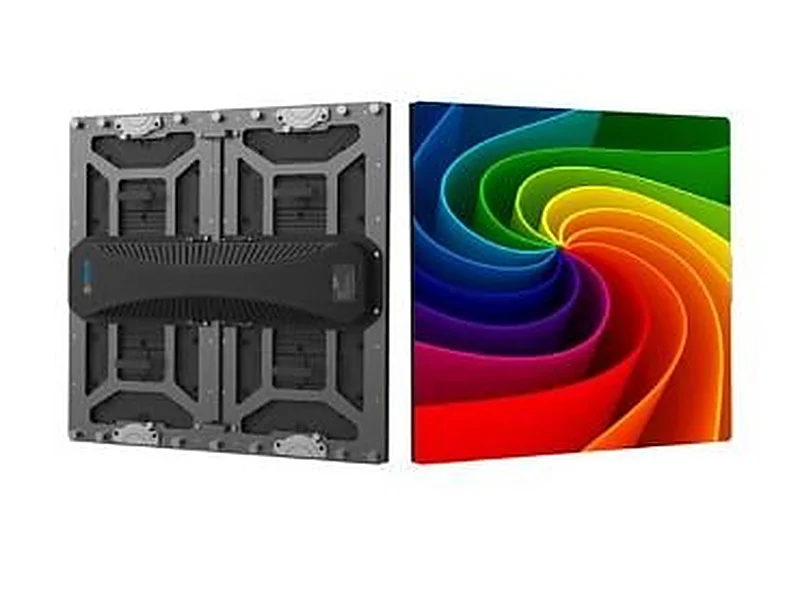
E-Pround Series
Ultra-thin and light indoor display, P2.6–P3.9, 4K capable — best value for medium and large KTV rooms.
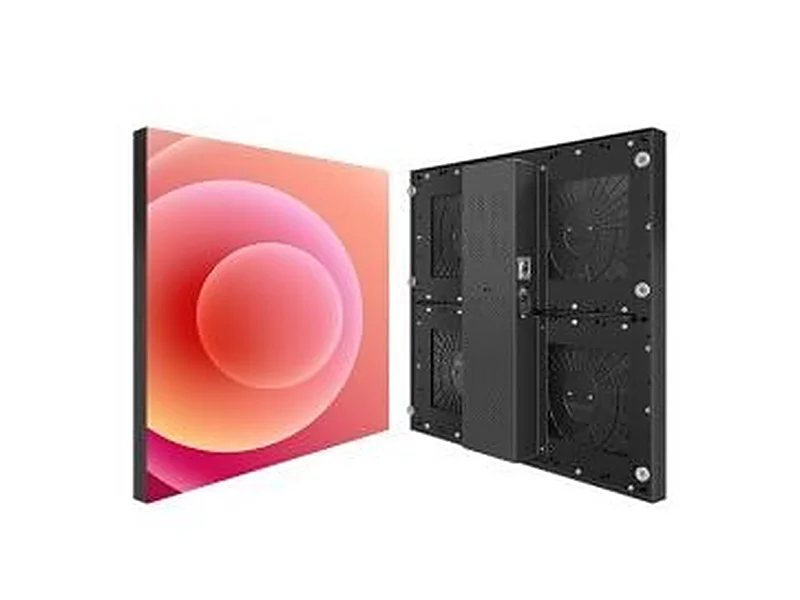
Serie H
P2.6–P3.9 high refresh, thin cabinet — installs 100 m² in about 3 hours, ideal for nightclub walls.
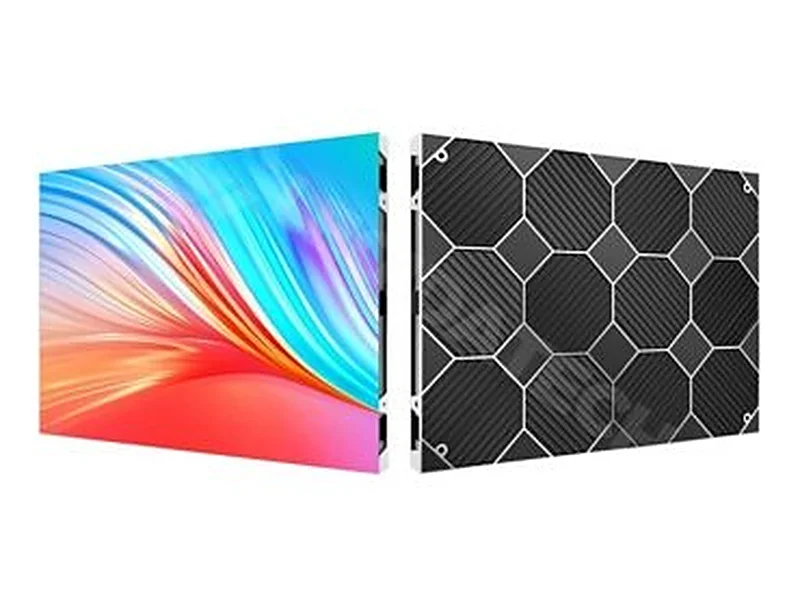
Serie EDI
P1.2–P3 fine pitch with 640×480 mm cabinets — for luxury VIP rooms watched from very close.
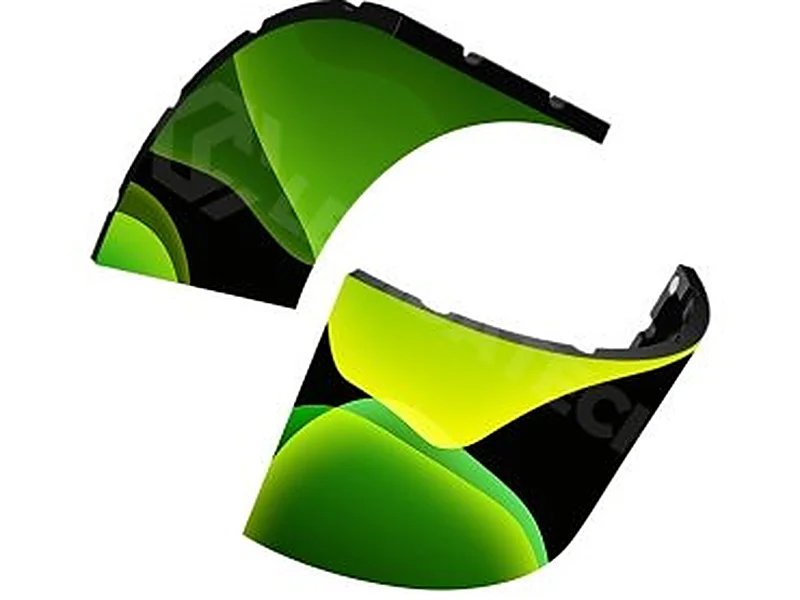
Flexible Modules
P1.87–P4 soft modules for curves, columns and any shape the interior designer draws.
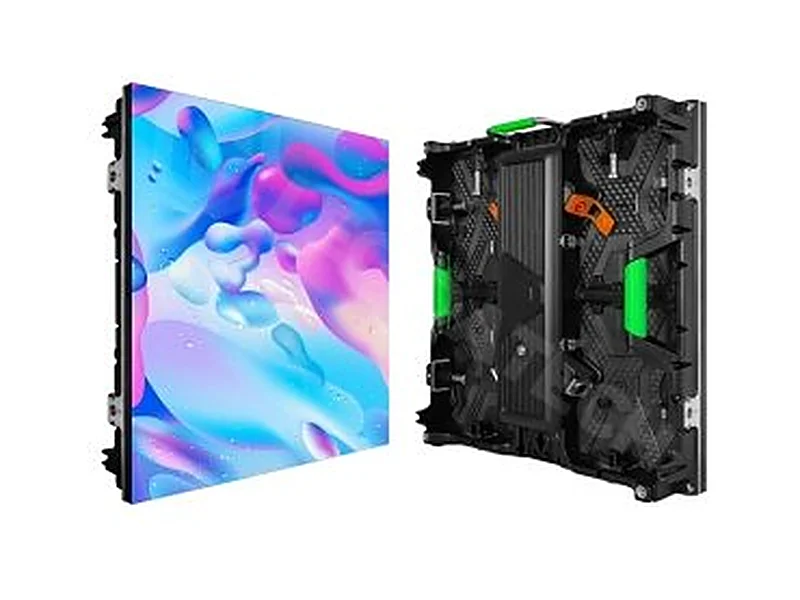
R Series Rental
P2.9–P4.8 rental panels for DJ events, parties and temporary stage setups that move between venues.
KTV / Club LED Display Projects
Real LEGIDATECH entertainment projects — photos and videos from completed installations. We do not show renderings: what you see is what was shipped and installed.

Creative Soft Modules — UK
Flexible LED modules shaped for a club interior.
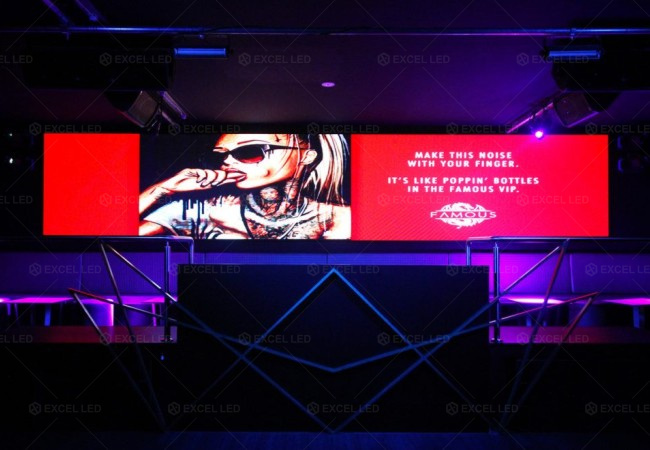
Indoor P3 LED Screen — USA
Indoor P3 video wall for an entertainment venue.

P2.5 Indoor Video Wall — Singapore
Fine-pitch wall for close-up viewing.

LED Screen Smart KTV — Nigeria
Smart KTV room with synchronized LED display.
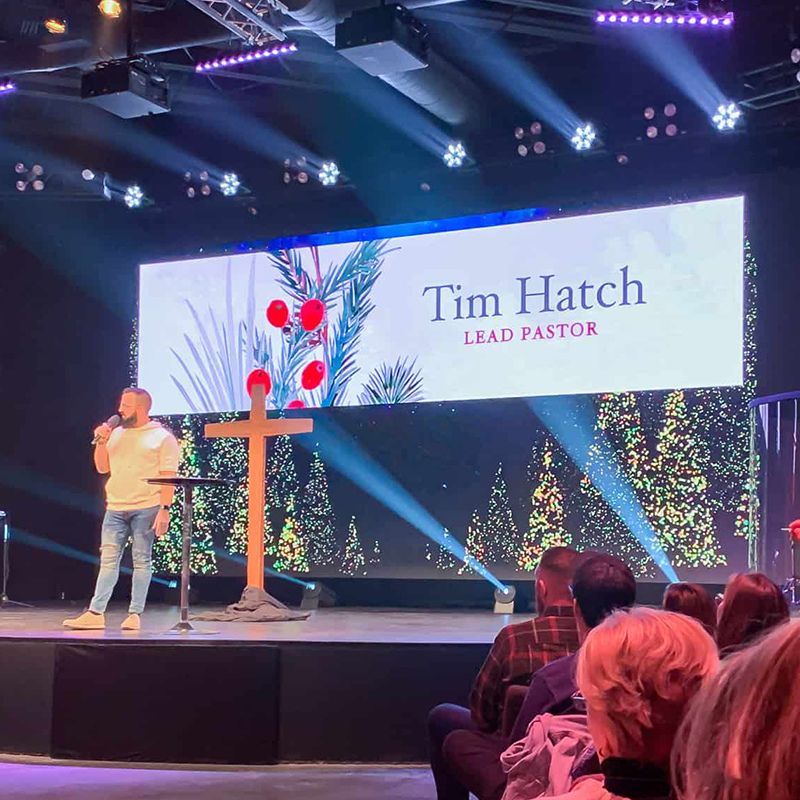
Indoor P3.9 LED Panels — Malaysia
Indoor P3.9 panels for a Malaysian venue.
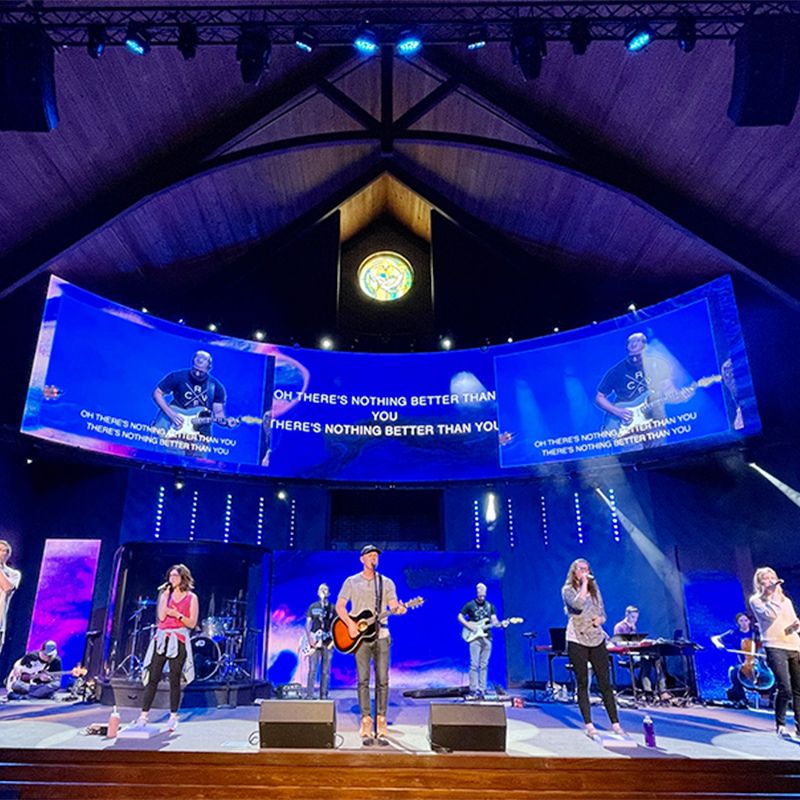
Videowall LED intelligente per club
Smart video wall solution for club KTV rooms.
KTV installation cases — custom shapes, Malaysia
2 × 3.84×0.96 m HD screens, Toppest Night Club, Nigeria
On-Site Project Videos
KTV room LED screen playing 3D content
KTV corridor LED screens
KTV ceiling LED display
KTV room LED screen effect
KTV room immersive LED screen
More entertainment cases and guidance: KTV LED Screen Solutions • Display LED creativo per bar
Installazione e manutenzione
A club screen must survive daily operation. These are the installation and maintenance points LEGIDATECH engineers cover on every entertainment project:
Montaggio a parete
Magnetic front-service cabinets mount directly on the finished wall — no rear maintenance space required.
Struttura in acciaio
For large and hanging walls, LEGIDATECH specifies the steel structure and fixing points for your wall type.
Manutenzione frontale
Every module lifts off from the front with a magnetic tool; a replacement takes minutes.
Ventilation
Thin cabinets with natural heat dissipation keep the wall quiet and cool behind the screen.
Power Distribution
Calculated power load and distribution per cabinet — the screen shares circuits correctly with club sound and lighting.
Gestione dei cavi
Data and power cables are routed inside the cabinets; the wall stays clean for the interior design.
Control System Installation
Processor, receiving cards and network setup are pre-configured and labeled in the factory.
Maintenance Access
Front-service design means staff can reach every module without scaffolding behind the screen.
Safety
Each screen is aged and tested before shipment; power supplies and modules are certified components.
Indoor fixed LED display with cabinet — professional installation
KTV / Club LED Screen Cost Factors
We do not publish fake price tags — a screen quote that ignores your room is meaningless. These are the factors that actually decide your project budget:
| Fattore | How It Affects Cost |
|---|---|
| Screen Size | More square meters = more modules; cost scales with area. |
| Passo dei pixel | Finer pitch (P1.8 vs P3.9) roughly doubles pixel density and module cost. |
| Tipo di mobile | Die-cast and ultra-thin cabinets cost more than standard indoor cabinets. |
| LED Package | SMD is the value standard; GOB adds protection; COB adds price and durability. |
| Luminosità | Higher nits require higher-spec LED chips. |
| Frequenza di aggiornamento | 3,840 Hz high-refresh driver ICs cost more than 1,920 Hz. |
| Sistema di controllo | Brand, processor class and multi-screen sync features set the control budget. |
| Struttura in acciaio | Wall-mounted vs freestanding/hanging structures differ significantly. |
| Installazione | Local installation teams or remote factory guidance with your own crew. |
| Shipping | Air vs sea freight; full cabinets ship heavier than modules. |
| Personalizzazione | Curves, special shapes and custom cabinet colors add engineering time. |
| Maintenance Plan | Spare modules and training included in the order keep long-term cost low. |
Send your room size and viewing distance for a factory-direct quote. Reference pricing for common indoor screens: LED Screen Price List.
How LEGIDATECH Builds KTV & Club LED Display Solutions
LEGIDATECH è un produttore di schermi LED, not a reseller — every KTV and club screen is produced, aged and tested in our own factory before it ships.
Fabbrica
Production in Shenzhen and Hunan, China, with overseas offices in Nigeria, the USA, Malaysia and South Africa.
LED Module Production
DECAN SMT machines place every pixel precisely for uniform color across the wall.
Cabinet Assembly
Ultra-thin cabinets at about 4.2 kg — half the weight of standard indoor screens.
Test di invecchiamento
Every screen runs a burn-in test before shipment so no dead pixels or faults leave the factory.
Controllo qualità
Brightness, color and refresh are verified against the spec you approved.
Personalizzazione
Special shapes, cabinet colors and custom sizes are engineered to your drawing.
Control System Integration
Processor and cards are pre-configured, labeled and tested together with the screen.
Packaging & Shipping
Accessories and screens packed separately, photographed before dispatch, shipped to your port or address.
72-hour burn-in aging test in the LEGIDATECH factory
Visit the factory or meet our team: Informazioni su LEGIDATECH • Contattaci
KTV / Club LED Display FAQ
Che cos'è uno schermo LED KTV?
Uno schermo LED KTV è una parete video LED modulare per interni, installata nei locali di karaoke per visualizzare testi, video musicali e immagini sincronizzate. Rispetto a televisori o proiettori, gli schermi LED offrono la possibilità di essere uniti senza soluzione di continuità a qualsiasi dimensione, una luminosità maggiore (gli schermi per interni LEGIDATECH raggiungono i 1.000 nit), una durata di 100.000 ore e manutenzione frontale.
Qual è il miglior schermo LED per una sala KTV?
Per la maggior parte delle sale private KTV, uno schermo LED per interni a passo pixel fine (da P1.8 a P2.5) è la scelta migliore, poiché gli ospiti guardano da una distanza compresa tra 1,5 e 4 metri. I cabinet magnetici per il servizio frontale, come la serie LEGIDATECH Ehonor, semplificano l'installazione in ambienti già allestiti, e una frequenza di aggiornamento di 1920 Hz o superiore garantisce video e testi scorrevoli nitidi durante le riprese.
Qual è il pixel pitch migliore per le sale KTV?
Utilizza la regola della distanza di visione: la distanza minima di visione confortevole in metri è pari al valore del passo dei pixel in millimetri. P1.8 per la visione da circa 1,8 m, P2 per circa 2 m, P2.5 per circa 2,5 m e P3 per circa 3 m. Per le piccole stanze private (visione da 1,5 a 2,5 m) sono adatti i valori P1.8–P2; per le stanze grandi e le pareti delle discoteche viste da 3 m o più si possono utilizzare i valori P2.5–P3.9.
Quanto grande dovrebbe essere lo schermo LED di un KTV?
Partite dalle dimensioni della stanza e dalla distanza di visione, non da una diagonale fissa. Come punto di partenza: le stanze private da 8 a 15 m² sono adatte a schermi da 2,0×1,1 m a 2,5×1,4 m; le stanze medie da 15 a 30 m² sono adatte a schermi da 3,0×1,7 m a 4,0×2,25 m; le grandi sale VIP e le pareti principali delle discoteche partono da 4,0×2,25 m e sono completamente personalizzabili. Gli ingegneri di LEGIDATECH confermeranno le dimensioni finali in base alla planimetria della stanza prima della produzione.
Quanto costa uno schermo LED per KTV?
Il costo dipende dalle dimensioni dello schermo, dal passo dei pixel, dal tipo di LED (SMD, GOB o COB), dalla luminosità, dalla frequenza di aggiornamento, dal sistema di controllo, dalla struttura in acciaio, dall'installazione e dalla spedizione. Un passo dei pixel più fine e dimensioni maggiori comportano un aumento del prezzo al metro quadro. Invece di un preventivo fisso, gli ingegneri di LEGIDATECH dimensionano prima lo schermo in base alle dimensioni della stanza e poi forniscono un preventivo direttamente dalla fabbrica: inviate le dimensioni della stanza per ottenere un preventivo preciso.
Quale schermo LED è adatto a una discoteca?
Le discoteche in genere necessitano di tre tipi di schermi LED: un videowall per il palco principale o la postazione del DJ (P2.5–P3.9 per una visione da 3–8 m), schermi creativi come schermi curvi, circolari o 3D per creare atmosfera, e schermi a striscia sottile o a soffitto per effetti avvolgenti e coinvolgenti. Un'elevata frequenza di aggiornamento e la riproduzione di contenuti sincronizzata con la musica sono essenziali affinché le immagini seguano il set del DJ in tempo reale.
È possibile sincronizzare gli schermi LED con la musica e l'illuminazione?
Sì. Un sistema di controllo LED professionale riceve la sorgente video, la elabora e la invia allo schermo LED, mentre le interfacce DMX512 o Art-Net sincronizzano luci e audio. LEGIDATECH utilizza processori video professionali (NovaStar, Colorlight, Huidu, Mooncell) in modo che testi, video musicali, visual del DJ e luci da discoteca rimangano sincronizzati su più schermi nella stessa sala.
È possibile realizzare schermi LED per KTV curvi o di forma personalizzata?
Sì. I moduli LED flessibili si piegano per formare schermi curvi, cilindrici o ondulati, e controller di forma speciale consentono di realizzare configurazioni circolari, a soffitto e irregolari. LEGIDATECH ha già realizzato progetti KTV curvi e dalle forme creative, tra cui pareti interne curve a 360°, e produce design personalizzati su disegno del cliente.
Come si installa uno schermo LED in un locale notturno?
Il processo standard prevede: la verifica della struttura in acciaio o dei punti di fissaggio a parete, il fissaggio dei cabinet fila per fila con supporti magnetici o a vite, il collegamento dei cavi di alimentazione e dati, l'installazione del processore video e delle schede di ricezione, la configurazione e la calibrazione. I cabinet con manutenzione frontale consentono la sostituzione di ogni modulo dalla parte anteriore, aspetto fondamentale per gli schermi installati a ridosso di pareti di club già rifinite. LEGIDATECH offre assistenza e formazione a distanza per ogni ordine.
È meglio uno schermo LED o LCD per una discoteca?
Per pareti di grandi dimensioni e forme creative, la tecnologia LED è migliore: non presenta cornici visibili, può avere qualsiasi dimensione o curvatura, raggiunge una luminosità maggiore e dura fino a 100.000 ore. I videowall LCD hanno cornici visibili e dimensioni fisse, ma costano meno per gli schermi di piccole dimensioni. Per la parete principale di un KTV o di una discoteca, un videowall a LED rappresenta lo standard del settore.
Quanto durano gli schermi LED dei karaoke?
La durata di vita dei display a LED arriva fino a 100.000 ore, diverse volte superiore a quella di televisori o proiettori. Gli schermi sono modulari, quindi se un modulo si danneggia è sufficiente sostituire solo il modulo anziché l'intero schermo, mantenendo bassi i costi di manutenzione a lungo termine per un'azienda che opera quotidianamente.
Posso acquistare schermi LED per KTV direttamente dalla fabbrica?
Sì. LEGIDATECH è un produttore di schermi LED con stabilimenti di produzione a Shenzhen e Hunan, in Cina, e uffici all'estero in Nigeria, Stati Uniti, Malesia e Sudafrica. Acquistare direttamente dalla fabbrica elimina i costi degli intermediari; ogni schermo viene sottoposto a un processo di invecchiamento e collaudo prima dell'imballaggio e LEGIDATECH spedisce in tutto il mondo al vostro porto o indirizzo.
KTV LED Screen & Club LED Display: The Complete B2B Selection Guide
How a KTV LED screen changes the economics of a karaoke room
A KTV room is rented by the hour, and the room that looks better gets booked first. This is the core business logic behind the rapid replacement of TVs and projectors with LED screens in KTVs across Asia, the Middle East, Africa and the Americas. A traditional TV in a KTV private room displays lyrics, but it cannot cover the wall, cannot follow the music, and cannot be shaped to the interior design. A KTV LED screen does all three, and because it is modular it grows, shrinks or moves with the business. When LEGIDATECH engineers size a KTV project, they start from one question: where do guests sit and how far are their eyes from the wall? That single measurement determines pixel pitch, resolution, brightness and budget more than any other factor.
The most common procurement mistake in KTV projects is choosing pixel pitch by price instead of by viewing distance. A P3.9 screen is an excellent product, but in a private room where guests sing 1.8 meters from the wall it looks grainy. The same P3.9 screen on a nightclub main wall viewed from five meters is perfectly sharp and dramatically more cost-effective. This is why LEGIDATECH never quotes a screen before seeing the room plan. The pitch×1000 rule — minimum viewing distance in meters equals the pixel pitch in millimeters — is the same starting formula professional AV integrators use worldwide, and it is the fastest way to check whether a quoted configuration fits a room.
Club LED screen design: from flat wall to immersive room
Club and nightclub LED display design has moved far beyond the single flat wall. Today’s projects combine several screen types in one venue: a large main video wall behind the DJ booth or stage, curved wings that wrap the dance floor, slim strips above the bar, circular ceiling screens above VIP zones, and flexible modules wrapped around columns. Each of these serves a different function. The main wall carries the visual show and live camera feeds; the curved wings extend the visuals into peripheral vision; the strips and ceiling screens hold the room in a continuous light-and-video envelope that static lighting cannot reproduce.
Designing this as a system, rather than buying individual screens, is where most projects save money and most failures happen. When screens of different shapes run from one video processor, one piece of content can span the entire room, and the lighting follows through DMX512. When they are bought separately with different control cards, the room looks fragmented and staff end up operating three or four software platforms. LEGIDATECH configures the whole chain — content source, processor, receiving cards, screens — in the factory and tests it as one system before shipping, which is why a club in Lagos and a club in Kuala Lumpur both run the same proven architecture.
Nightclub LED display: brightness, refresh and the camera test
Nightclub environments are hostile to displays in three specific ways: strong ambient lighting, phone cameras everywhere, and long operating hours. These map directly onto three specifications. Brightness: a club wall needs 800 to 1,200 nits to hold contrast against spotlights and strobes, while a KTV private room works well at 600 to 1,000 nits. Refresh rate: guests film the DJ set constantly; below 1,920 Hz the screen shows scan lines and flicker on their phones. LEGIDATECH indoor screens refresh at 3,840 Hz, which is twice a standard indoor screen, and this single spec is often what decides whether the venue looks premium or cheap in guest videos. Lifespan: a club screen may run 12 hours a night, 365 nights a year; the 100,000-hour rated life of LED modules and front-replaceable module design mean a damaged pixel becomes a five-minute maintenance task, not a screen replacement.
Pixel pitch and viewing distance: the numbers that decide sharpness
Pixel pitch is the distance in millimeters between the centers of adjacent LED pixels. It is the single strongest driver of both image quality and price, because halving the pitch quadruples the pixel density on the same area. Practical guidance for entertainment venues: P1.8–P2 for private rooms where the viewing distance is 1.5–2.5 meters and guests read lyrics up close; P2–P2.5 for medium and VIP rooms at 2.5–4 meters; P2.5–P3.9 for nightclub main walls and DJ backdrops viewed from 3 meters and beyond. Resolution follows from size and pitch: a 4-meter-wide, 2.25-meter-high wall at P2.5 resolves 1600×900, very close to the 16:9 HD format that music video content is produced in, which keeps videos sharp without scaling artifacts.
Screen size: from room measurement to cabinet count
Because LED walls are built from small cabinets, screen size is never limited by a diagonal like a TV. The useful procedure is: measure the wall and seating plan, decide the viewing distance band, pick the pitch, then compute how many cabinets fill the desired area. A 480×320 mm cabinet, for example, builds a 2.4×1.28 m wall from five columns by four rows — an 16:9-friendly area for a private room — and the same cabinet extends to 4.8×2.56 m for a VIP room by adding modules in the same structure. Fine cabinet steps mean the screen fits the wall exactly, with no custom metalwork. For corridors and ceilings the same cabinets turn 90 degrees, so a single product line can cover the entire venue, which simplifies spare parts and training for the operator.
Music synchronization and the LED control system
Music synchronization is what separates an LED wall from a big monitor in a club. The control chain runs from the content source — a karaoke server, media player or the DJ’s laptop — into a video processor, which scales, layers and routes the signal to the receiving cards behind each cabinet. The processor is also where the screen meets the rest of the venue: DMX512 or Art-Net output lets the lighting console drive fixtures on the same beat, and audio inputs let the visuals react to the music directly. LEGIDATECH integrates the four major control ecosystems — NovaStar, Colorlight, Huidu and Mooncell — choosing per project: NovaStar for large multi-screen walls, Colorlight for value, Huidu for Wi-Fi and asynchronous updates, Mooncell for creative shapes and multi-window media servers. The choice of control system determines how staff update content every day, so it is as much an operations decision as a technical one.
Installation and maintenance: planning for daily operation
Entertainment venues renovate fast and operate late, so installation must be quick and maintenance must not require specialists. Magnetic front-service cabinets install directly on a finished wall: each cabinet hangs on its magnets, data and power connect between cabinets, and the screen is flat and aligned by the cabinet design itself. Front maintenance means any module can be lifted off with a magnetic tool and replaced from the front — there is no need for a maintenance corridor behind the wall, which is often physically impossible in an existing club. Power is distributed per cabinet from calculated loads, cables run inside the cabinet channels, and the whole wall stays as clean as the interior designer intended. LEGIDATECH ships every screen with a pre-configured control system, labels every cable run, and supports installation by remote video guidance or by our partners in Nigeria, the USA, Malaysia and South Africa.
Cost factors: where a KTV LED screen budget actually goes
There is no honest single price for a KTV LED screen. Budget is decided by twelve factors: screen area, pixel pitch, cabinet type, LED package, brightness, refresh rate, control system, steel structure, installation, shipping, customization and the maintenance plan. The two that dominate are area and pitch. The most valuable purchasing discipline is to fix the room requirement first and let the quote follow the engineering, not the reverse. Sellers who quote a price before asking for the room plan are pricing a product, not solving the room. As a manufacturer, LEGIDATECH quotes factory-direct, and every screen is aged and tested in the factory before packing, with photos of the packed order sent before shipment — so the price you approve is the system you receive.
Choosing a B2B partner for KTV and club LED projects
KTV and club projects are system projects. The screen must fit the room, follow the music, survive the hours and be maintainable by local staff. That requires a supplier who manufactures the screen, integrates the control system and has built real entertainment projects — not a reseller translating a price list. LEGIDATECH has produced KTV and club installations in the UK, the USA, Singapore, Nigeria and Malaysia, among many others, with 13 years of export experience, a five-year warranty and lifelong technical training for operators. Whether you are outfitting one private room or a whole entertainment complex, the next step is the same: send the room plan and viewing distance, and our engineers will return a screen recommendation — size, pitch, product series and control system — with a factory-direct quotation.
Get Your KTV / Club LED Screen Recommendation
Send your room size and viewing distance. LEGIDATECH engineers reply within 2–4 hours with the right screen series, pixel pitch, size and a factory-direct quote.
Get Your Factory-Direct Quote