


Factory-Direct LED Display Manufacturer — 13 Years Export Experience
LED Stage Screen: Factory-Direct Rental Display Solutions
From P1.9 to P4.8 pixel pitch, LEGIDATECH manufactures rental-grade LED stage screens for concerts, weddings, corporate events, and touring productions. Whether you need an Écran LED pour scène backdrops, an LED screen for concert tours, or a complete Mur LED de scène system — we deliver factory-direct with free CAD design and Garantie de 3 ans. Shipped to 108+ countries.
📌 Key Takeaways — LED Stage Screen Buying Guide

Haute luminosité
Visible under stage lights

Easy Maintenance
Front-service, tool-free swap
Fréquence de rafraîchissement élevée
3,840Hz broadcast-ready

Light Weight
7.5kg die-cast aluminum
3 types de Stage LED Screens
Not all stage LED screens serve the same purpose. Your event type, venue size, and audience distance determine which configuration you need.
📝 TL;DR: Choisir Main Backdrop for the primary visual centerpiece, Floor LED for interactive stage surfaces, and Side Fill Screens for audience members at the back. Most professional productions combine all three.
Main Stage Backdrop LED Wall
The primary visual display behind performers — used for dynamic backgrounds, live camera feeds, sponsor logos, and synchronized video content. This is the centerpiece of any stage production.
- Pas de pixel : P2.6–P4.8 (indoor), P3.9–P6 (outdoor)
- Taille typique : 6m×4m to 14m×7m
- Budget Range: $8,000–$45,000 factory-direct
- Key Requirement: ≥3,840Hz refresh for camera-ready broadcast
LED Stage Floor / Dance Floor
Interactive LED floor panels that transform the stage surface into a dynamic visual element. Used for award shows, TV productions, nightclubs, and high-end weddings.
- Pas de pixel : P3.9–P6.2
- Load Capacity: 1,500–2,000 kg/m²
- Budget Range: $800–$1,600/m²
- Surface: Anti-slip, scratch-resistant, IP65 available
Side Fill & IMAG Screens
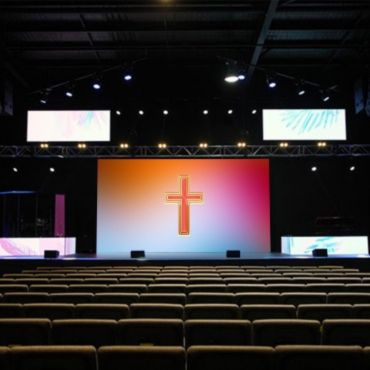
Supplementary screens mounted on stage sides or flown from truss for audience members at the back or extreme angles. Essential for IMAG (Image Magnification) at conferences, concerts, and worship events.
- Pas de pixel : P3.9–P4.8
- Taille typique : 3m×2m to 5m×3m per screen
- Budget Range: $3,000–$10,000 per screen
- Mounting: Ground-stacked or truss-flown
How to Choose the Right LED Stage Screen
The biggest mistake buyers make is choosing the wrong screen size or pixel pitch. Use this data-driven guide to match your event type to the optimal specification.
📝 TL;DR: Match screen size to event type (weddings: 3×2m, concerts: 8×5m+) and pixel pitch to viewing distance (P3.9 works for 4m+). For 80% of rental companies, a P3.9 main screen at 6m×4m is the optimal starting point.
📊 Screen Size by Event Type
🔍 Pixel Pitch vs Viewing Distance
💡 Conseil de pro : For most rental companies, a P3.9 main screen at 6m×4m is the sweet spot — versatile enough for 80% of bookings. For camera shoots, go one step finer because camera sensors detect pixel structure more than the human eye.
Écran LED de scène Gammes de produits
All five series are proven in touring, rental, and fixed installation projects worldwide. Every cabinet uses die-cast aluminum, NationStar/Kinglight LEDs, Mean Well power supplies, and NovaStar control systems as standard.
📝 TL;DR: Magic for mission-critical redundancy, Enova Pro for fastest setup, Enova for curved designs, RA for maximum flexibility, R Series for budget entry. All share the same premium components — the difference is in features, not core quality.

🎯 Magic Series — Never-Black-Out™
Flagship rental LED screen with dual power and signal redundancy. If one cabinet loses power, the rest keep running — the only choice for mission-critical live broadcasts where a black screen is not an option.
- Pas de pixel : P2.6 / P2.9 / P3.9 / P4.8
- Armoire: 500×500mm, 7.5 kg, die-cast aluminum
- Fréquence de rafraîchissement : 3,840Hz broadcast-ready
- Best For: Live concerts, TV broadcasts, high-stakes events
⚡ Enova Pro Series — Fastest Setup
Magnetic module attachment + full front maintenance. No tools needed for module swap — a single technician can replace a module in under 30 seconds. Plug-and-play design cuts setup time by approximately 40%.
- Pas de pixel : P2 / P2.6 / P2.9 / P3.9 / P4
- Armoire: 500×500mm / 500×1000mm
- Entretien: Full front-service, magnetic module
- Best For: Rental companies, frequent setup/teardown crews
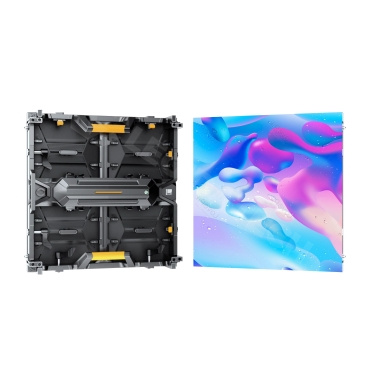

🎨 Enova Series — Curved & Creative
Le Série Enova features corner-protected cabinets with ±15° curve capability for immersive stage designs. Removable power supply enables quick field replacement in under 5 seconds. NovaStar control system with .rcfg pre-configuration included.
- Pas de pixel : P2.6 / P2.9 / P3.9 / P4.8
- Armoire: 500×500mm / 500×1000mm
- Curve: ±15° per cabinet (concave or convex)
- Best For: Creative stage designs, curved backdrops, immersive setups
🔧 RA Series — Versatile Workhorse
Front + rear dual maintenance design. Multiple installation modes — hanging, stacking, ground support — for maximum deployment flexibility. Back cover pulls out for 5-second power supply replacement in the field.
- Pas de pixel : P2.6 / P2.9 / P3.9 / P4.8
- Armoire: 500×500mm, versatile rigging options
- Entretien: Dual front + rear access
- Best For: Mixed-use rental fleets, AV production houses
💰 R Series — Best Value Entry Point
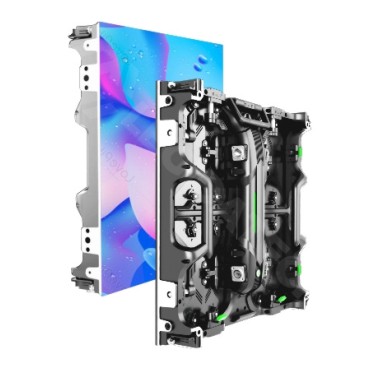
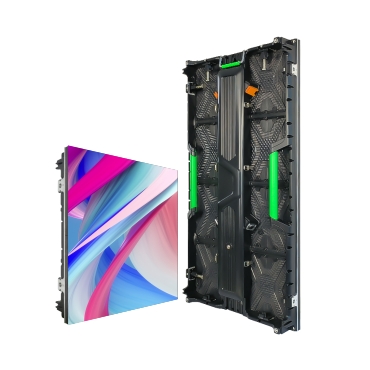
Economy stage screen without compromising core performance. NovaStar system, 3,840Hz refresh rate, proven reliability. The most cost-effective option for rental companies building their first LED inventory.
- Pas de pixel : P3.9 / P4.8
- Armoire: 500×500 mm
- Fréquence de rafraîchissement : 3,840Hz
- Best For: Budget-conscious rentals, entry-level inventory building
📊 Quick Comparison: All 5 Stage LED Screen Series
Prices are factory-direct estimates. Contact us for a formal quotation tailored to your configuration.
Not sure which series fits your business? Tell us your event types and budget — we will recommend the optimal configuration.
LED Stage Screen Installation & Setup
UN Mur LED de scène can be assembled in 2–4 hours with 2–3 technicians. We ship every Mur LED de scène pre-assembled and pre-configured — your screen arrives ready to connect, not as a box of loose components.
📝 TL;DR: Most stage LED walls assemble in 2–4 hours. Ground-stacked is fastest; truss-mounted is standard. We provide free CAD layout drawings, pre-configured .rcfg files, and remote video-call guidance — no on-site engineer needed.
Plan Layout & Rigging
Choisir ground-stacked (fastest), truss-mounted (standard), or flown/hung (arena). We provide CAD drawings with exact positions and rigging points. Power: ~0.3–0.5 kW/m² — a 20m² screen uses one standard circuit.
Assemble Cabinets
Quick-lock mechanisms connect in seconds. Cabinets daisy-chain for both power and data — no individual home runs needed. Pre-labeled by position. 3 technicians can assemble 50m² in ~2 hours.
Connect & Test
One Ethernet cable from video processor to first cabinet — signal cascades automatically. Load pre-configured .rcfg file from USB. Test video, color uniformity, and brightness across the entire wall before final tightening.
Strike & Pack
Reverse the process. Cabinets fit into flight cases in the same order unpacked. 50m² strike time: ~1 hour with 3 technicians. Flight cases labeled for next deployment efficiency.
🎬 Watch: Stage LED Screen Setup & Installation Videos
Curved LED Display Setup Demo
Stage LED Product Showcase
LED Wall in Live Event Action
Real Écran LED de scène Projects
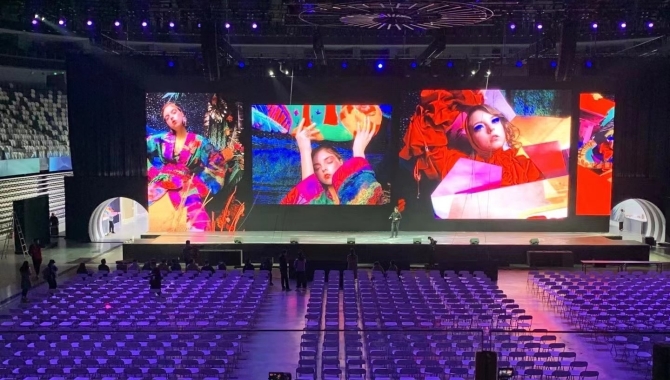
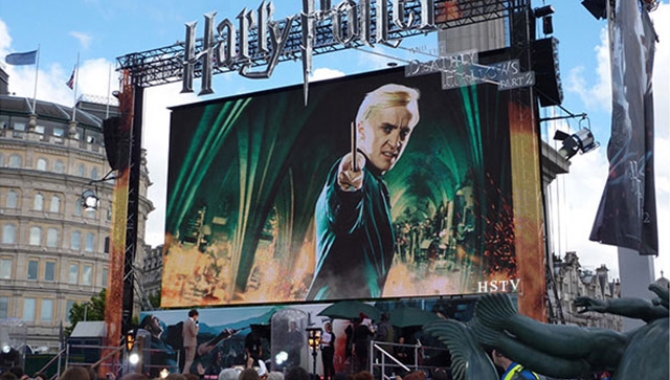
1,000+ stage projects delivered across 108 countries. Each Mur LED de scène installation below demonstrates real-world specifications and measurable outcomes.
📝 TL;DR: Real installations from Australia (70m² concert tour), Mexico (outdoor festival IP65), and a multi-country rental fleet (200+ cabinets). All delivered pre-configured with remote support — proving factory-direct procurement works at any scale.

Why Rental Companies Choose LEGIDATECH
13 years, 108+ countries, 1,600+ partners. Here is what makes factory-direct procurement the right decision for your rental business.
📝 TL;DR: Factory-direct saves $5K–$15K per order. All cabinets are die-cast aluminum with premium components and 48-hour burn-in testing. 3-year warranty with 48-hour replacement dispatch is standard — not an upsell.
Factory-Direct Pricing
10,000m² Shenzhen factory. No distributors. The same P3.9 rental cabinet that costs $950/m² through an AV distributor is $650–$750/m² direct. Every order includes receiving cards, power supplies, cables, spare modules, NovaLCT config, and flight cases. Average savings: $5,000–$15,000 per order.
Touring-Grade Reliability
All cabinets die-cast aluminum, not steel — lightweight for touring, won’t rust. Premium components: NationStar/Kinglight LEDs, Mean Well power supplies, NovaStar control. Every cabinet undergoes 48-hour burn-in at full white before shipping.
End-to-End Support
Conception CAO gratuite with 3D venue rendering. Pre-configured .rcfg files. Remote video-call setup guidance. 3–5% free spare modules with every order. 3-year full warranty with 48-hour replacement dispatch to most countries.
Rental Business ROI
A $15,000 stage screen typically rents for $1,500–$3,000 per event. At 10–15 events/year, ROI in 12–18 months. Distributor pricing available for repeat buyers — additional 10–18% discount. We actively support your rental business growth.
Écran LED de scène Applications
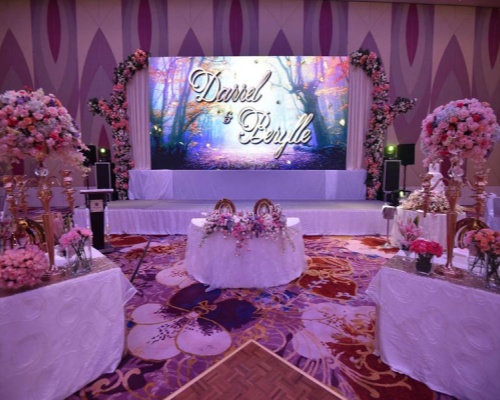
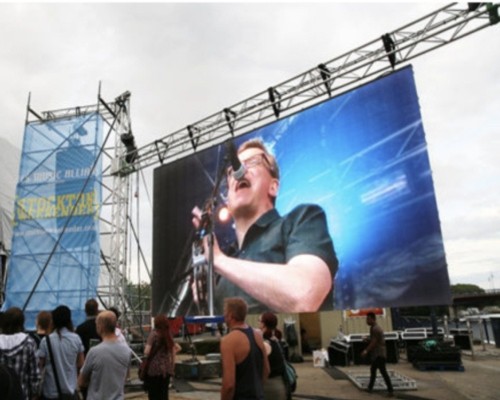
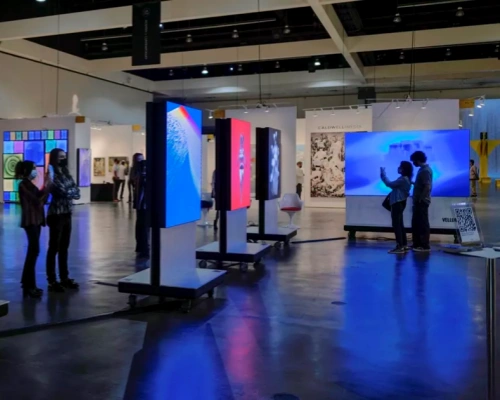
From intimate weddings to stadium concerts, stage LED screens transform live events. Here are the four most common use cases and their specific requirements.
📝 TL;DR: Stage LED screens serve weddings (dynamic photo/video backdrops), concerts (IMAG + atmospheric visuals), exhibitions (booth attraction), and corporate events (presentations + branding). Each application has specific pixel pitch and size recommendations below.

LED Stage Screen — Frequently Asked Questions
How much does a stage LED screen cost?
Stage LED screens range from $4,000 to $40,000+ depending on size and pixel pitch, factory-direct. A typical 6m×4m P3.9 rental screen with all accessories (receiving cards, power supplies, cables, video processor, flight cases, spare modules, and shipping) is approximately $12,000–$16,000. Buying factory-direct saves 20–40% compared to local AV distributor pricing. See our full prix des écrans LED guide →
What pixel pitch is best for a stage LED screen?
P3.9 is the industry standard for most stage applications — it balances clarity, cost, and viewing distance perfectly for 80% of bookings. Use P2.6–P2.9 for indoor concerts and TV broadcast where cameras are positioned close to the screen. Use P4.8 for outdoor festivals and stadium tours where audience distance is 5m+. Rule of thumb: optimal viewing distance (meters) ≈ pixel pitch (mm). For camera shoots, go one step finer.
How long does it take to set up and tear down a stage LED wall?
Setup: 2–4 hours with 2–3 experienced technicians for a typical 20–50m² configuration. Ground-stacked is fastest. Truss-mounted and flown rigs add rigging time. Teardown: 50–60% of setup time (~1–2 hours for 50m²). Quick-lock cabinets and pre-labeled positions significantly accelerate both processes. We recommend ordering 3–5% spare modules to handle any on-site contingencies.
What is the ROI for a rental stage LED screen business?
A $15,000 stage LED screen typically generates $1,500–$3,000 per rental event. At 10–15 events per year, full ROI is achieved in 12–18 months. Premium features like curved capability or Never-Black-Out™ redundancy command higher rental rates. Many of our rental company customers have scaled from 1 screen to 5+ screens within 2 years. Learn more about our écran LED de location solutions →
Do I need a video processor for my stage LED screen?
Yes — a video processor is essential. It converts your source signal (laptop, camera, media server) to the signal the LED wall understands. We include a compatible NovaStar video processor with every order. For multi-input setups (camera + laptop + backup), we recommend the Novastar VX series all-in-one controller. Our systems are pre-configured with .rcfg files — plug in your video source and go. NovaStar control system guide →
What warranty and after-sales support do you provide?
3-year full warranty on all components including LEDs, driver ICs, power supplies, and receiving cards. 48-hour replacement dispatch to most countries. Lifetime technical support via WhatsApp, email, or video call. Spare parts available at factory cost after warranty period. Remote diagnosis resolves 90%+ of issues — most fixes are simple module or power supply swaps completed in under 5 minutes.
What is the difference between rental and fixed-installation stage LED screens?
écrans de location are built for repeated assembly and teardown — die-cast aluminum cabinets (7.5 kg per panel), quick-lock mechanisms, flight cases, and 3,840Hz refresh rates for camera compatibility. Fixed-installation screens prioritize slim profiles and seamless wall integration, often with front-service access. Rental screens typically cost 15–25% more due to ruggedization but are the correct choice for touring and event companies. Compare our écran LED de location options →
How do I maintain and clean stage LED screens between events?
LED modules require minimal maintenance. Cleaning: Use a soft, dry microfiber cloth for surface dust. For heavier residue, lightly dampen with distilled water — never use alcohol or chemical solvents as they degrade the LED encapsulation. Between events: Inspect module alignment, check for loose connections, and run a full-screen white/red/green/blue test pattern to identify any dead pixels. Storage: Keep cabinets in their flight cases in a dry environment (40–60% humidity). We include 3–5% spare modules with every order — most on-site issues resolve in under 30 seconds with a quick module swap.
Explore Related Solutions d'affichage LED
Stage LED Screen ROI: How Rental Companies Build Profitable LED Inventory in 2026
By LEGIDATECH Engineering Team | Updated August 2026 | 8 min read
The Rental LED Market in 2026: Why Now Is the Time to Invest
The global rental LED display market is projected to reach $8.7 billion by 2028 (Grand View Research, 2026), driven by the post-pandemic surge in live events, hybrid conferences, and immersive brand activations. For AV rental companies, the shift from projection to direct-view LED is not a trend — it is a structural market transition. Projector lamp replacements cost $300–$800 every 2,000–4,000 hours. LED modules last 100,000 hours (10+ years) with zero consumables. The total cost of ownership math now decisively favors LED for any rental operation doing more than 8–10 events per year.
UN fabricant d'écrans LED with factory-direct pricing eliminates the distributor margin, typically 30–50%. This structural cost advantage directly impacts your écran LED de location fleet’s payback period. A $15,000 factory-direct screen that rents for $2,000 per event reaches breakeven in 7–8 events — roughly 6 months for an active rental house.
Pixel Pitch Economics: Spending More Up Front to Earn More Per Rental
The most consequential decision when building a stage LED screen inventory is pixel pitch selection. This single parameter affects purchase cost, rental rate, and addressable market. Here is a data-driven breakdown based on 2026 factory-direct pricing and average rental rates across North America, Europe, and Southeast Asia:
Strategic insight: P2.6 screens command the highest per-event rental rates but require more upfront capital. P3.9 represents the optimal balance for most rental companies — broad market appeal (concerts, corporate, weddings), lowest cost per rental dollar earned, and sufficient resolution for all but the most demanding broadcast applications. We recommend starting with a P3.9 main inventory and adding a smaller P2.6 premium inventory as demand grows.

Cabinet Material: Why Die-Cast Aluminum Pays for Itself
Stage rental screens face physical stress that fixed installations never encounter — repeated assembly/disassembly, truck transport, forklift handling, and weather exposure. Cabinet material directly impacts service life, technician fatigue, and repair frequency. Die-cast aluminum cabinets (7.5 kg per 500×500mm panel) offer three decisive advantages over steel:
- Weight reduction: Approximately 30% lighter than steel equivalents. For a 50m² screen, that translates to ~150 kg less weight on truss structures — reducing rigging costs and expanding venue compatibility.
- Corrosion resistance: Aluminum does not rust. Outdoor festival deployments in humid or coastal environments do not degrade cabinet structural integrity over time.
- Thermal management: Aluminum’s thermal conductivity is approximately 3× that of steel. Better heat dissipation = longer LED life and consistent brightness across the panel.
The price premium for die-cast aluminum (~15–20% over steel) pays back within the first year through reduced technician fatigue, faster setup/teardown, and lower replacement rates. Every rental company we have supplied in the past 5 years has standardized on aluminum within their second purchasing cycle.
Redundancy: The Feature That Separates Professional Rental Screens

Dual power supplies and signal paths per cabinet — if one fails, the cabinet continues operating. Mission-critical for live broadcasts.
When a single cabinet loses power mid-concert on a 10,000-person stage, the cost of that failure — in reputation damage, client refunds, and future booking losses — far exceeds the incremental cost of redundancy. Our Magic Series features dual power supplies and dual signal paths per cabinet. If either fails, the cabinet continues operating normally. This is the technology standard used by the largest touring productions worldwide.
For budget-conscious buyers who cannot justify full redundancy across their entire inventory, we recommend equipping at least 20–30% of your fleet with redundant cabinets for use in the center-stage position — the most visually critical area where any failure would be immediately visible to the entire audience and camera feed.
Spare Parts Strategy: The 5% Rule
LED modules follow a bathtub failure curve — higher failure rates in the first 200 operating hours (infant mortality), then a long flat period of extremely low failure, then gradual increase after 60,000+ hours. Our factory 48-hour burn-in at full white brightness catches the vast majority of infant mortality failures before shipping. But on-site contingencies still require spare parts.
The 5% spare parts rule: For every 100 modules in your inventory, maintain 5 spare modules, 2 spare power supplies, and 2 spare receiving cards. This covers >99% of on-site failure scenarios without waiting for international shipping. We include 3–5% free spare modules with every order — negotiate this into your purchase contract. The $200–$400 cost of spares is trivial compared to the cost of a single event cancellation.
Factory Audit: What to Verify Before Committing to a Stage Screen Supplier
Not all LED display manufacturers are equal. Before placing an order above $10,000, verify these five items — either through an in-person visit or a third-party inspection agency (SGS, Bureau Veritas, TÜV; typically $300–$800):
- SMT production line: Automated pick-and-place machines (Yamaha, Panasonic, ASM) — not manual soldering stations. This determines LED placement precision and long-term reliability.
- Aging test protocol: Every cabinet must undergo 48–72 hours of continuous burn-in at full white. Request batch test reports including brightness uniformity (±5% tolerance), color temperature calibration, and dead pixel rate (<0.01%).
- Component sourcing transparency: LED brand (NationStar, Kinglight, Nichia), driver IC model (Macroblock, Chipone), power supply brand (Mean Well), and PCB layer count (minimum 4-layer for rental-grade). Substitutions without disclosure are a red flag.
- Export packaging: Flight cases with foam lining for rental screens. Reinforced wooden crates with moisture barriers for fixed installations. Damaged-on-arrival rates should be under 2% with proper packaging.
- After-sales infrastructure: Dedicated English-speaking support team, spare parts inventory for current product lines, documented warranty claim process with clear timelines.
Conclusion: Building a Stage LED Screen Business That Lasts
The stage LED screen rental business is fundamentally a capital allocation and utilization game. The companies that win are those that minimize purchase cost per rental dollar earned, maximize screen utilization rates, and minimize downtime through smart component choices and spare parts planning.
Factory-direct procurement from a verified fabricant d'écrans LED is the single largest leverage point in this equation. It reduces your cost basis by 20–40%, directly compresses your payback period, and frees capital for faster fleet expansion. Combined with proper pixel pitch selection, aluminum cabinet standardization, redundancy where it matters, and disciplined spare parts management, you can build a rental LED inventory that generates 90–180% annual ROI — sustainably and predictably.
Ready to start? Contact our engineering team with your event types, typical venue sizes, and initial budget. We will provide a free 3D venue rendering, detailed BOM, and total landed cost estimate within 24 hours. No obligation, no sales pressure — just data to help you make the right decision for your business.
Ready to Power Your Next Event?
Tell us your event type, typical venue size, and initial budget. We will send a custom stage LED screen proposal with 3D design within 24 hours — no obligation, no sales pressure.
📧 legidatechled@gmail.com | 🏭 10,000m² Shenzhen Factory | 🌍 108+ Countries | 🛡️ 3-Year Warranty